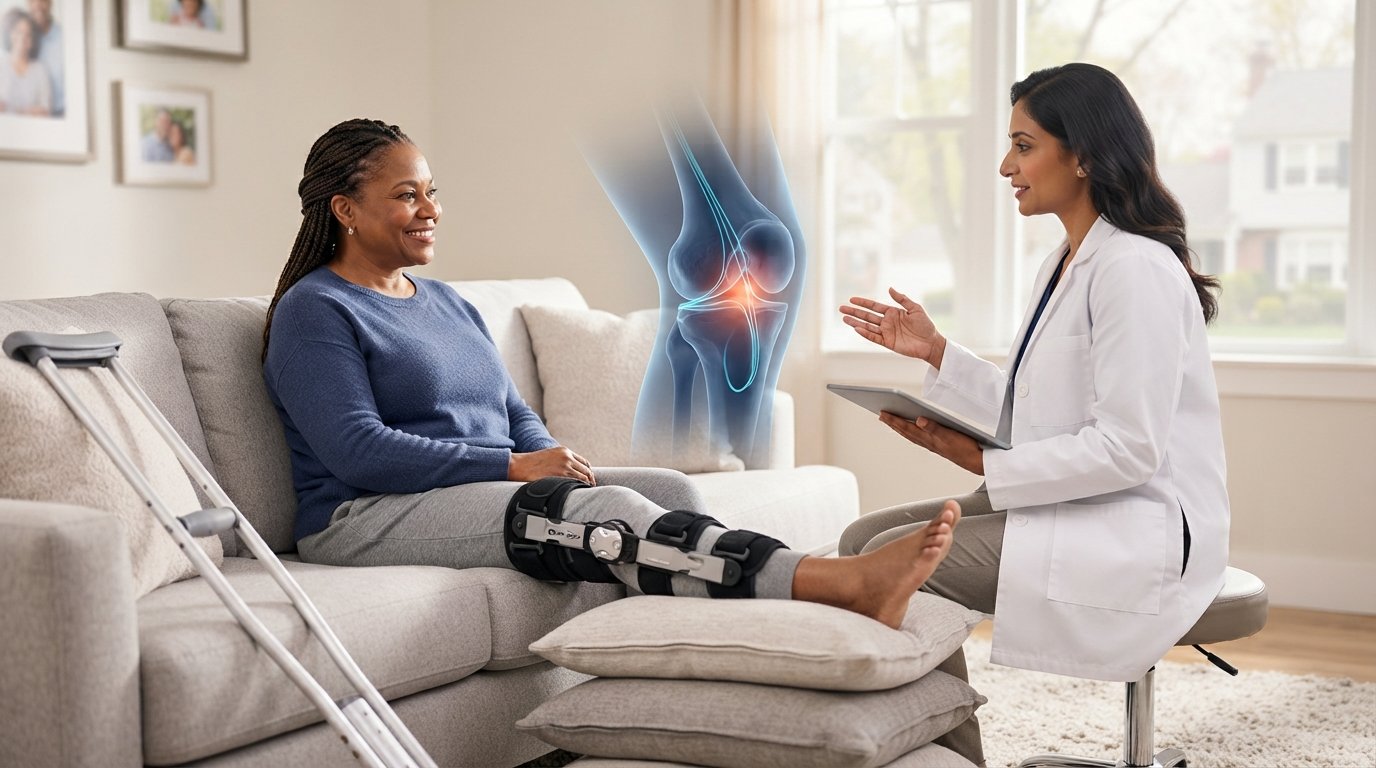
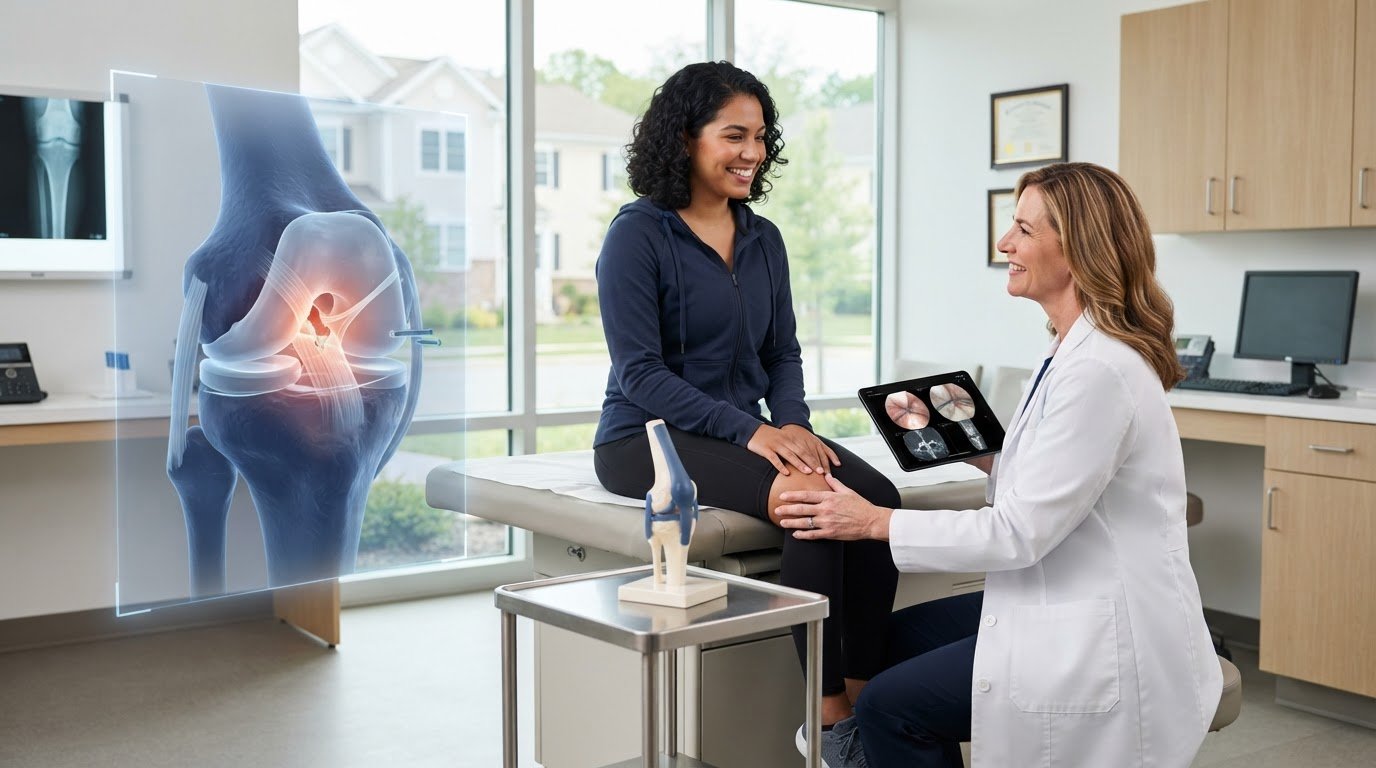
Knee arthroscopy is usually an outpatient procedure, so patients go home the same day, but the first days of recovery still call for careful knee care. If you’re wondering what to expect after knee arthroscopy in Verona, NJ, the answer depends in part on what was treated: a straightforward procedure may allow weight-bearing as tolerated, while a repair can require more protection and a longer recovery.
It’s natural to want clear expectations about anesthesia, pain, walking, and when physical therapy begins. This guide explains what knee arthroscopy involves, what recovery may look like, and how rest, icing, incision care, and rehabilitation fit into the process. You’ll also learn which symptoms need prompt medical attention, so you can approach recovery with a clearer understanding of what’s ahead.
Key Takeaways
- Knee arthroscopy is generally an outpatient procedure, and patients go home the same day. Arrange a ride because anesthesia takes time to wear off.
- Recovery differs between meniscectomy and meniscus repair; the procedure performed affects weight-bearing, knee bending, and return to activity.
- Physical therapy builds strength and motion, with sessions typically ramping up during weeks 2-4 after straightforward arthroscopy.
- Protect the incision by following dressing and wound-care instructions, and use rest, ice, and elevation as directed.
- Learn which changes, including worsening pain or calf pain, need prompt medical attention during recovery.
Arthroscopic knee surgery procedure and goals
Arthroscopic knee surgery uses a small camera and instruments inserted through small openings to examine or treat the joint. The surgeon may remove damaged tissue, repair a meniscus, or address another problem inside the knee. The treatment matters: a tissue repair can require more protection and a longer recovery than tissue removal.
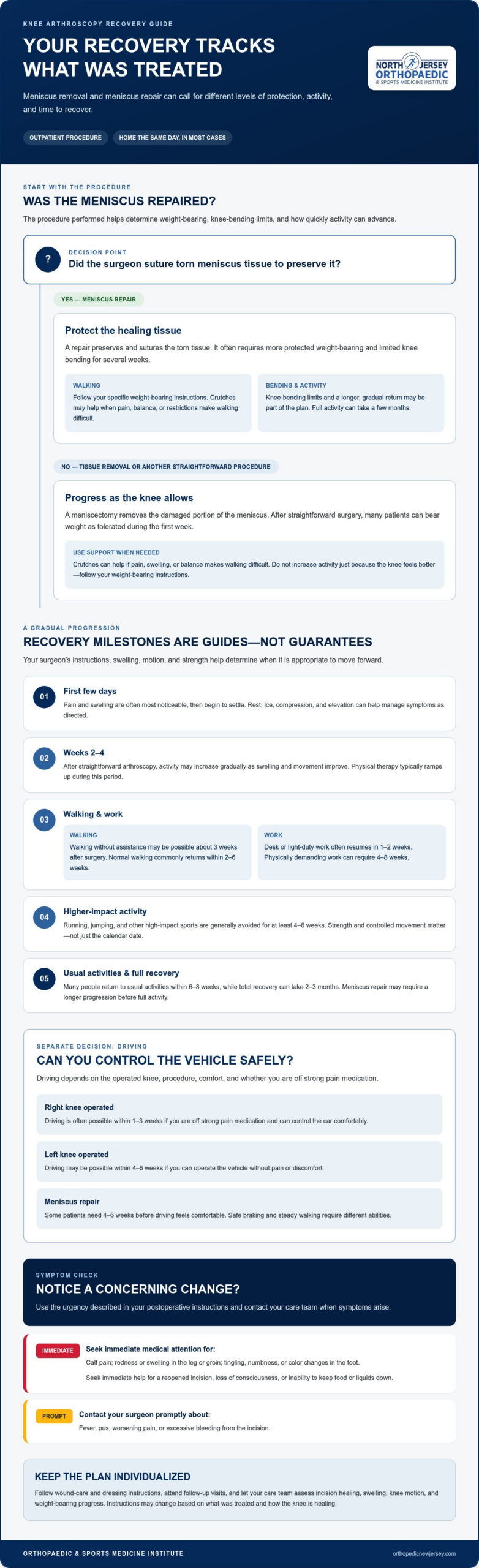
After straightforward surgery, many patients can bear weight as tolerated during the first week. Crutches can help if pain, swelling, or balance makes walking difficult. Walking may remain limited for 2-4 weeks after surgery, and normal walking may take 2 to 6 weeks. Follow your weight-bearing instructions instead of increasing activity just because the knee feels better. This is a central part of what to expect after knee arthroscopy in Verona, NJ.
Driving depends on the operated knee, the procedure, and your ability to control the vehicle safely. After right-knee surgery, driving is often possible within one to three weeks if you’re off strong pain medication and can control the car comfortably. Left-knee surgery may allow driving within 4 to 6 weeks if you can operate the vehicle without pain or discomfort. Meniscus repair may also mean waiting 4 to 6 weeks before driving feels comfortable.
Pain and swelling are often most noticeable during the first few days, then begin to settle. Rest, ice, compression, and elevation can help manage these symptoms. Calf pain, redness or swelling in the leg or groin, tingling, numbness, or color changes in the foot require immediate medical attention. Seek immediate help for a reopened incision, loss of consciousness, or inability to keep food or liquids down. Contact your surgeon promptly about fever, pus, worsening pain, or excessive incision bleeding.
Knee arthroscopy carries risks, including infection and blood clots. A single complication rate cannot describe every procedure because the condition being treated and whether tissue is repaired affect the risk profile. Watch for fever, wound drainage, or calf pain, and report these symptoms promptly to your care team.
Follow-up visits allow the surgeon to assess incision healing, swelling, knee motion, and progress with weight-bearing. Your care team may adjust exercises or recovery instructions based on these findings. Follow-up timing depends on the procedure and your healing, including wound condition and knee movement.
For people wondering what to expect after knee arthroscopy in Verona, NJ, surgery and physical therapy costs depend on the procedure, facility, insurance benefits, and rehabilitation plan. Before treatment, review your coverage and expected charges with your insurer and billing team.
What Is Knee Arthroscopy?
Recovery depends partly on whether the surgeon removes damaged meniscus tissue or repairs it. A meniscectomy removes the damaged portion; a meniscus repair preserves and sutures the torn tissue. Because repaired tissue needs time to heal, repair often requires more protected weight-bearing and limited knee bending for several weeks.
Pain and swelling are commonly most noticeable during the first few days, then begin to settle. Rest, ice, compression, and elevation can help manage these symptoms. Some movement may return early, but that doesn’t mean the knee is ready for demanding activity. Crutches can support walking when pain, balance, or weight-bearing instructions make independent steps difficult.
Activity usually progresses in stages, guided by the procedure and the knee’s response:
- Early recovery: Follow weight-bearing and bending instructions; meniscus repair can require restrictions for several weeks.
- Weeks 2-4: A straightforward recovery may allow activity to increase gradually as swelling and movement improve.
- Later recovery: Running, jumping, and other high-impact sports are generally avoided for at least 4 to 6 weeks.
- Strength and function: Return to usual activities commonly takes six to eight weeks, while meniscus repair can take a few months before full activity.
Walking without assistance may be possible about three weeks after surgery, while normal walking commonly returns within 2 to 6 weeks. Desk or light-duty work often resumes within one to two weeks. Physically demanding work can require four to eight weeks. Driving depends on knee control, comfort, medication, and procedure: after meniscus repair, some patients need 4 to 6 weeks before driving feels comfortable. These milestones are not interchangeable; safe braking and steady walking require different abilities.
Most people return to usual activities within six to eight weeks after knee arthroscopy, but total recovery can take 2-3 months. A repaired meniscus may need a longer progression than tissue removal. The surgeon’s restrictions, swelling, knee motion, and strength help determine whether activity can advance. For sports, restoring controlled movement and strength matters more than simply reaching a calendar date.
For a knee injury involving the ACL rather than the meniscus, orthopedic care for ACL injuries addresses a different structure and treatment pathway. Knowing whether surgery involved removal or repair helps explain why recovery instructions and activity milestones differ.
Physical therapy and knee strengthening
Physical therapy helps restore knee motion and strength while supporting a gradual return to daily movement. After straightforward knee arthroscopy, therapy typically ramps up during weeks 2-4.
Range of Motion Rehabilitation
Range-of-motion rehabilitation uses controlled movement to help the knee bend and straighten after surgery. Restoring motion supports everyday tasks such as sitting, standing, and walking, while helping prevent stiffness from limiting movement. A physical therapist can guide exercises and monitor your response. Changes in pain or swelling during a session can help shape the next steps.
Strengthening and Exercises
Strengthening exercises train the muscles that support the knee, including the quadriceps and hamstrings. A physical therapist selects movements based on the procedure, your current motion, and weight-bearing instructions. When appropriate, examples may include guided leg lifts or seated knee movements. Follow the rehabilitation plan and avoid adding resistance or repetitions on your own.
Physical therapy connects clinic exercises with practical movement. A therapist may assess how you stand, walk, and manage stairs, then tailor your program to specific difficulties. Progress means more than completing repetitions: it includes controlled movement and responding appropriately to the knee’s condition. For example, if you have trouble straightening your knee, you may need to work on motion before advancing strengthening.
Local Follow-Up and Rehabilitation Providers
Follow-up and rehabilitation involve the orthopedic surgeon overseeing healing and a physical therapist guiding exercises. The surgeon assesses the knee, while therapy focuses on movement, strength, and function. For patients in Verona and nearby Nutley, Bloomfield, Clifton, Belleville, Lyndhurst, North Arlington, Kearny, and Verona, follow-up and rehabilitation arrangements depend on where surgery was performed and how care is organized. Follow the surgical team’s instructions to coordinate these parts of recovery.
Insurance coverage for physical therapy after knee arthroscopy in New Jersey depends on your individual plan, including rehabilitation benefits and applicable visit limits. Review your physical therapy coverage and cost-sharing details before sessions begin.
For follow-up, start with the orthopedic practice responsible for your surgery; rehabilitation takes place through the physical therapy service arranged for your care. The surgical team’s instructions explain where your progress is reviewed and how therapy fits into follow-up. Coordination matters because exercises must respect restrictions related to the procedure and healing tissue.
Bring your exercise instructions and questions to therapy visits. Tell the therapist about changes in pain, swelling, or movement so they can assess them alongside your exercises. Noting what feels easier or more difficult can help guide adjustments. The aim is steady progress in motion and strength, not simply doing more activity.
How Should You Care for Yourself During Recovery?
Incision care, swelling control, and activity choices support healing after knee arthroscopy. Follow your surgical team’s instructions for dressings and wound care, since they reflect the procedure performed.
Incision Care
Incision care means keeping the surgical openings clean and managing dressings as instructed. After arthroscopy, portal dressings are generally changed to bandages 5-7 days after surgery. Follow the care team’s directions for changing dressings and keeping the wounds clean. Check the incision during dressing changes for excessive bleeding, new redness, or pus, and contact your healthcare provider about these changes.
Wound Care and Showering
Wound care protects the incision while it heals, including following instructions for showering and dressing changes. Daily showering is allowed after knee arthroscopy, with dressings changed once a day as instructed. Avoid soaking the wounds in water or pools for 4 weeks after surgery. Keep the care team’s wound instructions accessible so you can follow them during each dressing change.
Swelling and discomfort can affect how the knee feels during ordinary activities. Rest the affected leg and elevate it after walking or every 6 hours. If pain is excessive, elevate the knee above heart level. Ice can help reduce pain and swelling; apply it for 10-20 minutes at a time, following the instructions provided for your recovery.
During the first few days, balance prescribed movement with rest. For example, after walking around at home, elevate your leg and use ice as directed. Don’t add activities simply because the anesthesia has worn off or the incision looks small. The size of the skin openings does not show how much tissue was treated beneath them.
Some patients need a brace to hold the knee in a position that supports healing. Wear it when directed, and follow instructions for positioning and movement. Restrictions may differ after tissue repair compared with tissue removal. Follow your surgical team’s directions, especially for bending and weight-bearing.
Contact your healthcare provider about excessive incision bleeding, signs of infection, worsening pain that cannot be relieved, or calf pain that could indicate a blood clot. Fever, increased pain, or pus in the wound also warrant prompt medical attention. A reopened incision, redness or swelling in the leg or groin, and tingling, numbness, or color changes in the foot need urgent attention.
Return to everyday activities gradually, using wound condition and swelling as practical cues. If a dressing becomes wet during a shower, follow the care team’s dressing-change instructions rather than soaking the incision. Avoid pools and other wound-soaking activities for 4 weeks after surgery, even if the portals appear closed.
Knee arthroscopy procedure and anesthesia
Knee arthroscopy uses a camera, small instruments, and anesthesia to examine or treat the joint. The procedure commonly takes about an hour, although complexity affects operating time. Patients generally go home the same day, after recovery-room monitoring and discharge instructions.
The surgeon accesses the joint through small openings called portals. These are approximately 1 cm in size. Through a portal, the camera gives a view inside the knee; instruments can address the problem being treated. For example, the operation may involve removing damaged meniscus tissue or repairing it. Those treatments affect postoperative instructions and recovery demands.
Operating time is not the same as time at the surgical facility. Arthroscopic knee surgery can take 30 minutes to two hours, depending on the condition and procedure. Afterward, patients may spend another hour or two in the recovery room. The care team monitors recovery from anesthesia and reviews instructions before discharge.
Anesthesia helps make the procedure tolerable and affects the first hours afterward. Its effects take time to wear off, so arrange for someone to drive you home before surgery. Don’t plan to drive yourself after discharge. Follow your doctor’s instructions about medication use. In most cases, medications can restart the day after surgery, subject to specific directions for certain medications.
Before the procedure, follow the instructions provided by your surgical team. They may cover medications and arrival preparations based on your care plan. Tell your doctor about medications you take and relevant health changes so the team can review them before anesthesia. Don’t change prescribed medication use on your own. Written instructions can help you avoid missing a step on surgery day.
Discharge marks the transition from facility monitoring to recovery at home, not the end of anesthesia’s effects. Keep your written instructions nearby, have your ride remain available, and use prescribed mobility support. After meniscus repair, protected weight-bearing may be part of the plan. Tissue removal can involve different restrictions.
Small incisions still need careful attention. Follow instructions for incision care, and contact the surgical team about possible signs of infection, such as pus or increasing pain. Fever after arthroscopic knee surgery also warrants prompt medical attention. These changes differ from the temporary discomfort and swelling that can follow surgery.
For patients exploring minimally invasive orthopaedic surgery, discuss minimally invasive orthopedic treatment and how the approach relates to the condition being treated.
The Orthopaedic & Sports Medicine Institute: Bridge-enhanced ACL repair (BEAR® Implant)
The Orthopaedic & Sports Medicine Institute offers Bridge-enhanced ACL repair (BEAR® Implant) for people exploring treatment for an ACL injury. This differs from arthroscopy for a meniscus problem, so the right discussion depends on which knee structure is injured and what treatment is being considered.
A consultation with a board-certified surgeon can help clarify the diagnosis and discuss whether BEAR® Implant or another approach fits the ACL injury. For questions about ACL treatment, contact The Orthopaedic & Sports Medicine Institute or visit orthopedicnewjersey.com.
Take Your Next Step With a Clear Plan
Recovery is also a chance to make informed decisions about long-term knee health. If you’re considering what to expect after knee arthroscopy in Verona, NJ, use your follow-up discussion to clarify which activities matter most to you and how your treatment plan supports those goals. Your surgeon can explain how the procedure relates to your diagnosis and what to discuss at rehabilitation visits.
The Orthopaedic & Sports Medicine Institute provides Minimally Invasive Orthopaedic Surgery. Its other specialized treatments include Bridge-enhanced ACL repair (BEAR® Implant) and Rotator Cuff Repair, which address different orthopedic conditions. The right next step depends on the problem being treated, so focus your conversation on your symptoms, goals, and treatment options.
For guidance on orthopedic care and treatment options, contact The Orthopaedic & Sports Medicine Institute. A thoughtful conversation can help you move forward with greater clarity and confidence.
Frequently Asked Questions
When Should You Call Your Doctor?
Call your surgeon promptly about increasing pain that medication doesn’t relieve, excessive incision bleeding, or signs of infection such as fever or pus. Calf pain, redness or swelling in your leg or groin, a reopened incision, or tingling, numbness, and color changes in your foot need immediate medical attention. Keep your care team’s contact instructions accessible so you can act quickly if symptoms arise.
When can I return to sports?
Running, jumping, and other high-impact sports should wait at least 4 to 6 weeks after arthroscopic knee surgery. Returning to a sport also requires rebuilding control and strength, not simply reaching a date on the calendar. A meniscus repair can take a few months before full activity. For example, someone returning to court sports needs to regain controlled movement before attempting sudden turns or jumps.
When can I return to work?
Desk or light-duty work commonly resumes within one to two weeks, while physically demanding jobs can require four to eight weeks. Consider what your workday involves: prolonged standing, lifting, and frequent stair use place different demands on the knee than computer work. If your duties can be modified, discuss which tasks to avoid and how to resume them with your care team.
What is the typical recovery timeline after knee arthroscopy?
Recovery ranges from a few weeks to a few months, depending on the procedure and how the knee heals. After straightforward arthroscopy, usual activities commonly resume within six to eight weeks; total recovery can take 2-3 months. Meniscus repair often takes longer than tissue removal. For a patient in Verona, planning around these stages can help coordinate work, transportation, and household responsibilities.
How should I care for knee arthroscopy incisions and dressings?
Keep the wounds clean and follow the care team’s dressing instructions. Dressings are generally changed to bandages 5-7 days after surgery, with dressing changes once a day as instructed. Daily showering is allowed, but don’t soak the incisions in water or pools for 4 weeks. If a dressing becomes wet or the wound changes, follow your specific care instructions and contact your healthcare provider about concerning symptoms.
What exercises and physical therapy are recommended after knee arthroscopy?
Follow the exercise plan prescribed for your procedure rather than choosing movements independently. Physical therapy typically ramps up during weeks 2-4 after straightforward arthroscopy. A therapist can guide knee-bending and straightening work, then progress strengthening according to movement and weight-bearing instructions. For example, if a meniscus repair requires limited bending, your exercises must respect that restriction while supporting safe rehabilitation.
What pain medications and ice or elevation instructions are used after knee arthroscopy?
Use pain medication only as directed, since medication instructions depend on your care plan. In most cases, medications can restart the day after surgery, subject to specific instructions for certain medications. Apply ice for 10-20 minutes at a time. Rest and elevate the leg after walking or every 6 hours; raise the knee above heart level if pain is excessive. Don’t change medication instructions independently.
What are the risks and complication rates of knee arthroscopy?
Risks include infection and blood clots. The risk profile varies with the condition treated and whether tissue is repaired.