Knee pain doesn’t automatically mean surgery. An orthopedic surgeon specializing in knees in Clifton, NJ can assess the cause and recommend care based on the injury, joint stability, and its effect on daily activity. Treatment may include rehabilitation, injections, or other non-surgical approaches; surgery may be considered when these options aren’t enough to address a structural problem.
It’s understandable to want relief while also knowing what treatment may involve. This article explains common non-surgical approaches, how rehabilitation supports recovery, and when procedures such as ACL repair may be considered. You’ll also learn what a knee evaluation can clarify and how specialized orthopedic care in Clifton, Nutley, Bloomfield, Belleville, Lyndhurst, North Arlington, Kearny, and Verona can guide your next step.
Key Takeaways
- Learn how a knee evaluation can help distinguish conditions that may respond to rehabilitation or other non-surgical care.
- Understand the factors that may lead a specialist to consider surgery for an injury, including the problem’s effect on joint stability and function.
- Explore how ACL and meniscus injuries affect the knee and what treatment approaches may be considered.
- Find out what to clarify about a surgeon’s operating location and how The Orthopaedic & Sports Medicine Institute may fit into care for eligible ACL injuries.
Orthopedic care in Clifton and surrounding New Jersey communities
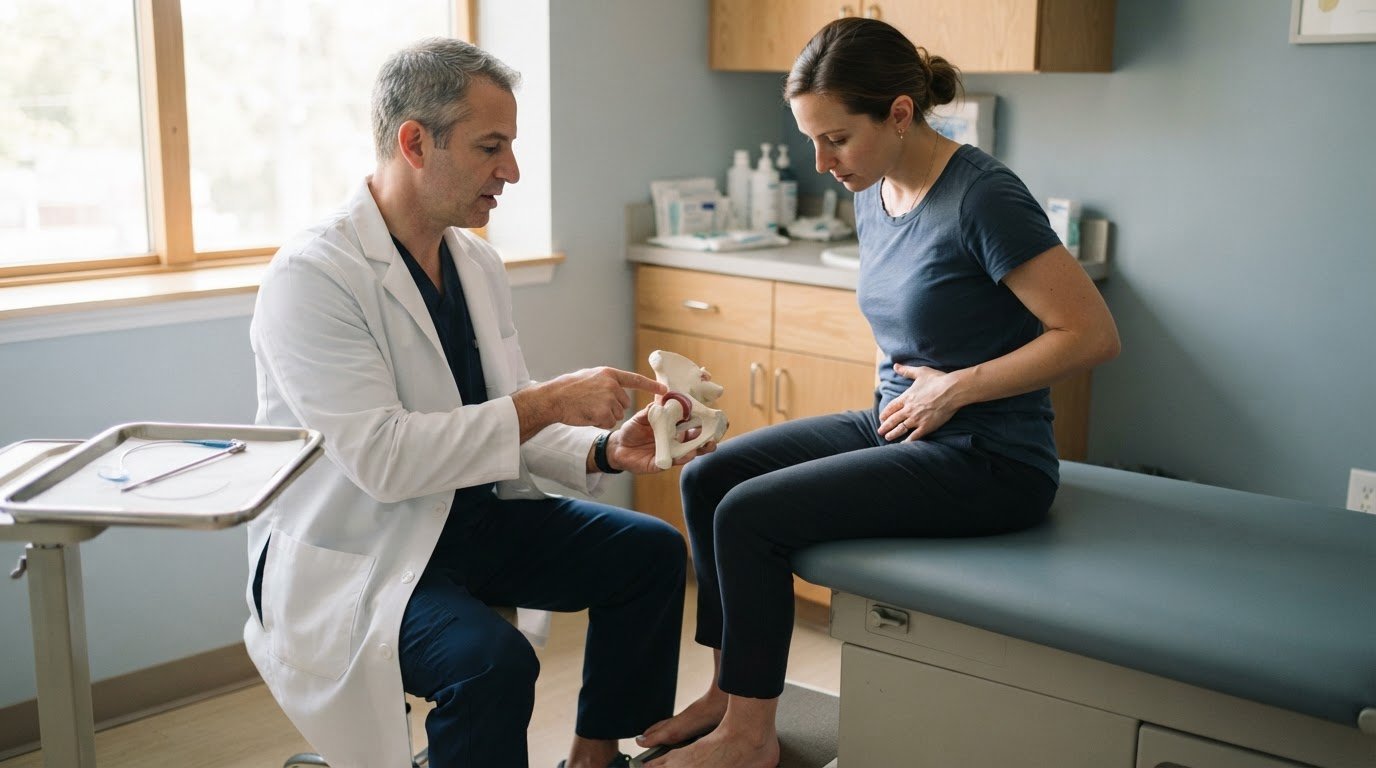
Knee care in Clifton and nearby communities may include rehabilitation, non-surgical treatment, and procedures for structural joint problems. An orthopedic surgeon specializing in knees in Clifton, NJ assesses symptoms, stability, and movement before discussing appropriate options.
Knee Replacement and Arthroscopy
Knee replacement and arthroscopy address different conditions, so the recommendation should match the diagnosis. Replacement may be considered for advanced joint damage; arthroscopy uses minimally invasive techniques for selected problems inside the joint. Discuss how the proposed procedure relates to imaging, symptoms, recovery, and your goals for returning to daily activities.
Non-surgical musculoskeletal care may include targeted injections, physical rehabilitation, and lifestyle modifications. According to the Centers for Disease Control and Prevention, approximately 53.2 million American adults reported doctor-diagnosed arthritis during 2019-2021. A treatment plan considers the affected joint, symptoms, and everyday demands.
Numbness, tingling, or weakness alongside knee pain can suggest a nerve-related concern. Describe where these symptoms occur and which movements affect them during your consultation. This can help distinguish joint-related concerns from symptoms that may need neurological assessment.
Surgeon Reviews and Qualifications
Patient reviews can describe communication, scheduling, and reported recovery experiences, but ratings alone don’t establish surgical skill. Look for recurring details relevant to your needs, such as clear explanations of treatment options. For qualifications, check for board certification in orthopaedic surgery and training relevant to the proposed procedure. Credentials and reviews vary among specialists.
A Clifton orthopedic office welcomes new patients. Patients seeking an orthopedic surgeon specializing in knees in Clifton, NJ can contact the office’s scheduling team to arrange a consultation and explain the reason for the visit. Referral requirements vary by insurance provider. Share relevant insurance details and prior imaging information when requested, so the office can explain the appointment process.
Orthopedic surgery may be considered when non-surgical approaches aren’t sufficient to address structural problems, remove damaged tissue, or stabilize a compromised joint. Some procedures can be performed on an outpatient basis, while more complex cases may require hospitalization for monitoring and initial recovery support. Discuss the procedure being considered and whether outpatient care or hospitalization is anticipated.
Surgery for injury-related conditions
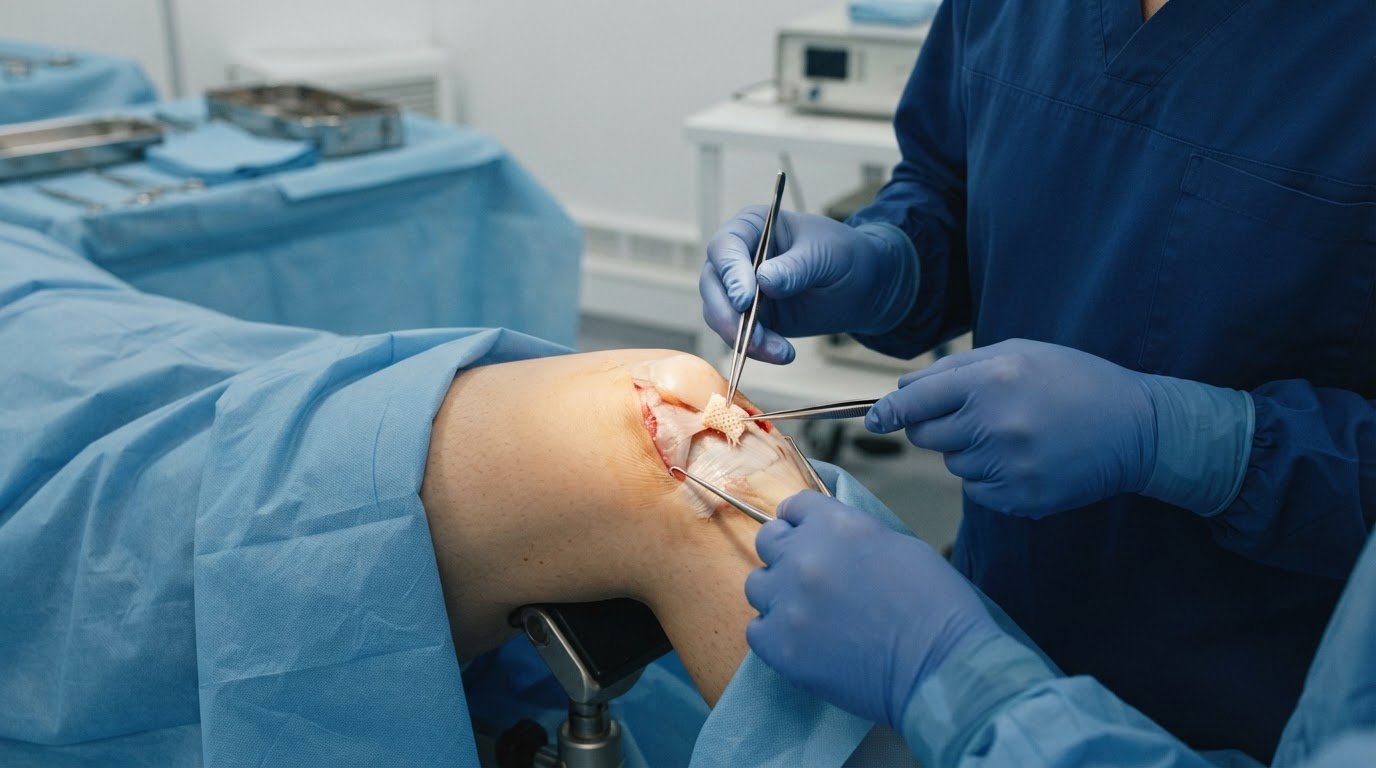
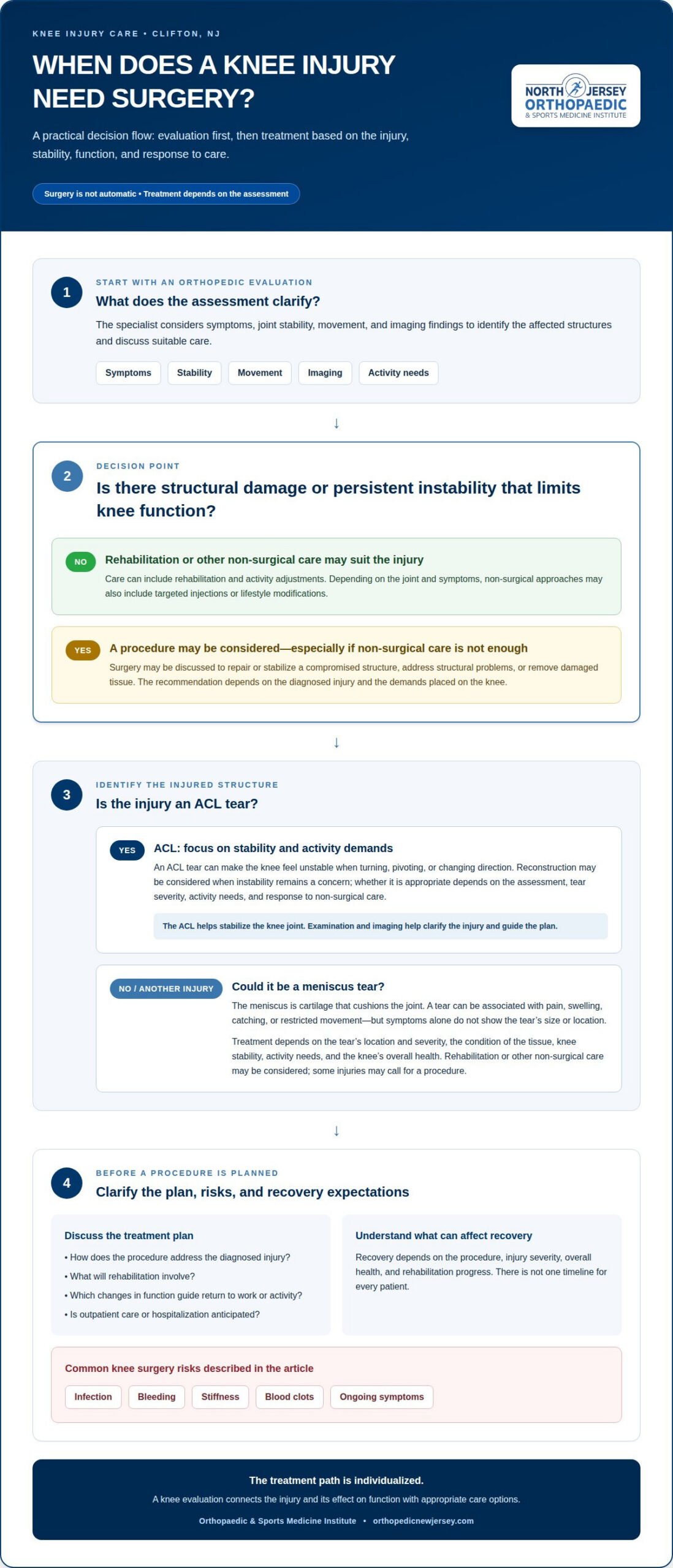
Surgery may be considered when an injury causes structural damage or persistent instability that limits knee function. An orthopedic doctor assesses the joint, symptoms, and imaging before recommending a procedure. Treatment depends on the damaged tissue and the demands placed on the knee. Rehabilitation and other non-surgical care may suit some injuries; others may call for surgery to repair or stabilize compromised structures.
An ACL tear can make the knee feel unstable, particularly when turning or changing direction. A meniscus tear affects cartilage that cushions the joint and can cause pain or restricted movement. Decisions about surgery consider the tear’s location and severity, knee stability, activity needs, and response to non-surgical treatment. Arthritis also matters, since joint wear can affect which procedure is suitable.
Acute injuries and trauma need careful assessment, especially when pain, swelling, or difficulty bearing weight follows a fall or sports collision. After a car accident, a knee evaluation can identify damage that symptoms alone may not reveal. Work-related injuries, such as a twist while lifting or a direct impact, also require assessment of the affected structures and job demands. These details help shape orthopedic care and recovery planning.
Common knee surgery risks include infection, bleeding, stiffness, blood clots, and ongoing symptoms. Recovery depends on the procedure, injury severity, overall health, and rehabilitation progress, so there isn’t one timeline for every patient. The surgeon explains the relevant risks and recovery milestones for the planned operation during consultation.
Ask how the proposed procedure addresses the diagnosed injury, what rehabilitation involves, and which changes in function guide return to work or activity. For selected cases, minimally invasive orthopaedic surgery is one approach to discuss as part of an individualized treatment plan.
Modern Orthopaedics of New Jersey says ACL tears are often treated with reconstructive surgery. Whether that approach is appropriate depends on the assessment of the knee, the tear’s severity, stability, activity needs, and response to non-surgical care. Patients can ask how reconstruction would address the injury and what rehabilitation and recovery milestones apply to their planned procedure. The surgeon can explain the relevant risks and how changes in function inform return to activity.
ACL and meniscus tears
An ACL tear can make the knee unstable during turning, pivoting, or sudden direction changes. The anterior cruciate ligament helps stabilize the joint, so assessment focuses on symptoms, stability, and activity demands. A meniscus tear affects cartilage that absorbs shock within the knee. Pain, swelling, or catching can prompt evaluation, but symptoms alone don’t identify the tear’s size or location. A specialist uses examination and imaging findings to shape the treatment plan.
Care may begin with rehabilitation and activity adjustments, depending on the injury and its effect on function. An ACL tear may require reconstructive surgery when instability remains a concern. Meniscus treatment depends on the damaged area and tissue condition; the aim is to address the injury while considering the knee’s overall health. Advanced imaging can help clarify the structures involved, while a clinical examination connects those findings with the patient’s symptoms.
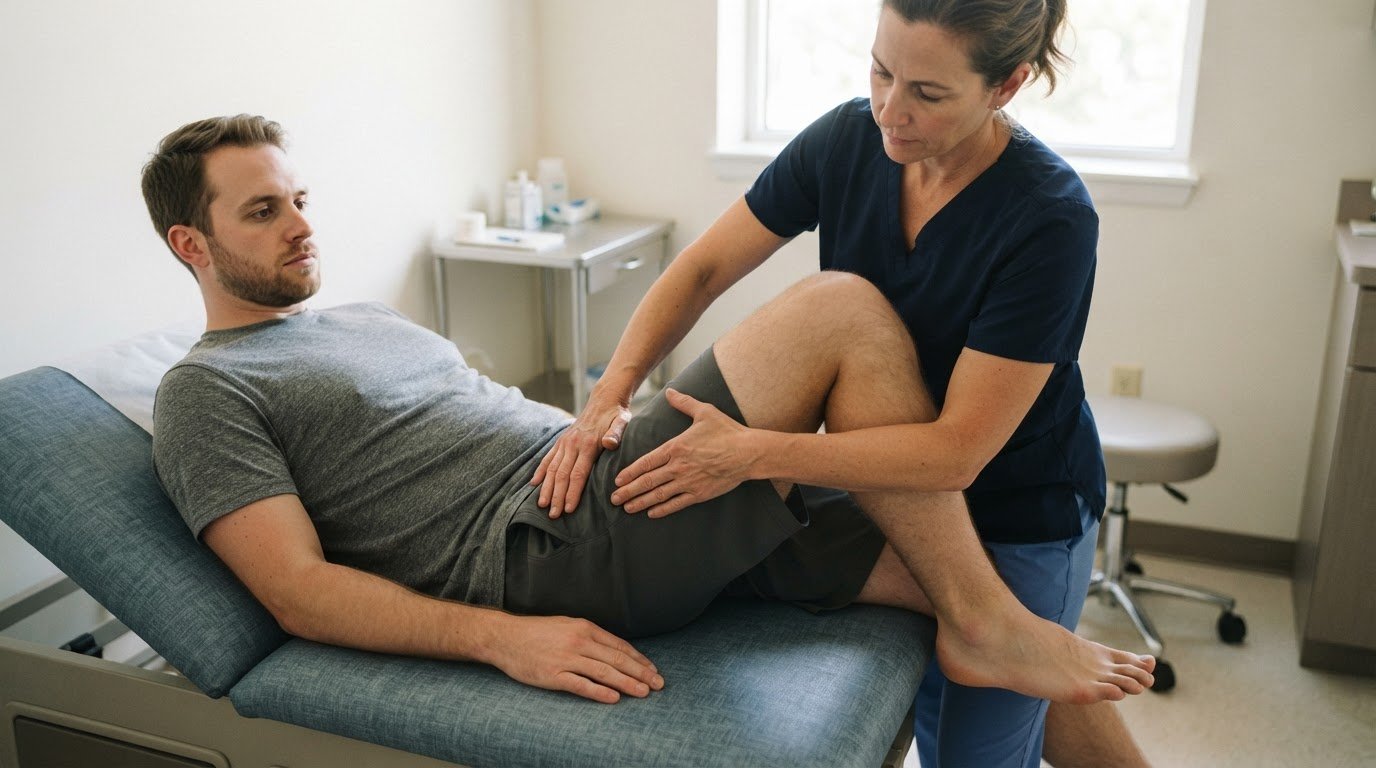
During your consultation, describe how the injury happened, which movements worsen symptoms, and whether the knee gives way. A twist during sport, for example, may affect the ACL, meniscus, or both. The specialist considers these details alongside examination findings before discussing options. Minimally invasive techniques may suit selected procedures, but the approach depends on the injury and treatment goals. Ask how each option could affect rehabilitation and your return to desired activities.
Knee replacement is different from ACL reconstruction or meniscus treatment. It may be considered when the central problem is substantial joint damage rather than an isolated ligament or cartilage injury. Chronic pain, instability, and limits on daily function each call for careful assessment, not an automatic decision to operate. A suitable treatment plan should reflect the diagnosis, recovery needs, and your priorities. Orthopedic care can range from rehabilitation to injury-related surgery.
Where do knee surgeons operate in Clifton, NJ?
A knee surgeon’s consultation office and operating location may be different facilities. In Clifton, the surgeon’s hospital privileges and the planned procedure help determine where surgery takes place. An office visit is typically where the specialist evaluates symptoms, reviews imaging, and discusses options. The operation itself may occur in an outpatient surgical facility or hospital, depending on the case.
Some orthopedic procedures are performed on an outpatient basis. More complex cases may require hospitalization for monitoring and initial recovery support. For example, a surgeon may plan an outpatient procedure for a suitable patient, while a more involved operation may need hospital-based care. The distinction depends on the procedure and the support needed immediately afterward.
Before scheduling, clarify the facility name and how your care plan is organized. Ask whether the consultation, imaging, operation, and follow-up take place at the same location. A clear answer helps you plan transportation and know where to arrive on surgery day. If imaging has already been completed, bring the records or confirm how the surgical team will review them.
Clifton-area orthopedic care includes knee surgery, alongside procedures involving the shoulder, elbow, hip, spine, foot, and ankle. The operating site can vary by surgeon and procedure, so a local office address alone doesn’t identify where an operation will occur. During consultation, discuss the recommended technique, the facility’s role, and whether recovery begins at home or with hospital support.
For a planned knee operation, useful questions include:
- Which facility is scheduled to perform the procedure?
- Will the procedure be outpatient or require hospital monitoring?
- Where will imaging review and postoperative follow-up occur?
- What arrangements should be made for returning home?
These details connect the treatment plan with practical preparation. If you’re considering an operation, discuss your knee surgery options and the care setting during a consultation.
The Orthopaedic & Sports Medicine Institute
The Orthopaedic & Sports Medicine Institute in Nutley provides specialized knee and sports injury care for patients from Clifton, Bloomfield, Belleville, Lyndhurst, North Arlington, Kearny, and Verona. If a suspected ACL tear affects stability or activity, a consultation can clarify the injury and whether surgical care may be appropriate. For eligible cases, treatment options include Bridge-Enhanced ACL Repair (BEAR® Implant) and minimally invasive orthopaedic surgery.
The next step is a focused discussion of your symptoms, examination findings, and recovery priorities. This connects the diagnosis with a treatment approach rather than assuming every knee injury needs surgery. The practice also treats shoulder conditions, including rotator cuff injuries and shoulder arthritis.
Contact The Orthopaedic & Sports Medicine Institute to discuss your orthopedic care needs.
Take the Next Step Toward a Clear Care Plan
Your next step is to turn uncertainty into a focused clinical conversation. A visit can connect your symptoms with the activities and responsibilities you want to return to. Before meeting an orthopedic surgeon specializing in knees in Clifton, NJ, consider which movements remain difficult, how symptoms affect daily routines, and what you hope treatment will help you do. These priorities give the specialist a practical picture of your needs.
You don’t need to arrive with a preferred procedure. A useful discussion can clarify the clinical reasoning, rehabilitation demands, and how progress will be assessed. Clear questions can help you take part in decisions and understand the path ahead. Focus on a plan that reflects your condition and personal goals, rather than feeling pressured to choose a particular treatment.
If knee symptoms are limiting your daily life or activity, contact The Orthopaedic & Sports Medicine Institute to discuss your care. Taking that step can help you move forward with greater clarity.
Frequently Asked Questions
Who are the top-rated orthopedic knee surgeons in Clifton, NJ?
Dr. Michael C. Russonella, D.O., a board-certified orthopaedic surgeon and sports medicine specialist at The Orthopaedic & Sports Medicine Institute in nearby Nutley, is one local option for knee care. The institute highlights 89 Google reviews as “EXCELLENT.” Reviews can offer insight into patient experiences, but also consider whether a surgeon’s expertise and treatment approach fit your specific knee concern.
Which knee surgeons near Clifton, NJ are accepting new patients?
Dr. L. Sean Thompson’s Clifton office welcomes new patients.