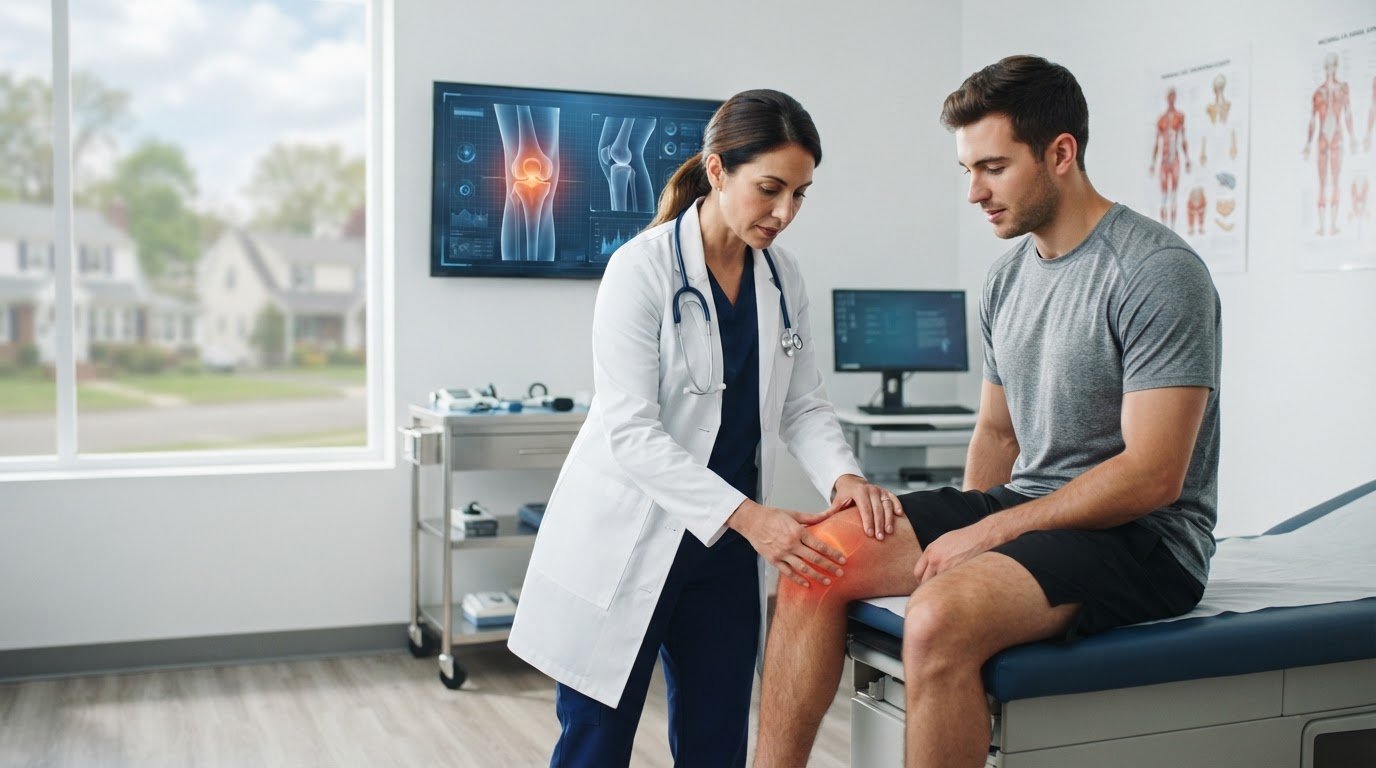
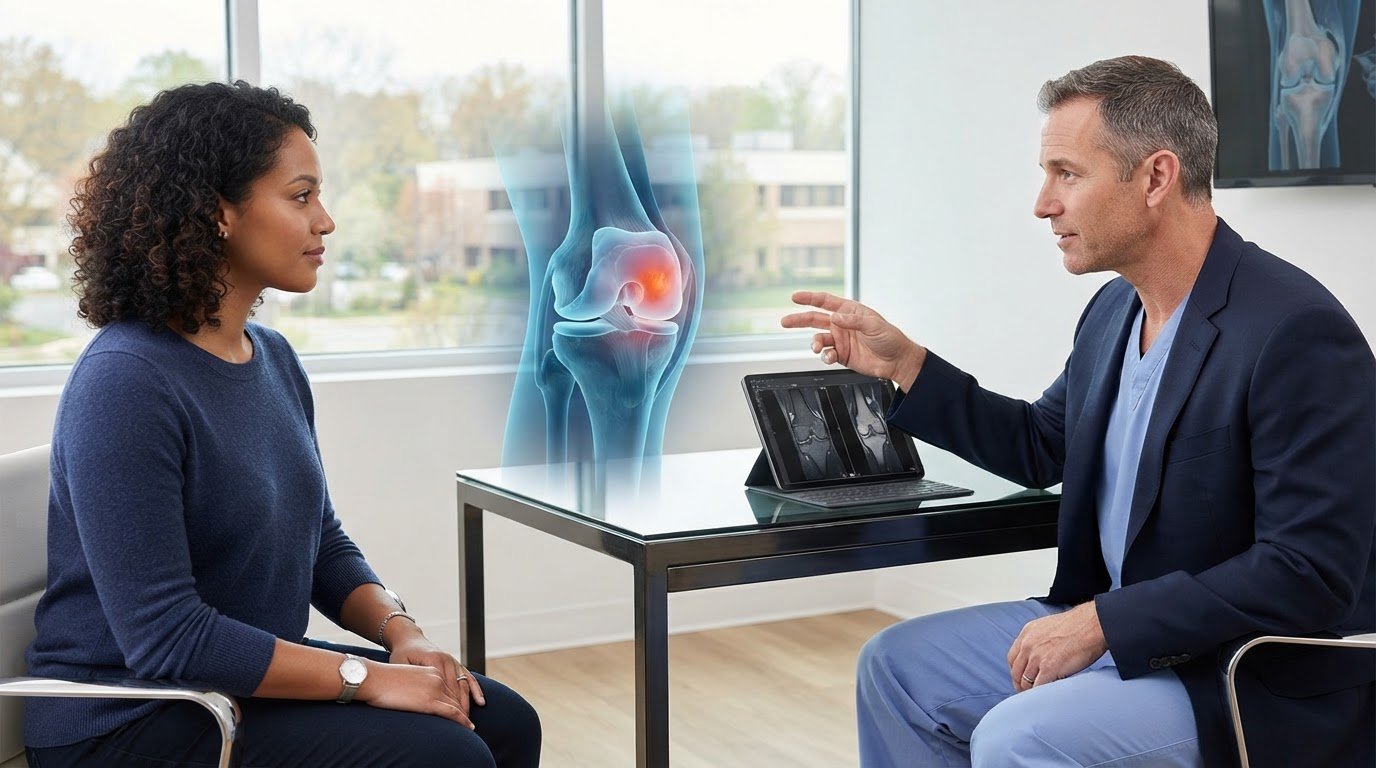
What if your age isn’t the main factor in deciding whether you’re ready to play again? If you’re thinking about getting back to sports after 40 Kearny NJ, it’s understandable to worry that an old knee injury, a sore shoulder, or a tendon problem could flare up. Your current function, injury history, symptoms, and the demands of your sport are more useful guides than your birthday.
Going straight from occasional exercise to a full-speed game can leave your body unprepared for sudden stops, pivots, throws, and jumps. A gradual progression gives you time to rebuild strength and endurance, see how symptoms respond, and adjust your training before a small concern becomes a bigger setback.
This guide explains how to move from general conditioning toward sport-specific practice, what to consider when judging readiness, and when recurring pain, swelling, instability, or reduced function may warrant orthopedic evaluation. A sports medicine assessment can help clarify possible causes and treatment options without making surgery inevitable. For Kearny residents, specialized orthopedic and sports injury care is available nearby in Nutley, serving people across the surrounding communities of Bloomfield, Clifton, Belleville, Lyndhurst, North Arlington, and Verona as well.
Key Takeaways
- Returning to sport is a gradual progression from basic conditioning to the movements and intensity your activity requires.
- Set a clear goal, establish your starting point, and increase one training variable at a time so you can gauge your response.
- Judge readiness by the overall pattern of your function, symptoms, and sport-specific demands, not a single test or age cutoff.
- If you’re getting back to sports after 40 Kearny NJ, learn how to adjust training when symptoms worsen and recognize when recurring pain or difficulty progressing merits evaluation.
- An orthopedic sports medicine assessment can help clarify knee, shoulder, or tendon concerns and discuss appropriate treatment options.
Getting Back to Sports After 40 in Kearny: What Changes, and What Does Not
Wanting to return to a sport you enjoy is a worthwhile goal, and being over 40 doesn’t automatically mean you need to stop. Your starting point depends on factors such as current conditioning, health, injury history, time away from training, and the demands of your activity. For people considering getting back to sports after 40 Kearny NJ, the practical question is not simply “Am I too old?” It’s “What can I do comfortably now, and what do I need to rebuild?”
A return to sport is a progression, not a single moment when you resume full participation. Start with the capacity you have today, then work toward the strength, coordination, and movement patterns your sport requires. Masters athletics includes sport for athletes aged 35 and over, illustrating that organized athletic participation continues beyond early adulthood. Individual readiness, however, still needs to be considered on its own.
Does being over 40 mean you need to avoid sports?
No. Adults have different abilities, medical histories, and training backgrounds at every age. A period of reduced activity may mean your endurance or strength needs rebuilding. That is different from persistent pain or a joint problem that limits everyday movement. Notice how your body responds during activity and afterward. Symptoms that recur, worsen, or interfere with normal function deserve more attention than simply feeling out of practice.
Age alone is not a diagnosis or a reliable readiness test. Your injury history, current symptoms, and the physical demands of your sport can help determine whether to progress independently or seek clinical guidance. If those factors make returning difficult, a sports medicine evaluation can help clarify what may be contributing and discuss appropriate options.
Why sport demands matter as much as general fitness
Comfortable walking is a useful sign of basic mobility and endurance, but it doesn’t necessarily prepare you for sprinting, jumping, quick pivots, or repeated overhead movements. Those actions place different demands on muscles, joints, and tendons. You may feel fit during steady exercise yet find that a fast change of direction or a series of jumps is much harder.
Familiarity with a sport doesn’t replace preparation. Even if you’ve played for years, time away can affect your ability to tolerate its specific movements and pace. List the actions your sport involves, then build toward them in manageable stages instead of assuming general fitness covers every demand.
A gradual return to sport rebuilds basic capacity first, then adds sport-specific movements and intensity as your function and symptoms allow.
For Kearny residents whose symptoms or injury history complicate that progression, specialized orthopedic and sports injury care is available nearby in Nutley. A board-certified orthopedic surgeon can assess knee, shoulder, and tendon concerns and help clarify potential next steps. An evaluation doesn’t mean surgery is inevitable.
How to Build a Gradual Return-to-Sport Plan After 40
A useful plan turns the goal of playing again into manageable steps, with room to adjust based on your response. For getting back to sports after 40 Kearny NJ, the right pace depends on your current conditioning, symptoms, injury history, and sport. There’s no universal weekly schedule or return date that fits everyone.
Start with a baseline and a realistic activity goal
Begin by defining what “returning” means to you. Identify your sport, the activity you can comfortably do now, and the movements you’ll need to perform. Returning to doubles tennis, for example, may involve short lateral movements and repeated swings. Soccer can demand running, acceleration, and changes of direction. Even in outdoor or recreational disciplines like shooting sports, programs from Black Sky Tactical emphasize structured progression and safety fundamentals for New Jersey participants.
Before progressing, take stock of prior injuries, current pain or stiffness, and any recent changes in strength, balance, or everyday function. This baseline helps you notice whether training is becoming more manageable or provoking symptoms. If pain, instability, or limited movement makes it hard to set a starting point, an orthopedic sports medicine clinician can assess your concerns and help clarify next steps.
Progress from conditioning to sport-specific practice
Build in stages instead of jumping from general exercise to a full game. A broad progression might look like this:
- Establish comfortable activity: Start with movement you can perform with controlled form and without worsening symptoms.
- Build relevant capacity: Develop the strength, mobility, balance, or endurance your sport uses.
- Introduce sport-specific drills: Practice selected movements at a controlled pace, such as gentle direction changes before faster cutting drills, when appropriate.
- Reassess your response: Pay attention during activity and afterward. If symptoms worsen or function declines, reduce or pause the provoking demand rather than pushing through.
Change one training variable at a time. If you increase duration, avoid also adding speed or intensity in the same step. Otherwise, it’s harder to tell what your body tolerated. The Physical Activity Guidelines for Americans offer general guidance for adult physical activity, but a health-focused target isn’t the same as being prepared for every sport-specific demand.
If injury history or recurring symptoms make progression uncertain, a sports medicine clinician can assess the issue. The practice’s sports medicine clinic guide explains considerations for specialized care. Kearny-area readers can also explore orthopedic sports medicine care in nearby Nutley, serving Kearny, Bloomfield, Clifton, Belleville, Lyndhurst, North Arlington, and Verona.
How to Judge Readiness: Fitness, Symptoms, and Sport-Specific Demands
Readiness isn’t established by one workout, a single self-test, or reaching a certain age. Look at the broader pattern: how you move, what your sport requires, and whether symptoms appear during activity or afterward. For getting back to sports after 40 Kearny NJ, a comfortable walk may show that everyday activity is manageable, but it can’t confirm that your body is prepared for a full game.
General fitness is not the same as full sport readiness
Daily movement and general exercise build a foundation. Sport can add repeated acceleration, jumping, pivoting, contact, or overhead motion. Demands differ by activity, and even a regularly active person may need time to prepare for movements they haven’t practiced recently. Use the comparison below to identify areas to consider, not as a medical clearance checklist.
| Readiness area | What to consider | What it may tell you |
|---|---|---|
| General fitness | Comfort with daily movement and steady activity; ability to move with control | A useful baseline, but not proof of readiness for every sport |
| Sport-specific demands | Repeated speed, jumping, direction changes, overhead movement, or contact | Highlights capacities to rebuild through relevant practice |
| Symptoms and function | Pain, swelling, instability, restricted movement, or difficulty doing usual activities | May signal a need to modify activity or seek clinical guidance |
| Injury history | Previous injuries that affect movement, confidence, or ability to train | May make an individualized assessment helpful |
A self-directed exercise can help you notice how a movement feels, but it can’t diagnose an injury or provide medical clearance. Don’t treat one successful effort as proof that you’re ready for full-intensity play. Consider whether you can repeat relevant movements with control and whether your symptoms remain stable as activity progresses.
When injury history or symptoms call for assessment
Persistent or worsening pain, swelling, a feeling that a joint may give way, or reduced function can change the appropriate next step. If symptoms limit activity or return each time you increase a particular demand, pause or modify that activity and seek clinical guidance. Previous knee, shoulder, or tendon injuries may also affect movement mechanics or confidence, even if the original injury occurred years ago.
An orthopedic sports medicine assessment can help evaluate the source of symptoms and discuss options based on your circumstances. Treatment decisions depend on the individual; surgery isn’t an automatic outcome of an evaluation. For background on one possible approach when surgery is being considered, see this minimally invasive orthopedic surgery guide.

Common Return-to-Sport Setbacks: Adjust Training Without Guesswork
Motivation can help you stay consistent, but determination alone can’t replace gradual progression or attention to symptoms. If an activity causes discomfort, pushing through every time may make it harder to understand what your body can tolerate. A measured adjustment is not failure; it’s information that can help guide your next step.
Avoid doing too much too soon
A sudden increase in workout duration, intensity, or frequency can make it difficult to identify what triggered a flare-up. For example, adding extra practice time while also increasing speed changes several demands at once. Instead, adjust one factor, such as duration, and observe how you feel during activity and afterward before progressing another.
A warm-up and appropriate preparation can support a training session, but no single stretch or exercise guarantees injury prevention. Focus on gradual changes and controlled movement. If an activity starts to aggravate symptoms, stop or reduce that demand rather than treating discomfort as something you must overcome.
Recognize when pain or reduced function deserves attention
A temporary increase in soreness after a new activity may call for rest or a short-term modification. Recurring pain, swelling, instability, or loss of function is different, particularly if it affects walking, routine tasks, or your ability to continue training. Note what activity brings symptoms on, whether they settle when you reduce that activity, and whether the problem returns as you resume it. That pattern can be useful to share during an evaluation.
For getting back to sports after 40 Kearny NJ, use this calm decision path:
- Symptoms are mild and settle: Reduce the provoking activity and avoid increasing training demands until your response is clearer.
- Symptoms persist, worsen, or limit function: Seek clinical guidance. An orthopedic sports medicine evaluation can help assess the concern and discuss appropriate options.
- Symptoms are severe or urgent: Seek emergency care.
A consultation doesn’t mean surgery is inevitable. A board-certified orthopedic surgeon serving Kearny and nearby communities can evaluate knee, shoulder, and tendon concerns and help clarify possible treatment approaches. For guidance tailored to an injury or recurring training symptoms, explore orthopedic and sports medicine care in Nutley.
Returning to Sports Near Kearny: When Orthopedic Sports Medicine Can Help
Some return-to-sport concerns are difficult to resolve by adjusting workouts alone. Consider an orthopedic sports medicine consultation if symptoms keep returning, a previous injury affects how you move or feel during play, or you can’t progress without pain or reduced function. For people getting back to sports after 40 Kearny NJ, an assessment can help connect those concerns to a practical next step instead of relying on guesswork.
What an orthopedic sports medicine evaluation can clarify
An evaluation typically starts with your activity goals, injury history, and description of symptoms, including when they occur and what affects them. A clinician may also consider relevant examination findings, such as movement or function, to better understand the concern. This context can help distinguish an issue that may be managed by adjusting activity from one that needs further assessment.
Recommendations depend on individual findings and goals. They may include nonsurgical care; an evaluation doesn’t mean surgery is necessary or that you must give up your sport. The Orthopaedic & Sports Medicine Institute in Nutley provides specialized orthopedic and sports injury care for people in Kearny and nearby Bloomfield, Clifton, Belleville, Lyndhurst, North Arlington, and Verona. A board-certified orthopedic surgeon treats knee, shoulder, and tendon injuries, using minimally invasive techniques where appropriate.
If your concern involves a previous ACL injury, you can read the BEAR implant ACL repair guide for information about that specific procedure. Whether it’s relevant to your situation depends on an individual evaluation.
Plan your next step from Kearny, New Jersey
Seeking advice doesn’t commit you to surgery, and it doesn’t automatically mean you need to stop pursuing your sport. The goal is to understand what may be affecting your return, discuss appropriate options, and make decisions with clearer information. Before an appointment, note which activities trigger symptoms, how your function has changed, and what you hope to return to. These details can help focus the discussion.
If recurring symptoms, injury history, or difficulty progressing are holding you back, connect with the Nutley practice for specialized orthopedic and sports injury guidance. Request orthopedic and sports medicine guidance when you’re ready to discuss your next step.
Take Your Next Step Toward Returning to Sport
Getting back to sports after 40 Kearny NJ is best approached as a progression shaped by your current function, symptoms, injury history, and sport-specific demands. Build from your present capacity, increase one training factor at a time, and reassess how your body responds. If pain keeps returning, swelling or instability develops, or an old injury limits your movement, professional guidance can help clarify your options.
You don’t have to assume that seeking an evaluation means giving up your sport or needing surgery. The Orthopaedic & Sports Medicine Institute in Nutley serves Kearny and nearby communities, including Bloomfield, Clifton, Belleville, Lyndhurst, North Arlington, and Verona, with specialized orthopedic and sports injury care. A board-certified surgeon evaluates knee, shoulder, and tendon injuries, with treatment recommendations based on each person’s needs.
If symptoms or injury concerns are making your return difficult, request orthopedic and sports medicine guidance. With a thoughtful plan and the right support, you can take your next steps with greater clarity and confidence.
Frequently Asked Questions
Is it safe to return to sports after 40?
Age alone doesn’t determine whether returning to sport is appropriate. For readers focused on getting back to sports after 40 Kearny NJ, readiness depends on current fitness, overall health, injury history, symptoms, and the demands of the activity. Build up gradually and notice how your body responds. If pain, swelling, instability, or reduced function persists or worsens, an orthopedic or sports medicine evaluation can help clarify a reasonable next step.
How should I start exercising again before returning to my sport?
Start by identifying the sport you want to resume and considering your current conditioning, symptoms, and injury history. Build from comfortable, manageable activity toward movements that resemble your sport, such as introducing controlled direction changes before faster drills. Increase one training factor at a time, such as duration or intensity, and observe your response. If symptoms interfere with progression, seek individualized clinical guidance rather than pushing through.
Can I return to sports if I have knee or shoulder pain?
Possibly, but pain needs to be considered in context. Its significance depends on its severity, duration, cause, and effect on your function. Don’t assume persistent or worsening pain is simply part of aging or exercise. If discomfort limits movement, repeatedly returns with activity, or occurs with swelling or instability, seek clinical guidance. An assessment can help clarify the concern and inform appropriate activity or treatment options.
How long does it take to get back to sports after 40?
There’s no single timeline that applies to everyone. Your sport, starting fitness, medical and injury history, symptoms, and any treatment needs all influence your progression. Use changes in function and your response to activity to guide the next step, rather than relying on a fixed number of days or weeks. If an injury or ongoing symptoms affect your return, a clinician can help discuss expectations based on your individual situation.
What happens if my pain gets worse when I resume sports?
Stop or modify the activity that’s increasing your symptoms, and note which movements or training changes seem to affect them. Don’t respond to worsening pain by increasing effort or trying to diagnose the cause yourself. If symptoms persist, worsen, or limit normal function, arrange a clinical evaluation. Severe or urgent symptoms should be assessed through emergency care, not a routine orthopedic appointment.
Do I need to see an orthopedic specialist before returning to sports?
Not every adult needs an orthopedic consultation before resuming activity. It may help if you have a significant injury history, recurring pain, reduced function, or difficulty progressing despite modifying your training. An orthopedic sports medicine evaluation can consider your symptoms, activity goals, and relevant examination findings, then discuss appropriate options. Seeking an assessment doesn’t automatically mean surgery is necessary or that you must give up your sport.
Where can I find sports medicine care near Kearny, NJ?
The Orthopaedic & Sports Medicine Institute provides specialized orthopedic and sports injury care in Nutley, serving Kearny and nearby Bloomfield, Clifton, Belleville, Lyndhurst, North Arlington, and Verona. A board-certified surgeon evaluates and treats knee, shoulder, and tendon injuries, with care tailored to individual needs. If symptoms or an old injury are making it difficult to return to activity, the practice can help clarify possible next steps and discuss appropriate treatment options.