


Second opinions can lead to a different treatment approach in up to 40% of patients. For most daily activities, recovery from total knee replacement typically takes 6 to 12 weeks. An orthopedic second opinion for knee replacement in Clifton, NJ can help you understand whether surgery is the right next step for your situation.
It’s reasonable to want clarity before committing to a major procedure, especially when knee pain affects your mobility and daily routine. An orthopedic second opinion for knee replacement gives you an opportunity to review your diagnosis, imaging, and recommended treatment with another orthopedic specialist.
This article explains when another opinion may help, how to arrange a consultation without a referral, and what to bring to the appointment. You’ll also learn what a specialist may consider before recommending knee replacement, how treatment recommendations can differ, and what to keep in mind when planning for recovery.
Key Takeaways
- Compare the reasoning behind surgery and non-surgical care, including how symptoms and imaging inform the recommendation.
- Consider a second opinion soon after diagnosis, especially if surgery has been recommended or you remain uncertain about the plan.
- Prepare for a consultation by gathering relevant medical records, imaging results, and a current medication list.
- Ask your insurer whether a second-opinion consultation is covered, since coverage can affect how you arrange the visit.
- Use the consultation to clarify your options, recovery expectations, and the questions that matter most before making a decision.
How Often Does a Second Opinion Change the Treatment Option?
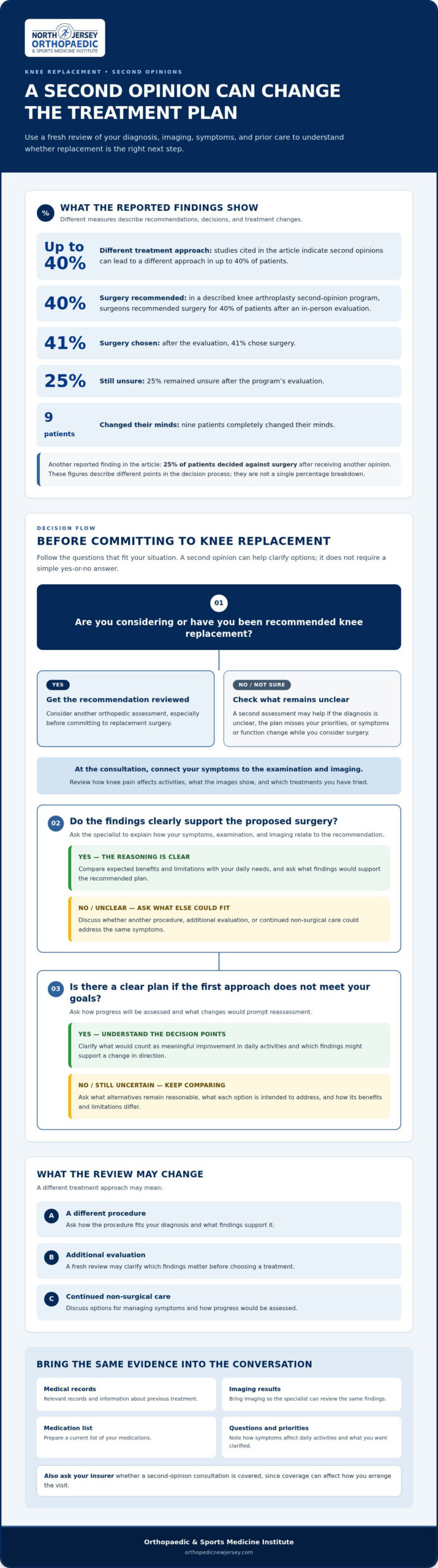
In a described knee arthroplasty second-opinion program, surgeons recommended surgery for 40% of patients after an in-person evaluation. Afterward, 41% chose surgery, 25% remained unsure, and nine patients completely changed their minds.
Orthopedic Evaluation and Treatment Choices
An orthopedic evaluation connects your symptoms with examination findings and available imaging. The specialist can review how knee pain affects your activities, what the images show, and which treatments you’ve tried. Together, these details can clarify whether the proposed surgery addresses the main problem or whether another treatment approach merits discussion.
Compare the reasoning behind each option, not just the procedure’s name. Ask what findings support knee replacement, what alternatives could address the same symptoms, and how their expected benefits and limitations differ. If a procedure is described as minimally invasive, ask how that approach fits your diagnosis and treatment plan.
The program’s results show why a recommendation and a decision aren’t the same thing. A surgeon recommended surgery for 40% of patients seen in person, but 41% ultimately chose it. The 25% who remained unsure and the nine patients who changed their minds illustrate how a separate evaluation can sharpen a decision, even when it doesn’t produce a simple yes-or-no answer.
Studies cited in the research indicate that second opinions can lead to a different treatment approach in up to 40% of patients. That change can involve a different procedure, additional evaluation, or continued non-surgical care. The figure describes findings across patients, not a prediction for any individual; the useful question is what specific finding would change the recommendation in your case.
Non-surgical options can also be part of the discussion. Ask which approaches could help manage your symptoms, what each is intended to address, and how progress would be assessed. A useful comparison connects each option to your daily limitations and previous care. For example, discuss what would count as meaningful improvement in walking or climbing stairs before reconsidering surgery.
Ask what happens if an initial approach doesn’t meet the agreed goals. The specialist can explain which changes would prompt reassessment and which findings might support surgery. This gives you a clearer sequence of decisions rather than treating replacement as the only possible next step.
Treatment Planning and Physician Communication
A comprehensive treatment plan connects the evaluation to a clear recommendation, alternatives, and decision points. Review the second-opinion assessment for its diagnosis, proposed procedures, and reasons for or against surgery. Ask how the plan addresses your symptoms and what could prompt a change in direction.
With your permission, the second-opinion specialist can share the findings with your treating physician. Discuss any differences together, such as whether to continue non-surgical care or consider a procedure. This can help your care team work from the same diagnosis and treatment priorities.
When to seek a second opinion for knee surgery
Consider another orthopedic assessment after a knee diagnosis, particularly before committing to replacement surgery. It can clarify the diagnosis, help compare treatment options, and show whether preserving the joint remains part of the discussion.
In a described knee arthroplasty second-opinion program, 25% of patients decided against surgery after receiving another opinion. That finding illustrates why a fresh review can matter before an irreversible decision.
Timing a Second Opinion
Seek another opinion after receiving a surgical recommendation, when the diagnosis is unclear, or when the proposed treatment doesn’t address your priorities. Bring your imaging and records so the orthopedic surgeon can review the same findings. A second assessment can also help if your symptoms or function change while you’re considering surgery.
Ask the specialist to explain what findings support replacement and which alternatives remain reasonable. For example, discuss whether arthritis, pain, and limits on walking align with the recommendation. A clear comparison helps you decide based on your diagnosis and daily needs.
Orthopedic surgeons in Clifton, NJ: Look for an orthopedic surgeon who evaluates knee conditions and can explain the basis for a replacement recommendation. Ask how the examination, imaging, and previous treatment inform the opinion.
Hospitals near Clifton, NJ: Compare options based on available orthopedic expertise, how imaging and records are reviewed, and how care is coordinated around a potential procedure. These practical criteria are more useful than relying on a “best hospital” label without knowing what matters for your case.
Choosing a Knee Surgeon or Hospital
Choose a surgeon who can discuss both joint preservation and replacement surgery, rather than focusing on one procedure alone. Ask how your diagnosis affects function, which treatment options fit the findings, and what would make surgery the preferred approach. The answers should connect your symptoms to the proposed plan.
Minimally invasive techniques describe an approach, not a guarantee of faster recovery or suitability for every knee condition. Ask what the term means for the procedure under consideration and how the approach relates to your imaging and goals. This helps distinguish surgical technique from the underlying reason for surgery.
Before deciding, prepare a short list of questions: What does the diagnosis show? Which options preserve the joint? What changes would lead to replacement? If arthritis is part of the diagnosis, ask how its location and effect on daily function influence the recommendation. Record the answers and compare the reasoning from each consultation.
For a discussion of surgical approaches, explore minimally invasive orthopedic care as part of understanding your options.
Referral-free second opinion consultations
You can contact an orthopedic practice directly to arrange a second-opinion consultation. Before booking, distinguish two questions: whether the office accepts direct appointment requests and whether your insurance plan requires a referral or provides coverage.
In New Jersey, gather the records that explain your knee diagnosis and the surgical recommendation. Ask the first physician’s office to forward your medical records, or bring them to the consultation. Include the imaging used to assess your condition, such as X-rays, MRI, CT scans, or ultrasound results.
Before scheduling, contact your insurer to ask whether the second-opinion physician is covered and whether your plan requires a referral. Some insurers require a medical second opinion for certain surgeries, so clarify your plan’s process before the visit. Coverage and referral requirements are separate from the clinical value of reviewing another specialist’s assessment.
Organize these materials for the orthopedic examination:
- Medical records and the diagnosis or surgical recommendation
- Available imaging results and reports
- A current medication list
- Notes describing symptoms and how they affect daily function
Questions for the Consultation
Use the appointment to understand how the physician reached the diagnosis and evaluated your knee. Ask which examination findings and imaging support replacement, what alternatives fit those findings, and how each option may affect your function. If a sports injury or earlier treatment is relevant, explain its timeline and ask how it informs the current recommendation.
Then ask what the proposed procedure is intended to address and what could change the treatment plan. Write down the answers, including unfamiliar medical terms, so you can compare the reasoning later. A focused list helps keep the consultation centered on your decision.
Comparing Recommendations and Getting an Opinion
To compare orthopedic surgeons’ recommendations, place them side by side: diagnosis, supporting examination or imaging findings, recommended treatment, alternatives, and the reasons for each choice. Note whether differences concern the diagnosis, timing of surgery, or procedure. Ask each physician to explain any disagreement in terms you can understand.
To seek a second opinion in New Jersey, contact an orthopedic office, arrange a consultation, and gather your records and imaging. Confirm insurance coverage and referral requirements with your plan before the appointment. These steps help the consulting physician review your case with the relevant medical context.
At the end of the visit, ask what the written assessment will include and whether it can be shared with your treating physician. A report explaining the diagnosis, treatment options, and reasons behind the recommendation can support a useful discussion between physicians. Keep a copy with your records for future appointments.
What Are the Risks of Not Getting a Second Opinion?
Proceeding with one recommendation leaves you with one specialist’s interpretation of your diagnosis, imaging, and treatment options. Before scheduling surgery, identify what supports the recommendation and whether alternatives were discussed. For example, ask how the findings explain your pain and limits on mobility.
A second review can help clarify differences between imaging and your symptoms. If the proposed surgery addresses arthritis but your main concern involves a previous ligament injury, ask how each finding affects the plan. The aim is to understand the reasoning, not to collect opinions without comparing their clinical basis.
Skipping that comparison can leave practical questions unanswered. Ask what the procedure is expected to address, which treatment options were considered, and what the next step involves. A clear discussion helps you understand your choices before committing to surgery and set expectations for restoring function.
For a knee replacement second opinion, provide the consulting specialist with the records used to diagnose your condition. Ask your first physician’s office to forward them, or bring copies to the appointment. Include available imaging, such as X-rays, MRI, CT scans, or ultrasound exams, along with their reports.
An online second-opinion process starts with arranging a consultation and asking how the specialist receives records and imaging. Gather the same materials you would bring in person, then prepare a concise symptom history. Include when the pain began, which activities are difficult, and what treatment you have already tried.
During a remote appointment, ask how the specialist will review your images and explain the diagnosis. Keep questions nearby, such as, “Which findings support replacement?” and “What alternatives fit my case?” A focused conversation helps you compare recommendations using the same criteria: diagnosis, symptoms, and treatment goals.
Minimally invasive procedures describe a surgical approach, not the reason a procedure is appropriate. Ask what the term means for the specific operation being discussed, how it addresses your condition, and how the approach relates to your imaging. A less invasive technique does not replace the need to understand the diagnosis and treatment rationale.
Use these steps to prepare for either appointment format:
- Request records and imaging from the diagnosing physician’s office.
- Write down symptoms, mobility limits, and previous treatments.
- Ask how the specialist’s recommendation follows from the findings.
- Compare the proposed procedure with the alternatives discussed.
After the consultation, review the written assessment alongside the original recommendation. Note any differences in diagnosis, surgical rationale, or alternatives, then discuss those points with your treating physician before choosing a plan.
Benefits of a second opinion before knee replacement
A second opinion gives you another orthopedic specialist’s assessment before you decide on knee replacement. Its value lies in examining the reasons for surgery, the alternatives, and how each option relates to your symptoms and goals.
A separate review can help connect the diagnosis to your specific symptoms. Ask the specialist to explain which imaging findings and examination results support replacement. If your main difficulty is pain on stairs, for example, discuss how the proposed treatment addresses that limitation and what other causes may be considered.
A second opinion can also clarify whether the recommendation reflects arthritis, an injury, or more than one issue. A meniscus finding on imaging may need to be considered alongside joint changes and your physical examination. Ask the doctor which finding best explains your symptoms and how that conclusion affects the treatment plan.
A second opinion can make alternatives easier to compare. Instead of weighing “surgery” against “no surgery,” ask for a clear account of the options, their goals, and the findings that support each one. Then consider whether the recommended approach addresses activities you want to resume, such as walking comfortably or managing stairs.
- Ask which diagnosis is driving the recommendation.
- Compare replacement with the alternatives discussed for your findings.
- Describe the daily tasks that symptoms currently limit.
- Ask what would prompt a reassessment of the plan.
Recovery planning is another practical benefit. Recovery after knee replacement usually takes 12 to 18 weeks, depending on a patient’s health and activity level. Ask how those factors apply to your routine, what rehabilitation involves, and how you might plan work, transportation, or household responsibilities around recovery.
Use both consultations to clarify expectations, not to seek a guaranteed outcome. Ask each doctor what improvement the procedure aims to support, which symptoms may remain, and how progress will be assessed. These questions help you judge whether the proposed plan matches your priorities and understand the trade-offs before deciding.
After reviewing both opinions, write down the shared findings and points of disagreement. For example, note whether both specialists identify the same source of pain, then list differences in timing or treatment. Bring those questions to your treating physician so the next discussion focuses on specific evidence and your goals.
If you’re weighing knee treatment options, discuss your orthopedic care questions and the findings that shape your decision.
The Orthopaedic & Sports Medicine Institute: Bridge-enhanced ACL repair (BEAR® Implant)
The Orthopaedic & Sports Medicine Institute offers Bridge-enhanced ACL repair (BEAR® Implant) for a different knee concern: an ACL tear. A knee replacement recommendation and an ACL injury involve distinct diagnoses, so treatment depends on the findings from your evaluation. If an assessment identifies an ACL tear, ask whether BEAR® Implant or another approach is relevant to that injury. The practice also offers Minimally Invasive Orthopaedic Surgery, considered in relation to the specific condition and procedure.
For questions about an ACL injury or minimally invasive orthopedic care, contact The Orthopaedic & Sports Medicine Institute to discuss your next step.
Make Your Next Decision With Clarity
Before choosing a path, identify what matters most to you: reducing pain, improving mobility, or returning to a particular activity. Share that priority with your orthopedic specialist, then ask how each proposed approach relates to it. A clear personal goal can make the next conversation more focused and useful.
An orthopedic second opinion for knee replacement in Clifton, NJ can help frame the decision around your diagnosis, daily needs, and treatment priorities. Bring forward any unresolved questions and discuss how the medical findings support the recommendation. The Orthopaedic & Sports Medicine Institute in nearby Nutley offers Minimally Invasive Orthopaedic Surgery, which may be relevant when discussing surgical approaches for an appropriate condition.
If you’re ready to discuss your orthopedic questions, contact The Orthopaedic & Sports Medicine Institute. A thoughtful next conversation can help you move forward with greater clarity and confidence.
Frequently Asked Questions
How Do I Know If Something Is Wrong With My Knee Replacement?
A change in pain, swelling, stability, or function after knee replacement warrants discussion with your orthopedic surgeon. Note when the change began, what activity brings it on, and whether it affects walking or sleep. These details help distinguish a persistent concern from a new change that needs assessment. Symptoms alone can’t identify the cause, so an examination and review of your surgical history provide important context.
What Happens If You Wait Too Long for a Knee Replacement?
There isn’t one waiting period that applies to every patient. The decision depends on how symptoms affect daily function, what the diagnosis shows, and which alternatives remain appropriate. While considering timing, track specific changes, such as increasing difficulty with stairs or walking, and bring them to your physician. Discuss how continued non-surgical care would be monitored and which changes would prompt reassessment.
What Should You Ask During a Second Opinion Consultation?
Ask the orthopedic specialist to explain the diagnosis, the findings behind the surgical recommendation, and the alternatives for your situation. For an orthopedic second opinion for knee replacement in Clifton, NJ, bring questions about what each option aims to improve and how progress will be assessed. If recommendations differ, ask which examination or imaging findings account for the difference. Request a written summary before leaving.
Does Insurance Cover an Orthopedic Second Opinion in New Jersey?
Coverage depends on your specific insurance plan, so ask the insurer whether the consulting physician and appointment are covered. Also ask whether your plan requires a referral or prior authorization, and what records are needed for a coverage decision. Some insurers require a medical second opinion for certain surgeries. Clarifying the plan’s requirements before the visit can help you understand your expected out-of-pocket responsibility.
What Is the Cost of an Orthopedic Second Opinion for Knee Replacement Near Clifton, NJ?
The cost of an orthopedic second opinion for knee replacement in Clifton, NJ depends on the case and is provided after a quote request. Factors can include insurance coverage, the type of consultation, and whether additional review of imaging or records is involved. Ask how the appointment will be billed and whether any separate services are included. Clarify these details before scheduling so you can plan around your insurance benefits.
When Is Knee Replacement Necessary, and What Alternatives Should Be Considered?
Knee replacement is considered when the diagnosis, symptoms, and effect on daily function support surgery as an appropriate option. Alternatives may include non-surgical care, such as physical therapy or injections, depending on the condition and treatment goals. Ask how each approach addresses your specific findings and how progress will be evaluated. This comparison helps distinguish treatments that manage symptoms from surgery intended to address the joint problem.
How Can I Check a New Jersey Orthopedic Surgeon’s Board Certification and Knee Replacement Experience?
Ask the orthopedic specialist to explain their board certification and how their training relates to orthopedic care. The Orthopaedic & Sports Medicine Institute identifies Dr. Michael C. Russonella, D.O. as a board-certified orthopedic surgeon and sports medicine specialist. For knee replacement experience, ask about the surgeon’s work with that procedure and how they assess cases like yours. Residents of Clifton, Nutley, Bloomfield, and nearby New Jersey communities can raise these questions at a consultation.
Best hospitals near Clifton NJ for knee replacement second opinions
Englewood Health, Hackensack University Medical Center, and Clifton-area regional medical centers are commonly considered for local orthopedic care and second opinions. Compare orthopedic expertise, how imaging and records are reviewed, and how care is coordinated around a potential procedure to find the right facility for your needs.


