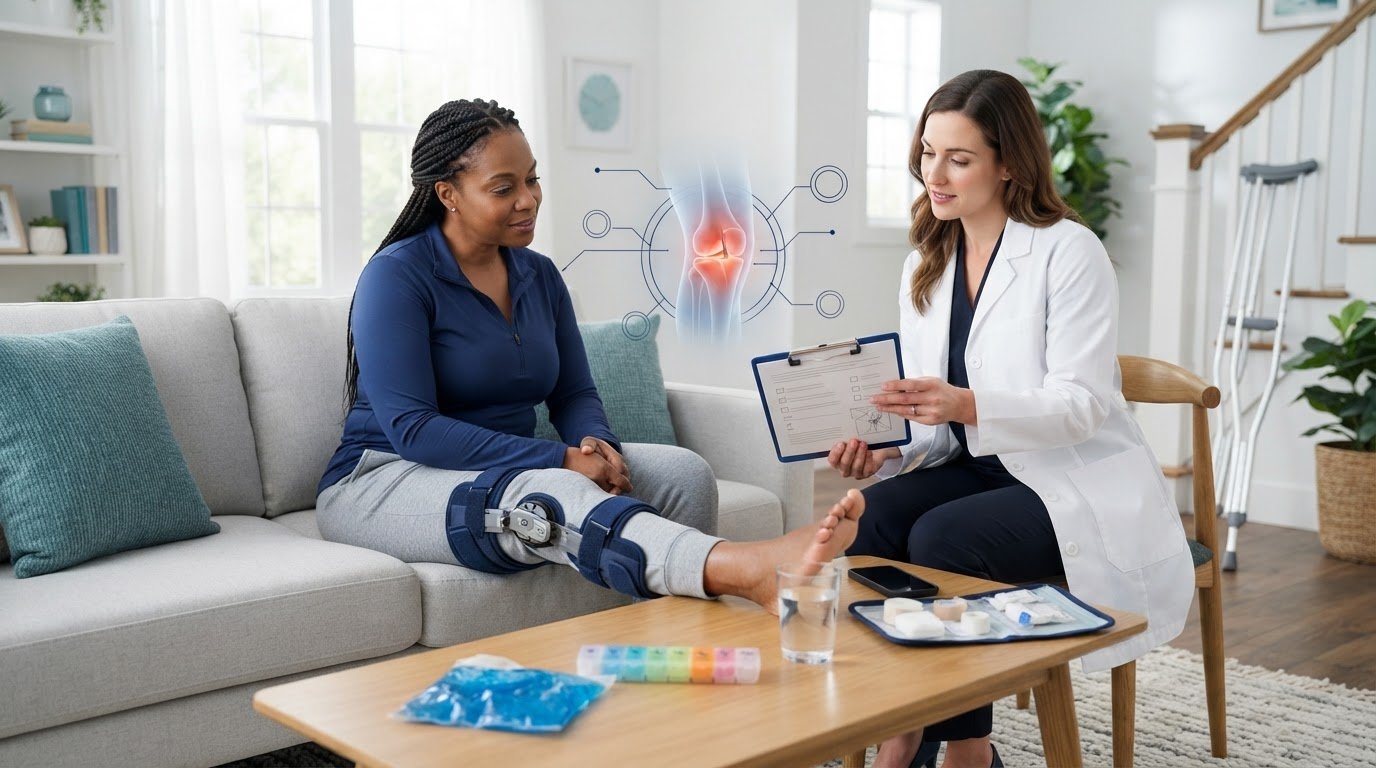
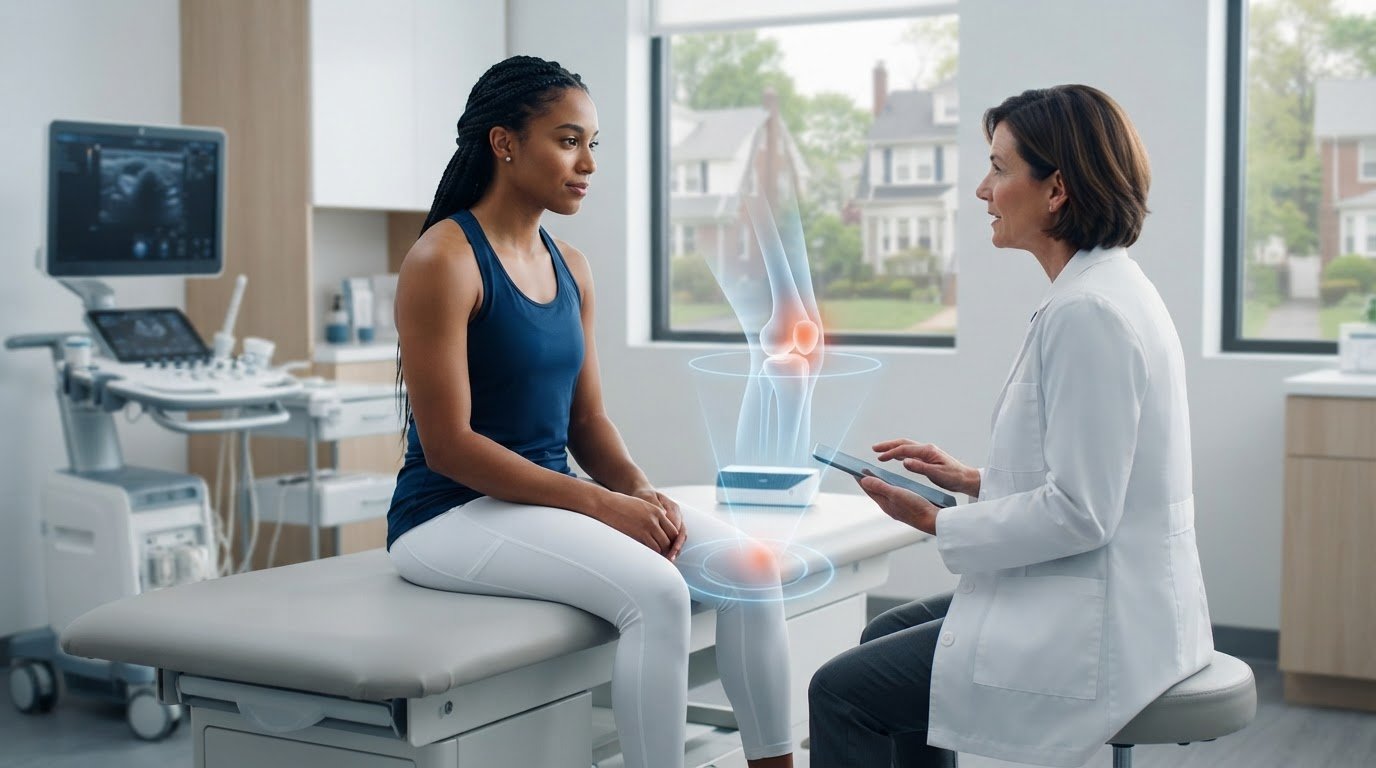
Could pain that eases after a match still point to an injury that needs professional attention? For players and families, pain or joint instability can make it difficult to know what to do next. Finding a soccer injury specialist Bloomfield NJ players can reach starts with looking for orthopedic expertise that considers the demands of soccer, not just the immediate symptoms.
A general injury evaluation may not address soccer’s cutting, sprinting, and sudden changes of direction. The Orthopaedic & Sports Medicine Institute, located in Nutley and serving Bloomfield, provides orthopedic care for knee, shoulder, and tendon injuries. A board-certified surgeon can assess the concern and develop an individualized treatment plan. An evaluation does not mean surgery is automatically the next step.
This guide explains what to look for in soccer injury care, which symptoms may warrant an orthopedic evaluation, and what to expect during an assessment. It also covers how to prepare for a visit and discuss next steps in the context of your activity goals.
Key Takeaways
- A twist, collision, or sprint alone can’t identify a soccer injury. Learn when an orthopedic evaluation may help clarify next steps.
- A careful assessment considers injury history, symptoms, examination findings, and goals before deciding whether imaging may be useful.
- When comparing soccer injury care near Bloomfield, consider orthopedic expertise, clear communication, treatment approach, follow-up, and convenience. Online ratings are only one source of context.
- Prepare for an appointment by noting when the injury occurred, your symptoms, which activities are limited, and what care you’ve already received.
- Learn what to look for in a soccer injury specialist Bloomfield NJ players can access, and how orthopedic care in Nutley serves Bloomfield patients.
Soccer Injury Specialist Near Bloomfield, NJ: When Orthopedic Care May Help
A sudden twist while changing direction, a collision during a challenge, or sharp discomfort during a sprint can interrupt training or competition. The symptom that follows doesn’t identify the injury on its own. Pain may begin immediately or build over time, while swelling, stiffness, or a feeling that a joint might give way can have different causes.
A soccer injury specialist evaluates musculoskeletal concerns in the context of the sport and helps guide appropriate next steps. The Orthopaedic & Sports Medicine Institute in Nutley serves Bloomfield-area patients with orthopedic care for knee, shoulder, and tendon concerns.
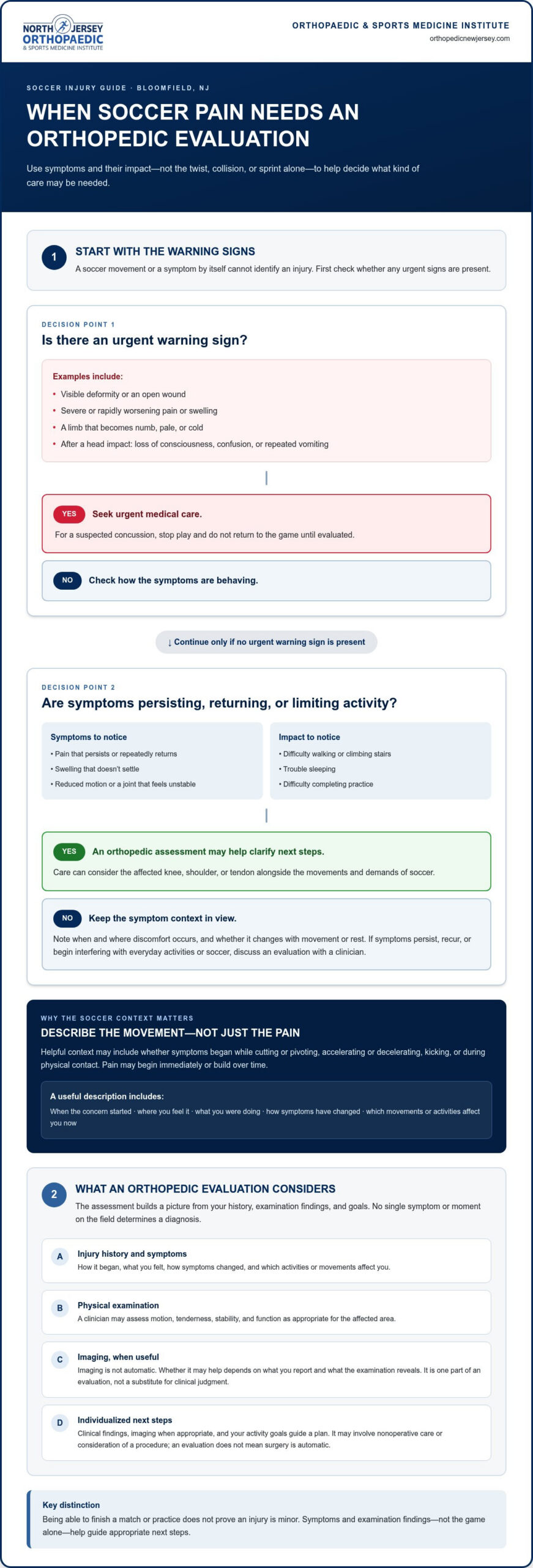
Which soccer injury symptoms deserve an orthopedic assessment?
Consider a clinical assessment when pain persists or repeatedly returns, swelling doesn’t settle, motion is reduced, or a joint feels unstable. Symptoms that affect everyday activities, such as walking, climbing stairs, sleeping, or completing practice, are also worth discussing with a clinician. Where and when a symptom occurs can help guide an evaluation, but can’t confirm a diagnosis by itself.
Some signs call for more urgent attention. Seek urgent medical care for a visible deformity, an open wound, severe or rapidly worsening pain or swelling, or a limb that becomes numb, pale, or cold. A head impact followed by loss of consciousness, confusion, or repeated vomiting also warrants urgent assessment. Stop play after a suspected concussion and don’t return to the game until evaluated.
Why soccer’s movements matter when describing an injury
Soccer involves cutting, pivoting, acceleration, deceleration, kicking, and physical contact. Explaining what you were doing when symptoms began gives the clinician useful context, whether the concern involves a knee, shoulder, or tendon. General information about sports injuries, including common causes and prevention considerations, is available in this Sports Injury Overview.
Think through the sequence: Were you planting a foot to change direction, reaching during a collision, or increasing your sprint speed? Note when discomfort started, where you feel it, and whether it changes with movement or rest. These details support a clearer conversation without requiring you to diagnose the injury yourself. A search for a soccer injury specialist Bloomfield NJ should lead to care that considers both your symptoms and the movements soccer demands.
Don’t treat the ability to finish a match or practice as proof that an injury is minor. If pain, swelling, instability, or limited motion continues to interfere with daily activities or soccer, an orthopedic evaluation can help clarify the findings and possible next steps. The aim is an individualized plan, not an assumption that every injury needs surgery.
How a Specialist Evaluates Soccer-Related Knee, Shoulder, and Tendon Injuries
A focused orthopedic evaluation uses the details of a soccer injury to build a clearer picture of what may be happening. It typically begins with your injury history and current symptoms, continues with a physical examination, and then turns to appropriate next steps. No single symptom or moment on the field determines a diagnosis.
What injury history and physical examination can reveal
Be ready to describe how the concern began, such as whether symptoms appeared during a pivot, after contact, or gradually during training. Mention what you felt at the time, how symptoms have changed, and which movements or activities affect you now. Whether discomfort is improving, recurring, or limiting normal activity also helps provide context.
During the examination, a clinician may assess motion, tenderness, stability, and function as appropriate for the affected area. A knee, shoulder, or tendon concern calls for an assessment tailored to the symptoms and relevant anatomy. Don’t try to reproduce a painful movement or perform stability tests on yourself. Examination findings need to be interpreted by a qualified clinician alongside your history.
When imaging may contribute to the evaluation
Imaging isn’t automatically the first step for every soccer injury. Whether it may help depends on what you report and what the examination reveals. If further detail could clarify the concern or inform treatment, the clinician can discuss whether imaging is useful and what question it may answer. An image is one part of an evaluation, not a substitute for clinical judgment.
If an ACL injury is a concern, the discussion can address the findings, your activity goals, and appropriate treatment options. For some patients, that may include a focused conversation about bridge-enhanced ACL repair with the BEAR® Implant. Candidacy and the treatment approach depend on individual clinical factors. An ACL concern doesn’t mean one procedure is right for everyone.
Clinical findings, imaging when appropriate, and a patient’s goals guide an individualized treatment plan. Depending on the evaluation, the plan may involve nonoperative care or consideration of a procedure. Minimally invasive orthopedic techniques may also be relevant when surgery is appropriate. A soccer injury specialist Bloomfield NJ patients can access should explain how the findings relate to daily activities and soccer demands, and what the proposed next steps are intended to address.
For Bloomfield-area patients, the Orthopaedic & Sports Medicine Institute in Nutley provides orthopedic evaluation for knee, shoulder, and tendon concerns. If you’re seeking orthopedic sports injury care, bring your symptom timeline and activity goals to make the discussion specific to your situation.
Choosing Soccer Injury Care Near Bloomfield: Compare Expertise and Treatment Approach
Proximity and online ratings can help you find nearby care, but they don’t show whether an evaluation addresses soccer’s demands or your specific concern. Compare orthopedic expertise, how clearly findings are explained, the treatment options discussed, and whether next steps reflect your goals.
The Orthopaedic & Sports Medicine Institute is located in Nutley and serves Bloomfield-area patients. Its board-certified surgeon evaluates knee, shoulder, and tendon concerns, develops individualized treatment plans, and uses minimally invasive techniques when clinically appropriate.
What to look for beyond proximity and patient reviews
Credentials help establish a clinician’s orthopedic background, while an injury-specific evaluation connects that expertise to your symptoms and activities. Clear communication matters too: you should be able to understand what the examination findings mean and how they inform the discussion. Reviews may offer perspective on other people’s experiences, but can’t establish whether a particular treatment suits your injury.
| Comparison area | What to consider |
|---|---|
| Orthopedic experience | Look for relevant expertise in musculoskeletal concerns such as knee, shoulder, and tendon injuries. |
| Communication | Choose care that explains examination findings and answers questions in understandable terms. |
| Treatment options | Consider whether recommendations are based on the evaluation, rather than assuming one approach fits every injury. |
| Follow-up and goals | Look for clear next steps that account for daily activities and the player’s soccer demands. |
| Convenience and reviews | Use location and patient feedback as context, not substitutes for clinical expertise. |
Use these considerations to compare care based on clinical fit, not just convenience. A search for a soccer injury specialist Bloomfield NJ can be a starting point, but a directory listing or review score can’t show how a clinician will evaluate your specific concern or explain treatment options.
How treatment discussions should address options and goals
An orthopedic consultation doesn’t commit you to surgery. Recommendations depend on the injury, examination findings, and your individual needs. Some concerns may be managed without an operation. If a procedure is considered, the clinician can explain its purpose, potential benefits, and relevant alternatives. Minimally invasive techniques may be considered when appropriate, but aren’t a guaranteed option or outcome for every patient.
For an ACL concern, treatment conversations should reflect the individual evaluation. Bridge-enhanced ACL repair using the BEAR® Implant is an option to discuss when clinically appropriate. The BEAR Implant ACL repair guide provides additional background on this approach.
Choosing care is about understanding the findings and having a reasoned plan, not selecting a procedure in advance. Bloomfield-area patients can explore orthopedic sports injury care through the practice in Nutley, where an individualized evaluation can clarify appropriate treatment considerations and next steps.
Preparing for a Soccer Injury Appointment: Information That Helps
A little preparation can make an orthopedic appointment more focused. You don’t need to arrive with a diagnosis or know which tests you need. Describe what changed, what you’re experiencing, and how the concern affects soccer and everyday activities. The clinician will determine the appropriate examination and discuss next steps for your situation.
What to record before the visit
Before the appointment, jot down a brief timeline. Note when symptoms began, what you were doing, and whether they have improved, worsened, or changed. If the issue came on gradually, include when you first noticed it and whether your training volume or activity had changed around that time.
- Symptoms: Record where discomfort is located and whether you’ve noticed swelling, instability, or reduced motion.
- Activity limits: Note effects on walking, stairs, sleep, practice, or other regular activities.
- Prior care: Include relevant evaluations or treatment, and bring prior imaging or records when available and applicable.
Your notes don’t need to be elaborate. Specific examples, such as difficulty bending the knee fully or discomfort during a particular movement, can help you explain the concern. Avoid testing the joint yourself or reproducing a movement that causes significant pain.
How to explain soccer demands and recovery goals
Describe the player’s position and its physical demands. A goalkeeper, for example, may need to explain diving and reaching, while a field player may describe repeated sprinting, cutting, or pivoting. Share how often you practice, your level of competition, and which movements bring on symptoms. This helps put the concern in the context of your sport.
Talk about what you hope to regain, such as moving comfortably through daily activities, returning to practice, or competing again. You can ask how progress and readiness will be assessed for your circumstances. A fixed return date shouldn’t replace an individualized discussion of findings, function, and goals.
Use the appointment to ask what the examination findings indicate, whether additional evaluation is appropriate, and what will guide the treatment plan. A soccer injury specialist Bloomfield NJ patients see should consider both clinical findings and the athlete’s goals when discussing care.
Routine preparation is for concerns appropriate for a scheduled appointment. If symptoms are severe, rapidly worsening, or accompanied by a possible head injury, don’t wait for a routine visit. Seek urgent medical attention. For non-emergency concerns, bring your notes and records and let the clinician guide the examination and next steps.
For Bloomfield-area patients, the Orthopaedic & Sports Medicine Institute in Nutley provides orthopedic care for sports-related concerns. If an injury is affecting your activity, request an orthopedic evaluation to discuss your symptoms and goals.
Orthopedic Soccer Injury Care for Bloomfield Patients: Local Next Steps
For Bloomfield-area players, the next step after an injury is understanding what may be causing symptoms and what care is appropriate. The Orthopaedic & Sports Medicine Institute is located in Nutley and serves patients from Bloomfield and nearby communities, including Clifton, Belleville, Lyndhurst, North Arlington, Kearny, and Verona. Its orthopedic and sports injury care focuses on knee, shoulder, and tendon concerns that can affect soccer players.
What Bloomfield-area patients can expect from specialized orthopedic care
A board-certified surgeon evaluates musculoskeletal concerns in light of each patient’s symptoms, examination findings, and activity needs. For a soccer player, those needs may include running, changing direction, kicking, or reaching during play. The evaluation connects the reported concern with relevant orthopedic findings rather than relying on the sport or one symptom to determine treatment.
The care pathway includes an orthopedic evaluation, a discussion of the findings, and individualized treatment planning. Depending on the concern, the discussion may address appropriate next steps and whether further assessment or treatment should be considered. Recommendations are based on the clinician’s assessment. An evaluation doesn’t automatically mean surgery is needed.
Take the next step toward an individualized evaluation
Persistent discomfort or symptoms that interfere with walking, daily activities, or soccer can be reasons to seek clinical evaluation. A visit gives you the opportunity to describe how the concern affects you and discuss what the assessment suggests. Your treatment plan will depend on the injury and your clinical findings, so a diagnosis, specific treatment, or return-to-play timeline can’t be assumed in advance.
Before an evaluation, it may help to organize a few details:
- When symptoms began and what you were doing at the time.
- Which activities or movements currently feel difficult.
- Your soccer position, playing demands, and recovery goals.
This information can make the conversation more specific to your situation. The clinician can explain the findings, answer questions, and discuss an appropriate plan without presuming that every injury needs the same approach.
If you’re looking for a soccer injury specialist Bloomfield NJ players can access nearby, the Nutley practice serves Bloomfield and surrounding communities. Request an evaluation to discuss persistent or function-limiting symptoms and orthopedic care options. Request an orthopedic appointment.
Move Forward With a Clearer Care Plan
Uncertainty can make it difficult to decide whether to keep training, modify activity, or seek an evaluation. You don’t have to identify the injury on your own. A clinical assessment can help clarify what your symptoms may mean and which next steps fit your needs, without assuming that surgery or a particular recovery timeline is right for everyone.
If you’re looking for a soccer injury specialist Bloomfield NJ players can turn to for orthopedic guidance, start with a conversation about the concern affecting your activity. Describe what has changed, bring your questions, and share what you hope to regain. The Orthopaedic & Sports Medicine Institute’s board-certified surgeon provides care in Nutley for Bloomfield-area patients with knee, shoulder, and tendon concerns.
Request an orthopedic appointment to discuss your symptoms and goals with the practice. An individualized evaluation can help clarify appropriate next steps.
Frequently Asked Questions
Can I keep playing soccer if my injury feels better after warming up?
Not necessarily. Pain that fades during warm-up doesn’t confirm that the affected area has recovered, and symptoms may return during a match or afterward. If discomfort eases while jogging but returns during a hard change of direction, stop playing rather than treating the improvement as proof you’re ready. Seek clinical guidance if symptoms persist, recur, limit movement, or affect normal activities.
Is a soccer injury specialist the same as an orthopedic surgeon?
Not always. Sports medicine describes care focused on activity-related injuries, while orthopedic surgeons evaluate and treat conditions involving bones, joints, muscles, and tendons, with surgical and nonsurgical options within their practice. Training and scope vary by clinician, so appropriate expertise depends on the injury. A soccer injury specialist Bloomfield NJ patients consider may have an orthopedic background; an evaluation helps clarify relevant care and next steps.
Can a soccer injury be significant even without swelling?
Yes. An injury can be present without visible swelling, so its absence shouldn’t be treated as reassurance on its own. Pay attention to other changes, such as weakness, reduced movement, pain with a particular activity, or a joint that feels unreliable. Difficulty planting or changing direction may matter even if the area looks normal. A clinician considers the full history and examination, not one sign in isolation.
Does every soccer injury need an MRI?
No. An MRI isn’t automatically needed for every soccer injury. Whether imaging is useful depends on your symptoms, examination findings, and the clinical question the clinician is trying to answer. Some evaluations can proceed without an MRI, while other findings may make imaging helpful for planning care. If a test is recommended, ask what information it may provide and how the result could affect treatment decisions.
What should I do if a soccer injury causes severe pain or an obvious deformity?
Seek urgent medical assessment for severe pain, a visible deformity, inability to bear weight, or other alarming symptoms. Don’t try to force a joint or limb back into position, and don’t continue playing. For a medical emergency, contact local emergency services or go to an emergency department. A routine orthopedic appointment is not a substitute for urgent evaluation when symptoms suggest immediate medical attention may be needed.
Can young soccer players have injuries that differ from adult injuries?
Yes. Because children and adolescents are still growing, an injury can affect developing bone as well as a joint, muscle, or tendon. A young player with pain after a collision, or persistent discomfort that limits running or ordinary movement, may need an assessment suited to their age and symptoms. Don’t assume an injury is minor because the player can still walk. A qualified clinician can determine appropriate next steps.
How can I lower the chance of another soccer injury after treatment?
Follow the clinician’s guidance for progressing back to soccer rather than relying on pain relief alone. Ask which activities are appropriate at each stage and what changes should prompt you to pause and seek advice. For example, discuss how to build toward more demanding drills before returning to full competition. Progress and readiness depend on the specific injury and the player’s function, not a universal timetable.