


Could the right next step after a sports injury be an evaluation, rather than a decision about surgery? If you’re searching for a sports injury doctor North Arlington NJ, pain, swelling, or limited movement may already be affecting your game, work, or daily routine. It’s understandable to wonder whether the problem involves a joint, tendon, or ligament, and whether treatment will mean surgery or a long recovery.
An orthopedic assessment can help clarify what may be causing your symptoms and guide a plan around the injury and your goals. The Orthopaedic & Sports Medicine Institute, located in Nutley, provides specialized care for people in North Arlington and nearby communities, including Bloomfield, Clifton, Belleville, Lyndhurst, Kearny, and Verona. A board-certified surgeon treats knee, shoulder, and tendon injuries, using minimally invasive techniques where appropriate. An evaluation doesn’t automatically mean surgery; care recommendations depend on your needs.
In this article, you’ll learn which symptoms deserve professional attention, what to expect from an orthopedic sports injury evaluation, and how individualized treatment planning can help you take a clear next step toward recovery.
Key Takeaways
- Pain, swelling, or restricted movement can warrant an evaluation, but symptoms alone can’t identify the injured structure or determine whether imaging is needed.
- A sports injury doctor North Arlington NJ can assess how and when the injury occurred, your symptoms, injury history, and activity goals to guide next steps.
- Non-surgical care and surgical consultation serve different purposes; an injury doesn’t automatically mean an operation.
- Prepare for your appointment by noting when symptoms began, what movements affect them, and which activities have become difficult.
- The Orthopaedic & Sports Medicine Institute in Nutley serves North Arlington patients with orthopedic care for knee, shoulder, and tendon injuries.
When should you see a sports injury doctor near North Arlington, NJ?
Pain, swelling, or limited movement can turn a routine practice, work shift, or trip up the stairs into a challenge. If symptoms persist, worsen, or interfere with how you move, an assessment can help clarify what to do next. A sports injury doctor North Arlington NJ can evaluate the problem, but symptoms alone can’t identify the injured structure or determine whether imaging is appropriate.
General soreness often eases with rest; pain or movement changes that persist, recur, or limit daily activities deserve professional evaluation. Consider arranging an orthopedic assessment if you notice ongoing pain, recurring swelling, reduced range of motion, a feeling that a joint may give way, or symptoms that return when you resume activity. The right next step depends on your individual symptoms and circumstances.
Which sports injury symptoms deserve an orthopedic evaluation?
Pay attention to changes in how the affected area feels and functions. Swelling, difficulty bearing weight, joint instability, or restricted movement can follow an injury, but none of these symptoms alone establishes the cause. If they persist, worsen, or repeatedly return during sports or everyday tasks, an individualized assessment can help determine what further evaluation may be appropriate.
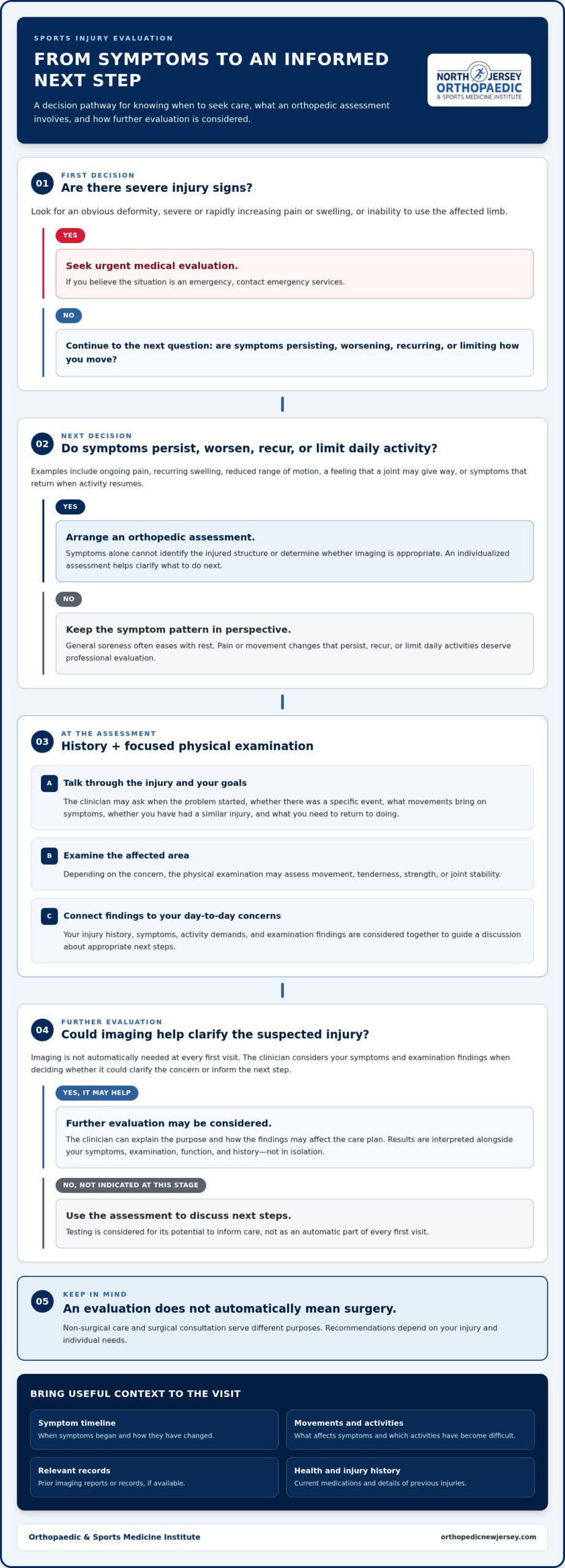
Seek urgent medical evaluation for severe injury signs, such as an obvious deformity, severe or rapidly increasing pain or swelling, or inability to use the affected limb. If you believe the situation is an emergency, contact emergency services.
Can an injury happen without a single obvious accident?
Yes. Some injuries begin with a sudden event, such as a twist or impact; others develop gradually as a body part is repeatedly loaded during training or daily activity. Knee discomfort may emerge during repeated running or jumping, shoulder symptoms may build with repeated overhead motion, and tendon pain may appear gradually with activity. These examples aren’t diagnoses: similar symptoms can have different causes.
Sports medicine covers the prevention, assessment, and care of activity-related health concerns. An orthopedic clinician considers your symptoms alongside the activity involved and your injury history rather than relying on one detail alone. For instance, describing when knee or shoulder symptoms began, which movements aggravate them, and whether they ease with rest can give the evaluation useful context.
If you’re looking for a sports injury doctor near North Arlington, the Orthopaedic & Sports Medicine Institute in Nutley serves North Arlington and nearby communities, including Bloomfield, Clifton, Belleville, Lyndhurst, Kearny, and Verona. Its board-certified surgeon treats knee, shoulder, and tendon injuries, with care planning tailored to the injury. An evaluation can help clarify the next step without assuming that surgery is necessary.
How does a sports injury doctor evaluate an injury?
An orthopedic sports injury assessment is a step-by-step process, not an automatic move toward imaging or surgery. A sports injury doctor North Arlington NJ will consider what happened, how your symptoms have changed, and what you need to return to doing. The findings help guide a discussion about appropriate next steps.
What should you expect during the first sports injury appointment?
The visit typically begins with a focused conversation. The clinician may ask when the problem started, whether there was a specific event, what movements bring on symptoms, and whether you’ve had a similar injury before. Your activity goals matter too: the demands of a sport, job, or daily routine can help put the symptoms in context.
Next comes a physical examination tailored to the affected area. Depending on the concern, the clinician may assess movement, tenderness, strength, or joint stability. Your history and the examination work together to guide decisions. As a general introduction to injury types, MedlinePlus also provides information about common sports injuries.
A sports injury assessment combines your injury history and symptoms with findings from a focused physical examination.
When might imaging or further evaluation be considered?
Imaging isn’t automatically needed at every first visit. A clinician considers whether it could clarify a suspected injury or help inform the next step, based on your symptoms and examination. If further evaluation is appropriate, the clinician can explain its purpose and how the findings may affect the care plan.
Test results are interpreted alongside your symptoms and examination findings, rather than in isolation. A scan or report needs to be understood in the context of your function, history, and the problem being assessed. The goal is a more informed plan, not testing for its own sake.
To make the conversation more productive, consider bringing:
- A brief timeline of when symptoms began and how they’ve changed.
- Notes about which movements or activities affect them.
- Relevant prior imaging reports or records, if available.
- A current medication list and details of previous injuries.
These details can help the clinician understand the full picture and connect examination findings with your day-to-day concerns. For patients in North Arlington, The Orthopaedic & Sports Medicine Institute in Nutley provides specialized orthopedic care for knee, shoulder, and tendon injuries. The practice serves patients in nearby Bloomfield, Clifton, Belleville, Lyndhurst, Kearny, and Verona as well. Learn more about orthopedic sports injury care and how an individualized evaluation can guide next steps.
Does every sports injury need surgery? Understanding treatment options
No. A sports injury doesn’t automatically mean surgery. The appropriate path depends on the type of injury, examination findings, symptoms, and what you want to return to doing. An evaluation with a sports injury doctor North Arlington NJ can help clarify the concern and explain whether monitored non-surgical care, a surgical discussion, or another step fits the situation.
These pathways have different purposes. Non-surgical care focuses on managing the injury without an operation, with guidance and follow-up tailored to the person. A surgical consultation explores whether a procedure could be appropriate based on the injury and the patient’s goals. Having that conversation doesn’t commit you to surgery. The University of Rochester Medical Center describes how clinicians evaluate and treat sports injuries using options that can range from conservative care to surgery.
When may non-surgical care be considered?
Depending on the diagnosis, a clinician may discuss modifying activities, monitoring symptoms, or other non-surgical approaches. Recommendations and follow-up should reflect the specific injury, your health, and the demands of your usual activities. They aren’t one-size-fits-all instructions, so avoid assuming that a plan suitable for another athlete is right for you.
If symptoms persist, worsen, or interfere with function despite the agreed plan, arrange reassessment with a qualified clinician. A follow-up can help determine whether the understanding of the injury or the next steps need to change.
When might a surgical discussion be appropriate?
A surgical discussion generally follows evaluation of the injury, symptoms, and relevant findings. It gives you a chance to understand the potential role of a procedure, its purpose, and how it relates to your goals. For example, the considerations for a knee ligament injury differ from those for a shoulder or tendon problem. The treatment plan should reflect those differences rather than treating all sports injuries alike.
The Orthopaedic & Sports Medicine Institute’s board-certified surgeon treats knee, shoulder, and tendon injuries, using minimally invasive techniques where appropriate. If surgery is discussed, ask how the recommendation relates to your specific findings and what alternatives may be considered. The decision should be individualized, not based solely on the fact that an injury occurred.
For more detail on the approach, read the minimally invasive orthopedic surgery guide. Its central takeaway is useful: the treatment conversation begins with understanding the injury and your needs, not assuming that an operation is inevitable.
How to prepare for a sports injury appointment near North Arlington
A little preparation can help you explain what’s changed and make the appointment more focused. Before seeing a sports injury doctor North Arlington NJ, jot down when symptoms began, what seems to aggravate them, and how they affect sports, work, or everyday activities. You don’t need to know the medical name for the problem. Clear details about what you’re experiencing are useful.
What details should you bring to the appointment?
Use a short note on your phone or a paper checklist. Include:
- Symptom timing: When you first noticed the problem, whether it began suddenly or gradually, and how it has changed.
- Movements and activities: Which actions worsen or ease symptoms, and what you’ve had to stop or modify.
- Relevant history: Previous injuries to the area, treatments you’ve tried, and medications you take.
- Activity demands: The sports, work tasks, or daily movements you hope to manage.
- Existing records: Relevant prior medical records, imaging reports, or images, if available.
Bringing previous imaging doesn’t mean you’ll need additional tests. It gives the clinician context and may help inform the discussion alongside your symptoms and examination.
What questions can help you understand the care plan?
Write down questions in advance so you can leave with a clearer understanding of the assessment and next steps. Consider asking:
- What does the examination suggest, and what remains uncertain?
- How does the proposed option relate to the suspected injury and my activity goals?
- Are there different approaches to consider, and what is the purpose of each?
- Which activities should I modify, and what symptoms or changes should prompt follow-up?
Ask for guidance specific to your situation rather than relying on another athlete’s experience. The right activity adjustments and follow-up depend on the findings and your individual needs. For broader context on sports medicine clinics and care considerations, read this sports medicine clinic selection guide.
The Orthopaedic & Sports Medicine Institute is located in Nutley and serves patients from North Arlington, Bloomfield, Clifton, Belleville, Lyndhurst, Kearny, and Verona. Bring your notes and relevant records to help make the evaluation more informative. Explore orthopedic sports injury care for a next step.
Sports injury care for North Arlington patients in Nutley
North Arlington residents looking for specialized orthopedic care have a nearby option in Nutley. The Orthopaedic & Sports Medicine Institute is based in Nutley, New Jersey, and serves patients from North Arlington and nearby communities, including Bloomfield, Clifton, Belleville, Lyndhurst, Kearny, and Verona. Its board-certified surgeon provides care for sports-related knee, shoulder, and tendon injuries, with evaluation and treatment planning tailored to the individual concern.
Location is one part of choosing a care pathway; clinical focus matters too. A knee injury, shoulder problem, and tendon concern can affect movement in different ways, so an assessment helps shape the discussion around the specific injury and your needs. If you’re searching for a sports injury doctor North Arlington NJ, this Nutley practice provides specialized orthopedic care without implying that every injury requires surgery.
What orthopedic sports injury care does the Nutley practice provide?
Care includes orthopedic evaluation and treatment for knee, shoulder, and tendon injuries. The surgeon considers the individual injury and treatment plan, and minimally invasive techniques may be used when appropriate. These techniques aren’t automatically suitable for every patient or condition; the clinical recommendation depends on the assessment and the needs of the case.
For readers looking for more information about one knee treatment approach, the BEAR Implant ACL repair guide explains this ACL-specific option. It can provide useful background for a discussion about an ACL injury, while an individual evaluation remains central to determining appropriate care.
How can North Arlington patients take the next step?
If an injury is affecting your movement, sport, work, or everyday activities, an orthopedic consultation can help clarify the concern and discuss possible next steps. Bring a concise description of your symptoms, relevant prior records or imaging reports if available, and the questions you want addressed. The Nutley practice serves North Arlington patients and people from nearby communities.
You don’t need to decide on a treatment before seeking an evaluation. The purpose of the visit is to understand the injury and discuss a plan based on your findings and goals. To take a clear next step, request an orthopedic consultation.
Take the Next Step Toward Clearer Answers
Persistent pain, swelling, instability, or restricted movement can make it difficult to know when to seek care. An orthopedic evaluation helps connect your symptoms, injury history, and activity goals with an appropriate care plan. An injury doesn’t automatically mean surgery; treatment decisions depend on your individual findings and needs.
For people seeking a sports injury doctor North Arlington NJ, The Orthopaedic & Sports Medicine Institute is located in Nutley and serves North Arlington and nearby communities, including Bloomfield, Clifton, Belleville, Lyndhurst, Kearny, and Verona. A board-certified surgeon provides orthopedic care for knee, shoulder, and tendon injuries, with minimally invasive techniques considered when appropriate.
You can prepare for an appointment by noting when symptoms began, what activities affect them, and bringing relevant records or imaging reports when available. These details can help make the conversation about evaluation and next steps more focused.
If an injury is interfering with your daily routine or the activities you value, request an orthopedic consultation. A clear assessment can help you move forward with greater confidence, one informed step at a time.
Frequently Asked Questions
When should I see a sports injury doctor for pain or swelling?
Arrange an evaluation if pain or swelling persists, worsens, returns with activity, or limits movement or your ability to bear weight. Instability or difficulty using the affected area also deserves attention. Symptoms alone can’t identify the injured structure, so a clinician can assess the full picture and discuss next steps. For severe injury signs or a suspected emergency, seek urgent medical help or contact emergency services.
Can a sports injury heal without surgery?
Yes, some sports injuries may be managed without surgery, but the right approach depends on the injury, examination findings, symptoms, and your goals. A clinician may discuss monitored non-surgical care or a surgical consultation based on your circumstances. A consultation doesn’t mean an operation is inevitable. If symptoms persist or worsen during a care plan, arrange reassessment so a qualified clinician can review the situation.
What happens at the first appointment with a sports injury doctor?
The first appointment generally includes a conversation about how and when the injury began, your symptoms, prior injuries, and activities that are difficult. The clinician then examines the affected area, which may include assessing movement, tenderness, strength, or joint stability as appropriate. After considering your history and examination findings, the clinician discusses possible next steps. Imaging may be considered, but it isn’t automatically required for every patient.
Does every knee or shoulder sports injury need an MRI?
No. An MRI isn’t automatically necessary for every knee or shoulder injury. The clinician decides whether imaging could help clarify a suspected injury, considering your symptoms, history, and examination findings. If you already have imaging reports or images, bring them to the appointment so they can be considered alongside your current concerns. The appropriate evaluation is individualized, and a test result is interpreted in context rather than on its own.
How do I find a sports injury doctor near North Arlington, NJ?
Look for specialized orthopedic care that fits your injury concern and location. The Orthopaedic & Sports Medicine Institute is based in Nutley and serves patients from North Arlington and nearby Bloomfield, Clifton, Belleville, Lyndhurst, Kearny, and Verona. Its board-certified surgeon treats knee, shoulder, and tendon injuries. If you’re searching for a sports injury doctor North Arlington NJ, this nearby Nutley practice provides a local option.
Can I see an orthopedic doctor if my injury happened weeks ago?
Yes, an injury that began weeks ago can still be evaluated, especially if pain, swelling, limited movement, or difficulty with activities continues or returns. Tell the clinician when it started and how symptoms have changed since then. Include activities that aggravate the problem and any care you’ve already tried. The timing and course of symptoms help the clinician understand your concern and discuss an appropriate next step.
What should I bring to a sports injury appointment?
Bring a brief symptom timeline, notes about movements that worsen or ease discomfort, and a description of activities affected. It can also help to list previous injuries, treatments, and medications. Bring relevant medical records or prior imaging reports and images if available; their presence doesn’t mean new imaging will be needed. Prepare questions about what the examination suggests, care options, activity changes, and which symptoms should prompt follow-up.


