What if the path to total mobility didn’t require the extensive trauma of traditional open surgery? For many active individuals, the primary obstacle to seeking minimally invasive orthopedic surgery NJ isn’t the diagnosis itself, but the fear of prolonged downtime and visible scarring. It’s frustrating to feel sidelined by joint pain while trying to decipher the complex differences between robotic and arthroscopic interventions.
We understand that you want to return to your peak performance without unnecessary disruption. This guide explores a biology-first approach to orthopedic care, focusing on how specialized techniques preserve your native tissue and joint function. You’ll learn exactly how modern, less disruptive procedures can offer a faster return to work and sports with significantly reduced postoperative pain.
We’ll examine the latest advancements in joint repair and the impact of 2026 CMS oversight models like the WISeR program on procedure authorization. By the end of this specialized buyer’s guide, you’ll have the professional clarity needed to select a board-certified specialist who utilizes the most advanced methodology for your recovery.
Key Takeaways
- Understand how modern arthroscopic and robotic-assisted techniques replace traditional open surgery to prioritize the preservation of your native joint anatomy.
- Discover specialized biological options like the BEAR® Implant for ACL repair and advanced rotator cuff techniques that minimize trauma to the deltoid muscle.
- Analyze the clinical advantages of minimally invasive orthopedic surgery NJ, specifically regarding lower infection rates and significantly smaller postoperative scars.
- Identify the professional standards for selecting a surgeon, including the necessity of board certification and documented experience with cutting-edge orthopedic tools.
- Learn how specialized care in Nutley provides a structured pathway for a faster return to physical activity and professional responsibilities.
Understanding Minimally Invasive Orthopedic Surgery in NJ
A minimally invasive procedure in the orthopedic field represents a fundamental shift in how we approach musculoskeletal injuries. Unlike traditional open surgery, which requires large incisions to provide the surgeon with direct visibility, minimally invasive orthopedic surgery NJ utilizes specialized instruments and high-definition cameras. This methodology allows for precise repairs through incisions often no larger than a buttonhole. The primary objective is to address the underlying pathology while preserving the integrity of the surrounding soft tissues, muscles, and ligaments. By utilizing these advanced entry points, we reduce the physiological stress on the body and maintain the natural structural support of the joint.
Residents across North Jersey, particularly in communities like Nutley and Clifton, are increasingly prioritizing these techniques. The demand for minimally invasive orthopedic surgery NJ is particularly high among athletes and professionals who cannot afford long periods of inactivity. They want clinical outcomes that prioritize long-term joint health and rapid functional recovery. By avoiding the extensive tissue disruption of traditional methods, patients experience less postoperative trauma and a lower risk of wound complications. This specialized focus on “biology-first” surgery ensures that the body’s natural healing environment remains as undisturbed as possible, facilitating a smoother transition back to daily life.
The Role of Arthroscopy in Modern Orthopedics
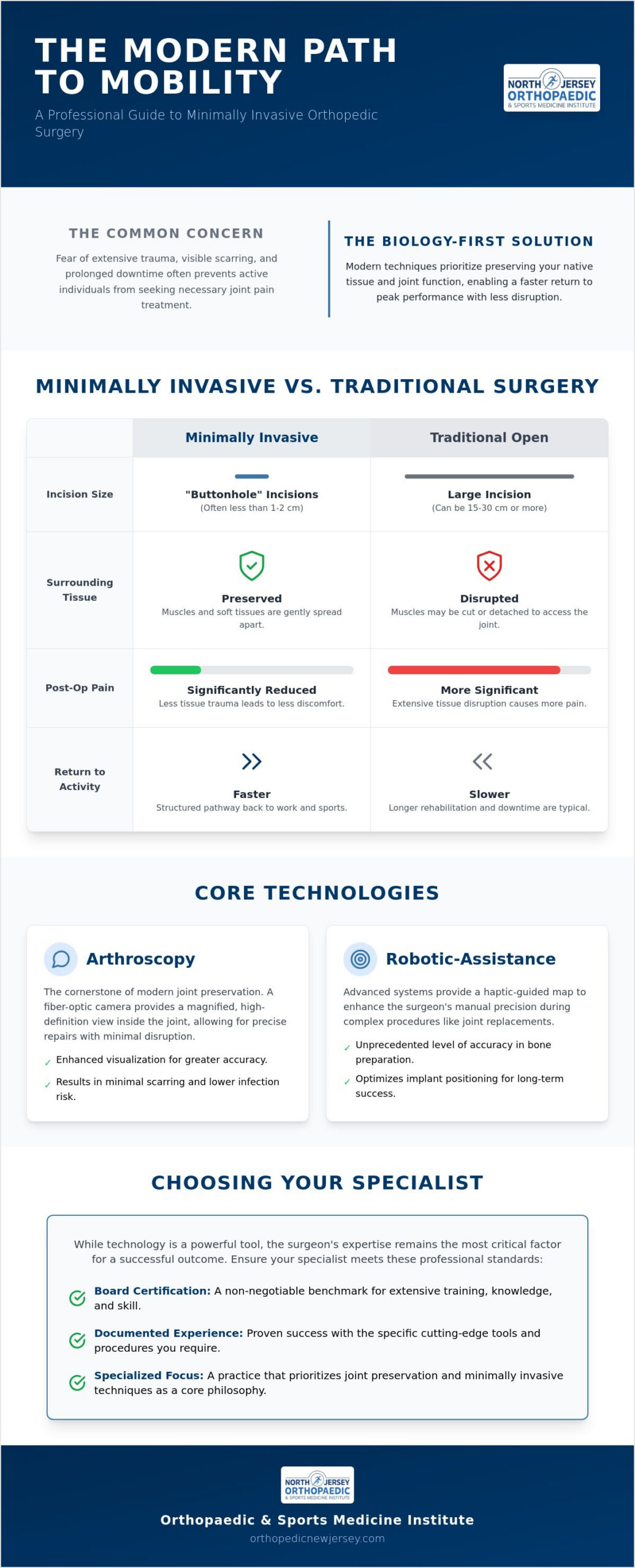
Arthroscopy is the cornerstone of modern joint preservation. By inserting a fiber-optic camera into the joint space, surgeons gain a magnified view of the internal structures with greater clarity than the naked eye provides. This enhanced visualization is essential for identifying and debriding frayed cartilage, performing precise ligament reconstructions, and removing obstructive bone spurs. The “keyhole” incision results in minimal scarring and reduced risk of infection compared to larger surgical openings. Additionally, the use of saline irrigation during the procedure helps clear away inflammatory debris and improves the surgeon’s line of sight, ensuring a thorough and accurate intervention.
Laparoscopic vs. Robotic-Assisted Techniques
It’s vital to distinguish between different technological approaches. While “laparoscopic” is a term common in general surgery, orthopedic specialists often employ robotic-assisted systems for complex joint alignments. Robotic assistance provides a haptic-guided map that enhances manual precision during bone preparation and implant positioning. This allows for a level of accuracy that is difficult to achieve through traditional sight alone. Technology is a powerful tool, but it’s only as effective as the professional wielding it. A board-certified surgeon’s expertise remains the most critical factor in achieving a successful outcome. They provide the diagnostic insight necessary to determine if a patient’s specific injury is best suited for these advanced, less disruptive interventions.
Specialized Procedures: Knee, Shoulder, and Biological Repairs
While many practices in the region focus heavily on spinal interventions, the specific needs of athletes and active adults in Kearny and Lyndhurst often center on joint preservation. Achieving peak performance after an injury requires a strategy that prioritizes native tissue. Minimally invasive orthopedic surgery NJ has evolved to address complex knee and shoulder pathologies with unprecedented precision. By utilizing arthroscopic techniques, we can repair structural damage without the extensive trauma associated with traditional open methods. This is particularly vital for rotator cuff repairs, where preserving the deltoid muscle’s attachment is essential for maintaining post-operative strength and range of motion.
For patients facing a labral tear shoulder treatment or chronic shoulder instability, the focus is on a rapid and safe return to play. Traditional methods often involved significant disruption to the joint capsule, leading to stiffness and prolonged rehabilitation. Modern minimally invasive surgery allows for the stabilization of the labrum through tiny portals. This approach protects the “envelope” of the joint, ensuring that the biological environment remains conducive to healing. If you’re currently managing persistent joint discomfort, you might consider a professional evaluation to discuss advanced repair options tailored to your activity level.
The BEAR® Implant: A New Standard for ACL Repair
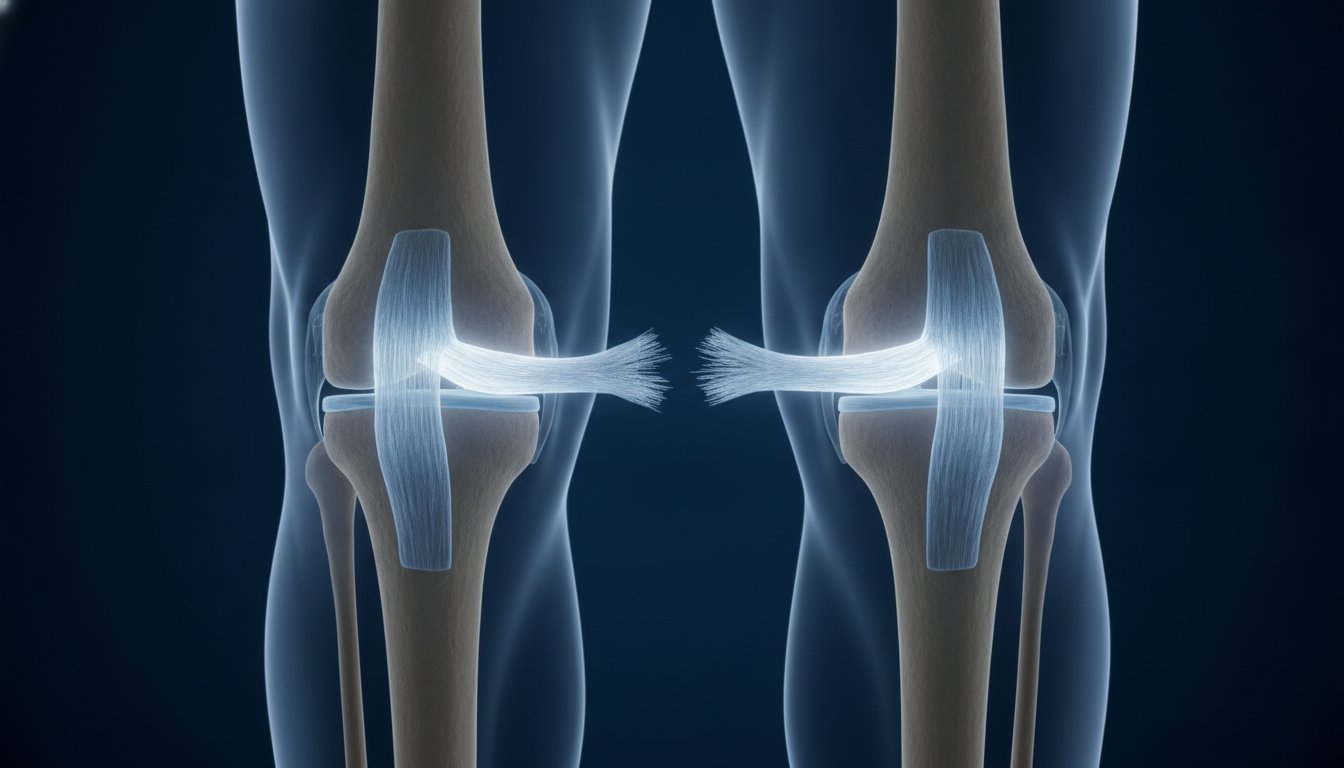
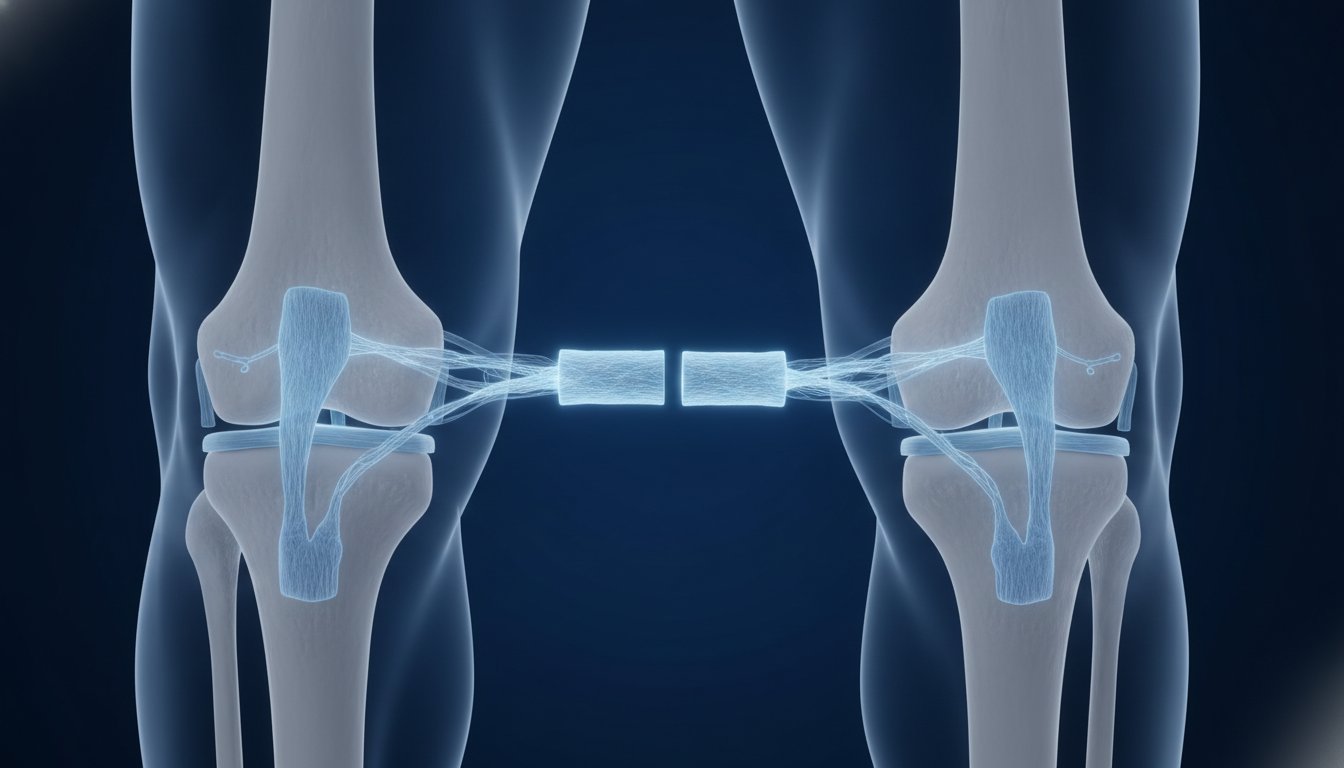
The landscape of ACL treatment is shifting from replacement to restoration. Historically, an ACL tear meant a full reconstruction using a graft harvested from the patellar or hamstring tendon. The Bridge-Enhanced ACL Repair (BEAR) process offers a different path. Instead of replacing the ligament, this technique uses a specialized biological implant to act as a bridge between the torn ends. The BEAR® Implant is the first FDA-cleared technology to enable native ACL healing. By facilitating the body’s natural repair mechanisms, this procedure avoids the morbidity associated with graft donor sites and helps maintain the original nerves and blood vessels within the knee.
Minimally Invasive Shoulder and Tendon Care
Shoulder arthritis and chronic tendon injuries often respond better to less traumatic surgical approaches. When the joint’s internal structures are addressed through minimally invasive orthopedic surgery NJ, the recovery timeline is typically compressed. We focus on debriding damaged tissue and smoothing bone surfaces with minimal impact on the surrounding musculature. This meticulous attention to detail prevents the formation of excessive scar tissue, which is the primary cause of postoperative stiffness. Whether we’re addressing a complex labral tear shoulder treatment or the early stages of arthritis, the goal is always to restore the fluid mechanics of the joint through the smallest possible intervention.
Minimally Invasive vs. Traditional Orthopedic Surgery
The physical footprint of traditional open surgery is often its most daunting aspect for patients. Conventional methods typically require an 8 to 10 inch incision, involving the detachment or splitting of major muscle groups to access the joint. In contrast, minimally invasive orthopedic surgery NJ utilizes portals as small as 1 to 2 centimeters. This reduction in incision size does more than just limit scarring; it fundamentally alters the body’s inflammatory response. Smaller incisions decrease the risk of surgical site infections because less internal tissue is exposed to the clinical environment for a shorter duration.
Physiological stress is also significantly lower with modern techniques. When we avoid extensive muscle cutting, blood loss is minimized, and the need for post-operative blood transfusions is nearly eliminated. This clinical efficiency is becoming even more critical in 2026 as CMS-1832-F implements efficiency adjustments that favor streamlined, outpatient-focused care. Patients often report lower pain levels, which directly translates to a reduced reliance on narcotic medications. By managing discomfort through targeted local anesthetics and non-opioid protocols, we facilitate a clearer, safer transition to early mobility.
Recovery Timelines and Return to Activity
The first 48 hours following a procedure highlight the starkest differences. While traditional surgery may require several days of inpatient monitoring, many minimally invasive procedures are performed in an ambulatory setting. This allows you to recover in the comfort of your home. Physical therapy milestones are reached sooner because the surrounding musculature remains intact and functional. For a deeper analysis of these differences, read our Minimally Invasive vs. Traditional Orthopedic Surgery guide.
Long-Term Outcomes and Joint Longevity
A common concern is whether a smaller procedure provides a weaker repair. Clinical data suggests that long-term outcomes for Minimally invasive total knee replacement and ligament repairs are comparable to open methods. The strength of the repair isn’t determined by the size of the incision, but by the precision of the fixation. By sparing the quadriceps or deltoid muscles, we ensure that the joint retains its natural dynamic stability. This muscle-sparing approach is vital for joint longevity and future functional strength.
Choosing an Orthopedic Surgeon in North Jersey
Selecting the right practitioner is the single most important decision in your recovery journey. While many providers claim to offer minimally invasive orthopedic surgery NJ, the distinction lies in specialized training and board certification. Certification by the American Board of Orthopaedic Surgery ensures the surgeon has met rigorous national standards for clinical knowledge and surgical skill. It’s not just about the title; it’s about a commitment to maintaining the highest level of professional excellence in a field that’s rapidly evolving with new technology.
You should also evaluate a surgeon’s technical proficiency with specific advanced technologies. For example, if you’re seeking an ACL restoration, ask how many procedures they’ve performed using the BEAR® Implant. This specific expertise is crucial because biological repairs require a different surgical mindset than traditional graft reconstructions. A surgeon who’s a bold innovator in these techniques will prioritize joint preservation over standard replacement whenever possible. During your initial consultation, ask direct questions to gauge their commitment to less disruptive methods:
- What percentage of your practice is dedicated to minimally invasive techniques?
- Can this specific injury be addressed through arthroscopy instead of an open incision?
- What are your specific protocols for postoperative pain management and physical therapy?
The Value of Specialized Expertise
Active patients often find that a sports medicine specialist provides a more nuanced approach than a generalist. A sub-specialized surgeon focuses on the unique biomechanics of specific joints, such as the shoulder or knee. This depth of knowledge is essential for achieving the functional outcomes required for high-level athletic performance. If you’re looking for an Orthopedic Surgeon near Bloomfield, NJ, prioritizing a specialist with a focus on joint preservation can significantly impact your long-term mobility. Specialized experts are better equipped to navigate the nuances of complex ligament and tendon repairs.
Local Care in the Nutley-Clifton Area
Geographic convenience is a practical necessity during the recovery phase. Navigating care within Essex and Passaic counties allows you to avoid the taxing commute to New York City for frequent follow-up appointments. Maintaining a local loop of care ensures that your surgeon, imaging facilities, and physical therapists can communicate seamlessly. This integrated approach is a hallmark of high-quality healthcare in the Nutley community. Board-certified expertise in Nutley provides patients with world-class surgical standards right in their own neighborhood. If you’re ready to discuss your recovery with a local expert, schedule a specialized consultation today to explore your options.
The Orthopaedic & Sports Medicine Institute Advantage
At The Orthopaedic & Sports Medicine Institute, our clinical philosophy is built upon the foundational principle of joint preservation. We recognize that for our patients in Nutley and the surrounding North Jersey area, surgery is a significant medical decision that requires both technical precision and empathetic guidance. Our practice specializes in minimally invasive orthopedic surgery NJ, providing a necessary bridge between traditional medical wisdom and the latest surgical innovations. Led by our board-certified specialist, we ensure that every patient receives a diagnostic evaluation that is both methodical and thorough, reflecting our commitment to professional excellence.
Our role as a dedicated community resource means we provide specialized care for a diverse patient population. From high school athletes in Nutley looking to return to the field to active seniors in Clifton and Bloomfield seeking to maintain their independence, our approach remains patient-centered. We don’t just treat isolated symptoms; we manage a comprehensive recovery journey. This process begins with high-resolution diagnostic imaging to create a precise map of the pathology, which then informs a personalized recovery plan tailored to your specific physiological needs and lifestyle goals.
The diagnostic process at our institute is designed to be exhaustive. This data-driven mindset ensures that when we perform minimally invasive orthopedic surgery NJ, the intervention is as targeted as possible. By utilizing advanced visualization and small-incision techniques, we minimize the disruption to your body’s natural structures. Following the procedure, we coordinate closely with rehabilitation specialists to ensure your recovery milestones are met with accuracy and safety. This integrated loop of care, where surgery and therapy work in tandem, is what defines our professional standard and drives our high success rates.
Leading with Innovation: The BEAR® Implant
As part of our mission to provide forward-thinking care, we are proud to be among the specialized practices offering BEAR® Implant ACL Repair in New Jersey. This procedure represents a paradigm shift in sports medicine, moving away from traditional graft-based reconstruction toward biological healing. By choosing this advanced method, our patients benefit from a results-driven approach that prioritizes the restoration of the native ligament. This facilitates a joint that feels more natural throughout the rehabilitation process and preserves the complex nerve endings essential for balance and coordination.
Your Recovery Starts Here
Taking the first step toward specialized orthopedic care is a straightforward process at our Nutley office. When you visit for your initial diagnostic evaluation, you’ll experience a professional consultation focused on transparency and education. We prioritize ensuring you understand every aspect of your treatment options before proceeding with any intervention. Don’t let chronic joint pain or a sudden sports injury dictate your long-term activity level. Schedule your consultation for minimally invasive surgery today.
Restoring Your Function Through Specialized Care
Choosing the right surgical path is a definitive step toward reclaiming your active lifestyle. We’ve explored how modern techniques prioritize the preservation of your native anatomy, from arthroscopic rotator cuff repairs to the innovative biological healing provided by the BEAR® Implant. These advancements mean that seeking minimally invasive orthopedic surgery NJ no longer requires compromising on the strength of the repair or the speed of your recovery. By focusing on muscle-sparing approaches and precise diagnostic planning, we ensure that your transition from injury back to peak performance is as seamless as possible.
Our commitment to the Nutley and Bloomfield communities is anchored by high-level board-certified expertise and a dedication to the most advanced surgical tools available. You don’t have to navigate the complexities of joint pain alone or settle for traditional methods that involve unnecessary downtime. Your journey to restored mobility begins with a specialized evaluation tailored to your unique physical goals. Book Your Minimally Invasive Consultation in Nutley Today and discover how a biology-first approach can transform your outcome. We look forward to guiding you through a successful and steady recovery.
Frequently Asked Questions
Is minimally invasive orthopedic surgery more expensive than traditional surgery?
While the specialized equipment involves specific costs, the total episode of care is often more economical due to the shift to outpatient settings. In New Jersey, outpatient surgery centers typically have lower facility fees than traditional hospitals. By avoiding overnight stays and reducing the need for extensive postoperative home care, many patients find the overall financial burden is lower compared to traditional inpatient methods.
How long is the recovery for minimally invasive ACL repair in NJ?
Functional recovery typically begins within days, though full athletic clearance follows a structured biological timeline. Most patients return to sedentary work within one to two weeks. However, because we prioritize native ligament healing with techniques like the BEAR® Implant, the full maturation of the tissue takes approximately nine months. This meticulous approach ensures the long-term stability required for high-impact sports in North Jersey.
Can all orthopedic conditions be treated with minimally invasive techniques?
No, certain complex fractures or advanced joint degenerations still require traditional open access for optimal results. While minimally invasive orthopedic surgery NJ is the preferred method for most ligament repairs and early-stage arthritis, a board-certified surgeon must evaluate each case individually. We use high-resolution imaging to determine if your specific anatomy and pathology are suitable for a less disruptive, portal-based approach.
What are the risks associated with minimally invasive orthopedic surgery?
Risks are generally lower than traditional surgery but include infection, nerve irritation, or blood clots. Because the incisions are smaller, the risk of significant wound complications is reduced. However, the technical complexity of working through small portals requires a surgeon with specialized expertise. We mitigate these risks through rigorous clinical protocols and precise, robotic-assisted or arthroscopic visualization during every phase of the procedure.
Will I have a scar after arthroscopic surgery?
You’ll have minimal scarring, typically consisting of two or three small marks less than a centimeter long. These “keyhole” incisions are designed to heal quickly and are often barely visible once the maturation process is complete. This is a primary benefit for patients concerned about the cosmetic and functional impact of the large, 10-inch scars often associated with traditional open joint procedures.
How do I know if I am a candidate for the BEAR® Implant?
Candidacy depends on the timing and location of your ACL tear. This biological repair is most effective when performed within 50 days of the injury, as the native ligament ends must still be viable for healing. A specialized consultation in our Nutley office, including a physical exam and MRI review, is necessary to confirm that your tear pattern is suitable for this specific restorative technology.
Do I need physical therapy after a minimally invasive procedure?
Yes, physical therapy is a mandatory component of the recovery process to restore joint mechanics. While the surgical trauma is reduced, your muscles still need to be re-educated to support the repaired structure. We coordinate with local therapists to ensure your rehabilitation protocol is aligned with the specific surgical technique used, whether it’s a rotator cuff repair or a biological ACL restoration.
Is minimally invasive surgery performed under general anesthesia?
It depends on the specific joint and the patient’s health profile, though many procedures use regional anesthesia with sedation. This “nerve block” approach numbs only the surgical site, allowing for better pain control in the immediate postoperative hours. Some patients may still require general anesthesia for comfort, but the shorter duration of minimally invasive orthopedic surgery NJ typically reduces the overall anesthetic load on the body.