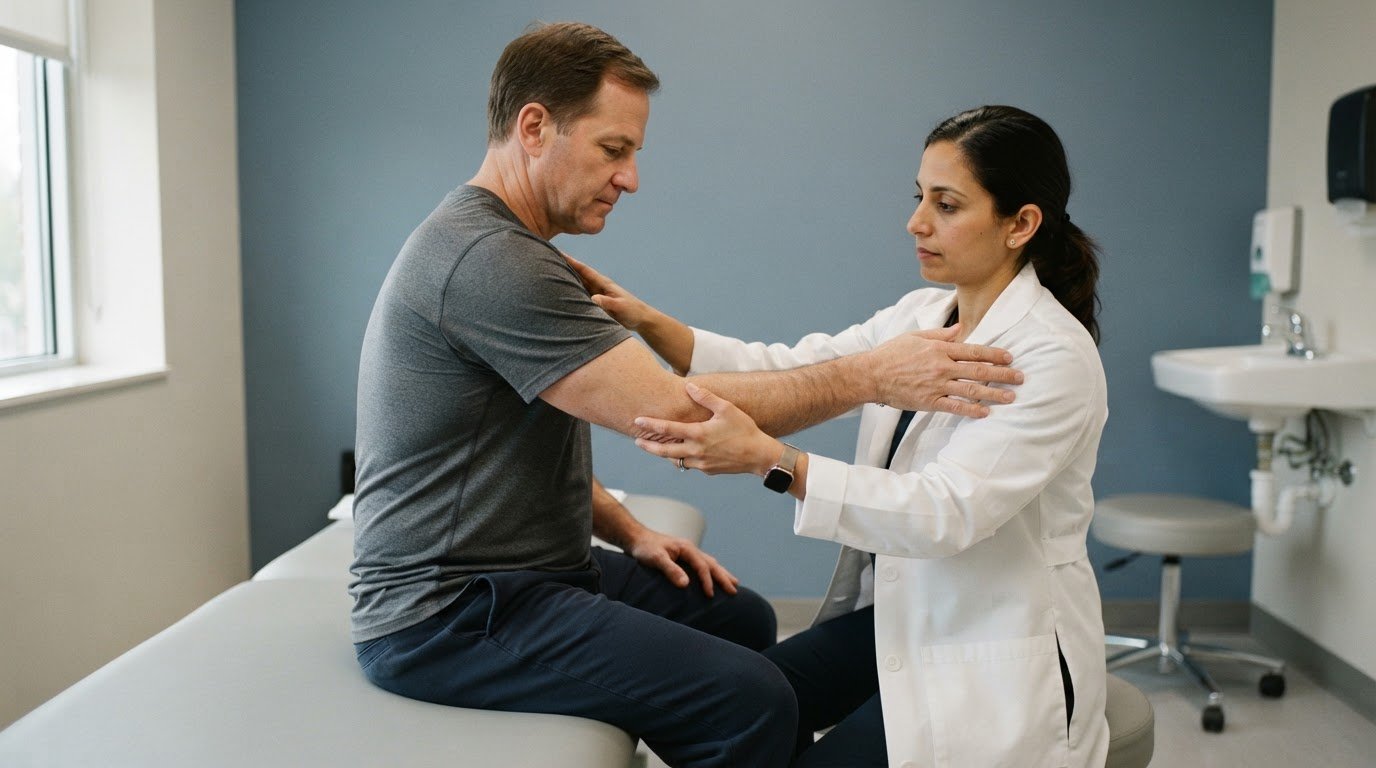
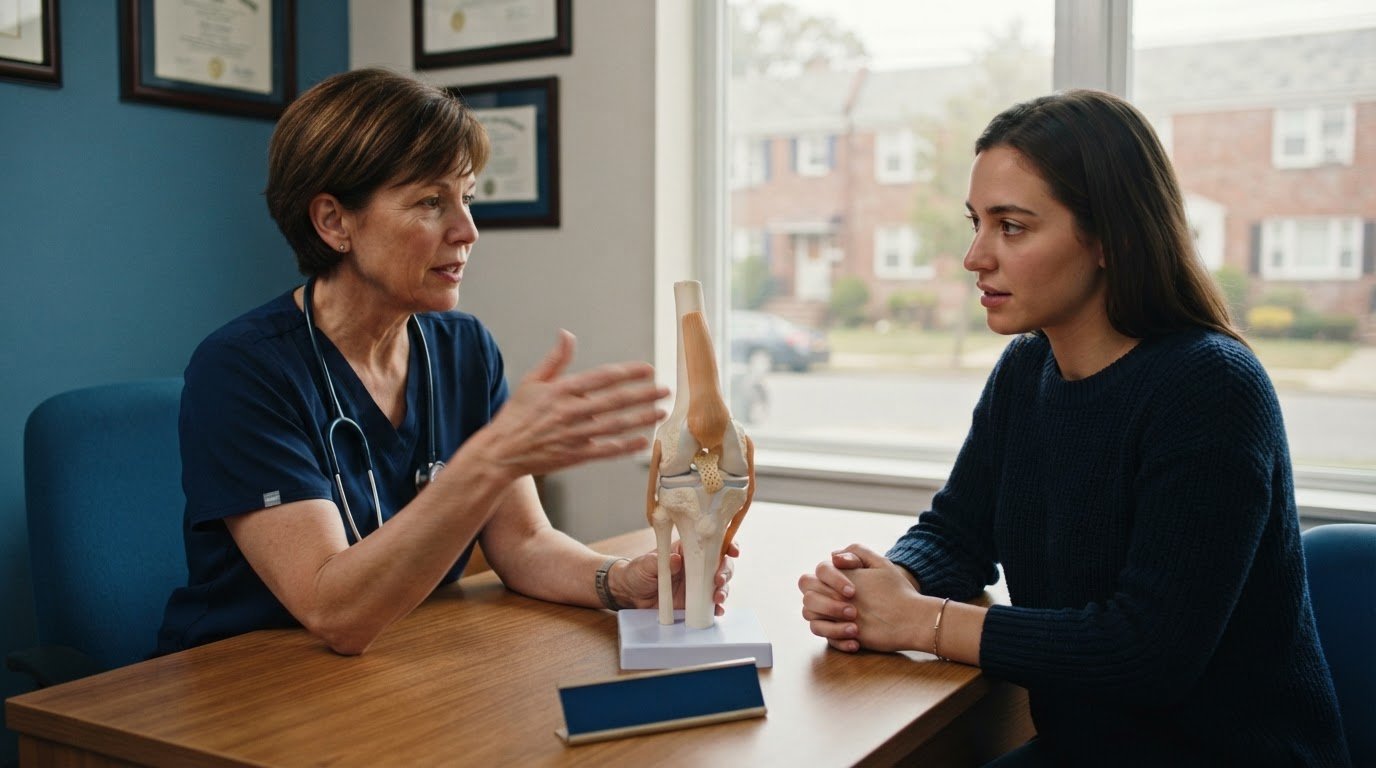
After a shoulder dislocation, arrange a specialist evaluation even if the joint has been put back in place. When looking for an orthopedic surgeon for shoulder instability in North Arlington, NJ, seek an assessment of your injury history and shoulder stability, with imaging if an associated injury is suspected. An MRI may help assess possible labral or rotator cuff damage, while a CT scan may be used when bone loss or fracture is suspected.
It’s understandable to want clear answers about why the shoulder slipped out and whether it could happen again. A thorough assessment can help identify soft-tissue or bone damage and clarify which treatments may suit the findings. This guide covers what to look for in a shoulder specialist, how dislocations and recurrent instability are evaluated, and how surgeons weigh nonsurgical care against procedures such as labral repair or a Latarjet procedure. It also explains what to expect when seeking orthopedic care near North Arlington.
Key Takeaways
- Look for a shoulder specialist who evaluates both soft-tissue injury and possible bone damage when assessing instability.
- Learn which findings may guide treatment choices, from arthroscopic stabilization to a Latarjet procedure.
- Understand why follow-up after a dislocation matters, including the need to assess for associated injuries.
- Compare nearby orthopedic options and see how shoulder-focused care can address related conditions such as rotator cuff injuries.
How can I find a top-rated Orthopedic Surgery Specialist in North Arlington, NJ?
Choose a specialist whose expertise fits the shoulder problem, rather than relying on a job title alone. If you need an orthopedic surgeon for shoulder instability in North Arlington, NJ, look for an evaluation that considers prior dislocations, labral injury, rotator cuff damage, and possible bone loss. A shoulder specialist can explain how examination findings and imaging inform treatment options. Ask how the diagnosis affects daily activities and sports, and how it influences the choice between nonsurgical care and surgery.
A Latarjet procedure is one option to discuss when instability involves bone damage. It transfers a piece of bone to the front of the shoulder socket to improve stability. It may be considered when a glenoid fracture makes it difficult to restore stability by treating soft tissues alone. The surgeon considers the location and extent of bone injury, the history of dislocations, and activity demands. Ask how those findings support soft-tissue repair or a bone procedure.
Shoulder expertise can also include procedures for rotator cuff injuries and other structural problems. Elbow care may address tendon injuries or instability, with treatment shaped by the affected tissue and demands placed on the joint. These related specialties matter when a sports injury affects more than one structure. A useful consultation distinguishes shoulder instability from pain caused by a separate condition and explains the surgical and nonsurgical options under consideration.
How soon can patients get an appointment with a shoulder specialist near North Arlington? Timing depends on scheduling and the urgency of symptoms, such as a recent dislocation or persistent instability. How can someone get a referral and prepare for a shoulder specialist appointment in New Jersey? Contact the specialist’s office about referral and scheduling steps, then bring prior imaging, medical records, a medication list, and a timeline of injuries and treatment. Choosing an orthopedic surgeon for shoulder instability in North Arlington, NJ, starts with a clear account of symptoms and goals.
Shoulder dislocation and recurrent instability
A dislocation occurs when the upper arm bone leaves the shoulder socket. Repeat episodes can make the joint feel unreliable. An evaluation looks for associated injuries and factors that may contribute to ongoing instability.
Evaluation and Imaging After Dislocation
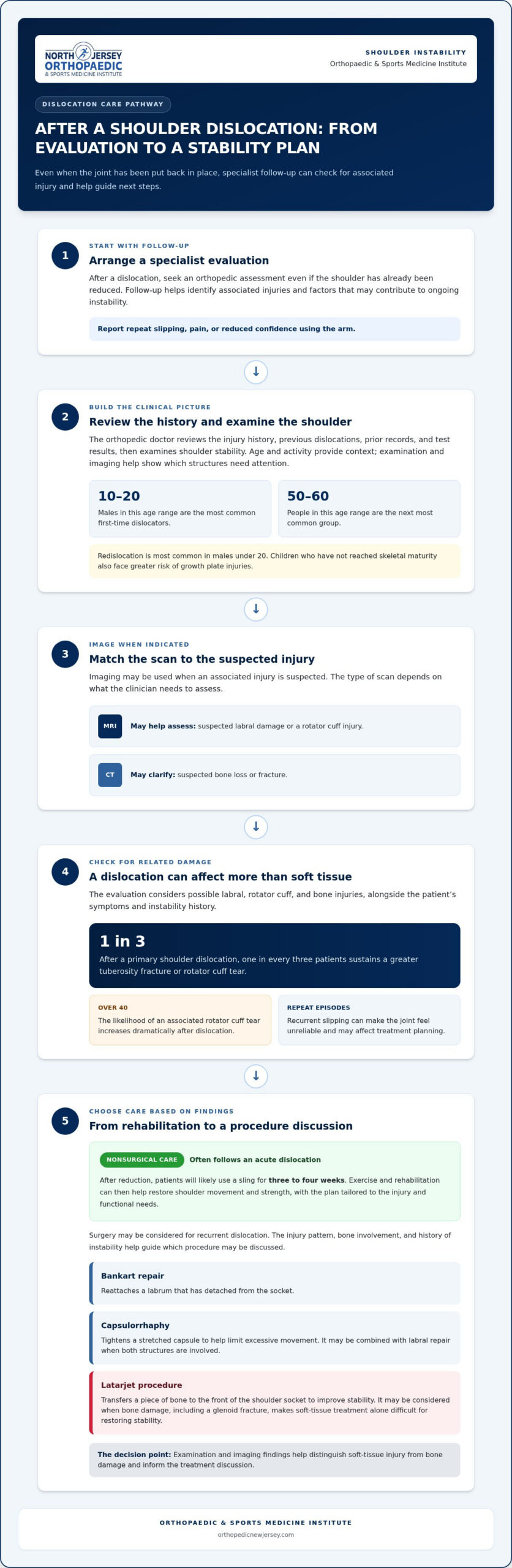
After a dislocation, an orthopedic doctor reviews the injury history, previous records, and any test results, then examines the shoulder. People of all ages should follow up at an orthopedic office for further evaluation. An MRI may help assess suspected labral damage or a rotator cuff injury; a CT scan may clarify suspected bone loss or fracture. The findings help guide care.
Associated Injuries After Dislocation
The joint’s movement can injure more than its supporting soft tissue. One in every three patients sustains a greater tuberosity fracture or rotator cuff tear after a primary shoulder dislocation. The likelihood of an associated rotator cuff tear increases dramatically in patients over 40 years old after shoulder dislocation, according to Orthopaedic clinical research sources. Children who haven’t reached skeletal maturity also face greater risk of growth plate injuries.
Age and activity provide context, but the examination and imaging show which structures need attention. Males aged 10 to 20 years are the most common first-time dislocators; people aged 50 to 60 years are the next most common group. Redislocation is most common in males under 20 years old. Recurrent slipping, pain, or reduced confidence using the arm are important details to report.
What nonsurgical treatments are available? After an acute dislocation is reduced, patients will likely use a sling for three to four weeks. Exercise and rehabilitation can then help restore shoulder movement and strength, with the plan tailored to the injury and functional needs. Surgery may be considered for recurrent dislocation.
For persistent symptoms or repeat dislocations, a focused assessment can clarify whether shoulder instability care is an appropriate next step.
Arthroscopic Bankart repair and capsulorrhaphy
When a shoulder dislocates, trauma can detach the labrum from the socket or stretch the capsule. Arthroscopic Bankart repair reattaches a detached labrum to the socket. Capsulorrhaphy tightens a stretched capsule to help limit excessive movement. A surgeon may combine these techniques when both structures are involved.
Arthroscopy uses a camera and instruments inserted through small incisions. The surgeon examines the joint, identifies damaged tissue, then secures the labrum and adjusts the capsule as indicated. The choice of procedure depends on the injury pattern, bone involvement, and history of instability. Substantial bone loss may call for a different approach than soft-tissue repair alone.
These procedures target instability, not every cause of shoulder pain. Arthritis affects the joint surface and may call for a different treatment discussion; joint replacement addresses advanced joint damage rather than a detached labrum. A tendon injury, such as a rotator cuff tear, also needs a separate assessment. Examination and imaging help distinguish these problems before surgery is planned.
What are the risks, recovery time, and physical therapy requirements after shoulder instability surgery? Risks include infection, stiffness, nerve or blood vessel injury, and recurrent instability. Recovery progresses through protection, guided motion, strengthening, and functional activity. Physical therapy helps restore movement and muscle control while protecting the repair. The pace depends on the procedure and tissue healing, so the surgeon’s rehabilitation plan sets activity milestones.
Therapy is not simply a final step. Early exercises protect the repair while maintaining safe movement; later strengthening builds shoulder control. Ask how the plan addresses work, sports, and daily tasks, and which movements to avoid during healing. Report new pain, swelling, or instability so the care team can assess progress.
Before choosing surgery, review what imaging shows, which structures need repair, and why the proposed technique fits. The explanation should distinguish Bankart repair from capsulorrhaphy and clarify how each addresses shoulder instability, rather than unrelated arthritis or tendon problems.
Orthopedic surgeon directory near North Arlington, New Jersey
Use a directory as a starting point, then compare shoulder expertise, location, and treatment scope. Orthopedic surgery specialists near North Arlington have an overall average rating of 4.2 stars. That figure offers context, but a rating alone can’t show whether a surgeon regularly evaluates instability or explains different surgical techniques.
Directory listings place Dr. Jay Reidler 1.3 miles from North Arlington and Dr. Sebastian Lattuga 6.4 miles away. These distances help frame travel, not clinical fit. For a shoulder problem, look for a specialist whose practice addresses instability and related injuries, such as rotator cuff tears. Ask how the evaluation connects examination and imaging findings to treatment choices, including physical therapy or surgery.
The broader directory context includes 483 hospitals near North Arlington with affiliated orthopedic surgery specialists. That number describes nearby hospital affiliations, not the number of shoulder specialists or the quality of any individual surgeon. Compare the actual physician’s relevant experience, explanation of the diagnosis, and ability to discuss treatment options such as repair, rehabilitation, or joint replacement when appropriate.
Which orthopedic surgeons near North Arlington accept your insurance? Coverage depends on your health plan and network, so a distance or ratings listing cannot establish whether care is covered. Use your insurer’s member directory to identify in-network orthopedic surgeons, matching the physician’s name and plan details before arranging care. Check surgeon coverage separately from facility or physical therapy coverage, as these may be listed separately.
A useful comparison keeps the decision focused: confirm the surgeon’s shoulder expertise, review the proposed techniques, and understand how follow-up and physical therapy fit the care plan. If rotator cuff tears or other shoulder conditions are part of the assessment, consider whether the evaluation addresses each issue directly. Explore orthopedic shoulder care options to learn about treatment for shoulder injuries and related conditions.
The Orthopaedic & Sports Medicine Institute: Bridge-enhanced ACL repair (BEAR® Implant)
The Orthopaedic & Sports Medicine Institute offers Bridge-enhanced ACL repair (BEAR® Implant) for ACL injuries in the knee, not shoulder instability. For shoulder concerns, its care includes minimally invasive orthopaedic surgery, rotator cuff repair, and shoulder arthritis treatment. These options address specific shoulder conditions; an evaluation helps determine which relates to your symptoms and findings.
For recurrent shoulder instability, focus on an assessment that identifies the affected structures and guides treatment. If you have a rotator cuff injury or shoulder arthritis, the Institute’s related treatments may be relevant. Contact The Orthopaedic & Sports Medicine Institute to discuss your shoulder concern and next steps.
Take the Next Step Toward Shoulder Care
Choosing an orthopedic surgeon for shoulder instability in North Arlington, NJ can help turn uncertainty into a clear, individualized plan. Before your visit, note which movements feel unreliable, what activities you hope to return to, and what questions you have about treatment. These priorities can help shape a practical conversation about your shoulder and recovery goals.
The next step is a focused discussion of your symptoms and care options. The Orthopaedic & Sports Medicine Institute offers orthopedic treatment including minimally invasive surgery and rotator cuff repair, and Bridge-enhanced ACL repair (BEAR® Implant) for ACL injuries. If you’re ready to discuss your orthopedic needs, contact the Institute to begin a conversation. Taking that step can help you approach your care with greater clarity and confidence.
Frequently Asked Questions
Which orthopedic surgeons near North Arlington, NJ specialize in shoulder instability?
Dr. Jesse Allert completed an additional year of training dedicated solely to shoulder and elbow surgery, a relevant focus for shoulder instability. Dr. Kent S. Lerner has more than 20 years of orthopedic experience and was most recently re-certified by The American Board of Orthopedic Surgery in 2007. These credentials provide useful context when comparing specialists, alongside the scope of their shoulder practice.
Which nearby orthopedic surgeons treat shoulder dislocations, labral tears, and recurrent instability?
Dr. Jesse Allert’s additional shoulder and elbow training is relevant to evaluating dislocations and recurrent instability. In nearby Nutley, The Orthopaedic & Sports Medicine Institute offers Labral Tear Treatment, which addresses one condition associated with shoulder instability. A labral tear and a dislocation are not interchangeable diagnoses; the examination identifies which structures are involved and informs the treatment plan.
What hospitals and clinics near North Arlington offer shoulder instability evaluations and surgery?
The Orthopaedic & Sports Medicine Institute in Nutley provides orthopedic evaluations and surgical procedures, including minimally invasive surgery. The directory landscape also includes 483 hospitals near North Arlington with affiliated orthopedic surgery specialists. That count is broad context, not a claim that every listed hospital performs shoulder instability surgery. Consider whether the care setting can coordinate evaluation, treatment planning, and follow-up.
What are the patient reviews and credentials of local shoulder instability specialists?
The Orthopaedic & Sports Medicine Institute highlights 89 Google reviews as “EXCELLENT.” Its surgeon, Dr. Michael C. Russonella, D.O., is a board-certified orthopaedic surgeon and sports medicine specialist. Reviews can reflect patients’ experiences, while credentials describe professional qualifications; neither replaces a conversation about the diagnosis and treatment approach. Patients in North Arlington can also consider nearby Nutley for orthopedic care.
When is shoulder instability surgery recommended, and what procedures are commonly used?
Surgery may be recommended when the shoulder repeatedly dislocates or remains unstable despite nonsurgical care. Common procedures include arthroscopic Bankart repair and capsulorrhaphy; a Latarjet procedure may be considered when bone injury affects stability. The choice depends on the specific structural damage. Ask how the proposed procedure relates to your imaging and which rehabilitation stages support a return to daily activities or sports.