Surgery is one option, not always the first step. For people facing fear of orthopedic surgery in North Arlington, NJ, care may involve nonsurgical treatment or a procedure, depending on the condition and its effect on daily activities. Understanding the options can make the decision feel more manageable.
It’s understandable to feel concerned about pain, recovery, or what surgery involves. A clear explanation of your diagnosis, potential benefits, and trade-offs can help you take part in decisions about your care.
This guide covers nonsurgical and surgical treatment paths, how to choose an orthopedic surgeon, and questions that can help clarify your next step. You’ll also learn what treatments may be considered before surgery, so you can approach the conversation informed and prepared.
Key Takeaways
- Compare nonsurgical care with surgery by considering your diagnosis, symptoms, and impact on daily activities.
- Choose an orthopedic surgeon whose experience and approach align with your condition and treatment priorities.
- Discuss nonsurgical options and practical ways to manage anxiety before making decisions about surgery.
- For an ACL injury, learn whether Bridge-enhanced ACL repair (BEAR® Implant) may be a treatment option for you.
Surgical and nonsurgical treatment options
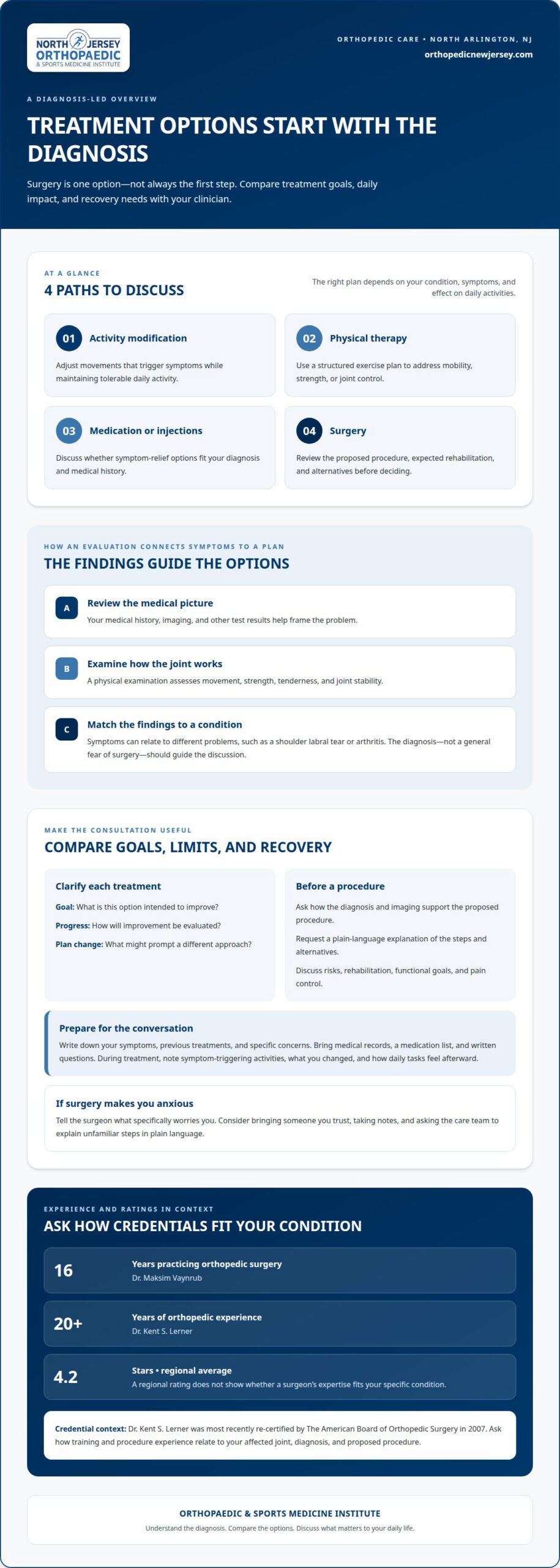
For patients concerned about orthopedic surgery in North Arlington, NJ, a structured evaluation can clarify which options fit the injury. The process starts with a review of your medical history, imaging, and other test results. A physical examination then assesses movement, strength, tenderness, and joint stability. These findings help connect symptoms to a specific problem, such as a shoulder labral tear or arthritis.
Nonsurgical care focuses on managing symptoms and supporting function without an operation. Depending on the condition, a treatment plan can include activity adjustments, physical therapy, medication, or injections. Each option serves a different purpose. For example, a therapist may guide exercises that address mobility and strength, while activity changes reduce movements that aggravate symptoms. Patients should understand the goal of each treatment and how progress will be evaluated.
- Activity modification: Adjust movements that trigger symptoms while maintaining tolerable daily activity.
- Physical therapy: Follow a structured exercise plan for mobility, strength, or joint control.
- Medication or injections: Discuss whether symptom-relief options fit the diagnosis and medical history.
- Surgery: Review the proposed procedure, expected rehabilitation, and alternatives before deciding.
Surgery addresses a structural problem when a procedure is appropriate for the treatment plan. The surgeon should explain the area being treated, the intended repair, and the demands of recovery. Treatment for a labral tear differs from treatment for shoulder arthritis, so the diagnosis matters more than a general fear of surgery. Ask how the proposed approach relates to your imaging and examination findings.
Compare options by their goals, limitations, and impact on daily life. Before your appointment, write down your symptoms, previous treatments, and specific concerns. Ask what each option is intended to improve, how progress will be measured, and what might prompt a change in the plan. A focused discussion can make an overwhelming choice easier to assess.
Choosing an orthopedic surgeon
Choose a doctor with experience relevant to the affected joint and proposed procedure. For a shoulder condition, ask about experience treating shoulder arthritis or labral tears. Before surgery, ask what diagnosis supports the procedure, what alternatives are available, and how results will be assessed. Request a clear explanation of risks, rehabilitation, and functional goals.
Anesthesia and pain-control options depend on the procedure and your health history. Ask which approach is planned, how pain will be managed afterward, and whom to contact with concerns.
Recovery generally involves following post-procedure instructions and a rehabilitation plan tailored to the operation. Ask when therapy begins, which activities may need to change, and how your progress will be reviewed.
If you’re anxious about surgery near North Arlington, NJ, tell the surgeon what specifically worries you. Bring someone you trust to the visit, take notes, and ask the care team to explain unfamiliar steps in plain language.
Use the consultation to assess communication as well as credentials. A certified orthopedic surgeon should explain how training and procedure experience relate to your diagnosis. Ask who will coordinate follow-up and rehabilitation, and how questions are handled between visits. Online ratings can offer context, but the regional average of 4.2 stars does not show whether a surgeon’s expertise fits your specific condition.
- Diagnosis: Ask how examination findings and imaging support the recommended treatment.
- Procedure: Request a plain-language description of the planned steps and alternatives.
- Recovery: Clarify therapy, activity restrictions, and follow-up expectations.
- Communication: Confirm how concerns about pain or anxiety will be discussed.
Bring your medical records, medication list, and written questions to the appointment. If a minimally invasive approach is relevant to your procedure, ask how it changes the surgical plan and recovery process. A focused consultation can help you compare options; explore minimally invasive orthopedic surgery as part of that discussion.
Dr. Maksim Vaynrub has been practicing orthopedic surgery for 16 years, while Dr. Kent S. Lerner has over 20 years of orthopedic experience. Dr. Kent S. Lerner was most recently re-certified by The American Board of Orthopedic Surgery in 2007. When considering these credentials, ask how each surgeon’s experience relates to the affected joint, diagnosis, and proposed procedure, and discuss how those qualifications apply to your care.
Non-surgical treatments before surgery
Before considering an operation, discuss a nonsurgical plan for your specific diagnosis. For shoulder pain, options may include activity adjustments, guided physical therapy, or medication selected with your clinician. Clarify the goal of each treatment and when it will be reviewed. For example, therapy may focus on shoulder movement and strength, while activity changes can reduce painful motions.
Keep a simple record during treatment. Note which activities trigger symptoms, what you changed, and how daily tasks feel afterward. Bring your notes to follow-up appointments, along with imaging reports and a current medication list. This information helps the doctor track changes and decide whether the plan needs adjustment.
- Movement: Ask which activities to modify and which movements to continue.
- Physical therapy: Clarify the exercise goals and how progress will be assessed.
- Medicine: Review appropriate use, possible side effects, and interactions with other medicines.
- Injections: Ask whether an injection fits the diagnosis, and what outcome it is intended to address.
Consistency matters during treatment. Follow the agreed plan, record changes, and promptly report new or worsening symptoms. Don’t add exercises or change medication doses without discussing it with your clinician. For shoulder arthritis or a labral tear, treatment depends on the diagnosis, symptoms, examination, and response to previous care.
Yes. Patients in New Jersey can seek a second opinion and discuss delaying planned surgery. Bring test results, imaging, and the proposed treatment plan so another orthopedic doctor can review the same information. Before postponing, ask how timing relates to your diagnosis, symptoms, and treatment goals.
Use your next visit to set a clear point for reviewing progress rather than continuing care without reassessment. Ask what changes would indicate progress, which symptoms warrant an earlier call, and when surgery might be reconsidered. For example, if shoulder pain still limits dressing or reaching despite following the plan, describe that specific impact. It gives the physician practical information to weigh when discussing next steps.
How can patients manage anxiety before orthopedic surgery?
Start by identifying what specifically worries you about surgery. Pain, anesthesia, loss of independence, and uncertainty about recovery are different concerns. Write them down before your appointment. A focused list helps the surgeon answer your actual questions rather than offering only general explanations.
Ask the surgical team to explain the process from arrival through discharge. Request a description of preparation, the procedure, and the first recovery steps. If a medical term is unclear, ask for an explanation in plain language. Knowing what to expect can make the process feel more structured.
Use these practical steps to prepare for a focused conversation:
- Bring written questions and notes about your main concerns.
- Ask a trusted support person to attend and help record answers.
- Discuss how anesthesia and pain control will be addressed for your procedure.
- Ask who will explain instructions and answer questions after surgery.
Preparing at home can also reduce last-minute uncertainty. Arrange transportation and identify someone who can help with tasks that your recovery instructions may limit. Keep the surgeon’s written instructions and contact information together. If you have questions about medication or a preparation step, raise them with the care team instead of changing your plan on your own.
Tell the doctor if anxiety affects your sleep, concentration, or ability to make decisions. Be specific: explain whether you’re concerned about anesthesia, a past medical experience, or recovery. That detail can help the team address what is troubling you and explain available support. A family member can help you remember these details during the visit.
Before deciding, ask whether a less invasive surgical approach fits your diagnosis and what it means for your care. To discuss minimally invasive orthopedic surgery and your concerns, bring your questions to an orthopedic consultation.
Ask the surgical team to explain the anesthesia and pain-control plan for your procedure and address any concerns during the discussion.
The Orthopaedic & Sports Medicine Institute: Bridge-enhanced ACL repair (BEAR® Implant)
The Orthopaedic & Sports Medicine Institute offers Bridge-enhanced ACL repair (BEAR® Implant) for patients considering treatment for an ACL injury. If you’re weighing surgery or have questions about your diagnosis, an orthopedic consultation can clarify which approaches may suit your needs. The Institute also provides minimally invasive orthopaedic surgery, rotator cuff repair, shoulder arthritis treatment, and labral tear treatment.
Bring questions about the proposed procedure, alternatives, and recovery expectations to your appointment. For an ACL injury, ask whether the BEAR® Implant may be an option. For shoulder pain, ask how your diagnosis affects treatment choices, including care for arthritis or a labral tear.
Contact The Orthopaedic & Sports Medicine Institute to discuss your orthopedic concerns and possible next steps.
Take the Next Step With a Clear Plan
Fear of orthopedic surgery in North Arlington, NJ doesn’t mean you need to make a rushed decision. Use your next conversation to focus on what matters most: understanding your diagnosis, comparing treatment choices, and learning what recovery may involve. Writing down your priorities can help keep the discussion practical and centered on your goals.
The Orthopaedic & Sports Medicine Institute offers Bridge-enhanced ACL repair (BEAR® Implant), Minimally Invasive Orthopaedic Surgery, and Rotator Cuff Repair. If one of these concerns relates to your condition, a focused conversation can help you consider the relevant treatment path. Contact The Orthopaedic & Sports Medicine Institute to discuss your orthopedic care. A thoughtful next step can help you move forward with greater clarity.
Frequently Asked Questions
What causes fear or anxiety before orthopedic surgery?
Fear often stems from uncertainty about anesthesia, pain, recovery, or how surgery might affect daily routines. Past difficult medical experiences or concerns about relying on others during healing can also contribute. Try naming the specific worry, such as needing help getting dressed after shoulder surgery. Sharing an example with the care team can focus the discussion on practical preparation and support.
What are the risks and benefits of common orthopedic surgeries?
Orthopedic surgery may address a structural problem and support better function, but potential risks depend on the procedure and your health. Ask the surgeon to explain risks relevant to your diagnosis, including concerns about anesthesia, healing, or persistent symptoms. For a shoulder procedure, discuss how the intended repair may affect pain and movement, and compare those goals with nonsurgical options.
Which orthopedic surgeons and hospitals near North Arlington, NJ, specialize in minimally invasive surgery?
Near North Arlington, The Orthopaedic & Sports Medicine Institute in Nutley provides orthopedic care, including minimally invasive techniques. The practice’s board-certified orthopedic surgeon and sports medicine specialist is Dr. Michael C. Russonella, D.O. For a hospital-based procedure, ask which facility and care team would be involved and how the proposed approach relates to your condition. Patients from nearby communities, including Bloomfield and Clifton, can discuss orthopedic treatment options with the practice.