The first orthopedic visit is about more than naming the painful joint. If you’re wondering what happens at an initial orthopedic visit in Nutley, NJ, the clinician reviews your symptoms and medical history, examines how your bones, muscles, and joints move, and considers whether further evaluation is needed. The visit also begins shaping care goals around pain, function, and returning to activity.
When pain or limited movement affects your routine, it’s understandable to want clear answers. At an initial orthopedic visit in Nutley, NJ, a specialist reviews your symptoms and medical history, examines the affected area, and discusses possible next steps.
You’ll learn what information to share, what a physical examination may involve, and when imaging or other tests may be considered. The discussion can also account for your daily activities and longer-term goals, helping you understand what to expect from the appointment.
Key Takeaways
- Bring relevant records, imaging reports, medication details, and notes about when symptoms began or what affects them.
- Expect the examination to assess movement, strength, flexibility, and joint tenderness through simple, gentle tests.
- Imaging may help clarify bone or soft-tissue concerns, while treatment goals depend on the findings and your activity needs.
- Learn how orthopedic care options, including BEAR® Implant for ACL repair, may relate to specific injuries and recovery goals.
Treatment goals and returning to an active lifestyle
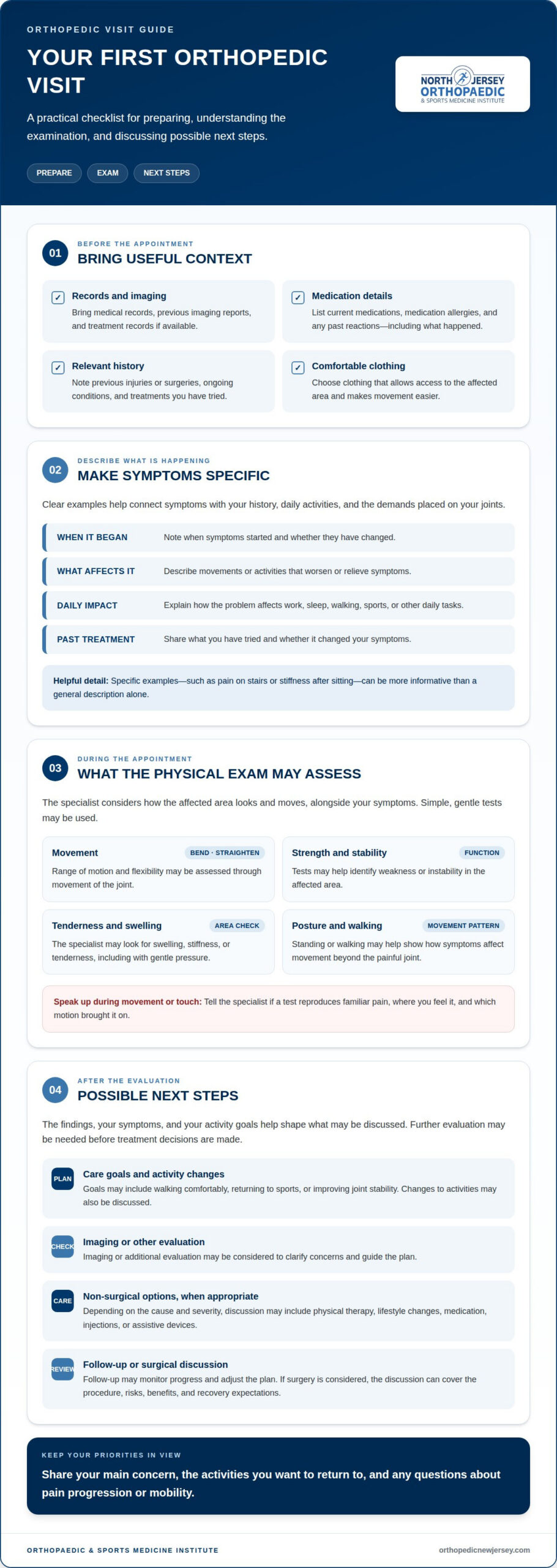
Bring medical records, previous imaging reports, and a current medication list. Note when symptoms began, what makes them worse or better, treatments you’ve tried, and how the problem affects daily activities.
After the evaluation, next steps may include a treatment plan, further evaluation, changes to your activities, or a follow-up appointment to monitor progress.
Setting Treatment Expectations
The evaluation helps connect your symptoms with possible care goals and next steps. Share previous injuries and treatments, including whether they changed your symptoms. Bring imaging reports and records so the doctor can consider them alongside the examination. A clear discussion can connect goals such as walking comfortably, returning to sports, or improving joint stability with the problem being assessed. Further evaluation may be needed before treatment decisions are made.
Conservative Treatment Options
Conservative treatment uses non-surgical approaches to address symptoms and support function. Depending on the cause and severity, discussion may include physical therapy, lifestyle changes, medication, injections, or assistive devices. For example, activity modification may help reduce strain while a rehabilitation plan builds movement and strength. These options matter because treatment can begin without surgery when appropriate. The doctor weighs how symptoms affect daily tasks and activity goals when discussing which approach fits.
Planning for Follow-Up Care
Follow-up care monitors progress and helps adjust the plan as your function changes. After the initial evaluation, next steps may include imaging or other evaluation, physical therapy, activity changes, or a follow-up appointment. If surgery is considered, the discussion can cover the procedure, risks, benefits, and recovery expectations. Returning to work, walking, or sports depends on the condition, response to treatment, and your goals. Share concerns about worsening pain, mobility, or long-term effects during care discussions.
Medical history and symptom review
Your medical history helps the specialist understand the current problem in context. Describe previous injuries or surgeries, ongoing conditions, medications, activity levels, and lifestyle factors. For example, a recurring shoulder symptom may affect dressing, work tasks, or sleep. These details help connect your symptoms with the demands placed on your joints.
At the first visit, expect questions about when symptoms began, what triggers or eases them, and how they affect daily activities. The doctor may also ask about previous injuries, treatments, medication allergies, or past reactions. Give specific examples, such as pain on stairs or stiffness after sitting, rather than relying only on general descriptions.
- Note when symptoms started and whether they have changed.
- Describe movements or activities that worsen or relieve them.
- List prior treatment and any effect it had on symptoms.
Medical history paperwork organizes these details before the examination. Complete each section carefully, including current medications, ongoing conditions, and previous procedures. If a medication caused a reaction, note the medicine and what happened. Clear, detailed answers help the specialist understand your concerns and consider relevant next steps.
The length of an initial appointment depends on your concerns, the history reviewed, and the examination needed. Discussing one joint differs from addressing several symptoms, previous procedures, and past treatments. Allow time to explain your main concern and ask questions about diagnosis, therapy, and possible ways to manage it.
Bring prior imaging reports and treatment records if available, so the specialist can consider them alongside your account. Before leaving, summarize the main concern you want addressed and raise any question about pain progression or mobility. For a more focused orthopedic discussion, explore orthopedic care as part of planning your evaluation.
An initial orthopedic evaluation may include questions about when symptoms began, what triggers or eases them, and how they affect daily activities. Note medication allergies or previous reactions before your appointment.
Physical examination
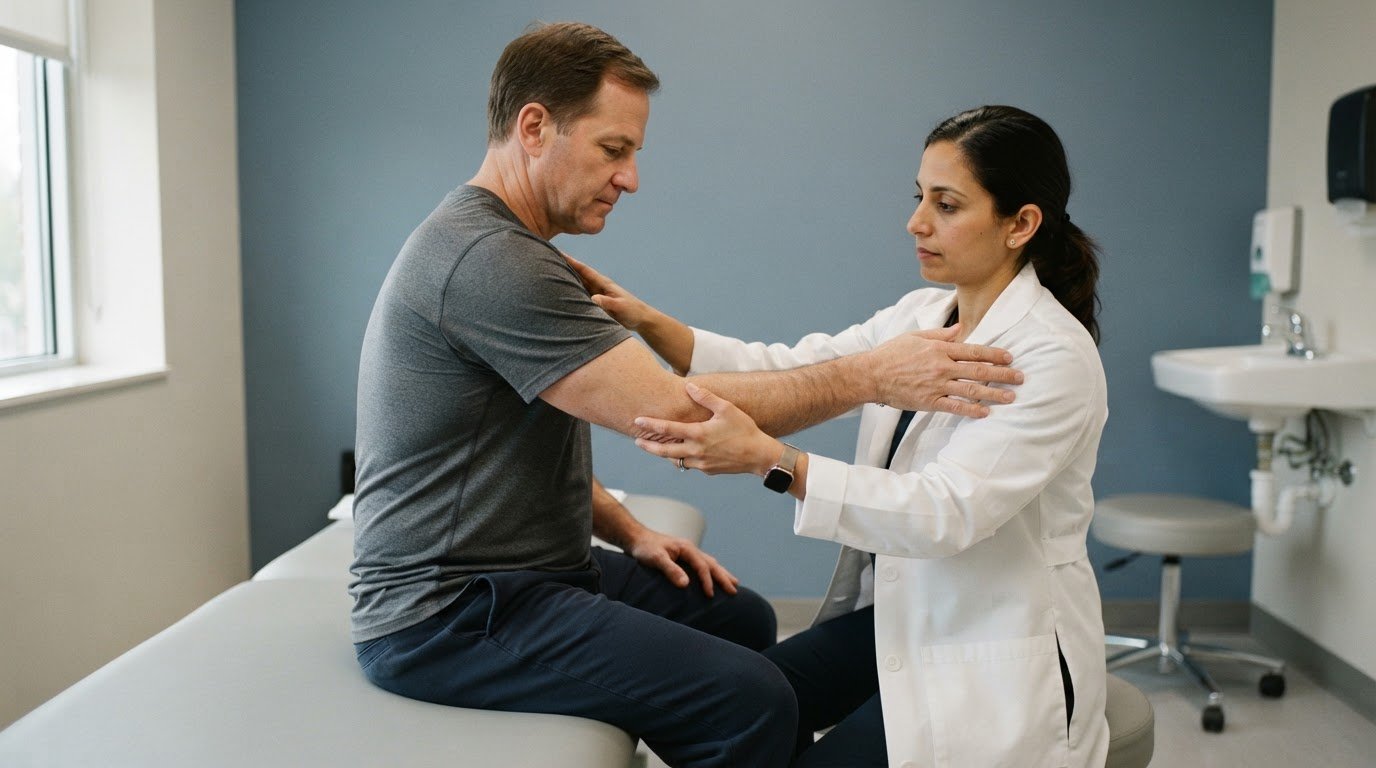
The physical exam assesses how the affected area looks and moves. Posture, walking pattern, joint movement, strength, and flexibility can help reveal changes in function.
Examining the Affected Area
The specialist examines the area related to your symptoms for tenderness, stiffness, or swelling. For a painful knee, this may involve looking at the joint and applying gentle pressure to locate tenderness. These findings help relate your symptoms to physical signs. Tell the specialist if a movement or touch reproduces familiar pain.
Assessing Movement and Strength
Movement assessment evaluates range of motion, strength, flexibility, and joint stability. You may be asked to bend or straighten a joint, stand, or walk. Simple, gentle tests can help identify stiffness, weakness, or instability. The specialist considers how the area functions during movement alongside your symptoms, including limitations affecting work, sports, or daily tasks.
Posture and walking patterns can show how an injury affects movement beyond the painful joint. For example, a change in walking may shift weight away from an affected knee. The physical exam considers these patterns alongside joint health to identify whether movement is limited or altered.
Wear comfortable clothing that allows access to the affected area and makes movement easier. For a shoulder concern, choose a top that permits arm movement so the specialist can assess flexibility and strength. Mention previous injuries or physical therapy that changed your mobility so those details can be considered with current findings.
If a movement causes pain, explain where you feel it and which motion brought it on. For example, distinguish discomfort while lifting an arm from pain at rest. Specific observations help the specialist understand how symptoms relate to movement and whether further evaluation may be appropriate.
At an initial orthopedic visit, the examination may bring together posture, walking pattern, joint range of motion, strength, and flexibility with the symptoms you describe. The specialist also considers how symptoms affect everyday function and movement. Simple movements or gentle tests may help identify tenderness, stiffness, or instability. Describe how each feels so findings can be considered alongside your symptoms. Comfortable clothing that allows easy movement can make the examination easier.
Orthopedic care for bones, muscles, and joints
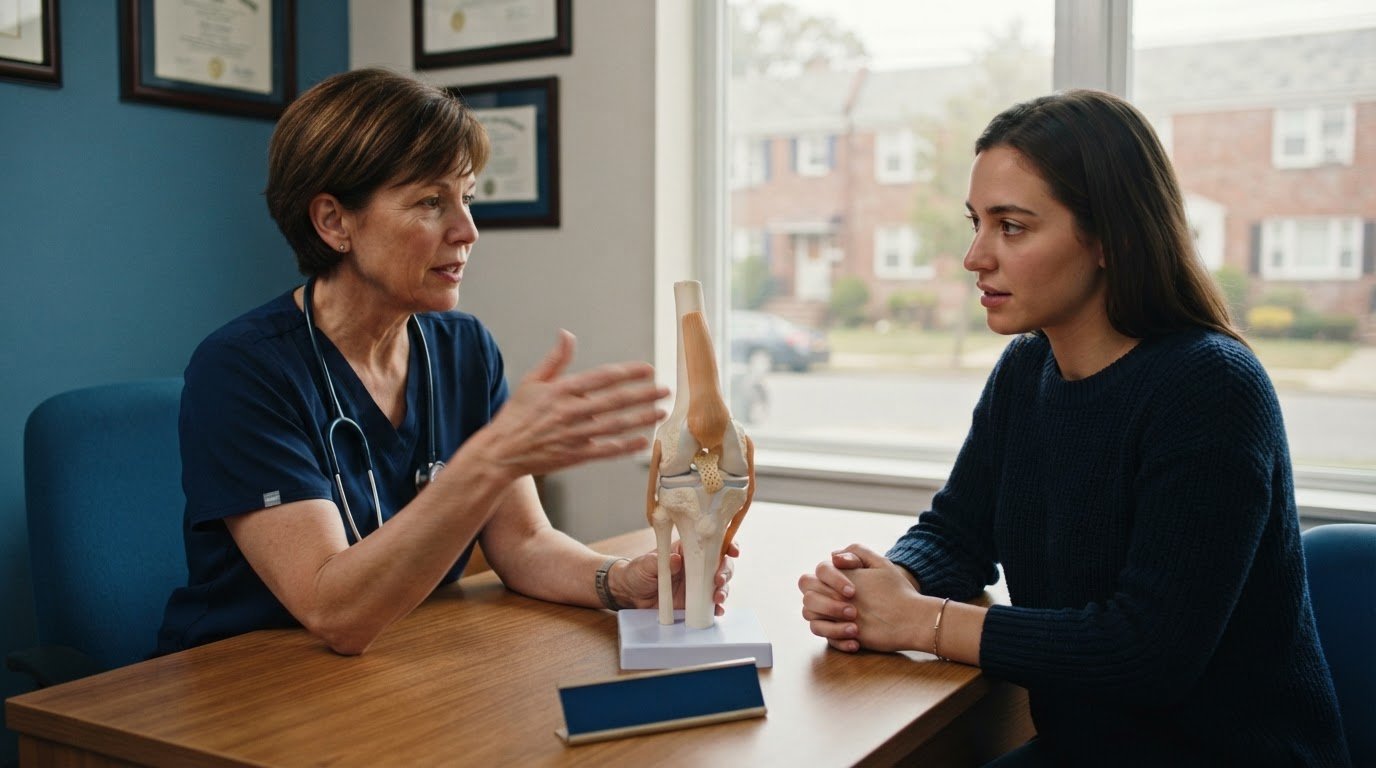
An orthopedic consultation connects symptoms with the structures that support movement: bones, muscles, tendons, ligaments, and joints. Diagnosis considers both the affected tissue and how the problem changes everyday function. For example, knee pain may involve a joint or surrounding soft tissue, while arthritis can affect joint movement and strength.
Imaging may help clarify what the examination suggests. X-rays can help identify fractures, arthritis, or other bone abnormalities. MRI can help evaluate soft tissues, including muscles, tendons, and ligaments. Imaging isn’t automatic at a first visit. Symptoms and examination findings guide whether additional tests are appropriate, since different structures may need different evaluation.
An early assessment can also reveal changes in movement. Someone protecting a painful knee may walk differently and place extra strain elsewhere. Identifying changes in walking and function connects the painful area with broader movement needs. Discuss which activities matter most, such as climbing stairs, working, or returning to sports.
Does insurance require a referral for an orthopedic visit in New Jersey? Referral requirements depend on your insurance plan, so there isn’t one answer for every patient. Review your plan’s referral rules before the appointment.
Care goals reflect the suspected cause, symptom severity, and desired activity level. Treatment discussions may include non-surgical approaches before minimally invasive procedures or surgery. For arthritis, the consultation can focus on pain, joint function, and how symptoms affect your lifestyle. Recovery planning should account for the condition and your daily demands, rather than relying on a single activity goal.
- Bone concerns may call for X-rays.
- Suspected soft-tissue problems may lead to MRI evaluation.
- Movement changes can reveal strain beyond the painful joint.
Early orthopedic evaluation can help identify problems and reduce compensatory movement patterns. Schedule an orthopedic consultation to discuss symptoms affecting your bones, muscles, or joints.
The Orthopaedic & Sports Medicine Institute: Bridge-enhanced ACL repair (BEAR® Implant)
The Orthopaedic & Sports Medicine Institute offers Bridge-enhanced ACL repair (BEAR® Implant) for patients discussing care after an ACL injury. If an evaluation identifies an ACL tear, this treatment may be relevant to the discussion of options and activity goals. The appropriate approach depends on the injury and clinical findings.
Orthopedic care at the institute also includes Minimally Invasive Orthopaedic Surgery, Rotator Cuff Repair, Shoulder Arthritis Treatment, and Labral Tear Treatment. These options address specific orthopedic concerns, including shoulder conditions, and do not replace an evaluation tailored to your symptoms. Discuss your diagnosis, treatment choices, and goals for returning to activity with the orthopaedic team.
For questions about orthopedic care or to discuss an evaluation, contact The Orthopaedic & Sports Medicine Institute or visit orthopedicnewjersey.com.
Take the Next Step Toward Confident Movement
Understanding what happens at an initial orthopedic visit in Nutley, NJ can help you approach your next decision with clearer priorities. Consider which activities you want to regain, which symptoms interfere most, and what questions you want answered. These goals can shape a focused conversation about evaluation and care.
The Orthopaedic & Sports Medicine Institute offers treatment options for specific orthopedic concerns, including Bridge-enhanced ACL repair (BEAR® Implant), Minimally Invasive Orthopaedic Surgery, and Rotator Cuff Repair. A useful discussion starts with the condition being evaluated and the activities you hope to return to. Share those concerns with an orthopedic specialist.
Contact The Orthopaedic & Sports Medicine Institute to discuss your orthopedic care. A thoughtful evaluation can help you move forward with greater clarity and purpose.
Frequently Asked Questions
What happens during an initial orthopedic visit?
In Nutley, an initial orthopedic visit involves a focused conversation and evaluation of the affected area. Someone with knee pain after a misstep might describe when it began, which movements worsen it, and how it affects walking. The specialist considers these details alongside examination findings when discussing possible next steps, including whether further evaluation could clarify the problem.
What should I bring to my first orthopedic appointment?
Bring your insurance card, medication list, relevant medical records, and previous imaging reports. Include details about medication allergies or past reactions, such as which medicine was involved and what happened. A brief note about symptom changes and questions can help you use appointment time effectively. Organize records by date so the specialist can follow the sequence of previous evaluations and care.
Will the orthopedist perform a physical exam or order imaging?
A physical examination is commonly part of the evaluation, while imaging depends on your symptoms and examination findings. If you’re wondering what happens at an initial orthopedic visit in Nutley, NJ, the exam may help determine whether imaging could clarify the suspected source of pain. X-rays assess bones, while MRI can examine soft tissues such as tendons and ligaments. Imaging isn’t automatic at the first appointment.