A suspected shoulder dislocation needs prompt medical evaluation. Trying to put the joint back yourself can worsen the injury. Shoulder dislocation treatment in North Arlington, NJ, starts with an examination and imaging to assess the joint and nearby structures. A clinician then realigns the upper arm bone in the socket, confirms its position with imaging, and outlines a recovery plan.
The pain, visible change in shoulder shape, and sudden loss of movement can be alarming, and it’s natural to want the joint treated quickly. Falls, sudden twisting, contact sports, and repetitive overhead activity can all contribute to a dislocation. This article explains common causes and dislocation patterns, what reduction involves, how a sling supports early healing, and how rehabilitation helps restore motion, strength, and stability. You’ll also learn when recurrent or complex instability may call for a discussion of surgical treatment, from acute injury through recovery.
Key Takeaways
- Seek immediate medical attention for a suspected shoulder dislocation, and don’t try to put the joint back in place yourself.
- Learn how assessment and imaging guide reduction and help clinicians check for associated injuries.
- Understand how sling use supports recovery, with immobilization time depending on injury severity and age.
- See how rehabilitation progresses toward better shoulder motion, strength, and joint stability.
What Should You Understand About Dislocated Shoulders?
For shoulder dislocation treatment in North Arlington, NJ, prompt evaluation matters because the injury can affect more than the joint’s position. Understanding the shoulder’s structure and the force behind the injury helps explain what clinicians assess.
Shoulder Anatomy and Dislocation Types
The shoulder is a ball-and-socket joint where the humeral head meets the glenoid, a shallow part of the shoulder blade. A complete dislocation moves the humerus fully out of the socket; a subluxation is a partial displacement. Dislocations usually move forward, but can also move backward or downward. Clinicians consider the direction, pain, and movement when assessing function and possible associated injury.
Dislocations as Sports Medicine Conditions
Shoulder dislocations are orthopedic sports injuries, particularly in contact sports and activities involving repeated overhead movement. Anterior dislocations account for over 90% of cases. Young men between 15 and 30 years old are disproportionately affected, and recurrence rates exceed 50% in the general population. A collision, awkward reach, or forceful arm movement can damage ligaments around the joint. Pain or limited movement can also accompany nerve damage, so assessment considers the surrounding structures.
Immediate Steps Before Reaching Care
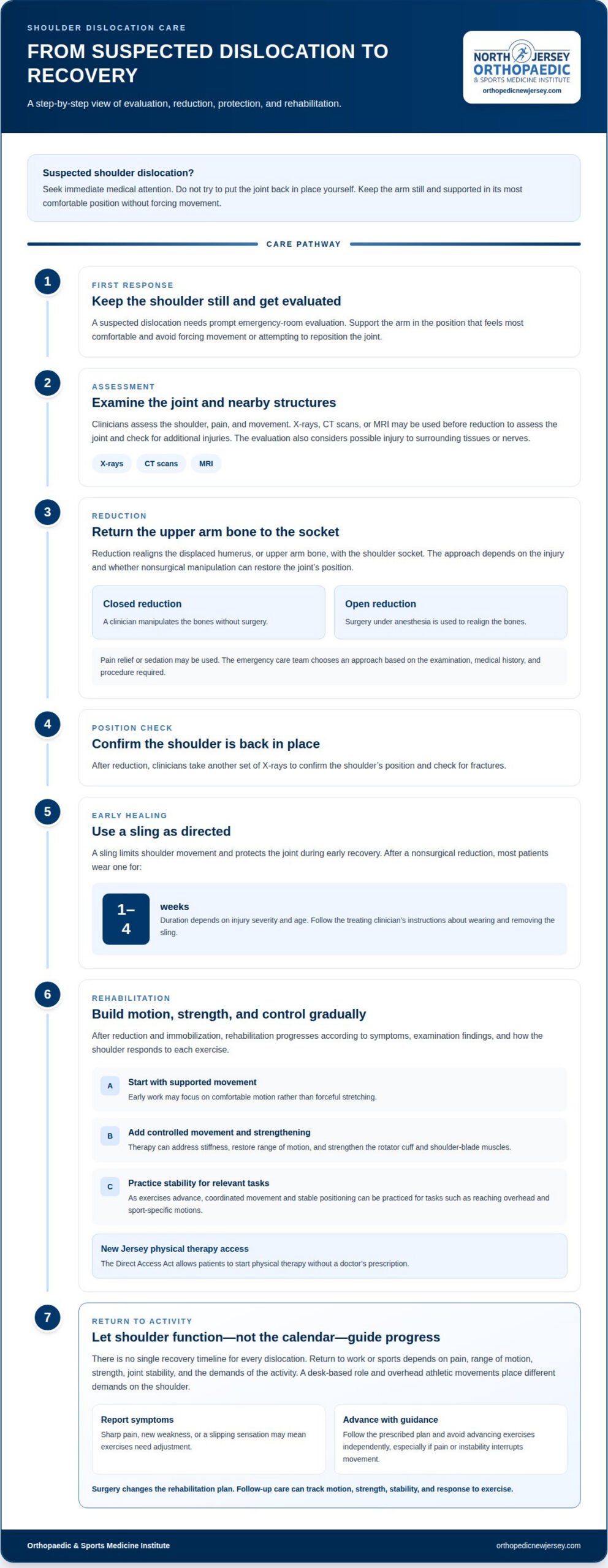
Don’t try to put the shoulder back in place. Keep the arm still and supported in its most comfortable position, without forcing movement. For shoulder dislocation treatment in North Arlington, NJ, a suspected dislocation requires immediate medical attention and emergency-room evaluation. Clinicians may use X-rays, CT scans, or MRI before reduction to assess the joint and check for additional injuries.
Insurance coverage for emergency-room or urgent-care treatment depends on your plan and its terms. Review your plan documents or call the number on your insurance card to ask about coverage and cost-sharing. Don’t delay emergency evaluation while seeking coverage information.
Rehabilitation to restore shoulder motion and strength
After reduction and immobilization, rehabilitation addresses motion, strength, and joint stability. Progress depends on symptoms, examination findings, and how the shoulder responds to each exercise.
Non-Surgical Rehabilitation Options
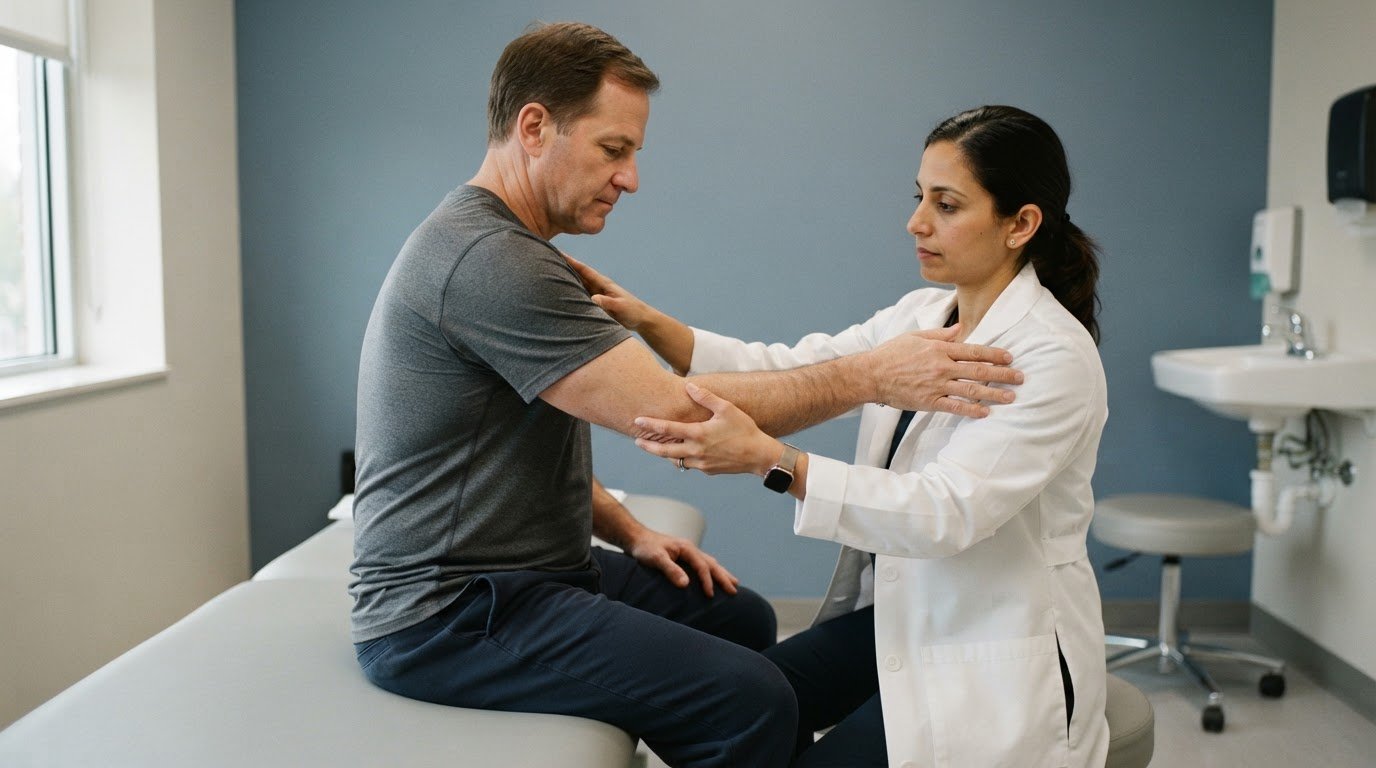
For a dislocation treated without surgery, a doctor guides the transition from protection to controlled movement. Physical therapy can address stiffness, restore range of motion, and strengthen the muscles supporting the shoulder. The therapist considers trauma-related pain, tissue injury, and movement quality before advancing activity. In New Jersey, the Direct Access Act allows patients to start physical therapy without a doctor’s prescription.
Rehabilitation Exercises
Exercises change as the shoulder tolerates more movement. Early work may focus on comfortable, supported motion rather than forceful stretching. Later, therapy can add controlled movement and strengthening for the rotator cuff and shoulder-blade muscles. Follow the treating professional’s plan and report sharp pain, new weakness, or a slipping sensation. These symptoms may mean exercises need adjustment.
Recovery and Return to Activities
There’s no single recovery timeline for every dislocation. Returning to work or sports depends on pain, range of motion, strength, joint stability, and the activity’s demands. A desk-based role and overhead athletic movements place different demands on the shoulder. A doctor or therapist uses progress in these areas to guide increases in activity rather than relying on the calendar alone. Surgery also changes the rehabilitation plan.
Near North Arlington, patients can begin physical therapy under New Jersey’s Direct Access Act without a doctor’s prescription. Follow-up care can track motion, strength, stability, and response to exercise; the doctor can also assess persistent symptoms or suspected tissue injury. For shoulder concerns involving a torn labrum or rotator cuff, an orthopedic shoulder evaluation can help identify the next treatment step.
Building Stability During Rehabilitation
Rehabilitation targets control as well as strength. As exercises advance, patients practice coordinated shoulder movement and stable positioning during tasks such as reaching overhead. Gradually returning to sport-specific motions lets the therapist assess control under relevant demands. Follow the prescribed plan and avoid advancing exercises independently, especially if pain or instability interrupts movement.
Shoulder immobilization after reduction
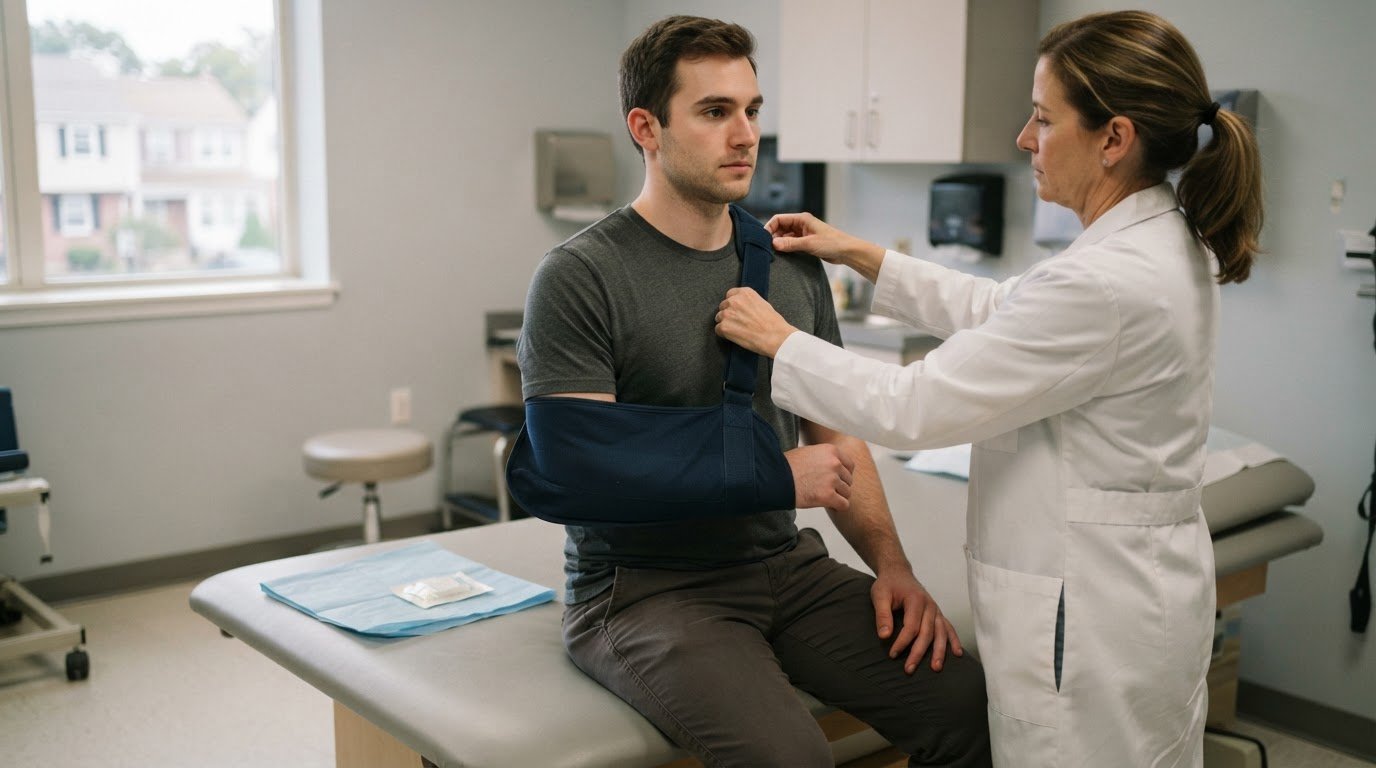
Once the humerus, or upper arm bone, is back in the socket, a sling helps limit shoulder movement. Immobilization protects the joint during early recovery, while follow-up care addresses pain, damage, and instability.
A suspected dislocation is assessed through a physical examination and imaging. X-rays, CT scans, or MRI scans can help identify associated injuries before reduction. Afterward, clinicians take another set of X-rays to confirm the shoulder is in place and check for fractures.
Reduction means returning the displaced humerus to the shoulder socket. In closed reduction, a clinician manipulates the bones without surgery. Open reduction uses surgery under anesthesia to realign them. The choice depends on the injury and whether nonsurgical manipulation can restore the joint’s position.
Pain relief or sedation may be used during reduction. The emergency care team selects the approach based on the patient’s examination, medical history, and the procedure required. Ask the team to explain the planned approach and what to expect before reduction begins.
After a nonsurgical reduction, most patients wear a sling for one to four weeks, depending on injury severity and age. Follow the treating clinician’s instructions about wearing and removing it. Avoid testing the joint with overhead reaching or lifting while the shoulder is immobilized. Keep follow-up appointments so clinicians can assess healing and guide the transition to rehabilitation.
After shoulder dislocation surgery, patients may need a sling for four to six weeks. This longer period helps protect repaired structures while they heal. A recurrent or complex dislocation can involve damaged ligaments or other joint structures, so the care plan may include surgical repair. Immobilization is followed by rehabilitation to rebuild motion, strength, and stability.
A sling supports the arm, but it doesn’t replace follow-up assessment. Report new numbness, unusual weakness, or worsening pain to the care team, since these symptoms may signal a concern that needs evaluation. Don’t try to force the shoulder into position or change the immobilization plan yourself. Clear instructions help protect the joint until guided movement begins.
Common causes of shoulder dislocation
A shoulder dislocation can follow a traumatic injury, a fall, or a sudden twisting motion. These events can force the upper arm bone out of its socket, disrupting the shoulder’s normal position. The exact movement matters: tell the clinician whether the injury happened during a collision, a fall, or a quick turn. This helps explain the force and direction involved.
Sports create several opportunities for shoulder trauma. A contact-sport collision can drive the arm abruptly, while repeated overhead movements place recurring demands on the joint. A sudden twist during active play can also displace the upper arm. Because these mechanisms differ, the clinician considers the event alongside pain, movement, and examination findings. Don’t try to reproduce the motion to demonstrate how the injury happened.
Falls are another cause. A slip or loss of balance can result in an impact that transfers force through the arm to the shoulder socket. If a fall is followed by severe shoulder pain, altered shape, or difficulty moving the arm, treat it as a possible dislocation and seek immediate medical attention. Avoid manipulating the joint yourself.
The cause remains relevant after reduction because associated damage can affect stability. Recurrent or complex dislocations may require surgery to repair damaged ligaments or other shoulder-joint structures. Treatment depends on the injury pattern and the structures affected, not simply on whether the person is active. Note what happened, which arm was involved, and whether the event occurred during sport, work, or a fall. Share those details during your assessment.
Shoulder instability can also be considered alongside other joint concerns. An orthopedic assessment helps identify whether the problem involves dislocation-related damage or a separate condition, such as shoulder arthritis. For ongoing shoulder symptoms after an injury, arrange an orthopedic shoulder evaluation to discuss the cause and appropriate next steps.
The Orthopaedic & Sports Medicine Institute: Bridge-enhanced ACL repair (BEAR® Implant)
The Orthopaedic & Sports Medicine Institute offers Bridge-enhanced ACL repair (BEAR® Implant) for ACL injuries, not shoulder dislocations. For ongoing shoulder symptoms after a dislocation, an orthopedic evaluation can assess persistent pain, weakness, or instability and identify related shoulder concerns.
Depending on the diagnosis, care may involve Minimally Invasive Orthopaedic Surgery, Rotator Cuff Repair, or Shoulder Arthritis Treatment. At the Orthopaedic & Sports Medicine Institute in Nutley, New Jersey, a board-certified orthopaedic surgeon and sports medicine specialist provides orthopedic evaluations and care for shoulder concerns. A suspected acute dislocation requires immediate emergency evaluation; follow-up orthopedic care can address ongoing problems after the joint has been assessed.
For information about shoulder care, contact The Orthopaedic & Sports Medicine Institute or visit orthopedicnewjersey.com.
Take the Next Step Toward Confident Shoulder Movement
As you plan your next step, focus on what your shoulder is doing now and what you need it to do again. Note which movements remain difficult, whether symptoms are changing, and which daily or work tasks are affected. These details can make a follow-up discussion more focused on your goals and concerns.
For shoulder dislocation treatment in North Arlington, NJ, continued orthopedic guidance can help connect the injury assessment with decisions about ongoing care. Bring your questions about activity, follow-up, and the milestones that will guide progress. A clear conversation can help you understand the reasoning behind your care plan and what to address next.
To discuss your shoulder concerns and next steps, contact The Orthopaedic & Sports Medicine Institute. Taking an informed, step-by-step approach can help you move forward with greater clarity.
Frequently Asked Questions
What is the difference between a dislocation and a subluxation?
A dislocation means the upper arm bone has moved completely out of the shoulder socket; a subluxation is a partial displacement. Both can cause pain and restricted movement, but a subluxation may look less deformed. For example, a shoulder that briefly slips and then settles may still be injured, so symptoms and function need clinical assessment.
When Should You Seek Care for an Injured Shoulder?
Seek prompt medical evaluation if shoulder pain follows a fall, collision, or sudden twisting injury, especially if movement becomes difficult. A suspected dislocation needs immediate emergency assessment. For pain that continues after the initial injury, an orthopedic evaluation can help identify the cause and guide next steps. Note what movements trigger symptoms and whether they interfere with work, sleep, or daily tasks.
When should a suspected shoulder dislocation be treated as an emergency?
Treat a suspected shoulder dislocation as an emergency rather than waiting for routine follow-up. Go to an emergency room for assessment, particularly after a clear injury with severe pain or inability to use the arm normally. Don’t attempt to reposition the joint yourself. Prompt evaluation helps clinicians assess the shoulder and nearby structures before deciding on treatment.
What X-rays or other imaging are needed before and after shoulder reduction?
Imaging before reduction helps clinicians assess the shoulder’s position and look for related injuries. X-rays are commonly used; CT or MRI may also be considered to assess additional damage. After reduction, a second set of X-rays confirms that the joint is back in place and checks for fractures. The specific images depend on examination findings and the injury being assessed.
When is surgery needed for a shoulder dislocation, and what are the risks of recurrence?
Surgery may be considered for recurrent or complex dislocations when damaged ligaments or other joint structures need repair to restore stability. The decision depends on the injury pattern and the structures involved. Recurrence rates exceed 50% in the general population, so a prior dislocation is relevant during follow-up. Discuss repeated slipping episodes and activity demands during an orthopedic assessment.