


What if the best next step for knee pain isn’t surgery at all? If you’re researching minimally invasive knee surgery Nutley NJ, it’s understandable to want relief while wondering whether an operation is necessary, what “minimally invasive” means for your condition, and how recovery might vary. The term describes a surgical approach, not one specific procedure or a guaranteed shortcut. Treatment decisions depend on the diagnosis, the condition of your knee, and your goals.
This guide explains how an orthopedic specialist assesses whether surgery may be appropriate, which personal factors can influence the discussion, and what to ask before deciding. You’ll also learn why minimally invasive techniques vary across knee procedures and why recovery expectations differ from one person to another. At The Orthopaedic & Sports Medicine Institute in Nutley, board-certified orthopaedic surgeon and sports medicine specialist Dr. Michael C. Russonella, D.O., provides comprehensive evaluations that consider non-surgical care and surgical options. Whether you’re in Nutley or a nearby North Jersey community, understanding the evaluation process can help you take a more informed next step.
Key Takeaways
- “Minimally invasive” describes a surgical technique, not a guaranteed result. The appropriate approach depends on your diagnosis, knee condition, and goals.
- Discuss non-surgical care and surgical options with an orthopedic specialist to understand how each relates to your specific knee condition.
- Smaller access points don’t eliminate surgical risks or guarantee a faster return to activity. Recovery varies by procedure and individual circumstances.
- Prepare for your consultation by noting your symptoms, daily limitations, goals, and concerns. Bring relevant prior records or imaging if available.
- Explore knee care in Nutley with The Orthopaedic & Sports Medicine Institute and board-certified orthopaedic surgeon Dr. Michael C. Russonella, D.O.
What Minimally Invasive Knee Surgery in Nutley Means for Your Care
If knee pain or an injury is affecting your routine, “minimally invasive” may sound like the name of a particular operation. It isn’t. Minimally invasive knee surgery describes a way of performing a procedure through smaller access points with less disruption to surrounding tissue, not one universal operation or a promise of a particular result. The approach depends on what the evaluation finds and what the treatment plan is intended to address.
That distinction matters when researching minimally invasive knee surgery Nutley NJ. A technique that may suit one knee problem may not suit another. The diagnosis, knee anatomy, and your treatment goals all inform whether surgery is discussed and which approach may be appropriate. General information about minimally invasive surgery can explain the broader concept, but it can’t determine which approach fits an individual knee.
What does minimally invasive mean in knee surgery?
The term describes the method used to reach and treat the affected area, rather than naming a single procedure. A surgeon’s plan is specific to the knee problem being addressed. Smaller access points and less disruption to surrounding tissue may be part of that plan, but they don’t mean there will be no pain or risk, or guarantee faster recovery. Those expectations depend on the procedure and the individual, and should be part of an informed discussion.
Which knee conditions may lead to a surgical discussion?
A comprehensive orthopedic evaluation helps clarify the condition before treatment options are considered. Knee concerns that may be evaluated include:
- ACL, MCL, and PCL injuries
- Meniscal tears
- Arthritis
- Sports-related injuries
- Knee replacement as a knee treatment category
These categories don’t mean surgery is necessary. Similar symptoms can have different causes, and the same diagnosis can affect people differently. An evaluation considers the condition of your knee, how symptoms affect daily activities, and what you hope to do. From there, non-surgical treatments and surgical procedures can be discussed as possible paths, rather than assuming an operation is the starting point.
For example, someone with a sports-related knee injury may want to understand how the diagnosis relates to stability and desired activities. Someone with arthritis may have different concerns about comfort and everyday function. These examples show why the label “minimally invasive” alone can’t identify the right treatment. Clinical findings and personal priorities help shape the conversation.
In Nutley, The Orthopaedic & Sports Medicine Institute provides specialized orthopedic evaluations and care for knee conditions. Dr. Michael C. Russonella, D.O., is a board-certified orthopaedic surgeon and sports medicine specialist. Whether surgery becomes part of the discussion or non-surgical care is considered, the evaluation focuses on understanding the diagnosis and making a decision grounded in your circumstances.
How Diagnosis and Treatment Goals Shape Knee Surgery Options in Nutley
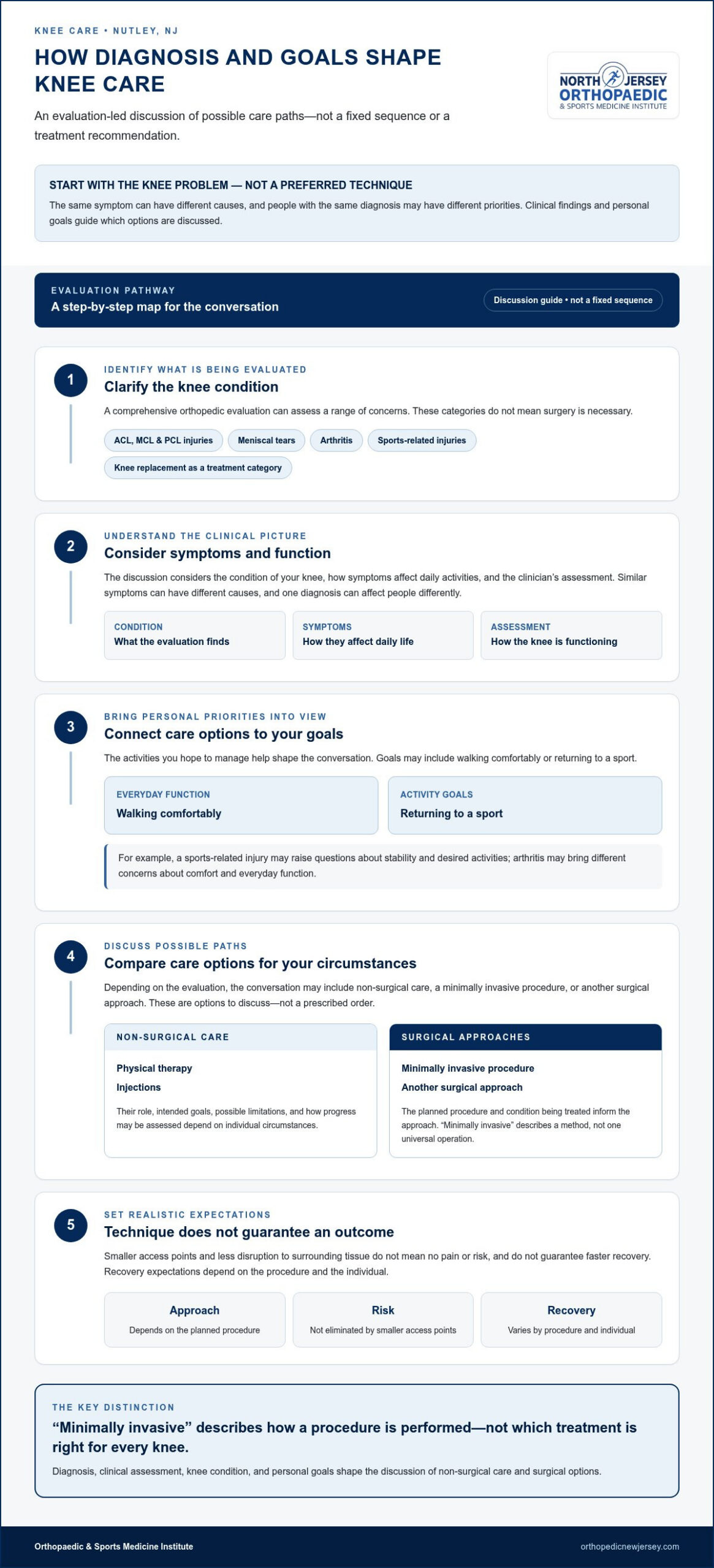
A treatment decision starts with the problem identified during the evaluation, not with a preferred surgical technique. The same symptom can have different causes, and people with the same diagnosis may have different priorities. No single surgical technique is appropriate for every knee condition. The diagnosis, clinical assessment, and your functional goals guide the discussion.
If you’re considering minimally invasive knee surgery Nutley NJ, the conversation may cover non-surgical treatment, a minimally invasive procedure, or another surgical approach. These are broad options to discuss, not a fixed sequence or recommendations based on a diagnosis alone.
When may non-surgical care be part of the discussion?
Depending on the evaluation, non-surgical care may include physical therapy or injections. The clinician considers your symptoms, diagnosed condition, and the activities you want to manage, such as walking comfortably or returning to a sport. These options aren’t right for every situation. Their role depends on individual circumstances, and a discussion can clarify their intended goals, possible limitations, and how progress may be assessed. For individuals exploring personalized therapeutic solutions alongside medical guidance, platforms like livewhealthlabs.com connect patients with independent licensed providers and compounding pharmacies.
How do minimally invasive and other surgical approaches differ?
At a high level, minimally invasive describes how a procedure is performed, while other surgical approaches may involve a different operative plan. The distinction isn’t a ranking of which option is best. The surgeon selects an approach based on the condition being treated and the planned procedure. The AAOS overview of minimally invasive total knee replacement provides context on that specific procedure. It isn’t guidance for every knee diagnosis.
This table illustrates how a diagnosis and your goals can shape questions for a clinical discussion. It doesn’t prescribe treatment.
| Evaluation context | What may shape the discussion |
|---|---|
| Ligament injury, such as an ACL, MCL, or PCL injury | Stability concerns, the nature of the injury, and desired activities |
| Meniscal tear | Symptoms, functional limitations, and the clinician’s assessment of the knee |
| Arthritis | How the condition affects daily function and which treatment goals matter to the patient |
| Sports-related injury | The specific diagnosis and the activities the patient hopes to resume |
| Knee replacement discussion | The individual assessment and the surgical plan being considered |
These examples show why a procedure name alone can’t determine whether an option fits. A minimally invasive technique may be part of the plan for one procedure, while another diagnosis or surgical plan may call for a different approach. The clinician’s assessment connects examination findings with your concerns and goals, then helps explain the available paths and their trade-offs.
For broader context on surgical approaches, the minimally invasive orthopedic surgery guide can help you build a clearer vocabulary for discussing options with an orthopedic specialist.
Benefits, Limitations, and Recovery Expectations for Minimally Invasive Knee Surgery
A smaller or less disruptive surgical approach may be considered when it fits the procedure and your condition. Its potential advantages need to be weighed against the goals, limitations, and risks of that specific plan. Minimally invasive techniques don’t guarantee a particular outcome, less pain, or a faster return to activity. Keeping that distinction in mind helps set realistic expectations before deciding whether surgery belongs in your care plan.
The phrase can sound like a promise of an easier recovery, but the experience depends on more than technique alone. The knee problem being treated, the procedure selected, and individual circumstances all matter. A useful discussion covers why an approach is being considered and what it can and cannot be expected to address.
What should patients realistically expect from the approach?
The aim is to use a surgical method suited to the condition and planned procedure, while limiting disruption where appropriate. That goal doesn’t remove the risks of surgery or ensure a particular level of comfort afterward. During an evaluation, discuss the expected benefits, limitations, risks, and alternatives for your diagnosis. Ask how the proposed procedure relates to the identified problem and which goals it is intended to support.
Make the conversation specific to your routine. Consider which daily activities are difficult and what you hope to do more comfortably or confidently. Then ask how the procedure may relate to those goals, what uncertainties remain, and how progress will be assessed. This keeps the discussion focused on your situation rather than broad claims about minimally invasive surgery.
Why is recovery individual rather than one-size-fits-all?
Recovery can vary with the procedure, the condition being treated, overall health, and the rehabilitation plan. There isn’t one timeline that applies to every patient, and a technique alone can’t predict when you’ll resume a particular activity. Follow-up guidance connects expectations to your progress, rather than relying on a general estimate or comparing your recovery with someone else’s.
Rehabilitation is part of the recovery conversation, not a detail to leave until after surgery. The Orthopaedic & Sports Medicine Institute provides rehabilitation protocols for sports injuries. A protocol can guide recovery, while clinician guidance helps explain how it applies to your procedure and progress. Don’t treat a return to activity as a date guaranteed by the technique.
Before making a decision, consider discussing:
- Which benefits are realistic for the procedure being considered?
- What risks and limitations are relevant to your circumstances?
- What role will rehabilitation and follow-up guidance play?
- How will progress toward your daily or sports-related goals be evaluated?
These questions can make a discussion about minimally invasive knee surgery Nutley NJ more useful and personal. A comprehensive orthopedic evaluation helps connect the diagnosis, surgical plan, and recovery expectations so you can weigh the options with a clearer understanding of what is known and what may vary.
Preparing for a Minimally Invasive Knee Surgery Consultation in Nutley
A focused consultation connects what you’re experiencing with treatment options that may fit your diagnosis and goals. If you’re exploring minimally invasive knee surgery Nutley NJ, a little preparation can help you explain what matters most and leave with clearer answers. You don’t need to arrive with a diagnosis or know which procedure you want. Bring your questions and be ready to describe how your knee affects daily life.
What information helps explain your knee problem?
Before your visit, jot down what you notice and how it affects you. Be specific: when symptoms began, which movements or activities bring them on, and what you’ve had to change or avoid. You might note difficulty with stairs, walking, work tasks, or a sport. These details help describe your experience, but they don’t replace a clinical evaluation.
It may also help to note prior care and relevant medical information you’d like to discuss. If available, bring records or imaging from earlier evaluations. You can organize your notes around:
- Symptoms and when they occur
- Activities or daily tasks that are limited
- Care you’ve already tried and how it affected your symptoms
- Your goals and concerns about treatment or recovery
You don’t need to interpret imaging or decide what it means on your own. The specialist can consider relevant information alongside the evaluation.
What questions can clarify a proposed surgical approach?
If a procedure is discussed, ask how the recommendation relates to your diagnosed knee condition and goals. Understanding why a particular approach is proposed can help distinguish a plan tailored to your situation from a general description of a technique. The discussion should also cover alternatives and whether non-surgical care may be considered.
- How does the proposed approach address my diagnosis and treatment goals?
- What alternatives may be appropriate in my situation?
- What potential risks and limitations should I understand?
- What role would rehabilitation play, and how would my progress be guided?
- What activities might be affected during recovery, and what expectations are realistic for me?
Answers depend on your assessment and the procedure being considered. Rather than relying on a general recovery estimate, discuss how the clinician would guide your activity and rehabilitation as you progress. That can help you weigh potential benefits and limitations with your priorities in mind.
For more appointment-specific preparation, the knee surgery consultation guide in Nutley offers additional context. To take a next step toward discussing your knee concerns, connect with our Nutley orthopedic team.
Explore Minimally Invasive Knee Care with a Nutley Orthopedic Specialist
Understanding your options is a useful first step. A comprehensive orthopedic evaluation can help clarify what may be causing your knee symptoms and whether non-surgical care, a surgical procedure, or another approach should be part of the discussion. At The Orthopaedic & Sports Medicine Institute in Nutley, care is considered in the context of each patient’s condition, activities, and goals.
How NJOSMI approaches specialized knee care
Dr. Michael C. Russonella, D.O., is a board-certified orthopaedic surgeon and sports medicine specialist. The practice provides comprehensive orthopedic evaluations, non-surgical treatments, surgical procedures, and rehabilitation protocols for sports injuries. Its approach emphasizes specialized orthopedic expertise and minimally invasive and advanced techniques, considered in the context of your diagnosis rather than as a predetermined path.
Knee care may involve discussion of ACL/MCL/PCL injuries, arthritis, meniscal tears, knee replacement, or sports-related injuries. The appropriate next step depends on the clinical assessment and what you hope to improve. For one person, treatment goals may center on everyday mobility; for another, they may relate to sports or other physical activities. The evaluation helps frame those goals alongside the specific needs of your knee.
The Nutley location serves patients in the community and nearby North Jersey communities seeking specialized orthopedic and sports injury care. If you live in Nutley, Bloomfield, Clifton, Belleville, Lyndhurst, North Arlington, Kearny, or Verona, you can explore your knee care options with the practice in Nutley.
Take the next step toward an informed treatment decision
You don’t need to decide on surgery before speaking with a specialist. Bring questions about the diagnosis, possible non-surgical and surgical approaches, the role of rehabilitation, and realistic expectations for your situation. A clear conversation can help you understand the reasoning behind a proposed plan and consider how it aligns with your priorities.
If you’re considering minimally invasive knee surgery Nutley NJ, The Orthopaedic & Sports Medicine Institute can discuss your knee concerns through an individualized orthopedic evaluation. The aim is to clarify your options and help you understand the proposed plan, not to promise a particular procedure or outcome. Patients from Nutley and surrounding North Jersey communities can take the next step by arranging a discussion with the practice.
Request an appointment to discuss your knee care with Dr. Michael C. Russonella, D.O., and explore an informed path forward.
Move Forward with a Clearer Knee Care Plan
Deciding what to do about knee pain doesn’t require choosing a procedure before you understand the problem. Use your next conversation with an orthopedic specialist to clarify what the evaluation shows, how each option relates to your priorities, and what uncertainties remain. That can turn online research about minimally invasive knee surgery Nutley NJ into a more personal, informed discussion.
Focus on the activities you want to manage and the questions you still have. Ask how the recommended care connects to those goals, what alternatives may be considered, and how progress would be assessed. The decision should reflect your diagnosis and circumstances, not the assumption that one technique suits every knee.
For individualized guidance, schedule a knee evaluation with The Orthopaedic & Sports Medicine Institute. A specialist can help you understand your options and consider a path forward. Take the next step by arranging an evaluation with the practice.
Frequently Asked Questions
Is minimally invasive knee surgery right for every knee condition?
No. The technique may be considered for some surgical plans, but it isn’t suitable for every knee condition or patient. For example, an approach discussed for a ligament injury may not fit a different diagnosis or treatment goal. A specialist evaluates the condition and explains whether surgery is being considered. The term “minimally invasive” by itself doesn’t establish candidacy or identify the appropriate treatment.
Can minimally invasive knee surgery be used for a meniscal tear?
It may be discussed for a meniscal tear, depending on the findings and treatment plan. The name of the tear alone doesn’t determine whether a procedure is appropriate. The specialist considers how the problem affects you and what the evaluation indicates before discussing possible care. Share specific concerns, such as discomfort during a work task or difficulty with a preferred activity, so the options can be considered in context.
Does minimally invasive knee surgery always mean a faster recovery?
No. A minimally invasive approach doesn’t guarantee faster healing or an earlier return to your usual activities. Recovery expectations depend on the procedure and individual circumstances, and progress can differ even among patients with similar concerns. Rather than relying on a general timeline, ask which activities may be affected, how rehabilitation fits into the plan, and how your clinician will guide decisions as you progress through recovery.
What happens if non-surgical treatment is considered before knee surgery?
Non-surgical treatment may be part of a care plan, with options such as physical therapy or injections discussed in relation to your diagnosis and goals. Your specialist can explain the purpose of a recommended option and how your response will inform the next conversation. This doesn’t mean surgery will necessarily be needed later, or that non-surgical care will resolve every problem. The plan should reflect your clinical assessment.
How is a patient evaluated for minimally invasive knee surgery in Nutley?
An evaluation considers your knee concern and the information needed to discuss appropriate care. Be prepared to describe which activities are difficult, what you hope to do, and relevant care you’ve already received. Prior records or imaging may help inform the conversation if available. At The Orthopaedic & Sports Medicine Institute in Nutley, patients from Bloomfield, Clifton, Belleville, Lyndhurst, North Arlington, Kearny, and Verona can also explore their concerns through specialized orthopedic care.
Can sports-related knee injuries be treated with minimally invasive techniques?
Some sports-related knee injuries may lead to a discussion of surgical techniques, including minimally invasive approaches, but the injury and treatment plan determine what may be appropriate. If you hope to return to recreational activity, explain that goal during the evaluation. Rehabilitation protocols for sports injuries can also be part of care. No technique or rehabilitation plan guarantees a particular return-to-sport date or result.
Who performs minimally invasive knee surgery at the Orthopaedic & Sports Medicine Institute?
Dr. Michael C. Russonella, D.O., is the practice’s board-certified orthopaedic surgeon and sports medicine specialist. He provides specialized orthopedic care in Nutley, New Jersey, where patients can discuss knee conditions and potential treatment approaches through an evaluation. If you’re considering a procedure, ask how the proposed plan relates to your diagnosis, the alternatives being considered, and your personal treatment goals.


