


Could a focused injury evaluation help you make a more informed plan for returning to activity? Pain, swelling, or reduced function can disrupt sports, exercise, and everyday routines. When searching for a sports medicine doctor Clifton NJ, you’re likely looking for clear answers about what may be causing the problem and what to do next, not assumptions about surgery or recovery.
A sports medicine evaluation considers your symptoms, how the injury happened, physical examination findings, and the activities you want to resume. These details help guide treatment recommendations around your diagnosis, function, and goals. Because similar symptoms can have different causes, an assessment is more useful than trying to identify an injury based on pain alone.
This article explains what a sports medicine doctor may evaluate, how clinical findings can inform treatment, and how to prepare for an appointment. The Orthopaedic & Sports Medicine Institute provides specialized orthopedic and sports injury care in Nutley for Clifton and nearby North Jersey communities, including Bloomfield, Belleville, Lyndhurst, North Arlington, Kearny, and Verona. The practice focuses on knee, shoulder, and tendon injuries and uses minimally invasive orthopedic techniques when appropriate.
Key Takeaways
- Consider an evaluation when pain or reduced movement persists, returns with activity, or interferes with everyday function, whether or not you’re a competitive athlete.
- An injury history and physical examination help a physician assess symptoms; imaging may be considered when appropriate.
- An injury doesn’t automatically require surgery. Diagnosis, severity, function, and personal goals all inform treatment recommendations.
- Before an appointment, note how the injury happened, which activities are limited, and what evaluations or imaging you’ve already had.
- A sports medicine doctor Clifton NJ patients can consult at The Orthopaedic & Sports Medicine Institute can assess knee, shoulder, and tendon injuries at its Nutley practice.
When Should You See a Sports Medicine Doctor Near Clifton, NJ?
Pain can turn a routine run into a struggle, interrupt a game, make work harder, or limit everyday movements such as reaching, lifting, and climbing stairs. A sports medicine doctor evaluates and treats activity-related problems affecting muscles, bones, joints, tendons, and ligaments. The field is not limited to competitive athletes. For a general overview of its scope and the professionals involved, see What is Sports Medicine?
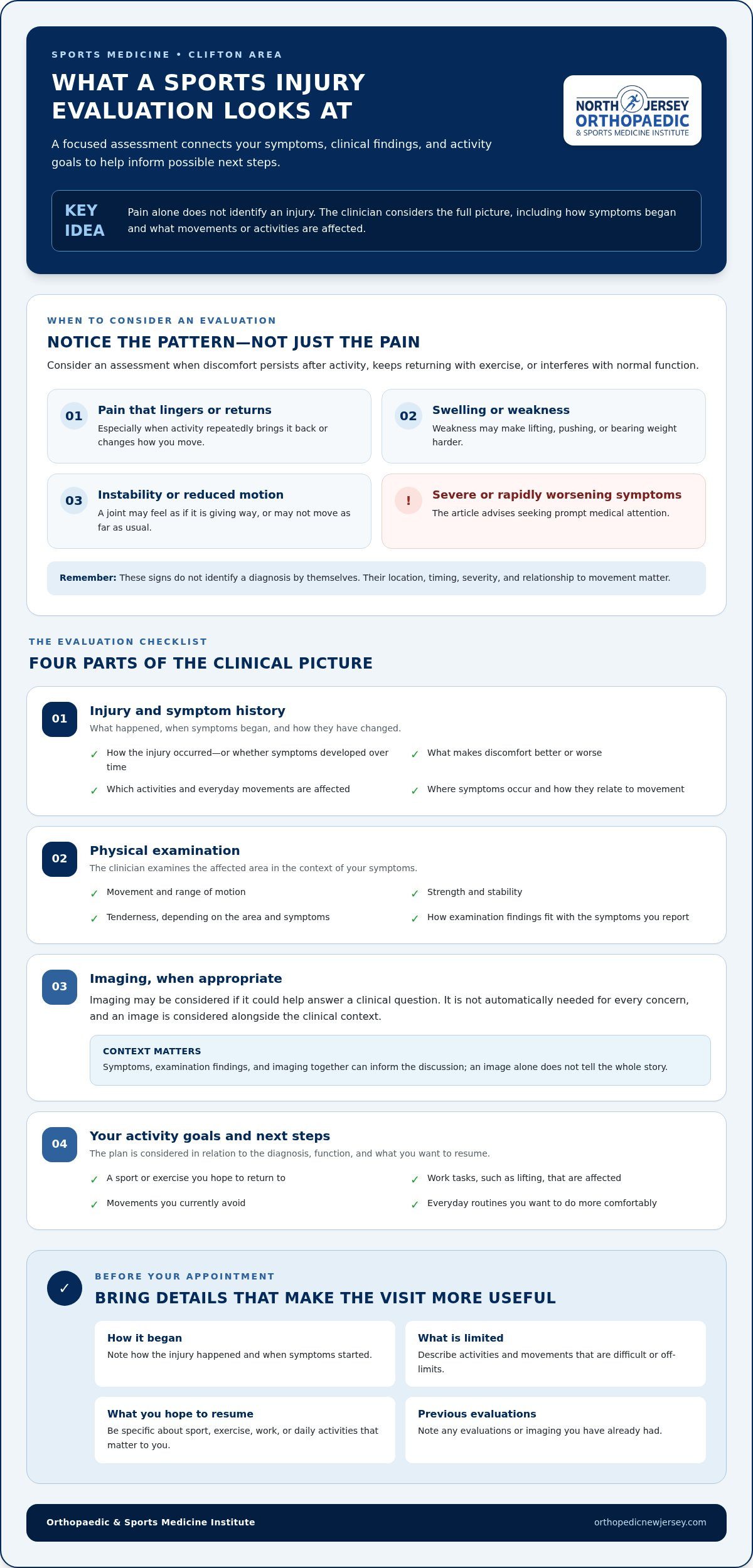
Consider an evaluation if discomfort persists after activity, returns whenever you exercise, or interferes with normal function. A sports medicine doctor Clifton NJ patients consult can assess symptoms in the context of how an injury occurred, which movements are difficult, and what activities you want to resume. Symptoms offer clues, but they don’t identify a specific injury by themselves.
Which symptoms may need a sports injury evaluation?
Pay attention to pain that lingers or repeatedly flares with activity, particularly if it changes how you move or prevents you from completing usual tasks. Swelling may appear around the affected area. Weakness can make lifting, pushing, or bearing weight harder. Instability may feel like a joint is giving way, while reduced range of motion means you can’t comfortably move it as far as usual.
These signs don’t point to one diagnosis on their own. Their location, timing, severity, and relationship to movement all matter. If symptoms are severe or worsening rapidly, seek prompt medical attention. An evaluation can help clarify the concern and guide appropriate next steps.
Who can benefit from sports medicine care?
Recreational runners, competitive athletes, weekend players, and active adults can all develop activity-related injuries. Repetitive exercise, a sudden change in movement, or an injury during sport can affect anyone’s ability to stay active.
Care should take into account what you need to do, whether that means returning to a sport, exercising comfortably, managing physical demands at work, or moving through daily routines with less difficulty. Describe your activity goals and limitations during an evaluation. That context helps the physician consider the injury alongside the demands of your usual life and discuss an appropriate plan.
How a Sports Medicine Doctor Evaluates Knee, Shoulder, and Tendon Injuries
An injury evaluation typically starts with your history and a physical examination. The clinician may also consider imaging when appropriate, then discuss the findings and possible next steps with you. How the injury happened, how symptoms have changed, and which movements bring them on can help put knee, shoulder, and tendon concerns into context.
Diagnosis combines the symptoms you report with findings from a clinical examination. Neither a symptom alone nor an image viewed without clinical context tells the whole story. If shoulder discomfort is part of your concern, MedlinePlus offers an overview of Common Shoulder Injuries; an individual assessment is needed to understand your own symptoms.
What happens during the first sports medicine consultation?
The clinician will ask when symptoms began, how the injury occurred, and what makes the discomfort better or worse. Be ready to explain whether symptoms came on suddenly during a particular movement or developed over time, and how they affect your daily activities.
A physical examination follows. Depending on the affected area and your symptoms, the clinician may assess movement, strength, stability, and tenderness. Imaging may be considered if it could help answer a clinical question; it isn’t automatically needed for every concern. The clinician can then explain the findings and how they inform possible next steps.
How do activity goals inform the evaluation?
Your activity demands help put the examination in practical context. A job that involves lifting, regular exercise, and a sport involving repeated overhead motion place different demands on the body. Two people with similar symptoms may therefore have different priorities and treatment discussions. A sports medicine doctor Clifton NJ patients consult should consider both the affected area and the movements and activities the patient hopes to resume.
Be specific about what you want to get back to and what you currently have to avoid. That information helps shape a plan around your diagnosis, function, and goals instead of relying on a one-size-fits-all approach. The Orthopaedic & Sports Medicine Institute provides injury-focused orthopedic and sports medicine care from its Nutley practice for patients from Clifton and nearby communities.
Does a Sports Injury Always Require Surgery? Understanding Your Options
No. A sports injury doesn’t automatically mean surgery. The appropriate next step depends on the evaluation, including the diagnosis, injury severity, symptoms, how the affected area functions, and the activities you want to return to. Similar complaints can have different causes, so treatment decisions should follow an individualized assessment rather than assumptions based on pain alone.
A procedure is a possible treatment option, not a recommendation made before the injury has been evaluated. A sports medicine doctor Clifton NJ patients see can consider the clinical findings alongside your goals, explain possible approaches, and discuss why an option may or may not fit your situation. The aim is an informed decision, not a promise of a specific result.
How are treatment recommendations individualized?
The discussion draws on your reported symptoms and the clinician’s examination findings. Imaging may also contribute when indicated to clarify the injury or answer a clinical question. Together, these details help establish how the injury affects movement and function.
Your preferences and activity needs matter, too. Returning to a physically demanding job, recreational exercise, or competitive sport can involve different priorities. Share what you hope to resume and what you currently find difficult. This supports shared decision-making: the clinician explains the reasoning behind possible options, and you can discuss questions and concerns.
When might specialized orthopedic procedures enter the discussion?
A procedure may be considered when the specific diagnosis and clinical findings support it. For example, an evaluation of a knee injury may identify an ACL concern that warrants a focused discussion of surgical options. That does not mean every knee injury, or every ACL injury, calls for the same procedure. Learn more about one ACL treatment option in this BEAR Implant ACL repair guide.
Shoulder or tendon procedures may also enter the conversation when the assessment points to an injury for which a procedure is appropriate. The Orthopaedic & Sports Medicine Institute provides specialized care for knee, shoulder, and tendon injuries, including minimally invasive orthopedic surgery. Whether surgery is part of an individual plan depends on the evaluation, not simply on which body part hurts.
For an overview of the practice’s orthopedic and sports injury care, explore the Orthopaedic & Sports Medicine Institute, serving Clifton and nearby North Jersey communities from Nutley.
Preparing for a Sports Medicine Appointment in the Clifton Area
A little preparation can help make your appointment more focused. Before meeting with a sports medicine doctor Clifton NJ residents may consult, organize what you’ve noticed, how the injury began, and what you hope to do more comfortably. Clear details about symptoms and activity needs help the clinician understand how the problem affects your daily life.
What information should you bring?
Note when symptoms started, what seems to worsen or ease them, and which movements or tasks are limited. Include how the injury occurred, such as a twist or fall, or whether symptoms developed gradually. Also note any prior evaluations or care.
- Relevant imaging reports and treatment records, if available.
- A current list of medications.
- Examples of activities affected, such as work tasks, exercise, or sport.
- Your main questions and personal activity goals.
You don’t need to know the diagnosis before the visit. Specific observations are more useful than trying to label the injury yourself.
What should you ask about your care plan?
Use the discussion to understand what the evaluation suggests and whether additional assessment may be appropriate. Ask how proposed care relates to your work, exercise routine, or sport, and what changes you may need to consider as you work toward your goals.
- What do the examination findings suggest?
- Would additional assessment help clarify the injury?
- How might the proposed approach affect my usual activities?
- What factors will shape expectations for recovery?
Recovery expectations depend on the individual injury and clinical findings, so avoid assuming a fixed timeline. Ask the clinician to explain the relevant factors and what progress may be assessed along the way.
The Orthopaedic & Sports Medicine Institute is based in Nutley and serves patients from Clifton and nearby North Jersey communities, including Bloomfield, Belleville, Lyndhurst, North Arlington, Kearny, and Verona. Its board-certified surgeon focuses on knee, shoulder, and tendon injuries. Bringing relevant records, questions, and activity priorities can help make the evaluation specific to your needs.
Prepare for an injury-focused evaluation with the Orthopaedic & Sports Medicine Institute.
Clifton at The Orthopaedic & Sports Medicine Institute
For people searching for a sports medicine doctor Clifton NJ, The Orthopaedic & Sports Medicine Institute provides specialized orthopedic and sports injury care from its practice in Nutley, serving Clifton and surrounding North Jersey communities. A board-certified surgeon focuses on knee, shoulder, and tendon injuries, with evaluations that connect clinical findings to a patient’s symptoms and activity priorities.
What the practice treats
Sports-related injuries can affect the knee during running, jumping, or a change in direction. Shoulder symptoms may interfere with lifting or overhead movement, while tendon problems can limit exercise and daily tasks. The practice’s injury-focused orthopedic care addresses these areas, with treatment discussions guided by each evaluation rather than a standard approach for every patient.
Minimally invasive orthopedic techniques are part of the practice’s surgical care when clinically appropriate. The approach depends on the diagnosis and the patient’s circumstances. Minimally invasive surgery does not guarantee a particular recovery speed or outcome. For a closer look at shoulder care, explore the practice’s rotator cuff repair services and resources on specific procedures, keeping in mind that an evaluation determines which options may be appropriate.
How to take the next step
A consultation gives you time to describe your symptoms, explain how they began, and discuss which activities or responsibilities they affect. You can review relevant examination findings, ask what they may indicate, and talk through treatment options and factors that could shape your care plan. Bringing prior imaging reports or a list of questions can help you make the most of the conversation.
Clifton-area patients can visit the Nutley practice for specialized orthopedic and sports injury care. If pain or limited function is affecting your routine, a consultation is a practical way to discuss your concerns with the surgeon and understand possible next steps. The evaluation provides a basis for discussing care in light of your questions and priorities.
Schedule a consultation through the practice website to discuss your injury, findings, and treatment options.
Take the Next Step Toward Clearer Injury Care
Pain or reduced movement doesn’t have to leave you guessing about what to do next. A focused evaluation considers your symptoms, examination findings, and activity goals to guide a treatment discussion. An injury doesn’t automatically mean surgery; recommendations depend on the specific diagnosis and your needs.
If you’re looking for a sports medicine doctor Clifton NJ, The Orthopaedic & Sports Medicine Institute provides specialized knee, shoulder, and tendon injury care from its Nutley practice, serving Clifton and nearby communities such as Bloomfield, Belleville, Lyndhurst, North Arlington, Kearny, and Verona. A board-certified surgeon can discuss your concerns, explain relevant findings, and review treatment options, including minimally invasive orthopedic approaches when appropriate.
Bring your questions and describe the activities you hope to resume. Schedule a sports medicine consultation with The Orthopaedic & Sports Medicine Institute to discuss your injury and care options.
Frequently Asked Questions
When should I see a sports medicine doctor for an injury?
Consider an evaluation if pain persists, keeps returning with activity, or limits work, exercise, sport, or everyday movement. Swelling, weakness, a feeling that a joint may give way, or difficulty moving normally are also reasons to seek guidance. These symptoms don’t identify a diagnosis by themselves. If symptoms are severe or rapidly worsening, seek prompt medical attention rather than waiting for a routine consultation.
Can a sports medicine doctor help if I am not a competitive athlete?
Yes. Sports medicine care can benefit recreational athletes and active adults as well as competitive athletes. An injury can affect someone who exercises casually, plays a weekend sport, or has physically demanding daily routines. The evaluation considers the activities that matter to you, whether that’s returning to a particular sport, exercising more comfortably, or managing everyday movement. Competition level doesn’t determine whether an injury deserves assessment.
Does every sports injury require surgery?
No. Surgery is not automatic after a sports injury. Recommendations depend on the diagnosis, injury severity, symptoms, function, and personal activity goals. A clinician uses the evaluation findings to explain relevant treatment options and why an approach may fit your circumstances. The Orthopaedic & Sports Medicine Institute provides minimally invasive orthopedic surgery when appropriate, but the need for a procedure is determined by the individual clinical assessment, not assumed in advance.
What happens during a sports medicine appointment?
A sports medicine appointment generally begins with a discussion of your symptoms, when they started, and how the injury occurred. The clinician may examine the affected area and assess movement, strength, or stability. Imaging may be considered when appropriate to help clarify the findings. You can also discuss how symptoms affect work, exercise, or sport, then review what the evaluation suggests and possible next steps.
Can I see a sports medicine doctor in Clifton, NJ?
The Orthopaedic & Sports Medicine Institute is based in Nutley and serves patients from Clifton and surrounding North Jersey communities. Its board-certified surgeon focuses on knee, shoulder, and tendon injuries. The practice also serves nearby communities including Bloomfield, Belleville, Lyndhurst, North Arlington, Kearny, and Verona. Patients can discuss injury concerns and activity goals as part of a sports medicine consultation.
What should I bring to a sports medicine consultation?
Bring relevant imaging reports or prior treatment records if you have them, along with a current medication list. It can help to note when symptoms began, what aggravates them, how the injury happened, and which activities are limited. Write down your main questions and goals, such as returning to exercise or managing a work task. You don’t need to arrive with a suspected diagnosis.
How do sports medicine doctors diagnose knee or shoulder injuries?
Diagnosis draws on your description of symptoms and the clinician’s examination findings. The doctor may ask how the injury occurred, assess movement and strength, and examine the affected area. Imaging can be considered when the clinical assessment indicates it may help answer a question about the injury. Knee and shoulder symptoms can have different causes, so an individualized evaluation helps guide the discussion of treatment options.


