Choosing a minimally invasive procedure is a sophisticated step toward reclaiming your mobility, yet the true path to success begins the moment you leave the surgical center. Most patients in North Jersey feel a blend of relief and sudden apprehension once the initial anesthetic wears off. It’s common to worry about managing post-operative swelling or feel anxious about the strict logistics of a rehabilitation schedule. Understanding what to expect after arthroscopic knee surgery NJ is essential for a smooth transition from the operating room back to your daily routine in Nutley or Clifton.
This specialist-led guide provides the clinical clarity you need to navigate your post-operative journey with absolute confidence. We’ve structured this resource to mirror the diagnostic process, moving from immediate care to long-term wellness. You’ll find a precise week-by-week recovery roadmap, evidence-based pain management strategies, and clear medical milestones to help you determine when it’s safe to return to driving and professional duties. By following a structured protocol developed by board-certified expertise, you can replace uncertainty with a proactive plan for a full, stable recovery.
Key Takeaways
- Understand how minimally invasive techniques reduce tissue trauma, allowing for a faster return to activity for patients in North Jersey.
- Follow a detailed clinical roadmap to understand exactly what to expect after arthroscopic knee surgery NJ, including milestones for driving and returning to work.
- Implement advanced pain management strategies and the R.I.C.E. protocol to effectively control swelling and discomfort during the initial recovery phase.
- Identify potential complications early by recognizing specific “red flags” that require immediate communication with your surgical team.
- Learn why localized, board-certified orthopaedic care in Nutley and Clifton provides a significant advantage for your long-term rehabilitation outcomes.
What is Arthroscopic Knee Surgery and the Immediate Post-Op Reality?
Arthroscopy is a sophisticated, minimally invasive surgical technique that allows a board-certified surgeon to visualize and treat joint pathology through small incisions. Rather than the large openings required in traditional open surgery, we utilize an arthroscope, a specialized camera about the size of a pencil, to project high-definition images of the knee’s interior onto a monitor. This precision-focused approach is the foundation of modern orthopaedic care in North Jersey. Because the procedure involves less tissue disruption, patients typically experience reduced post-operative pain and a significantly lower risk of infection compared to older methods.
In the recovery room, your experience begins with a methodical assessment of your vital signs as the anesthesia wears off. Our clinical team monitors your initial pain levels and ensures your neurovascular status is stable before discharge. This immediate post-operative phase is dedicated to safety and comfort, setting the stage for what to expect after arthroscopic knee surgery NJ. The “minimally invasive” promise means you’ll leave the facility with small, manageable dressings rather than extensive bandaging, facilitating a more aesthetic healing process with minimal scarring.
Common Conditions Treated with a Knee Scope
We utilize arthroscopic techniques to address various intra-articular issues that cause pain or mechanical instability. Common procedures include:
- Meniscus Repairs: Trimming or suturing the fibrocartilage that acts as the knee’s shock absorber.
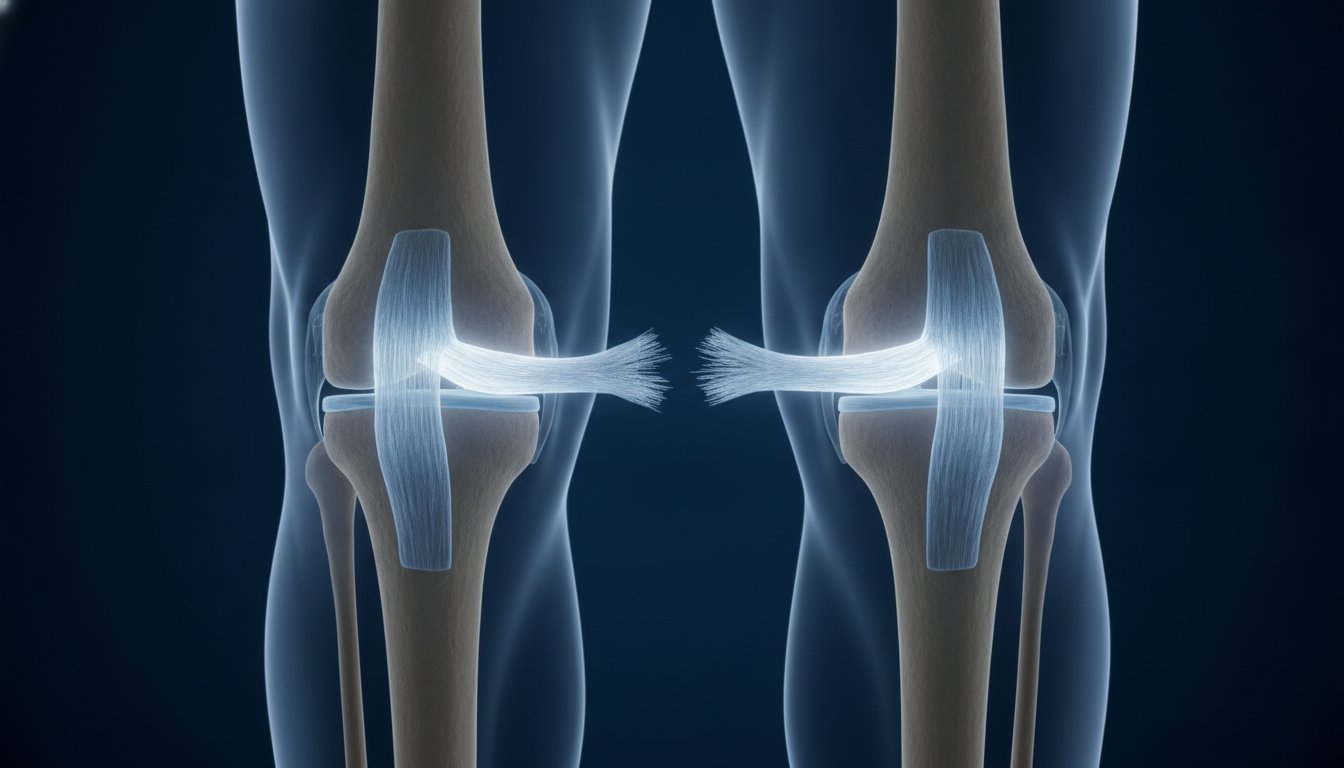
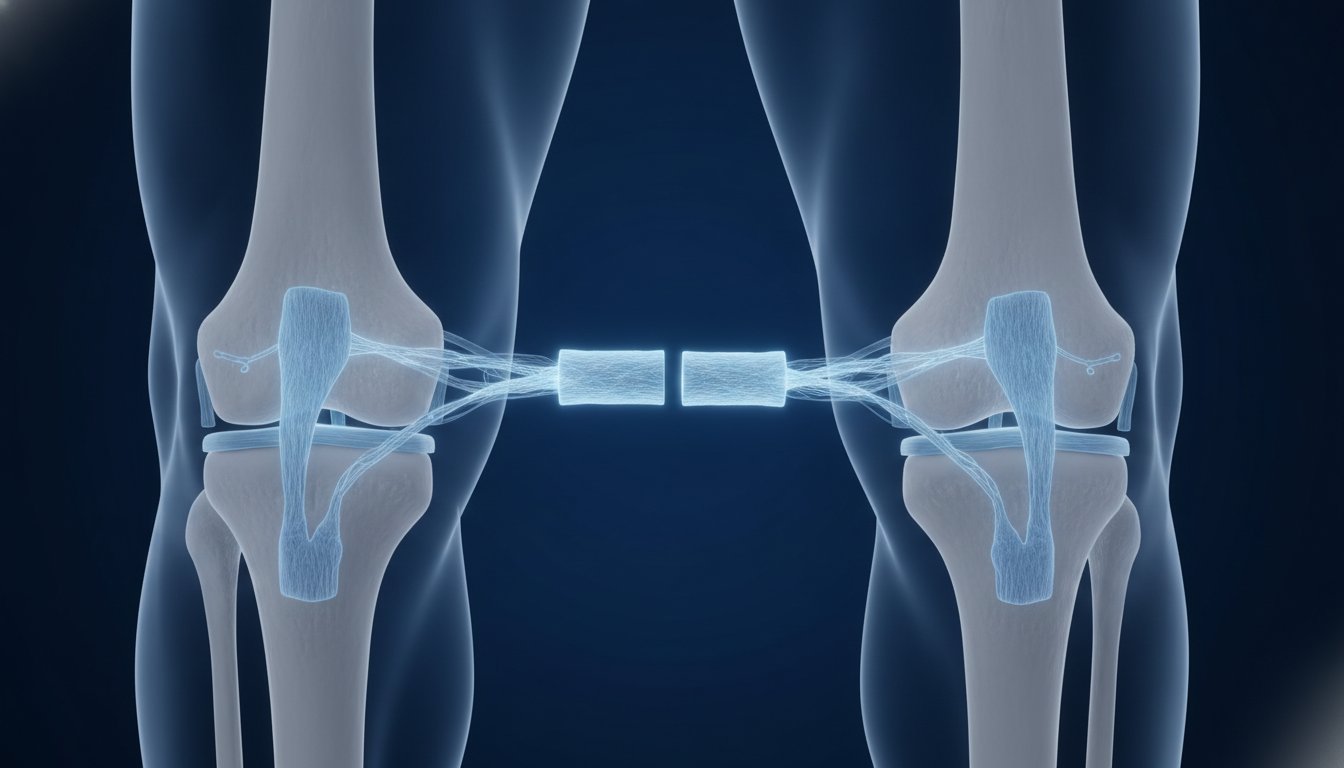
- Advanced Ligament Reconstruction: This includes the innovative BEAR® Implant for bridge-enhanced ACL repair, a cutting-edge alternative to traditional grafting.
- Debridement: Removing loose fragments of bone or cartilage that often cause “locking” or “catching” sensations in the joint.
The First 24 Hours: Your Nutley Home Recovery Begins
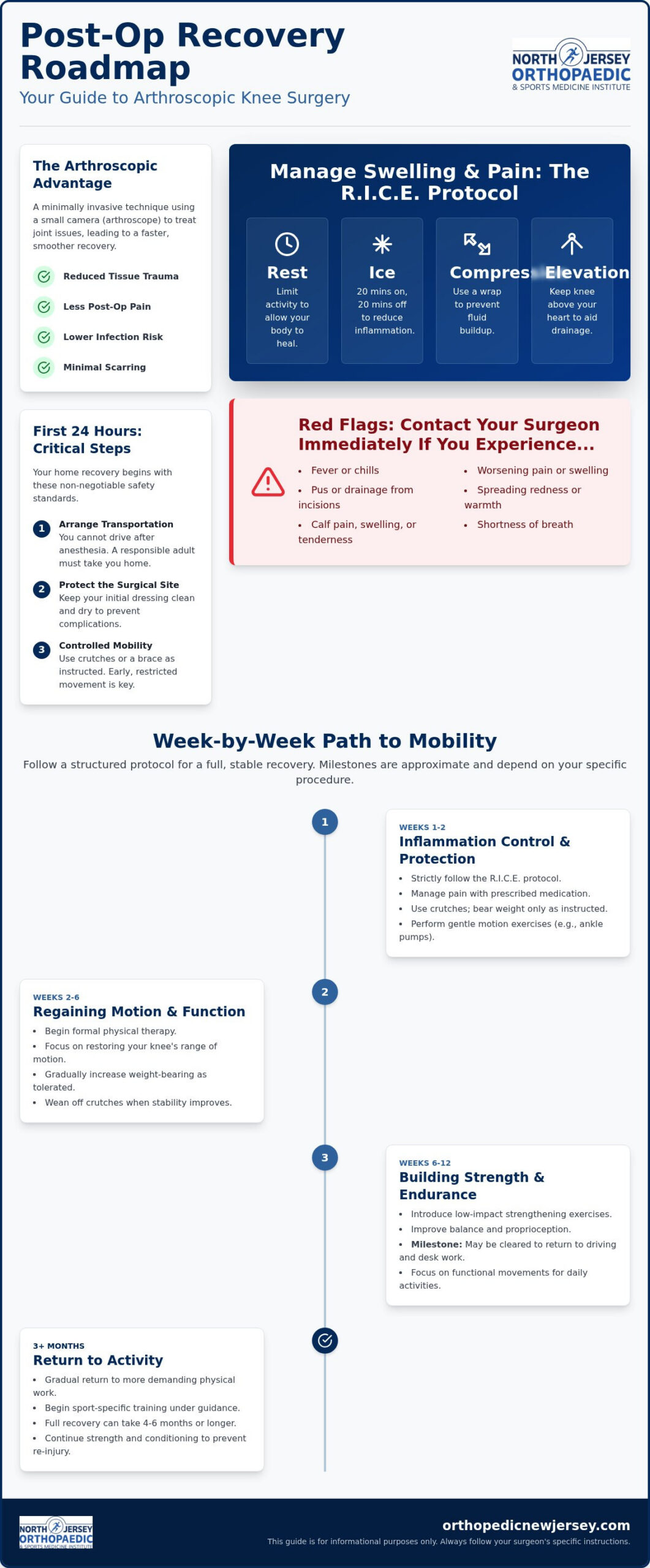
Your transition home to Nutley or surrounding areas requires specific logistical planning. You cannot drive yourself home after receiving anesthesia; you must arrange for a responsible adult to provide transportation. This is a non-negotiable safety standard for all surgical patients in New Jersey. Once home, your primary focus is protecting the surgical site. Keeping the initial dressing clean and dry is vital to prevent irritation or wound complications during the first critical day.
Mobility starts almost immediately, though it’s strictly controlled. Depending on the complexity of your repair, you might use crutches or a hinged knee brace to protect the joint. We provide clear, direct guidance on how much weight you can safely put on your leg. This early movement, while restricted, is essential for maintaining circulation and preventing stiffness. Your recovery is a methodical progression that begins the moment you arrive home.
Managing Pain and Swelling: The R.I.C.E. Protocol and Beyond
Managing the inflammatory response is the primary objective during the initial 72 hours of your recovery after knee arthroscopy. While the procedure is minimally invasive, the body naturally reacts to surgical intervention with localized swelling and discomfort. Implementing the R.I.C.E. protocol (Rest, Ice, Compression, and Elevation) provides a clinical foundation for controlling this response. Elevation is particularly vital; you should keep your knee positioned above the level of your heart to facilitate fluid drainage and reduce the pulsing sensation often felt post-surgery. This simple mechanical adjustment uses gravity to move fluid away from the joint, which is a critical component of what to expect after arthroscopic knee surgery NJ.
Icing should follow a disciplined schedule of 20 minutes on and 20 minutes off. This cadence effectively constricts blood vessels to limit inflammation without risking thermal injury to the skin. Always use a thin barrier, such as a towel, between the ice pack and your dressing to protect the tissue. Compression, typically achieved through an ACE bandage or a specialized sleeve, helps stabilize the joint and prevents excessive fluid from accumulating in the surgical area. Consistency during this phase directly influences your comfort level when you begin formal physical therapy in Nutley or Clifton.
Advanced Pain Management Strategies
Modern surgical protocols often include a peripheral nerve block administered during the procedure. These blocks typically provide significant numbness for 12 to 24 hours, though you’ll need to begin your oral pain medications before the block completely wears off to maintain a steady state of comfort. We often utilize multimodal analgesia, which involves combining different types of medications to target pain through various pathways while minimizing the need for high-dose opioids. This approach allows for a more alert and active recovery. If you have questions about managing discomfort, it’s beneficial to consult with a board-certified orthopedic specialist who can tailor a plan to your specific medical history.
Hydration and Nutrition for Tissue Healing
Recovery is a metabolic process that requires specific building blocks for cellular repair. Increasing your intake of lean proteins and Vitamin C supports collagen synthesis, which is essential for the structural integrity of a repaired meniscus or ligament. Proper hydration is equally important. Staying well-hydrated promotes healthy circulation to the surgical site and helps prevent common post-surgical issues like constipation. For patients who require more intensive clinical support or specialized nutritional support, Vital Care of Syracuse offers professional home infusion and clinical therapies to assist in a safe and effective healing process. During the first week, try to avoid highly processed or sugary foods, as these can trigger systemic inflammation that may exacerbate joint swelling and slow your progress toward full mobility.
The Recovery Timeline: Your Week-by-Week Path to Mobility
Successful recovery follows a methodical progression, ensuring the joint remains stable while gradually reintroducing mechanical load. When considering what to expect after arthroscopic knee surgery NJ, patients should view the first six weeks as a series of critical clinical milestones. Each phase is designed to protect the surgical site while preventing the complications of immobility. While individual timelines vary based on the specific pathology treated, the biological stages of tissue healing remain consistent.
During Week 1, the primary clinical focus remains on wound healing and inflammatory control. You’ll begin gentle rehabilitation exercises, such as quad sets and ankle pumps, to maintain circulation and muscle activation. By Weeks 2 through 4, most patients in Nutley or Clifton begin transitioning off crutches as their weight-bearing tolerance improves. This period marks the start of focused physical therapy, where the emphasis shifts from passive range of motion to active strengthening. By Weeks 4 through 6, the goal is a return to light daily activities and sedentary desk work. From Month 3 and beyond, we focus on the gradual reintroduction of high-impact sports or heavy labor, ensuring the knee can withstand the rigors of an active lifestyle without risk of re-injury.
Milestones: When Can I Drive and Return to Work?
The ability to drive depends on several clinical factors, including which leg was operated on and your current use of narcotic pain medications. If the surgery involved your right leg, you must wait until your reaction time and muscle control have fully returned, which often takes several weeks. If your left leg was treated and you drive an automatic vehicle, you may return to the road sooner, provided you are no longer taking sedative medications. Work transitions also vary significantly. While those in desk-based roles in North Jersey may return within one to two weeks, individuals performing physical labor require a longer recovery window. Every milestone must be cleared by your board-certified surgeon to ensure the joint is ready for the specific stresses of your profession.
Physical Therapy: The Engine of Your Recovery
Early engagement with physical therapy is non-negotiable. It serves as the primary defense against arthrofibrosis, a condition where excessive scar tissue limits joint mobility. By strengthening the quadriceps and hamstrings, you create a supportive environment for the joint, which is a hallmark of successful minimally invasive orthopedic surgery NJ. This disciplined approach ensures that the surgical precision of the procedure is matched by the functional restoration of the limb. Your therapist will guide you through a structured protocol that mirrors the diagnostic process, moving from basic stability to complex functional movements.
Recognizing Red Flags and Avoiding Complications
Vigilance is a cornerstone of a safe and effective recovery. While arthroscopy is a minimally invasive procedure with a high success rate, the body remains vulnerable to certain post-operative risks that require clinical attention. Monitoring for infection is paramount during the first two weeks. Clinical signs of concern include a persistent fever over 101°F, spreading redness or erythema around the portal sites, and any purulent or foul-smelling discharge from the incisions. If you observe these symptoms, contact your surgical team immediately rather than waiting for your scheduled follow-up in Nutley.
Vascular health is another critical consideration during the initial period of restricted mobility. Deep Vein Thrombosis (DVT), or blood clots in the leg, can occur when circulation slows. Be alert for persistent calf pain, localized warmth, or swelling in the lower leg that feels distinct from your surgical knee pain. Simple exercises, such as performing 20 ankle pumps every hour while awake, act as a mechanical pump to maintain healthy blood flow. This proactive approach to vascular health is a vital part of what to expect after arthroscopic knee surgery NJ.
Knowing where to turn when a concern arises prevents unnecessary anxiety. For localized issues like incision irritation or mild pain spikes, your North Jersey orthopedic specialist is the most appropriate resource. However, if you experience sudden shortness of breath or chest pain, these are potential signs of a pulmonary embolism. These symptoms constitute a medical emergency that requires an immediate visit to the nearest emergency department rather than a call to the clinic.
Protecting Your Incisions
Maintaining the integrity of your surgical portals is essential for preventing secondary complications. Most patients can shower 48 to 72 hours after the procedure, provided the incisions are not submerged in a bath or pool. Gently pat the area dry with a clean towel rather than rubbing the skin. At your initial post-operative appointment in Nutley, we’ll remove any remaining sutures and assess the healing of the skin. Once the wounds have fully closed, using silicone sheets or vitamin E oil can help optimize the appearance of the scars and maintain skin elasticity. For those seeking professional guidance on post-procedure skin rejuvenation, the Dermatology Laser Center & Medispa provides expert advice on achieving optimal aesthetic results during the healing phase.
Long-Term Joint Health
As you progress through your rehabilitation, you might notice occasional clicking or popping within the joint. In many cases, this is a normal part of the joint fluid and tissues adjusting to the new environment. Managing your weight is one of the most effective ways to reduce the mechanical load on your repaired knee, ensuring the longevity of the surgical outcome. Maintaining a consistent dialogue with your sports medicine clinic Montclair NJ allows for early intervention if new symptoms arise. If you have concerns about your progress or need to adjust your protocol, don’t hesitate to schedule a clinical evaluation with our board-certified surgeons.
Why Specialized Care in Nutley, NJ Makes the Difference
The decision of where to receive treatment is as significant as the surgical procedure itself. When evaluating what to expect after arthroscopic knee surgery NJ, the caliber of your surgical team and their proximity to your home in Nutley, Bloomfield, or Clifton are paramount. A board-certified orthopedic surgeon offers more than technical proficiency; they provide a deep understanding of the local athletic community’s specific needs. Choosing a specialist within your community reduces the physical stress of long commutes during the first two weeks of recovery. This is a period when maintaining joint elevation and minimizing vibration is critical for effective pain management and swelling reduction.
Our practice functions as a dedicated community resource, bridging the gap between advanced surgical technology and personalized patient care. We maintain close, professional relationships with physical therapists throughout North Jersey to ensure your rehabilitation protocol is executed with precision. This coordinated approach means your therapist receives direct, clinical guidance from your surgeon, creating a seamless transition from the operating room to the rehabilitation clinic. By aligning your surgical care with localized, specialized rehabilitation, you ensure that every milestone in your recovery roadmap is met with professional oversight and expertise.
The BEAR® Implant: A New Standard for ACL Repair
For patients facing ACL injuries, we offer the innovative BEAR® (Bridge-Enhanced ACL Restoration) Implant. Unlike traditional reconstruction, which requires harvesting a graft from another part of your body or using donor tissue, this technology acts as a bridge to help your native ligament heal itself. The BEAR® implant is a bridge-enhanced solution that facilitates the natural restoration of the ACL without the need for autograft or allograft tissue. This method preserves the natural anatomy of the knee and often leads to a more natural feeling joint during high-impact activities. You can learn more about this advanced technology by exploring the BEAR implant ACL repair New Jersey protocol.
Schedule Your Consultation in North Jersey
Navigating a knee injury requires a methodical and diagnostic mindset. Whether you’re seeking a primary diagnosis for persistent joint pain or looking for specialized guidance on what to expect after arthroscopic knee surgery NJ, our team in Nutley is prepared to assist. When you arrive for your consultation, please bring any recent imaging, such as MRI or X-ray reports, along with a detailed history of your symptoms. This transparency allows us to develop a highly individualized treatment plan that prioritizes minimally invasive techniques and rapid functional recovery. To take the first step toward reclaiming your mobility, Contact The Orthopaedic & Sports Medicine Institute to discuss your personalized knee recovery plan.
Reclaiming Your Active Lifestyle in North Jersey
Restoring full joint function is a methodical process that extends far beyond the operating room. By following a structured R.I.C.E. protocol and adhering to a specialist-led rehabilitation timeline, you can significantly improve your long-term mobility. Success hinges on the synergy between advanced surgical precision and your commitment to the recovery process. Understanding what to expect after arthroscopic knee surgery NJ ensures you stay on track through every phase of healing, from the first 24 hours to your eventual return to high-impact activities.
Our team provides the sophisticated, board-certified expertise required to navigate complex joint repairs, including advanced options like the BEAR® Implant technology. We remain a dedicated resource for residents in Nutley, Clifton, and Bloomfield, offering a bridge between cutting-edge medical innovation and personalized community care. Don’t let joint instability dictate your future. You deserve a recovery plan tailored to your specific athletic and professional goals. Schedule your knee consultation at our Nutley office to begin your journey toward lasting health. We’re here to guide you through a confident and successful return to the life you love.
Frequently Asked Questions
How long after arthroscopic knee surgery can I walk?
Most patients can begin weight-bearing with the assistance of crutches immediately or within 24 hours of the procedure. While you may be able to put some weight on the leg, crutches are typically required for the first 3 to 7 days to ensure joint stability. Your specific walking timeline depends on whether you underwent a simple debridement or a more complex tissue repair.
When can I sleep on my side after a knee scope?
You can typically resume sleeping on your side within 48 to 72 hours, provided it does not cause significant discomfort. To maintain proper joint alignment and reduce pressure on the incisions, we recommend placing a supportive pillow between your knees. This simple adjustment is a common part of what to expect after arthroscopic knee surgery NJ during the first week of recovery.
Is it normal to have bruising down to my ankle after knee surgery?
Yes, it’s clinically normal for bruising and swelling to migrate down the leg toward the ankle and foot. This occurs due to gravity and is known as dependent edema. While it may look concerning, it’s a standard physiological response. Maintaining strict elevation above the level of your heart is the most effective way to facilitate the drainage of this fluid.
How many days of work will I miss for a simple meniscus repair?
Patients with sedentary desk positions typically return to work within 7 to 14 days. If your profession requires physical labor, heavy lifting, or prolonged standing, you may need 4 to 6 weeks of recovery time. The duration of your absence depends on the complexity of the repair and the specific physical demands of your workplace in the North Jersey workforce.
Can I climb stairs immediately after returning home to Nutley?
You can generally navigate stairs immediately upon returning home, though you must use a railing and move with deliberate caution. We recommend the “up with the good, down with the bad” technique: lead with your non-operated leg when ascending and your operated leg when descending. This methodical approach protects the surgical site during your early home recovery in Nutley.
What is the fastest way to get rid of swelling after a knee scope?
The most efficient way to reduce swelling is strict adherence to the R.I.C.E. protocol during the first 72 hours. Keeping your knee elevated above your heart for the majority of the day is essential for fluid management. Scheduled icing for 20 minutes every hour and the consistent use of a compression sleeve further accelerate the reduction of joint inflammation.
When can I return to the gym or start running again?
Low-impact exercises like stationary cycling often begin around week 4, but running typically requires a 12-week recovery period. You must achieve specific strength milestones, particularly in the quadriceps and hamstrings, before reintroducing high-impact loads. This gradual progression is a vital component of what to expect after arthroscopic knee surgery NJ to prevent secondary joint irritation or re-injury.
Will I need a brace after my arthroscopic procedure?
The requirement for a brace depends on the specific surgical intervention performed. While simple meniscus trimmings rarely require bracing, complex procedures like the BEAR® Implant or ligament reconstructions often necessitate a hinged knee brace. This device protects the healing tissue by limiting your range of motion during the critical early phases of biological tissue integration.