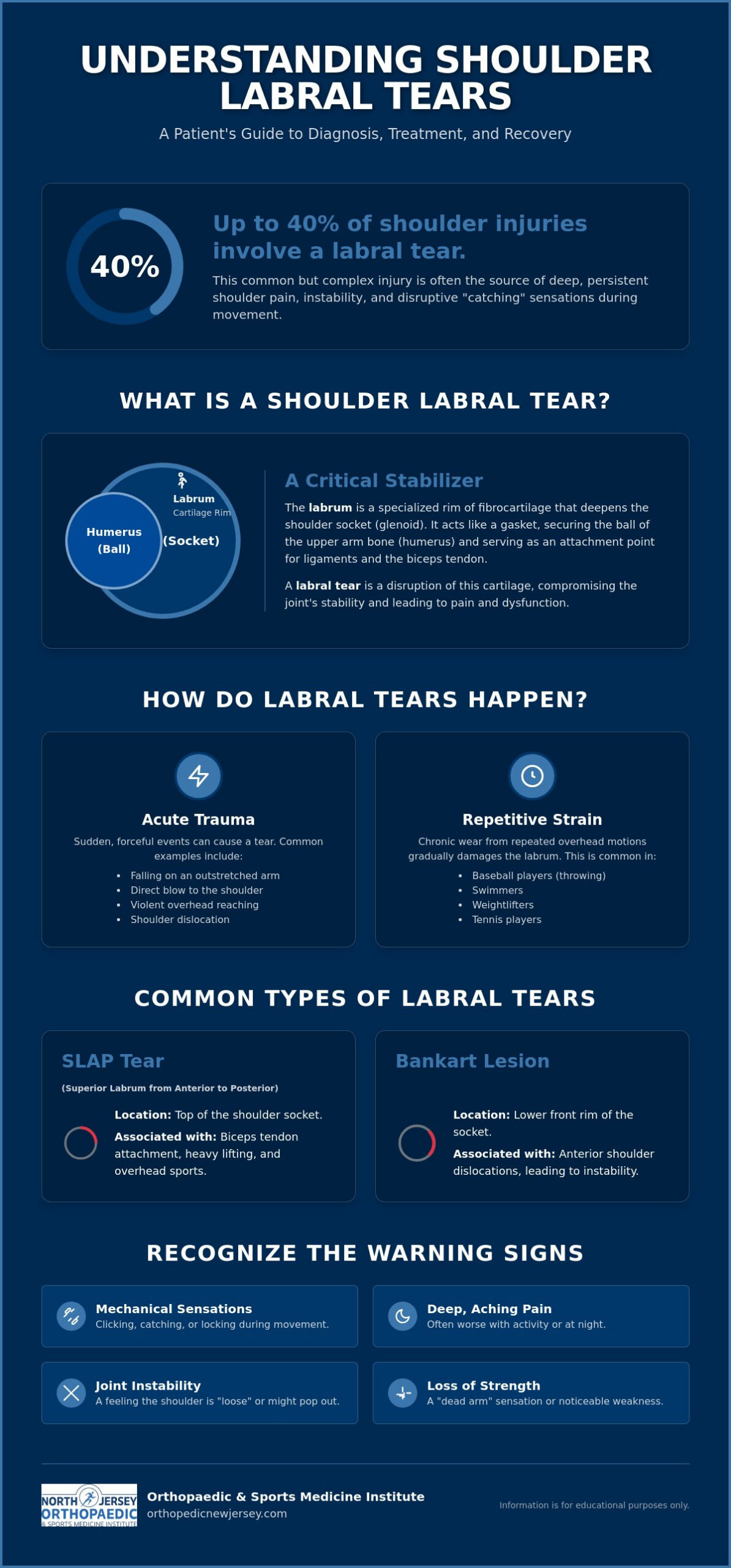
Did you know that up to 40% of individuals suffering from shoulder injuries are actually dealing with a labral tear? For many, this diagnosis explains that deep, persistent ache that disrupts sleep and the unsettling “catching” sensation felt during overhead movements. If you’re concerned about permanent instability or a decline in your athletic performance, you aren’t alone in your search for a definitive labral tear shoulder treatment.
It’s understandable to feel hesitant when your physical autonomy and mobility are at stake. This guide provides a clear, professional roadmap to recovery, detailing the most effective surgical and non-surgical pathways available from a board-certified specialist in North Jersey. You’ll discover how advanced, minimally invasive techniques can restore your full range of motion and help you return to your active lifestyle with renewed confidence. We will examine the clinical advantages of modern interventions to ensure you have the transparency and security needed for a successful recovery journey.
Key Takeaways
- Understand the anatomical role of the labrum and how specialized fibrocartilage provides the stability necessary for pain-free overhead movement.
- Learn how to distinguish a labral tear from other shoulder pathologies through a professional clinical evaluation focused on precision and diagnostic accuracy.
- Explore conservative management strategies and non-surgical labral tear shoulder treatment options designed to reduce inflammation and restore muscle strength.
- Discover the advantages of modern, minimally invasive arthroscopy and the specific criteria used to determine when surgical intervention is the most effective path.
- Understand the critical phases of post-operative rehabilitation that bridge the gap between surgical repair and a full return to competitive sports or weightlifting.
What is a Shoulder Labral Tear? Understanding Your Injury
The shoulder is the most mobile joint in the human body, but this impressive range of motion comes at a cost to its inherent stability. To compensate, the body utilizes the labrum, a specialized rim of fibrocartilage that deepens the glenoid, or shoulder socket. This structure acts as a critical gasket, providing the necessary depth for the ball of the humerus to sit securely while serving as a primary attachment point for various ligaments and the biceps tendon. A labral tear is a disruption of this cartilage rim that compromises joint stability.
Injuries to the labrum typically stem from two distinct mechanisms. Acute trauma, such as falling onto an outstretched arm or sustaining a direct blow during contact sports, can cause sudden and violent tearing. Conversely, repetitive overhead strain is a frequent cause for patients in North Jersey, particularly among baseball players, swimmers, and weightlifters. This chronic wear gradually thins the fibrocartilage until a symptomatic tear develops, often necessitating a professional evaluation to determine the most appropriate labral tear shoulder treatment.
SLAP Tears vs. Bankart Lesions
The classification of your injury depends heavily on the anatomical location of the damage within the socket. A SLAP tear (Superior Labrum from Anterior to Posterior) occurs at the top of the shoulder socket where the long head of the biceps tendon attaches. These are frequently associated with repetitive overhead motions or heavy lifting. In contrast, Bankart lesions occur at the lower rim of the socket and typically follow an anterior shoulder dislocation. Because the location dictates which ligaments are compromised, the specific site of the tear will directly influence whether your labral tear shoulder treatment involves conservative management or a minimally invasive surgical repair.
Common Symptoms and Warning Signs
Identifying a labral tear can be challenging because the pain often feels deep within the joint and is difficult for a patient to pinpoint. However, several mechanical “red flags” suggest the labrum is compromised:
- Mechanical Sensations: You might experience clicking, catching, or a “locking” feeling during specific movements, especially when reaching overhead or behind your back.
- Deep, Aching Pain: This discomfort often intensifies during activity or at night, frequently making it difficult to find a comfortable sleeping position.
- Joint Instability: A sensation that the shoulder is “loose” or might pop out of its socket is a hallmark sign of significant labral damage, particularly after a dislocation.
- Loss of Strength: Many patients report a sudden “dead arm” sensation or a noticeable decrease in power when performing pressing or throwing motions.
Recognizing these symptoms early is the first step toward recovery. While some minor fraying is a natural part of aging, a true tear requires a diagnostic approach that differentiates it from other common conditions like rotator cuff tears or simple tendonitis. Patients who are unsure whether their presentation warrants surgery can review our labral tear shoulder symptoms and non-surgical recovery checklist for NJ patients to better understand their options before committing to a treatment path.
Specialized Labral Tear Diagnosis in New Jersey
Accurate detection is the essential foundation for any successful labral tear shoulder treatment plan. In our Nutley facility, we prioritize a specialized clinical evaluation that goes beyond generic assessments. Relying on a “wait and see” strategy can be risky; chronic instability often leads to further joint degradation or secondary issues like rotator cuff strain. For a comprehensive overview of our diagnostic protocols, please refer to our labral tear diagnosis in New Jersey guide.
The Clinical Examination Process
A thorough physical exam is often more revealing than imaging alone. We utilize provocative testing to isolate the labrum and assess its integrity. During the O’Brien’s test, we ask you to hold your arm out with the thumb pointed down while we apply downward pressure. Pain that is deep in the joint during this maneuver often indicates a SLAP tear. We also perform the Crank test, which involves rotating the humerus while applying gentle compression to the socket. This helps us identify mechanical clicking or catching that signals a tear. This process also allows us to differentiate a labral issue from biceps tendonitis, which typically presents with more superficial tenderness. Beyond these tests, we carefully evaluate your range of motion and joint laxity. This is especially important for athletes in North Jersey who require high levels of shoulder stability for overhead performance. Your personal history, including how and when the pain started, provides the final piece of the diagnostic puzzle.
Advanced Imaging: MRI and MRA
While a standard MRI is useful for identifying rotator cuff injuries, it can sometimes miss subtle labral fraying or small tears. To achieve superior clarity, we often recommend a Magnetic Resonance Arthrogram (MRA). This procedure involves injecting a small amount of contrast dye into the joint before the scan. The dye seeps into any tears, making them highly visible to the radiologist and surgeon. This level of precision allows us to map out the most effective labral tear shoulder treatment strategy, whether that involves focused physical therapy or a minimally invasive procedure. Understanding these specifics is a vital component of Shoulder labrum tear recovery, as it helps set realistic expectations for your rehabilitation timeline. If you are experiencing persistent discomfort or a sensation of instability, you can consult with our board-certified team to receive a definitive diagnosis and start your recovery.
Non-Surgical Treatment for Shoulder Labrum Tears
For many patients, the initial phase of labral tear shoulder treatment focuses on conservative management. This is particularly true for degenerative tears or minor fraying where the joint’s structural integrity remains largely intact. The primary objective of non-operative care is twofold: suppressing localized inflammation and optimizing the mechanical function of the surrounding musculature. While we strive for non-surgical success, it’s vital to understand the anatomical constraints of fibrocartilage. Unlike muscle or bone, the labrum has a very limited blood supply. This means it doesn’t “heal” in the traditional sense by knitting back together; instead, we aim to make the shoulder functional and pain-free despite the presence of the tear.
Activity modification is a critical component of this early phase. For athletes and active individuals in Bloomfield and Clifton, this often means a temporary cessation of heavy overhead lifting or throwing to allow the irritated tissues to calm down. This isn’t a permanent retirement from sport, but rather a strategic “reset” that prevents further joint degradation while we build a more resilient shoulder through targeted intervention.
Physical Therapy and Targeted Exercises
Physical therapy is the cornerstone of non-surgical care. We focus on strengthening the rotator cuff muscles, which serve as the dynamic stabilizers of the joint. By increasing the capacity of these muscles, they can better hold the humeral head in the socket, effectively compensating for the compromised labrum. We also emphasize scapular stabilization. If your shoulder blade doesn’t move correctly, it places undue stress on the labrum during every reach and lift. Most patients in our Nutley office undergo a structured 6-to-12 week rehabilitation program. This timeline allows us to assess how the joint responds to increased load and whether the mechanical symptoms begin to subside.
Anti-Inflammatory Protocols and Injections
Managing acute pain cycles is essential to allow for effective participation in physical therapy. We often utilize non-steroidal anti-inflammatory drugs (NSAIDs) to manage flare-ups and reduce the chemical irritation within the joint. For those who find their daily activities or sleep significantly limited, a targeted cortisone injection may be appropriate. We use these judiciously; while they are excellent at reducing swelling, repeated injections can potentially weaken local tendons. We also stay at the forefront of biological options in modern sports medicine, which aim to support the joint environment. As noted by experts regarding the Shoulder Labrum Tear, the specific treatment pathway must be tailored to the patient’s age, injury severity, and functional demands. For patients who are weighing their options and want to understand whether avoiding arthroscopic labral tear surgery in NJ is a realistic goal, our structured non-surgical recovery checklist can help clarify the clinical criteria for conservative success. It is also worth noting that patients with long-standing labral damage who do not pursue appropriate care may face accelerated joint wear, potentially requiring shoulder arthritis treatment in NJ down the line. If these conservative measures don’t restore the stability you need for high-demand activities, we then discuss the transition to minimally invasive surgical repair.
Minimally Invasive Surgical Repair Options
When conservative measures like physical therapy and anti-inflammatory protocols fail to provide relief, we must identify the “tipping point” for surgical intervention. This transition typically occurs when mechanical symptoms like locking or catching persist, or when recurrent instability prevents you from participating in sports or daily activities. For patients who have reached this stage, a definitive labral tear shoulder treatment often involves a specialized surgical approach. Modern advancements allow us to address these injuries with extreme precision through minimally invasive orthopedic surgery in NJ, focusing on restoring the joint’s anatomy while minimizing disruption to the surrounding healthy tissue.
Shoulder Arthroscopy: The Modern Standard
The gold standard for surgical repair is shoulder arthroscopy. This technique utilizes tiny incisions, often no larger than a buttonhole, to insert a high-definition camera and specialized surgical instruments. This allows the surgeon to visualize the joint in real-time with exceptional clarity. Depending on the nature of your injury, we may perform a debridement, which involves smoothing down frayed edges of the cartilage, or a full repair. In a repair, we utilize bio-absorbable anchors and high-strength sutures to re-attach the labrum to the bone of the glenoid. Because this approach avoids large incisions, patients experience significantly less muscle damage and a lower risk of infection. Most procedures are performed on an outpatient basis, allowing residents of Nutley or Lyndhurst to return home the same day to begin their recovery in a familiar environment.
Surgical Criteria for Athletes
For overhead athletes or those involved in contact sports, the criteria for surgery are often more direct. High-demand activities like baseball pitching or tennis serves require a perfectly stable labrum to prevent the shoulder from shifting out of place. If you have experienced recurrent dislocations, a Bankart repair is often necessary to secure the lower rim of the socket. Research indicates that first-time arthroscopic labral repairs have a success rate of 85% to 90% in preventing recurrent instability. We customize the repair based on your specific activity level, ensuring the tension of the repair matches the functional requirements of your sport. This level of specialization is what allows our patients to transition from the operating room back to the competitive arena with confidence. If your shoulder instability is limiting your performance, schedule a consultation with our board-certified team to discuss your surgical options.
Recovery and Returning to Sport in North Jersey
Long-term success for any labral tear shoulder treatment is effectively a 50/50 partnership between the technical precision of the surgical procedure and the patient’s diligent commitment to rehabilitation. While the surgery secures the anatomy, the biological healing of the fibrocartilage requires a methodical, time-dependent process. This is why we emphasize the “protection phase” immediately following your repair. During this initial window, the repair is at its most vulnerable, and even minor overexertion can compromise the integrity of the suture anchors before the bone and cartilage have fully integrated.
Choosing the right environment for this journey is paramount to achieving your desired outcomes. We frequently recommend coordinating your care with a sports medicine clinic near Montclair to ensure your physical therapist is well-versed in our specific post-operative protocols. This collaborative approach ensures that your progress is monitored with clinical precision, allowing for real-time adjustments based on your joint’s unique healing response and inflammatory levels.
Your Post-Operative Rehabilitation Timeline
A successful recovery follows a structured progression designed to restore mobility before building power. While every patient’s biology differs, we typically follow this evidence-based timeline:
- Weeks 0 to 6: The focus is strictly on joint protection and sling immobilization. You’ll perform passive range of motion exercises where a therapist moves the arm for you, which prevents capsular stiffness without taxing the newly repaired labrum.
- Months 3 to 4: Once the initial healing is confirmed via clinical exam, we transition to the strengthening phase. This involves light functional movements and progressive resistance exercises to rebuild the rotator cuff and restore proprioception.
- Months 6 and Beyond: This is the window for a safe return to high-impact activities and full-contact sports. One study showed a 76% rate of return to sport following an arthroscopic 270 degree labral repair, provided the athlete followed a comprehensive, multi-phase program.
Why Choose a Board-Certified Surgeon in Nutley
Opting for a board-certified orthopedic surgeon in Nutley provides a level of personalized attention and transparency that large, anonymous hospital systems often lack. Recovery is rarely a linear process; it requires frequent, high-level follow-up appointments and a specialist who understands the specific nuances of your cartilage repair. Our practice serves as a dedicated community resource for athletes in North Jersey, offering advanced, minimally invasive techniques and a steady, diagnostic mindset. By staying local, you ensure that your labral tear shoulder treatment is managed by a practitioner who is deeply invested in your long-term functional independence and your return to the sports you love.
Restoring Your Shoulder Stability and Performance
Recovering from a labrum injury requires more than just time; it demands a strategic, medically sound approach tailored to your specific anatomical needs. By prioritizing an accurate diagnosis and understanding the full spectrum of care, you can move past the persistent clicking and instability that limits your daily life. Whether your path involves focused physical therapy or advanced arthroscopy, the right labral tear shoulder treatment focuses on long-term joint health and a confident return to the activities you love.
Our board-certified orthopedic surgeon specializes in minimally invasive shoulder repair, providing the sophisticated care typically found in large hospital systems within a personalized, community-focused setting. We are proud to serve patients throughout Nutley, Bloomfield, and Clifton, ensuring that every stage of your recovery is managed with professional expertise and transparency. Don’t let shoulder pain dictate your physical potential any longer. Schedule a Consultation with our Shoulder Specialist in Nutley to take the first definitive step toward a pain-free, active future. Your journey back to peak performance begins with a single, expert evaluation.
Frequently Asked Questions
Can a shoulder labral tear heal on its own without surgery?
A torn labrum does not have the biological capacity to heal back to the bone on its own because fibrocartilage has a very limited blood supply. While the tissue won’t knit back together, many patients achieve a pain-free lifestyle through non-surgical labral tear shoulder treatment that focuses on strengthening the surrounding muscles. Conservative care aims to compensate for the tear rather than repair the physical defect.
How long is the recovery time after labral repair surgery?
Most patients require approximately six months to return to unrestricted activities, though the biological healing process continues for up to a year. The initial six weeks involve sling immobilization to protect the repair. This is followed by several months of progressive physical therapy to restore range of motion and strength. Athletes typically wait at least six months before returning to full-contact sports or competitive throwing.
What happens if you leave a torn labrum untreated?
Leaving a labral tear untreated often leads to recurrent shoulder instability and chronic pain that can interfere with sleep and daily activities. Over time, the abnormal movement of the humeral head within the socket can cause early-onset osteoarthritis. This occurs because the missing or damaged gasket of the labrum allows the bones to rub together, leading to irreversible cartilage wear. Patients who develop this type of joint degradation may eventually require specialized shoulder arthritis treatment in NJ to manage the long-term consequences of untreated instability.
Is physical therapy effective for all types of labral tears?
Physical therapy is highly effective for degenerative tears and patients with low-demand lifestyles, but it may not be sufficient for everyone. High-level athletes or individuals with significant mechanical symptoms, such as locking or frequent dislocations, often find that exercise alone cannot restore the necessary joint stability. In these cases, a specialized surgical intervention is usually the more predictable path to full recovery.
Will I need to wear a sling after shoulder labrum surgery?
You will typically need to wear a sling for four to six weeks following an arthroscopic repair. This period of immobilization is critical; it prevents you from inadvertently moving the arm into positions that could pull the repair away from the bone. Most surgeons allow you to remove the sling for bathing and performing specific, gentle exercises under the guidance of a physical therapist.
When can I return to the gym or lifting weights after a labral tear?
Most patients can begin a light, supervised strengthening program between three and four months post-surgery. Returning to heavy weightlifting, particularly overhead pressing or bench pressing, usually requires at least six months of healing. Your surgeon will use specific clinical benchmarks, such as full range of motion and balanced muscle strength, to determine when it’s safe to increase your gym intensity.
Are there minimally invasive options for labral tear treatment in NJ?
Our Nutley facility specializes in minimally invasive arthroscopic techniques for labral tear shoulder treatment. This modern approach uses tiny incisions and a high-definition camera to repair the cartilage with minimal disruption to the surrounding muscles. These procedures are performed on an outpatient basis, allowing patients from surrounding areas like Bloomfield and Clifton to recover in the comfort of their own homes.
How do I know if my shoulder pain is a labral tear or a rotator cuff injury?
While both injuries cause shoulder pain, labral tears are often associated with deep joint aching and mechanical sensations like clicking or catching. Rotator cuff injuries more commonly present with weakness and pain that radiates down the outside of the upper arm. A professional clinical evaluation in our office is the most reliable way to differentiate these conditions and ensure you receive the correct diagnosis.