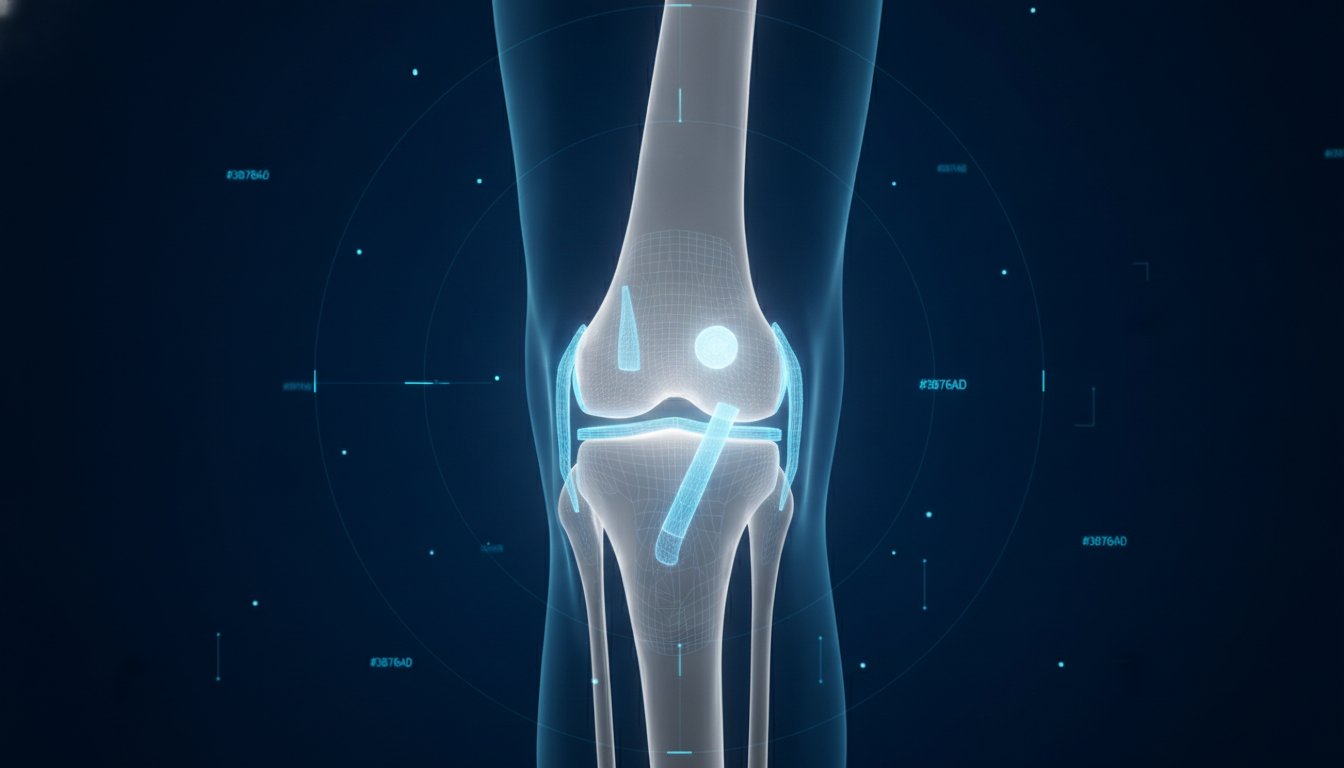
What if the solution to your chronic joint pain isn’t a major operation, but a strategic preservation of your own natural knee tissue? For many active individuals in North Jersey, the fear of a long, debilitating recovery often prevents them from seeking the care they need. It’s understandable to feel overwhelmed by complex surgical terminology or worried that a procedure might result in permanent limitations. If you’re seeking minimally invasive knee surgery Bloomfield NJ, you’re looking for a path that restores your mobility without the extensive scarring or lengthy hospital stays associated with traditional methods.
This specialist’s guide clarifies how modern, small-incision techniques can accelerate your return to the sports and professional activities you love. We’ll examine the latest advancements in orthopaedic care, including the BEAR® Implant, which is currently the only FDA-approved technology for native ACL restoration. You’ll discover how a diagnostic mindset and board-certified expertise can bridge the gap between traditional surgical wisdom and the future of specialized care. We’ll break down the benefits of tissue preservation, the reality of outpatient recovery, and what you can expect as you regain your strength and confidence.
Key Takeaways
- Understand how the transition from traditional “open” procedures to arthroscopic methods minimizes trauma to surrounding tissues and preserves native anatomy.
- Learn why patients seeking minimally invasive knee surgery Bloomfield NJ benefit from our Nutley-based, board-certified expertise and advanced clinical protocols.
- Explore the clinical advantages of the BEAR® Implant, the only FDA-approved technology designed for native ACL restoration without the need for tendon grafts.
- Compare the recovery timelines of outpatient procedures versus inpatient stays, focusing on the preservation of natural joint function and proprioception.
- Discover the specific diagnostic criteria and advanced imaging required to determine if you’re a suitable candidate for these tissue-preserving surgical interventions.
What is Minimally Invasive Knee Surgery?
Minimally invasive surgery (MIS) represents a paradigm shift in how we approach joint repair and reconstruction. Unlike traditional “open” surgery, which requires extensive exposure of the joint, MIS utilizes specialized instruments and advanced visualization technology to perform complex repairs through very small portals. This approach is fundamentally about tissue preservation. By minimizing the disruption to the skin, tendons, and ligaments surrounding the knee, we prioritize the body’s natural ability to heal. It’s a strategic move away from the “one size fits all” large incision, focusing instead on targeted intervention that respects the patient’s anatomy.
For many athletes and active seniors in North Jersey, seeking minimally invasive knee surgery Bloomfield NJ has become the standard for addressing chronic pain or acute injury. The transition from large, disruptive incisions to Arthroscopic or keyhole surgery allows for a more precise diagnostic and therapeutic process. Instead of a surgeon relying on a wide, naked-eye view, we use high-definition cameras that provide a magnified, detailed look at the internal structures of the knee. This ensures that only the damaged tissue is addressed, leaving healthy cartilage and bone undisturbed.
The Anatomy of a Small Incision
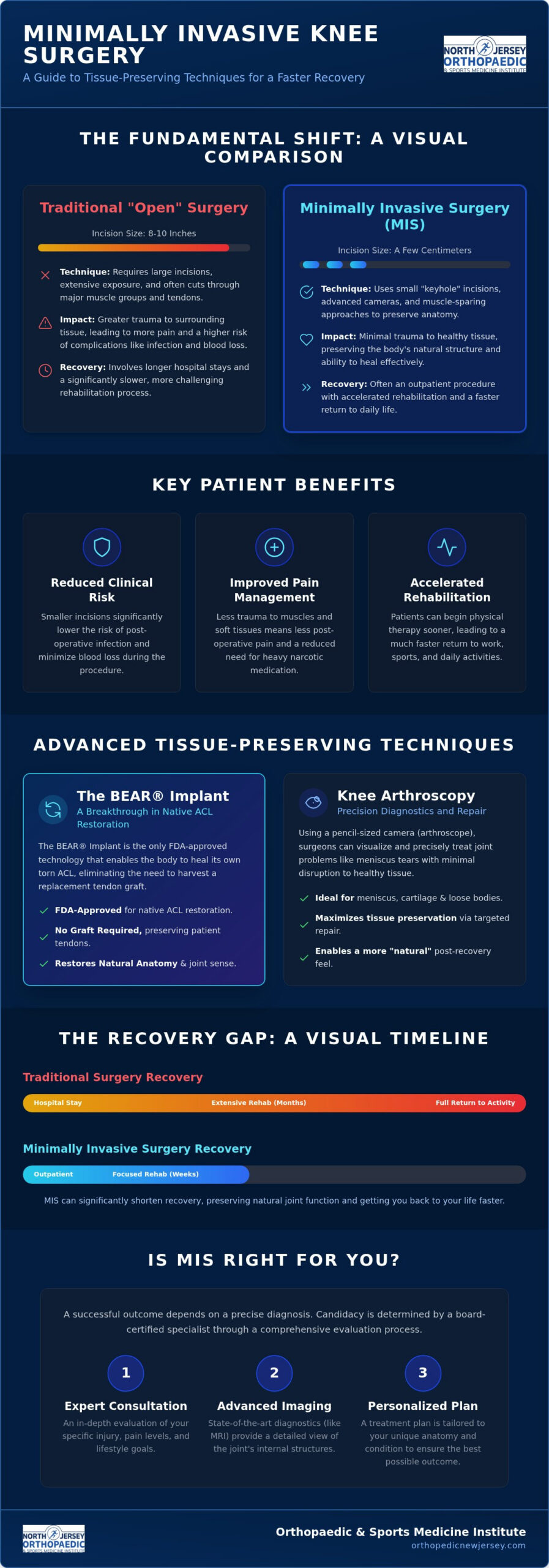
The most visible difference in MIS is the size of the surgical site. Traditional knee procedures often require an incision spanning eight to ten inches, necessitating a significant recovery period just for the skin and underlying fascia to close. In contrast, minimally invasive techniques typically involve two or three incisions that are only a few centimeters long. This smaller footprint means less exposure to the environment and a reduced physiological impact on the patient’s system. Muscle-sparing is a specialized technique where the surgeon moves muscle groups aside rather than cutting through them to access the joint. By avoiding the detachment of the quadriceps tendon or the cutting of major muscle fibers, the structural integrity of the knee remains largely intact.
Why Bloomfield Patients Choose MIS Over Traditional Surgery
The decision to opt for minimally invasive knee surgery Bloomfield NJ is driven by a desire for a safer and more efficient recovery. Patients frequently report several distinct advantages:
- Reduced Clinical Risk: Smaller incisions significantly lower the risk of post-operative infection and minimize intraoperative blood loss.
- Pain Management: Because there is less trauma to the soft tissues, there’s a documented reduction in the need for heavy narcotic pain medication during the early stages of healing.
- Accelerated Rehabilitation: Without the need for major muscle or tendon repair, patients can often begin physical therapy and return to daily activities much faster than those undergoing traditional surgery.
This modern approach ensures that whether you’re a runner training for a local race or a retiree enjoying the walking paths in Brookdale Park, your surgical intervention is a bridge to recovery rather than a source of long-term disability. It provides a level of precision that traditional methods simply cannot match, allowing for a more “natural” feel in the joint post-recovery.
Advanced Techniques: Arthroscopy, BEAR®, and Partial Replacement
The Nutley-based practice, located just minutes away for those seeking minimally invasive knee surgery Bloomfield NJ, utilizes a diagnostic-first approach to select the most tissue-preserving intervention. Modern orthopaedics has moved beyond generic solutions, offering targeted procedures that address specific anatomical damage while keeping the rest of the joint’s architecture intact. This philosophy focuses on native tissue restoration, ensuring that every surgical decision prioritizes long-term joint health and stability.
Knee Arthroscopy for Meniscus and Cartilage
Surgeons use an arthroscope, a pencil-sized camera, to visualize the interior of the knee through tiny portals. This technology allows for the precise debridement of loose cartilage or the meticulous repair of a torn meniscus without the need for large incisions. These principles of joint preservation are remarkably similar to those used in labral tear shoulder treatment, where the objective is to stabilize the structure with minimal disruption to surrounding tissues. Arthroscopy serves as both a diagnostic gold standard and a therapeutic tool, ensuring that surgical interventions are as conservative as possible while remaining highly effective.
The BEAR® Implant: A New Standard for ACL Repair
For patients with ACL injuries, the Bridge-Enhanced ACL Restoration (BEAR®) implant represents a significant milestone in native ligament healing. The FDA granted clearance for an updated label for the BEAR® implant, which noted a reduced risk of post-traumatic osteoarthritis compared to traditional reconstruction using a hamstring tendon autograft. Unlike traditional methods that replace the torn ligament with a graft, the BEAR® implant acts as a bio-absorbable bridge that enables your own ACL to heal itself. This graft-free approach preserves the natural innervation of the ligament. You can find more comprehensive details in our guide on BEAR implant ACL repair New Jersey.
Minimally Invasive Partial Knee Replacement
When arthritis is confined to a single compartment of the knee, a partial replacement is often a superior alternative to a full joint replacement. This technique preserves the healthy bone, cartilage, and cruciate ligaments in the unaffected sections of the knee. By keeping these structures intact, the joint maintains its natural proprioception, which is the body’s ability to sense the position and movement of the limb. While advanced disease may sometimes necessitate a Minimally Invasive Total Knee Replacement, the partial approach offers a faster recovery and a joint that feels more like your own. Patients looking for minimally invasive knee surgery Bloomfield NJ often find that these advanced procedures offer a level of precision that traditional methods simply cannot match. If you’re struggling with localized joint pain, scheduling a professional evaluation is the first step toward a tailored treatment plan.
Minimally Invasive vs. Traditional Knee Surgery: The Recovery Gap
The primary distinction between traditional methods and modern interventions lies in the immediate post-operative environment. While traditional “open” surgery often necessitates a multi-day hospital stay for monitoring and pain management, minimally invasive orthopedic surgery NJ allows many patients to return home the same day. This shift to outpatient care isn’t just about convenience; it’s a direct reflection of reduced surgical trauma. By avoiding large disruptions to the quadriceps and other supporting structures, patients experience significantly less stiffness. This facilitates early mobilization, a critical factor that Bloomfield physical therapy clinics emphasize for preventing scar tissue buildup and promoting long-term joint health.
In more complex cases where a full replacement is required, a Minimally Invasive Total Knee Replacement still offers a substantial recovery advantage over conventional techniques. The preservation of soft tissue translates into superior proprioception. This is the body’s subconscious ability to sense the joint’s position and movement in space. When native ligaments and nerve endings remain intact, the knee retains a “natural” feel that’s often lost with more aggressive, traditional procedures. For those seeking minimally invasive knee surgery Bloomfield NJ, this anatomical preservation is the key to regaining a fluid, confident gait.
Recovery Timeline: What to Expect
The trajectory of healing after a tissue-sparing procedure is structured to encourage safe, progressive movement. While every patient’s biological response varies, the general milestones include:
- Week 1: The focus is on pain modulation and restoring a basic range of motion. Most patients begin simple exercises within 24 hours of surgery.
- Weeks 2-6: This phase involves progressive weight-bearing. Specialized physical therapy helps rebuild strength in the supporting musculature without overstressing the repair site.
- Month 3+: Patients typically transition back to high-impact activities. Athletes often return to their specific sports once they’ve met objective strength and stability benchmarks.
Long-Term Outcomes and Joint Longevity
Choosing a less disruptive path has implications that extend far beyond the first few months. Research indicates that tissue-sparing techniques are associated with lower revision rates because they maintain the joint’s mechanical environment. Just as specialized shoulder arthritis treatment NJ aims to delay the need for total joint replacement, preserving the native meniscus or ACL in the knee prevents the early-onset wear that leads to secondary arthritis. There’s also a significant psychological benefit to these modern approaches. When a patient’s knee feels like their own rather than a mechanical substitute, they’re more likely to remain active, which further supports cardiovascular health and overall joint longevity.
Determining Candidacy for Minimally Invasive Procedures
While the benefits of tissue preservation are compelling, selecting the appropriate surgical approach requires a nuanced understanding of a patient’s specific pathology. Not every knee condition is suitable for a minimally invasive approach. The decision to proceed with minimally invasive knee surgery Bloomfield NJ depends on a confluence of factors, including the mechanical stability of the joint, the extent of cartilage degradation, and the patient’s functional goals. A high-level consultant must weigh these variables against the technical requirements of the procedure to ensure that the chosen intervention provides a durable, long-term solution rather than a temporary fix.
Patient age and activity level play significant roles in this diagnostic process. An athlete requiring a BEAR® Implant for a mid-substance ACL tear presents a different clinical profile than a senior managing localized osteoarthritis. In all cases, a consultation with a board-certified surgeon is the essential first step. This ensures that the treatment plan adheres to current New Jersey informed consent standards, which require physicians to explain all medically reasonable alternatives in accessible language. This transparency allows patients to understand why a specific technique is recommended for their unique anatomical needs.
Diagnostic Excellence in North Jersey
The diagnostic process begins with a comprehensive physical examination designed to assess joint laxity and mechanical alignment. We utilize specific provocative maneuvers to isolate damaged structures, such as the meniscus or cruciate ligaments. Reviewing previous imaging from Bloomfield or Clifton radiology centers is a critical component of this phase. While high-resolution MRI and X-ray data provide the structural roadmap, patient-reported symptoms are as vital as imaging data in determining the impact of the injury on daily life. This holistic view ensures that we aren’t just treating an image, but a person with specific mobility requirements.
When is Traditional Surgery Necessary?
There are clinical scenarios where traditional “open” surgery remains the safest and most effective option. If a patient has suffered severe multi-ligament trauma, the complexity of the reconstruction may require broader access to the joint to ensure structural integrity. Similarly, advanced, multi-compartment osteoarthritis often necessitates a total knee replacement rather than a partial, tissue-sparing procedure. Complex revisions of previous failed surgeries also frequently require traditional methods to address significant bone loss or scar tissue. In these instances, the priority remains the restoration of function, even if a larger incision is required to achieve the best surgical outcome.
Ultimately, the goal is to match the most advanced methodology to your specific clinical needs. If you’re ready to explore whether you’re a candidate for a tissue-preserving approach, contact our Nutley office to schedule a comprehensive evaluation with our board-certified team.
Expert Knee Surgery Near Bloomfield: The Orthopaedic & Sports Medicine Institute
For residents seeking minimally invasive knee surgery Bloomfield NJ, the Orthopaedic & Sports Medicine Institute in Nutley provides a specialized destination for advanced clinical care. Our office is strategically located to serve the North Jersey community, offering a proximity that simplifies the logistical challenges of both pre-operative consultations and post-operative monitoring. We understand that the journey to recovery is most effective when high-level expertise is accessible. Our practice remains a leader in surgical innovation, specifically through the implementation of the BEAR® Implant, ensuring that patients have access to the latest native tissue restoration technologies without traveling to major metropolitan hospital systems.
This commitment to excellence extends to our role as a premier sports medicine clinic North Jersey patients trust for comprehensive musculoskeletal health. We bridge the gap between established medical wisdom and modern, less disruptive alternatives, positioning our Nutley facility as a vital resource for athletes and active individuals throughout the region. By focusing on precision and specialized credentials, we provide a sense of security for those facing the gravity of surgical decisions.
A Patient-Centered Approach to Recovery
Our philosophy is rooted in a “conservative first” mindset. We believe that surgery should only be pursued when non-operative interventions have been exhausted or when the pathology clearly dictates a surgical solution for long-term joint health. This diagnostic accuracy ensures that every patient receives a tailored treatment plan that respects their biological needs. Once a procedure is performed, we collaborate closely with local Bloomfield physical therapists to ensure a seamless transition into rehabilitation. This integrated network of care facilitates early mobilization and helps prevent the stiffness often associated with traditional open surgeries. Throughout this process, you have direct access to your board-certified surgeon, providing a level of transparency and professional guidance that is essential for a confident recovery.
Schedule Your Consultation Today
Reclaiming your active lifestyle starts with a thorough professional evaluation at our Nutley location. We accept a wide range of insurance plans and provide clear guidance on payment information for our North Jersey patients, ensuring that the focus remains on your health rather than administrative hurdles. Our team is dedicated to guiding you through every stage of the recovery journey, from the initial diagnostic imaging to your final return to sports or daily activities. Don’t let chronic knee pain dictate your mobility or affect your daily life in Bloomfield. By choosing a specialist who prioritizes modern, tissue-preserving techniques, you’re taking a decisive step toward a faster return to function and a more natural-feeling joint. Contact us today to learn how our expertise in minimally invasive knee surgery Bloomfield NJ can help you move forward with confidence.
Restoring Your Mobility Through Precision Orthopaedic Care
Choosing the right surgical path is a decision that impacts your long-term mobility and quality of life. By prioritizing tissue preservation and native anatomy restoration, modern techniques offer a significant advantage over traditional, more disruptive methods. Whether you’re considering a partial joint replacement or the innovative BEAR® Implant for native ACL healing, the goal remains a faster return to the activities that define your lifestyle. You don’t have to settle for the extended downtime or the “mechanical” feel of older surgical approaches.
Our Nutley office provides specialized expertise for those seeking minimally invasive knee surgery Bloomfield NJ, bridging the gap between established medical wisdom and the future of joint care. With a board-certified orthopedic surgeon leading your recovery, you’ll benefit from a diagnostic-first approach tailored to your specific injury. We’re proud to serve the Bloomfield and Clifton communities with advanced, clinical solutions in a convenient, local setting. Take the first step toward a pain-free future and reclaim your confidence. Request a Consultation with Our Board-Certified Surgeon to explore your options for a more efficient and natural recovery.
Frequently Asked Questions
How long is the recovery after minimally invasive knee surgery?
Most patients return home the same day as their procedure. Initial weight-bearing typically begins within two to six weeks, depending on the specific repair performed. Full return to high-impact sports or demanding professional activities generally occurs around the three-month mark. This accelerated timeline is a primary benefit of choosing minimally invasive knee surgery Bloomfield NJ, as it reduces physiological trauma compared to traditional open procedures.
Will I need physical therapy after my procedure in Bloomfield?
Specialized rehabilitation is a mandatory component of the surgical plan to ensure optimal outcomes. We coordinate directly with physical therapy clinics in the local Bloomfield area to ensure your recovery protocol is followed precisely. Early mobilization helps prevent scar tissue formation and restores range of motion. This collaborative approach ensures that the mechanical repairs made during surgery translate into functional, pain-free daily mobility.
Is minimally invasive knee surgery covered by insurance in NJ?
Most private insurance plans and Medicare provide coverage for these procedures when they’re medically necessary. The specific out-of-pocket costs depend on your deductible and plan tier. We recommend verifying your benefits with our office during your initial consultation. Our team ensures that you understand all medically reasonable alternatives as part of the informed consent process required by New Jersey state law.
How soon can I drive after a minimally invasive knee procedure?
Your ability to drive depends on which leg was operated on and your current use of pain medication. Patients who underwent a procedure on the left leg may return to driving sooner if they have an automatic transmission. If the right leg was involved, you must demonstrate sufficient reaction time and strength for braking. Typically, this milestone occurs between one and six weeks post-operatively.
What is the success rate of the BEAR® Implant compared to traditional ACL surgery?
The BEAR® Implant offers a unique advantage by enabling the native ACL to heal itself without a tendon graft. On January 14, 2026, the FDA cleared an updated label noting a reduced risk of post-traumatic osteoarthritis compared to traditional hamstring autografts. While traditional reconstruction has a long history of success, the BEAR® procedure preserves the natural innervation and proprioception of the original ligament.
Are there age limits for being a candidate for minimally invasive surgery?
There are no strict chronological age limits for being a candidate for these modern techniques. Eligibility is determined by the patient’s overall health, the quality of their bone and soft tissue, and their specific functional goals. We evaluate each individual’s clinical profile to ensure that a tissue-sparing approach provides a durable result that meets their specific mobility needs and lifestyle expectations.
How do I know if my knee pain requires surgery or just physical therapy?
We adhere to a conservative-first philosophy where non-operative treatments are exhausted before recommending surgery. If physical therapy fails to resolve mechanical symptoms like locking, catching, or instability, surgical intervention may be required. Advanced imaging and stability tests help determine if the damage is structural. A professional evaluation for minimally invasive knee surgery Bloomfield NJ identifies if native tissue preservation is still an option.
What kind of anesthesia is used for arthroscopic knee procedures?
Most arthroscopic procedures utilize a combination of regional anesthesia and sedation. This often involves a spinal block or a peripheral nerve block to numb the leg, coupled with medication to keep you relaxed and comfortable. In some cases, general anesthesia is more appropriate based on the patient’s medical history. Local anesthetics are also injected into the small incisions to provide extended pain relief after the procedure.