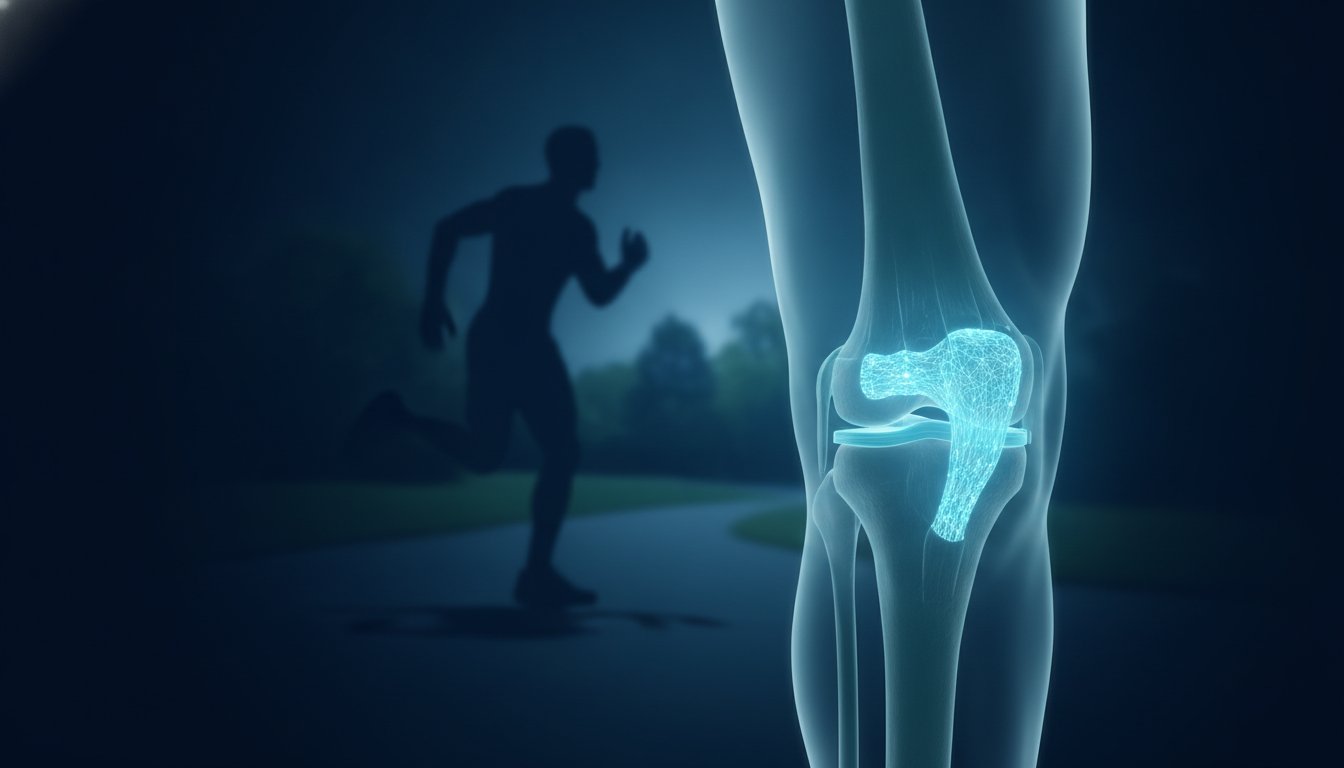
Did you know that 33% of patients who undergo traditional ACL reconstruction show signs of osteoarthritis just six years after their procedure? For athletes and active adults in Essex County, the prospect of trading a torn ligament for long-term joint decay is a daunting reality. If you are seeking a BEAR implant surgeon Bloomfield NJ, you are likely looking for a way to avoid harvesting healthy tendons from other parts of your body while preserving the natural feel of your knee. Recent clinical data from 2026 suggests that the BEAR® Implant results in a six-fold lower rate of post-traumatic osteoarthritis compared to traditional hamstring grafts, offering a sophisticated path toward true biological restoration.
It’s natural to feel concerned about losing the native tissue that helps you maintain balance and coordination. You shouldn’t have to settle for a replacement when healing is possible. This article explores how bridge-enhanced ACL repair utilizes a specialized protein scaffold to help your original ligament bridge the gap and regrow. We’ll preview the latest FDA-cleared indications for patients of all ages and explain why choosing a board-certified specialist close to home in the Nutley and Bloomfield area is the most effective way to protect your long-term knee health and proprioception.
Key Takeaways
- Learn how the BEAR® Implant acts as a bio-engineered bridge to help your body heal its original ACL instead of replacing it with a graft.
- Discover how preserving your native ligament maintains natural knee proprioception while avoiding the need to harvest healthy tendons from your hamstring or patella.
- Understand why consulting a board-certified BEAR implant surgeon Bloomfield NJ is essential for accessing this minimally invasive, restorative technology close to home.
- Get a clear overview of the specialized recovery timeline, from initial wound protection to the gradual return of weight-bearing and functional range of motion.
- Compare the long-term clinical benefits of ACL restoration, including a documented reduction in the risk of developing post-traumatic osteoarthritis.
BEAR® Implant: A Game-Changer for Bloomfield Athletes
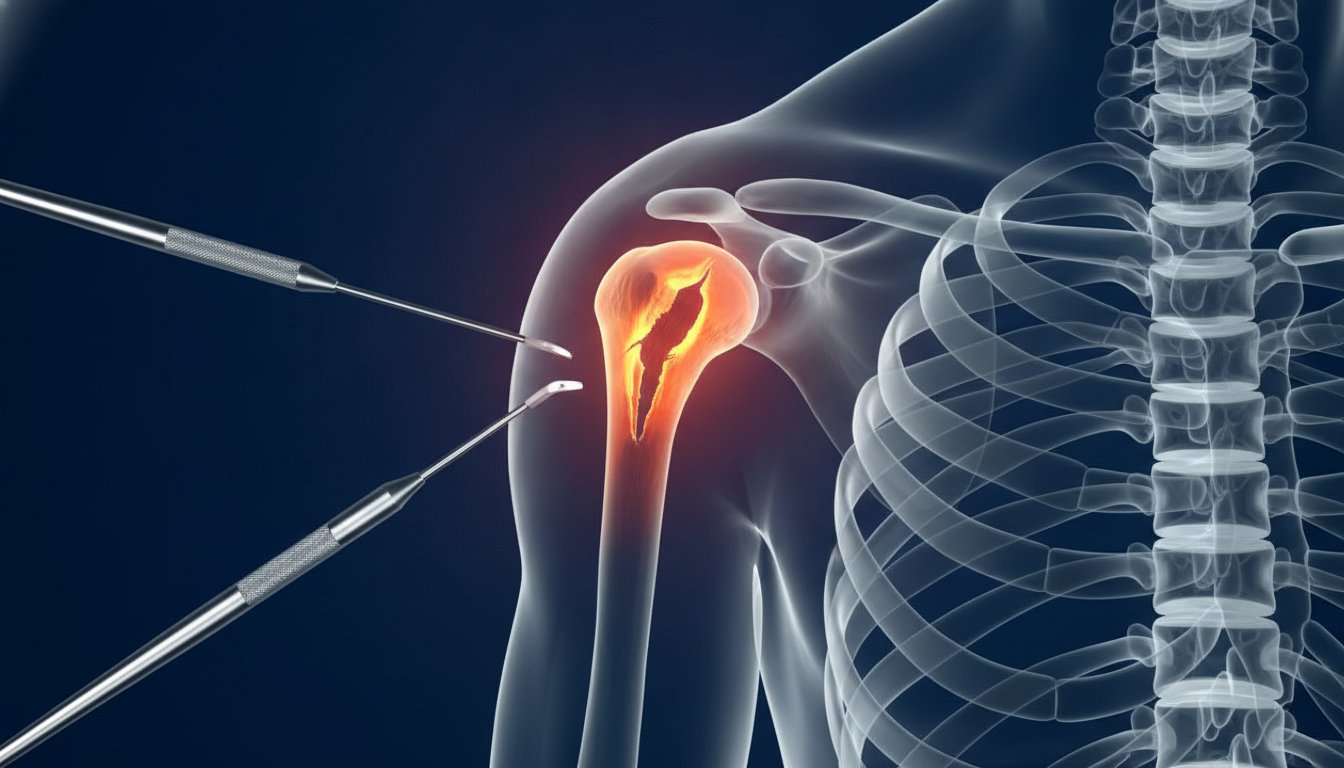
For decades, the standard of care for a torn anterior cruciate ligament (ACL) was reconstruction. This involved removing the damaged tissue and replacing it with a graft, often harvested from the patient’s own hamstring or patellar tendon. While functional, this method creates a second surgical site and never truly restores the knee’s original anatomy. Today, patients seeking a BEAR implant surgeon Bloomfield NJ have access to a restorative alternative. The Bridge-Enhanced ACL Restoration (BEAR) Implant is a bio-engineered sponge made of highly purified bovine collagen that acts as a bridge between the torn ends of the ligament.
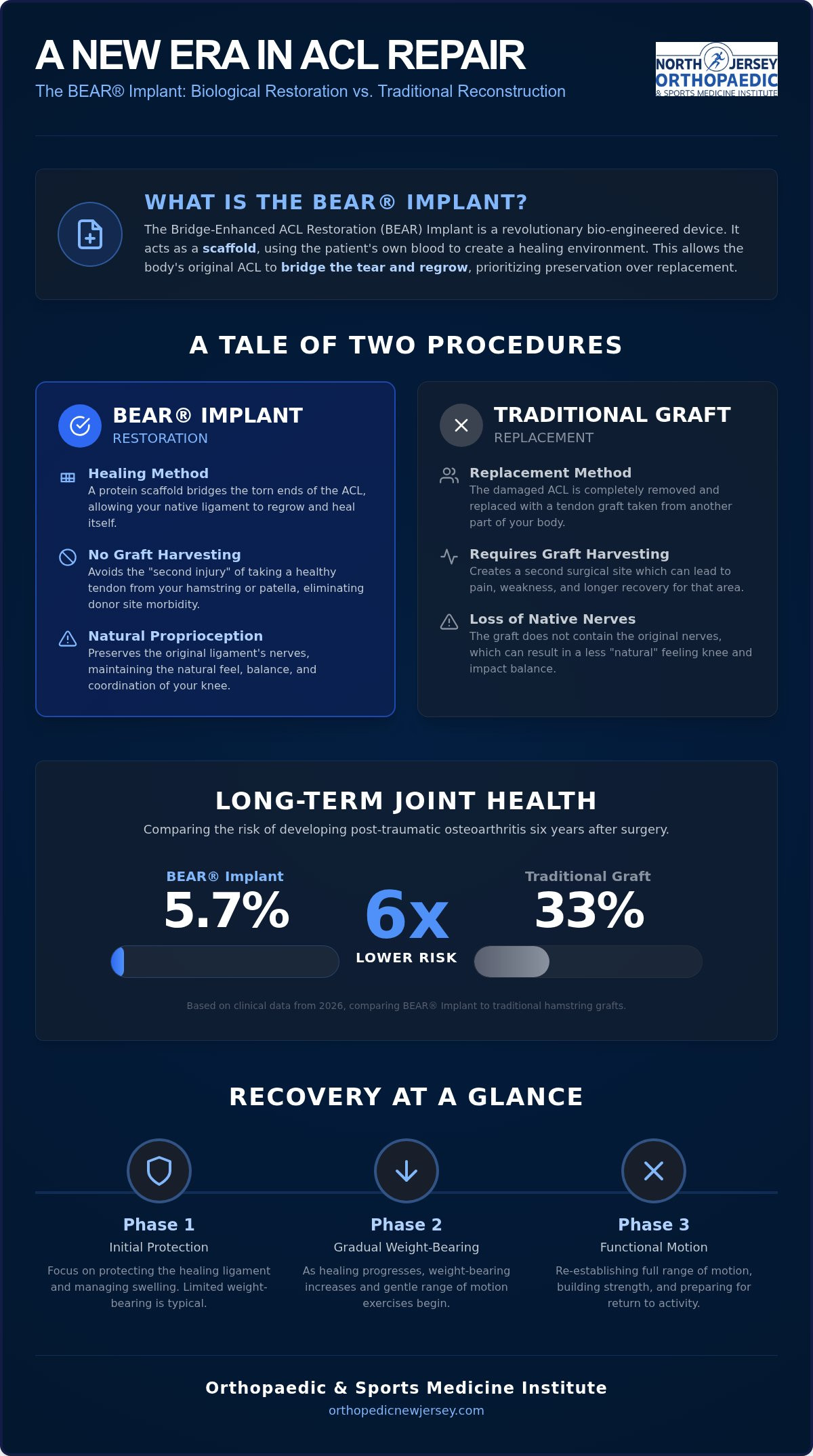
Bloomfield residents are increasingly opting for this “graft-less” solution because it eliminates donor site morbidity. Instead of weakening one part of the leg to fix another, the BEAR® procedure uses the patient’s own blood to initiate healing. During the surgery, the specialist injects the patient’s blood into the implant sponge. This creates a stabilized clot that serves as a nutrient-rich environment, allowing the native ligament to grow back together. It’s a biological approach that prioritizes preservation over replacement.
The Science of Native Ligament Healing
The implant functions as a temporary scaffold. It doesn’t stay in your knee forever; instead, your body naturally absorbs the collagen sponge within a few months. As the implant dissolves, it’s replaced by the patient’s own natural tissue. This process is critical because it preserves the original ligament fibers and the complex network of nerves within them. Maintaining these native fibers is essential for long-term joint health and proprioception, which is your brain’s ability to sense the position and movement of your knee without looking at it. Athletes often find that this “natural feel” allows for a more confident return to pivoting sports.
FDA Approval and the 2026 Clinical Standard
The medical community recognizes the BEAR® Implant as the first significant innovation in ACL surgery in over 30 years. After receiving De Novo approval in 2020, the technology reached a new milestone on March 10, 2025, when the FDA expanded its clearance to include pediatric patients and those with partial tears. By January 14, 2026, the FDA granted an updated label for the implant, specifically noting a reduced risk of post-traumatic osteoarthritis. Clinical trials showed that only 5.7% of BEAR® patients developed signs of osteoarthritis after six years, compared to 33% of those who received traditional hamstring grafts. This data-driven shift has established the BEAR® Implant as a premium clinical standard for active individuals in Essex County.
Benefits of Choosing a BEAR® Implant Surgeon near Bloomfield, NJ
Selecting a BEAR implant surgeon Bloomfield NJ means choosing a surgical path that respects the body’s natural mechanics. Traditional reconstruction is essentially a replacement strategy, while bridge-enhanced restoration is a preservation strategy. This difference is most apparent in how the knee feels and functions years after the initial injury. The FDA approval for BEAR Implant confirmed its safety and efficacy, marking a significant shift toward biological joint care for active residents in Essex County.
Preserving Natural Proprioception and Balance
Your ACL isn’t just a structural rope; it’s a sensory organ. It contains millions of tiny nerve endings called mechanoreceptors. These sensors send constant signals to your brain about where your leg is in space, a sense known as proprioception. When a surgeon replaces your ACL with a graft, those original nerves are lost. This often leads to the “mechanical” or “numb” sensation that some patients report after traditional surgery. Athletes in high-agility sports like soccer or basketball rely on this natural feedback for balance and rapid changes in direction. Because the BEAR® Implant allows your native ligament to heal, those nerves are preserved, maintaining the natural feel of your knee joint.
Eliminating the ‘Second Injury’ of Graft Harvesting
Traditional ACL surgery usually requires a “rob Peter to pay Paul” scenario. To create a new ligament, the surgeon must harvest a donor tendon from your hamstring, patellar tendon, or quadriceps. This process creates a second surgical site and can lead to permanent weakness or chronic pain in the harvested muscle group. By working with a BEAR implant surgeon Bloomfield NJ, you eliminate this “second injury.” The procedure focuses entirely on the ACL site, which simplifies the surgery and reduces the overall trauma to your leg. You don’t have to sacrifice a healthy tendon to repair the torn one.
For residents in the Nutley, Bloomfield, and Clifton corridor, having access to this level of specialized, minimally invasive care locally is a major advantage. You don’t need to travel into Manhattan or Philadelphia to find cutting-edge orthopedic solutions. Long-term health is the ultimate goal, and the six-fold reduction in osteoarthritis risk makes this a compelling choice for those wishing to remain active well into the future. If you’re ready to explore your options, you can consult with a local specialist to determine if you’re a candidate for this restorative technique.
BEAR® Implant vs. Traditional ACL Reconstruction: A Comparison
Traditional ACL reconstruction has been the medical standard for decades, but it relies on a replacement philosophy. In this procedure, the surgeon removes the remnants of your torn ligament and replaces them with a graft. This creates a functional substitute, but it isn’t a biological match. By contrast, a BEAR implant surgeon Bloomfield NJ focuses on restoration. Instead of clearing out the original tissue, the surgeon uses the implant to help those native fibers reconnect. This fundamental difference in approach has significant implications for how the knee performs under the stress of daily athletic activity.
Surgical Technique and Invasiveness
The technical execution of these two procedures differs greatly in terms of disruption to the joint. Traditional reconstruction requires drilling tunnels into the femur and tibia that are large enough to accommodate a thick graft. When utilizing minimally invasive orthopedic surgery NJ techniques for a BEAR® procedure, the surgical footprint is notably smaller. Because there’s no need to anchor a large replacement tendon, the bone tunnels are typically smaller, and the overall trauma to the surrounding knee structures is reduced.
Patients often weigh three primary options for ACL care:
- Autografts: Using your own tissue, which requires a second surgical site.
- Allografts: Using donor tissue from a cadaver, which carries a slightly higher risk of re-tear in young athletes.
- BEAR® Implant: Using a bio-engineered scaffold to heal your own tissue without a donor graft.
Long-Term Outcomes and Knee Stability
Clinical data from the Bridge Registry in July 2026 indicates that the BEAR® Implant provides stability comparable to traditional reconstruction, but with superior biological outcomes. While traditional grafts can sometimes feel “stiff” or “mechanical,” patients who undergo restoration often report a more natural range of motion. Studies measuring muscle strength recovery show that BEAR® patients often achieve parity with their uninjured leg faster than those who have had a portion of their hamstring or quadriceps removed for a graft. This is particularly vital for preventing the compensatory injuries that often occur when one leg remains weaker than the other during the return-to-sport phase.
A critical advantage of restoration involves the “failed graft” scenario. If a traditional reconstruction fails, the revision surgery is complex because the original tunnels must often be filled with bone grafts before a new ligament can be placed. Because a BEAR implant surgeon Bloomfield NJ preserves the native tissue, the knee’s anatomy remains much closer to its original state. This leaves more options available for the patient in the future. Restoration is the preferred clinical choice for younger Bloomfield patients because it protects the growth plates and maintains the biological foundation of the knee during its most active years.
Recovery Timeline: What to Expect After BEAR® Surgery in North Jersey
Recovery after bridge-enhanced restoration is a biological process that requires patience and precision. While the surgical technique is minimally invasive, the healing ligament needs time to mature and gain structural integrity. As your BEAR implant surgeon Bloomfield NJ, we monitor this progression closely to ensure the protein scaffold successfully transitions into your own natural tissue. The timeline is structured to protect the “bridge” during its most vulnerable stages while gradually restoring your knee’s functional capacity.
- Immediate Post-Op (Weeks 0-2): The primary focus is wound healing and joint protection. You’ll use a brace locked in extension and crutches to limit weight-bearing. This stage is critical for allowing the blood-stabilized clot to begin its work within the collagen sponge.
- Phase 1 (Weeks 2-6): We begin gradual weight-bearing and controlled range of motion exercises. You’ll slowly move away from crutches as your quadriceps strength returns and your gait stabilizes.
- Phase 2 (Months 2-6): This period focuses on building strength and transitioning to functional movements. You’ll progress to low-impact activities like cycling or swimming, provided your biological healing is on track.
- Return to Play (Month 9+): The 9-month mark is a critical milestone for ligament maturity. While you may feel ready sooner, the internal tissue often needs this full window to reach the tensile strength required for high-agility sports.
The Importance of Specialized Physical Therapy
The BEAR® protocol differs significantly from standard ACL reconstruction rehab. In traditional cases, therapists often push for rapid range of motion because the graft is mechanically fixed. With the BEAR® procedure, we must protect the healing bridge from excessive tension in the early weeks. We work with physical therapists in the Bloomfield and Nutley area who understand these specific biological constraints. During your follow-up visits, we often use MRI imaging to monitor the implant’s absorption and ensure the new tissue is forming a solid connection between the torn ends of your ACL.
Returning to an Active Bloomfield Lifestyle
We understand that North Jersey athletes are eager to get back to their routines. You can typically expect to return to low-impact activities, such as walking the trails at Brookdale Park, within the first few months. However, the first 12 weeks are the most critical for the bridge to solidify. Avoiding sudden pivoting or “cutting” movements during this window is non-negotiable. By the 9-to-12-month mark, most patients can return to local competitive sports or intensive gym routines with a knee that feels natural and stable. If you’re ready to start your recovery journey, contact our office to schedule a consultation with a board-certified specialist.
Consulting a Board-Certified ACL Specialist in Nutley, NJ
Choosing a BEAR implant surgeon Bloomfield NJ requires looking beyond basic surgical skills. You need a practitioner who holds board certification and has completed fellowship training in sports medicine. These credentials signify that the surgeon has met rigorous national standards and possesses specialized knowledge in treating complex ligament injuries. At The Orthopaedic & Sports Medicine Institute, we prioritize this level of expertise to ensure our patients in Essex County receive the most advanced care available. A specialist’s deep understanding of joint mechanics is what allows them to successfully transition from traditional reconstruction to modern restorative techniques.
During your orthopedic consultation Nutley NJ, we perform a comprehensive diagnostic evaluation. This isn’t just about confirming an ACL tear; it’s about assessing whether your specific injury is suitable for restoration rather than reconstruction. We take the time to explain the biological requirements of the procedure so you can make an informed decision about your knee’s future.
Are You a Candidate for the BEAR® Implant?
The “window of opportunity” is a critical factor in determining candidacy. Traditionally, clinical protocols suggested that the procedure should occur within 50 days of the injury. While real-world data from the Bridge Registry in 2026 has shown some flexibility in this timeline, early intervention remains the gold standard for ensuring the native tissue is healthy enough to bridge the gap. If you wait too long, the ligament ends may scar over or retract, making restoration more difficult.
The type of tear also matters significantly. The BEAR® Implant is designed for complete ruptures where the ACL has torn away from itself but still has an adequate “stump” attached to the tibia. Mid-substance tears typically respond best to this protein scaffold. To confirm your status, we utilize high-resolution MRI and a physical stability exam right here near Bloomfield. This diagnostic precision allows us to determine if your body can effectively use the implant to regrow its own ligament. We also consider your age and activity level, as the FDA has expanded indications to include a broader range of patients, including adolescents.
Why Choose The Orthopaedic & Sports Medicine Institute?
Our practice is a dedicated community resource for athletes and active adults in the Nutley, Bloomfield, and Belleville corridor. We specialize in BEAR implant ACL repair New Jersey because we believe in the long-term benefits of preserving native anatomy. We understand the specific demands placed on North Jersey athletes, whether you’re a high school soccer player or a weekend runner navigating the local trails.
We don’t offer generic treatments; we provide tailored surgical solutions that align with your lifestyle goals. Our board-certified team is committed to transparency and education, guiding you from the initial diagnosis through every phase of biological healing. If you’ve recently suffered a knee injury, don’t wait for the window of opportunity to close. Schedule your evaluation today to see if native ligament restoration is the right path for your recovery.
Restore Your Native ACL for a Stronger Future
The transition from traditional ACL reconstruction to bridge-enhanced restoration represents a major advancement in orthopedic medicine. By choosing to heal your original ligament rather than replacing it with a graft, you preserve the vital nerve endings that maintain your balance and coordination. This biological approach doesn’t just address the immediate injury; it acts as a long-term investment in your joint health by reducing the risk of post-traumatic osteoarthritis. For active residents in Essex County, accessing this level of specialized care close to home is a transformative opportunity.
Finding a qualified BEAR implant surgeon Bloomfield NJ is the first step toward a recovery that respects your body’s natural anatomy. Our board-certified team at The Orthopaedic & Sports Medicine Institute provides the expertise and localized support necessary to navigate this modern healing protocol. We’re dedicated to helping you return to the sports and activities you love with a knee that feels stable and natural.
Don’t settle for a replacement when your native ligament can be restored. Schedule a Consultation with our BEAR® Implant Specialist in Nutley to determine if you’re a candidate for this innovative procedure. We look forward to guiding you back to an active, pain-free lifestyle.
Frequently Asked Questions
Is the BEAR® implant better than a traditional ACL graft?
The BEAR® Implant offers distinct biological advantages over a traditional graft. While reconstruction replaces the ligament, the BEAR® procedure restores your native tissue. Clinical studies from 2026 show a six-fold lower rate of post-traumatic osteoarthritis compared to reconstruction. This makes it an excellent choice for active patients in Bloomfield and Nutley who want to maintain natural knee proprioception and avoid the secondary trauma of harvesting a healthy donor tendon from their own body.
How long does the BEAR® implant surgery take?
A bridge-enhanced restoration typically takes between 45 and 60 minutes to perform. This is comparable to the duration of a traditional ACL reconstruction. The procedure is performed using minimally invasive techniques, which helps reduce overall surgical trauma. Because there’s no need to harvest a graft from your hamstring or patella, the total time spent in the operating room is often more efficient than complex reconstruction methods that require multiple surgical sites.
Will my insurance cover the BEAR® implant in New Jersey?
Most major health insurance providers in New Jersey now provide coverage for the BEAR® Implant. Since its FDA approval in 2020 and subsequent label updates in 2026, it’s become a recognized standard of care for ACL restoration. Our office works closely with patients from Clifton and Belleville to verify specific plan benefits. It’s important to confirm your coverage details during your initial consultation with a board-certified BEAR implant surgeon Bloomfield NJ to ensure a smooth administrative process.
Can an old ACL tear be fixed with the BEAR® implant?
The BEAR® Implant is designed for acute ACL tears rather than chronic ones. To achieve the best biological results, the procedure is traditionally performed within 50 days of the injury. While real-world data from 2026 indicates some flexibility, an old tear that occurred years ago typically lacks the healthy native tissue necessary to bridge the gap. We recommend a prompt evaluation in Nutley to determine if your specific tear pattern is still eligible for restoration.
What are the risks associated with the BEAR® procedure?
Like any surgical intervention, the BEAR® procedure carries standard risks such as infection, stiffness, or blood clots. There’s also a risk of the ligament failing to heal or a future re-tear. Two-year outcomes from the 2026 Bridge Registry show a 5% re-tear rate when using evolved surgical techniques. Our board-certified specialists utilize precise, minimally invasive methods to mitigate these risks. Consulting a BEAR implant surgeon Bloomfield NJ ensures you receive the most current technical approach to minimize complications.
How soon can I walk after BEAR® implant surgery?
You’ll typically begin gradual weight-bearing shortly after surgery, but you’ll use crutches for approximately four to six weeks. This protection is necessary to allow the blood-stabilized bridge to solidify without being disrupted by the full force of your body weight. Patients in Bloomfield often transition to full weight-bearing as their quadriceps strength returns. Following a specialized physical therapy protocol is essential to ensure your return to walking is safe and doesn’t compromise the healing ligament.
Do I need a brace after the BEAR® procedure?
Yes, you’ll wear a specialized knee brace for approximately six weeks following the procedure. The brace is initially locked in extension to protect the healing bridge and then gradually adjusted to allow for a controlled range of motion. This structured protection is a key component of the BEAR® protocol. It ensures that the native ligament fibers can reconnect securely within the collagen sponge without being stretched too early in the biological healing process.
Why is the timing of the surgery so important for the BEAR® implant?
Timing is critical because the body’s natural healing potential at the injury site diminishes over time. The torn ends of the ACL can retract or begin to scar over if the repair is delayed too long. Performing the procedure while the tissue is still “fresh” ensures that the bridge-enhanced restoration has the best possible foundation. Residents in Kearny and North Arlington should seek a diagnostic MRI and consultation quickly after a knee injury to keep this restorative option available.