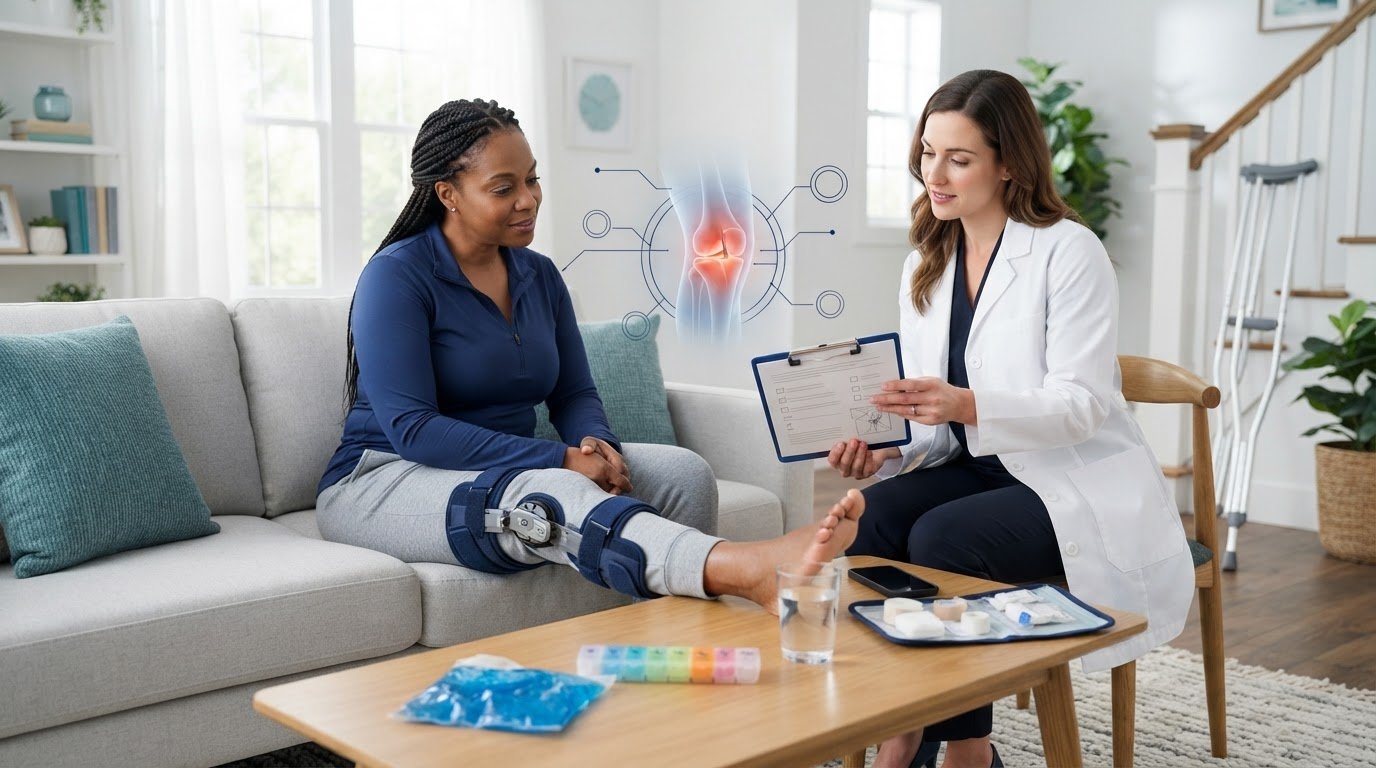
Imagine waking up at 3:00 AM because of a deep, throbbing ache in your hip or shoulder that refuses to subside, regardless of how you adjust your position. You’ve likely experienced that unsettling “catch” or “click” during a routine workout, followed by the immediate worry that your active lifestyle is at risk. It’s physically and mentally draining to live with joint instability, especially when the fear of a grueling surgical recovery keeps you from seeking help. Finding a qualified labral tear specialist Bloomfield NJ is the first step toward reclaiming your mobility and ending the cycle of discomfort.
We recognize that you’re looking for expert guidance that balances clinical precision with a clear path to recovery. This article provides a comprehensive overview of how modern orthopaedic medicine addresses labrum injuries, ensuring you understand every phase of the diagnostic and treatment process. We’ll examine the differences between hip and shoulder tears, the benefits of minimally invasive surgical interventions, and the structured milestones required to return to your sport or profession. By focusing on board-certified expertise and patient-centered outcomes, we’ll help you move from a state of uncertainty to a focused plan for long-term joint health.
Key Takeaways
- Understand the critical role of the labrum in joint stability and how to identify mechanical symptoms like catching, clicking, or deep instability.
- Discover the diagnostic advantages of consulting a board-certified labral tear specialist Bloomfield NJ to ensure an accurate assessment of your specific injury type.
- Evaluate a range of treatment pathways, from conservative physical therapy and anti-inflammatory protocols to advanced, minimally invasive surgical repairs.
- Gain a clear understanding of the structured rehabilitation timeline required to safely transition from post-operative protection to active strengthening.
- Learn how local access to specialized orthopaedic expertise in the Bloomfield area facilitates more consistent follow-up care and a faster return to daily activities.
What is a Labral Tear? Understanding Joint Stability and Pain
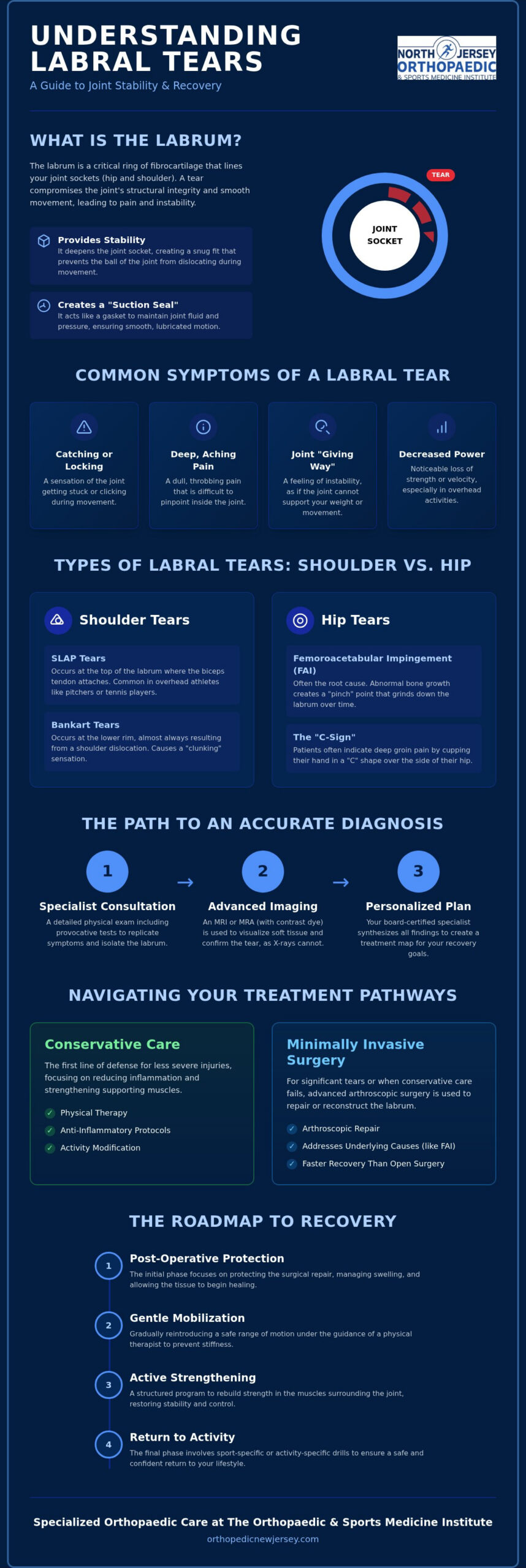
The labrum is a specialized ring of fibrocartilage that lines the circumference of your joint sockets. In both the shoulder (glenoid) and the hip (acetabulum), this structure serves two primary purposes: it deepens the socket to provide mechanical stability and acts as a gasket to maintain a “suction seal.” This seal keeps the joint fluid contained and the ball of the joint centered during movement. When this tissue is compromised, the joint loses its structural integrity and smooth gliding capability.
A tear can occur through acute trauma, such as a fall or a sudden athletic collision, or through repetitive micro-instability caused by years of high-impact movement. When the seal is broken, the joint often feels loose or unstable. If you’re experiencing these symptoms, consulting a labral tear specialist Bloomfield NJ is essential to determine the extent of the damage. Without professional intervention, a minor fraying can progress into a significant detachment that limits your range of motion. Common indicators of a labral injury include:
- Mechanical catching or locking during movement
- Deep, aching pain that is difficult to pinpoint
- A sensation of the joint “giving way” under pressure
- Decreased power or velocity during overhead activities
Shoulder Labral Tears: SLAP vs. Bankart Lesions
Shoulder injuries are typically categorized by their location on the socket’s rim. SLAP tears (Superior Labrum from Anterior to Posterior) involve the top portion of the labrum where the biceps tendon attaches. These are frequent in baseball pitchers or tennis players who notice a sudden drop in throwing power. Bankart tears occur on the lower rim and are almost always the result of a shoulder dislocation. Patients often report a distinct “clunking” sensation when reaching overhead or behind their back.
Hip Labral Tears and Femoroacetabular Impingement (FAI)
In the hip, understanding labral tears requires looking at the underlying bone structure. Many patients suffer from Femoroacetabular Impingement (FAI), where abnormal bone growth on the femoral head or the socket rim creates a “pinch” point. Over time, this mechanical friction grinds down the labrum. Patients often present with the “C-sign,” gripping their hand in a C-shape over the side of the hip to describe deep groin pain. Working with a labral tear specialist Bloomfield NJ allows for a nuanced evaluation of these bony abnormalities to prevent further joint degradation, as these injuries are frequently mislabeled as simple groin strains by non-specialists.
Finding a Labral Tear Specialist in Bloomfield, NJ: The Diagnostic Process
Establishing a definitive diagnosis for joint pain requires more than a simple review of symptoms. It demands the clinical intuition of a board-certified orthopedic surgeon who understands the subtle mechanical nuances of the hip and shoulder. During your initial visit with a labral tear specialist Bloomfield NJ, the process begins with a detailed assessment of your North Jersey lifestyle, including your athletic history and daily physical demands. This background helps the specialist understand if your pain stems from an acute injury or chronic repetitive strain.
A cornerstone of this evaluation is provocative testing. Your specialist will perform specific manual maneuvers designed to stress the labrum, looking for the characteristic “catch” or “click” that signifies a tear. These physical tests are highly specific; they allow the surgeon to differentiate between a labral issue and adjacent problems like bursitis or tendonitis. A specialist doesn’t just read a radiologist’s report; they interpret every clinical finding in the context of your physical exam. This synthesis of data allows for the creation of a personalized treatment map tailored to your specific recovery goals.
Advanced Imaging for Labral Injuries
While standard X-rays are a vital first step to rule out fractures, bone spurs, or severe arthritis, they cannot visualize soft tissue like the labrum. Advanced imaging is necessary to confirm the diagnosis. A standard MRI may miss small tears, which is why specialists often utilize a Magnetic Resonance Angiogram (MRA). This procedure involves injecting a contrast dye into the joint to expand the capsule and highlight even minor fissures in the fibrocartilage. This level of detail is crucial for diagnosing and treating hip labral tears accurately, as it allows the surgeon to determine the exact size, location, and stability of the lesion before recommending an intervention.
When to Schedule a Consultation in Bloomfield
If you recognize the following signs, seeking an evaluation from a specialized orthopedic team can prevent a manageable injury from becoming a chronic condition. Consider scheduling an appointment if you experience:
- Deep joint pain lasting more than four weeks despite rest, ice, and activity modification.
- A persistent feeling of the joint “giving way,” locking, or buckling during routine movements.
- A significant loss of range of motion or strength that interferes with your work or sport.
- Pain that radiates into the groin or down the arm that hasn’t responded to basic over-the-counter treatments.
Treatment Pathways: Conservative Care vs. Minimally Invasive Surgery
Most labral injuries do not immediately require the operating room. A board-certified labral tear specialist Bloomfield NJ typically adopts a “conservative first” philosophy, prioritizing non-operative interventions that allow the joint to stabilize. This approach is particularly effective for degenerative fraying where structural instability is minimal. Treatment often begins with a combination of activity modification and targeted anti-inflammatory protocols. By reducing the mechanical stress on the joint, we can often alleviate the deep, aching pain that characterizes these injuries without invasive measures.
The decision to move toward surgery is never rushed. It’s usually reserved for patients who have failed to see improvement after six to twelve weeks of dedicated conservative care or for those who experience persistent mechanical symptoms like locking and buckling. Modern orthopedic standards in 2026, often aligned with updated insurance prior authorization requirements, emphasize a documented period of physical therapy before proceeding to surgical intervention. This ensures that every non-operative avenue is exhausted before considering the operating suite.
Non-Surgical Management Strategies
Physical therapy is the cornerstone of non-surgical care. The objective isn’t just general exercise; it’s the precise strengthening of the dynamic stabilizers, such as the rotator cuff for the shoulder or the gluteal and core muscles for the hip. This improves joint tracking and reduces impingement. In some cases, targeted joint injections are used to provide a window of pain relief, allowing the patient to engage more effectively in rehabilitation. For many, this multimodal approach provides sufficient relief to return to daily activities.
Minimally Invasive Arthroscopic Repair
When conservative measures fail, arthroscopy offers a sophisticated solution. This technique utilizes small incisions and high-definition cameras to visualize the joint interior with minimal disruption to surrounding tissue. This is the hallmark of minimally invasive orthopedic surgery NJ, offering reduced trauma and a more cosmetic recovery compared to traditional open procedures.
A critical distinction during surgery is the choice between debridement and repair. Debridement involves trimming away the unstable, frayed edges of the labrum to prevent them from catching in the joint. This is often suitable for minor tissue damage. Conversely, a repair involves using small anchors and sutures to reattach the detached labrum to the bone. This restoration of the structural “suction seal” is vital for long-term hip labral tear recovery, especially in younger, high-demand athletes who require maximum joint stability to return to their sport. Your specialist will determine the appropriate method based on the quality of your tissue and the specific location of the tear.
The Roadmap to Recovery: Rehabilitation for North Jersey Patients
Successful outcomes for labral repair are as much a product of post-operative discipline as they are of surgical precision. Once the mechanical integrity of the joint is restored, the focus shifts to protecting the biological healing of the tissue. Managing pain and early inflammation is critical during the initial days. Having a labral tear specialist Bloomfield NJ coordinate your care locally ensures that you don’t have to travel far for these vital early follow-ups. Proximity to our office in the Nutley and Bloomfield area facilitates closer monitoring of your progress and allows for immediate adjustments to your rehabilitation plan as your symptoms evolve.
Patient compliance is significantly higher when the recovery process is accessible. We find that patients who utilize local rehabilitation resources are more consistent with their physical therapy appointments, which is the single most important factor in preventing post-surgical stiffness. We’ll work closely with your therapist to ensure that your recovery milestones align with the specific surgical findings from your procedure. This collaborative approach minimizes the risk of over-stressing the repair while ensuring you don’t fall behind the expected healing timeline.
Phase-Based Rehabilitation Protocol
Recovery is a methodical process divided into specific milestones. Every patient progresses at a different rate, but the following timeline serves as a general guide for a standard labral repair:
- Weeks 1-4 (Protection Phase): The primary goal is to safeguard the repair. You’ll likely use a sling for shoulder repairs or crutches for hip repairs to limit weight-bearing. Gentle, passive range of motion exercises are introduced to prevent joint stiffness without stressing the sutures.
- Weeks 6-12 (Strengthening Phase): As the tissue integrates with the bone, you’ll transition to active movements. We focus on restoring the strength of the surrounding musculature, such as the rotator cuff or the hip abductors, to provide dynamic stability to the joint.
- Month 4+ (Functional Integration): This stage involves sport-specific drills and plyometrics. We utilize objective testing to ensure your strength and balance are symmetrical before clearing you for high-impact activities.
Returning to Sports and Daily Life
Returning to your peak performance level requires meeting strict clinical criteria. For overhead athletes like baseball players or swimmers, this means achieving full, pain-free range of motion and demonstrating significant muscular endurance. For those involved in running or cutting sports like soccer, we look for excellent pelvic control and the ability to absorb impact without joint instability. Maintaining long-term joint health involves a commitment to a consistent maintenance program that emphasizes core strength and proper mechanics. If you’re ready to start your journey back to an active lifestyle, contact our specialized orthopaedic team to schedule your evaluation.
Specialized Orthopedic Care at The Orthopaedic & Sports Medicine Institute
Choosing a labral tear specialist Bloomfield NJ means selecting a partner dedicated to your long-term joint health. Our practice is built on a foundation of board-certified expertise, serving the residents of Bloomfield, Nutley, and Clifton with a focus on surgical precision and empathetic care. Unlike large, anonymous hospital systems where patients often feel like a number in a high-volume queue, we prioritize a direct, consultant-style relationship. This personalized approach ensures that every diagnostic finding is explained in detail and every treatment plan is co-authored with the patient to reflect their specific lifestyle demands.
We remain at the forefront of the industry by integrating the most current clinical evidence and technological advancements into our daily practice. This includes a heavy emphasis on labral tear shoulder treatment protocols that favor tissue preservation over aggressive resection. By staying anchored in modern methodology, we provide our patients with access to the same level of care found at major academic centers, delivered within a more accessible and responsive community setting.
A Dedicated Community Resource in Nutley
Our office is strategically located to serve as a primary resource for patients in Belleville, Lyndhurst, and Kearny. We’ve streamlined the diagnostic journey to minimize the time between your initial injury and the start of your recovery. This efficiency is possible because we manage the entire process, from provocative physical testing to the coordination of advanced imaging referrals. Furthermore, we maintain a robust network of collaboration with local physical therapists. This ensures that the transition from our surgical care to your outpatient rehabilitation is seamless, with clear communication regarding your specific surgical anchors and repair tension.
Modern Solutions for Active Lifestyles
We believe that a “one size fits all” approach has no place in modern orthopedics. Whether you’re a high-level athlete aiming for a scholarship or a weekend warrior looking to play a pain-free round of golf, our techniques are tailored to your goals. We focus on native ligament healing and advanced repair methods that respect the complex anatomy of the joint. Our objective is always to restore the natural mechanics of your hip or shoulder, allowing you to return to the activities that define your quality of life. Don’t let chronic joint instability dictate your future. Schedule your orthopedic consultation in Nutley, NJ today to discuss your options with an expert who understands the unique needs of our North Jersey community.
Reclaiming Your Active Lifestyle in North Jersey
Living with the persistent pain and mechanical instability of a labral tear doesn’t have to be your permanent reality. By prioritizing a structured diagnostic process and exploring modern treatment pathways, you can effectively address the root cause of your joint discomfort. Whether your recovery involves specialized physical therapy or advanced arthroscopic repair, success depends on having access to high-level clinical expertise right in your community. Consulting a labral tear specialist Bloomfield NJ ensures that your care is managed by a board-certified professional who understands both the complexity of joint anatomy and the importance of a personalized rehabilitation timeline.
Our commitment to minimally invasive techniques and patient-centered outcomes means you’ll receive the sophisticated care of a major medical center with the accessibility of a local practice serving Nutley and the surrounding areas. Don’t let joint pain limit your potential or prevent you from enjoying the activities you love. You’re invited to Schedule Your Consultation with a Labral Tear Specialist to begin your journey toward a full, pain-free recovery. We’re here to help you return to your sport, your work, and your daily life with confidence.
Frequently Asked Questions
How do I know if I need a labral tear specialist in Bloomfield?
You should consult a labral tear specialist Bloomfield NJ if you experience mechanical symptoms such as catching, locking, or a distinct “clunking” sensation in the hip or shoulder. These symptoms often indicate a structural detachment that requires specialized provocative testing. If deep joint pain persists for more than four weeks or interferes with your athletic performance, a board-certified evaluation is necessary to prevent further joint degradation.
Can a labral tear heal on its own without surgery?
The labrum has a limited blood supply, which means a full detachment rarely heals back to the bone on its own. However, many patients successfully manage their symptoms through conservative care. By strengthening the surrounding dynamic stabilizers and modifying activity levels, you can often achieve a pain-free lifestyle. Surgery is typically reserved for cases where mechanical instability persists despite these dedicated non-operative efforts.
What is the success rate of arthroscopic labral repair?
Arthroscopic labral repair is highly effective, with most patients reporting significant pain relief and a successful return to their previous activity levels. Success is largely dependent on the quality of the surrounding tissue and the patient’s commitment to a structured rehabilitation protocol. While individual outcomes vary, minimally invasive techniques have refined the precision of these repairs, leading to more predictable and durable long-term results for North Jersey athletes.
How long is the recovery time after labral tear surgery?
A full recovery typically spans four to six months, depending on the specific joint and the nature of the repair. The initial protection phase lasts approximately six weeks, during which you’ll use a sling or crutches to safeguard the healing tissue. This is followed by several months of progressive strengthening. Most patients return to high-impact sports or overhead activities only after passing objective functional testing to ensure joint stability.
What happens if a labral tear is left untreated?
Leaving a labral tear untreated can lead to chronic joint instability and premature osteoarthritis. When the labrum is damaged, the “suction seal” of the joint is compromised, causing the ball to shift abnormally within the socket. Over time, this irregular movement grinds down the protective articular cartilage. Early intervention from a labral tear specialist Bloomfield NJ can help preserve your native joint and prevent the need for more invasive procedures later in life.
Is physical therapy effective for a torn labrum?
Physical therapy is a highly effective first-line treatment for many labral injuries. The focus is on strengthening the muscles that support the joint, such as the rotator cuff or the gluteal group, to compensate for the compromised labrum. While therapy doesn’t physically reattach the torn tissue, it improves joint tracking and reduces the friction that causes pain. Many residents in Nutley and Bloomfield find significant relief through these targeted exercise programs.
Will I need an MRI to diagnose my labral tear?
An MRI is the gold standard for confirming a labral tear because standard X-rays only visualize bone. In many cases, a specialist will recommend an MRA, which involves a contrast dye injection to better highlight small fissures in the fibrocartilage. This detailed imaging allows for an accurate assessment of the tear’s size and location, which is critical for planning either a conservative or surgical treatment path.
Does the Orthopaedic & Sports Medicine Institute accept my insurance?
The Orthopaedic & Sports Medicine Institute works with many major insurance providers to ensure our specialized care remains accessible to the local community. Because insurance networks and employer plans frequently update their coverage policies, we recommend calling our office directly to verify your specific plan’s participation. Our staff is familiar with the prior authorization requirements for arthroscopic procedures in New Jersey and will help guide you through the process.