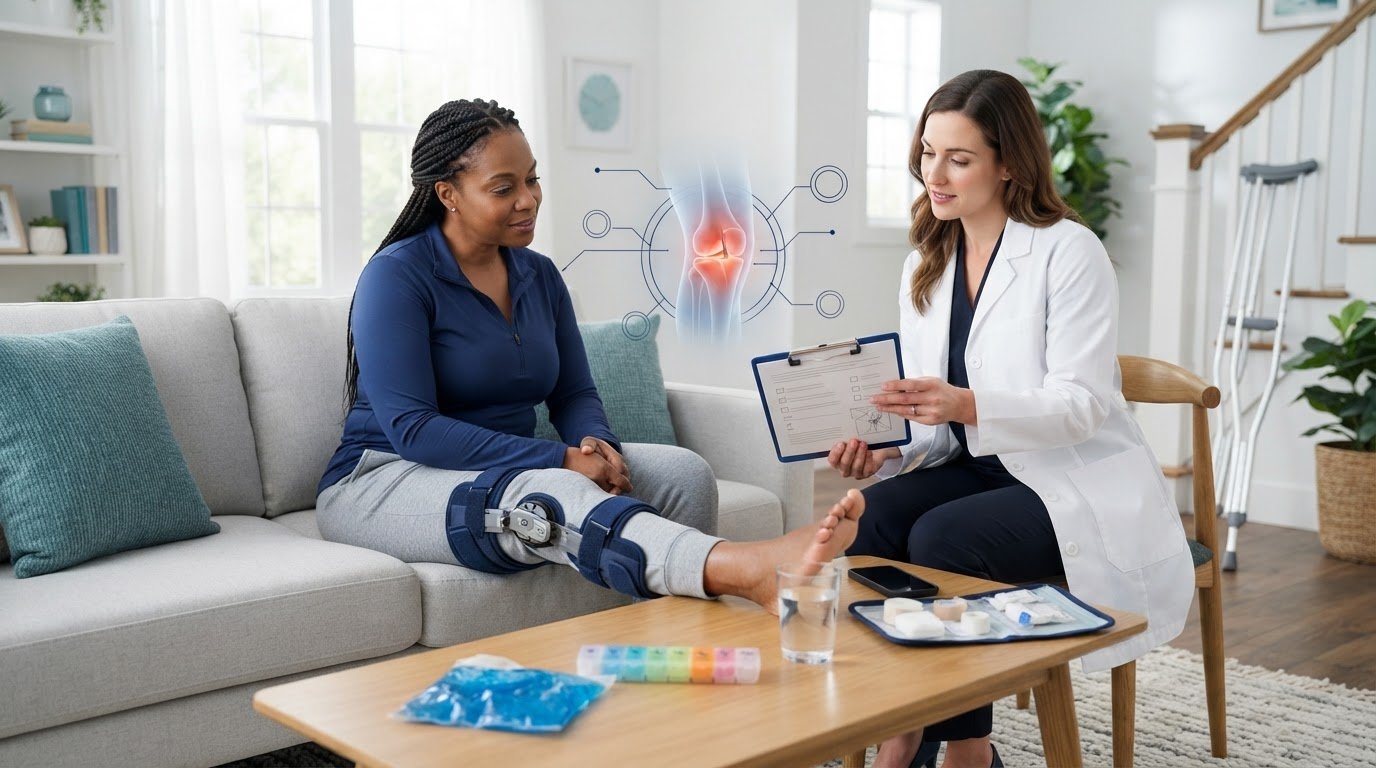
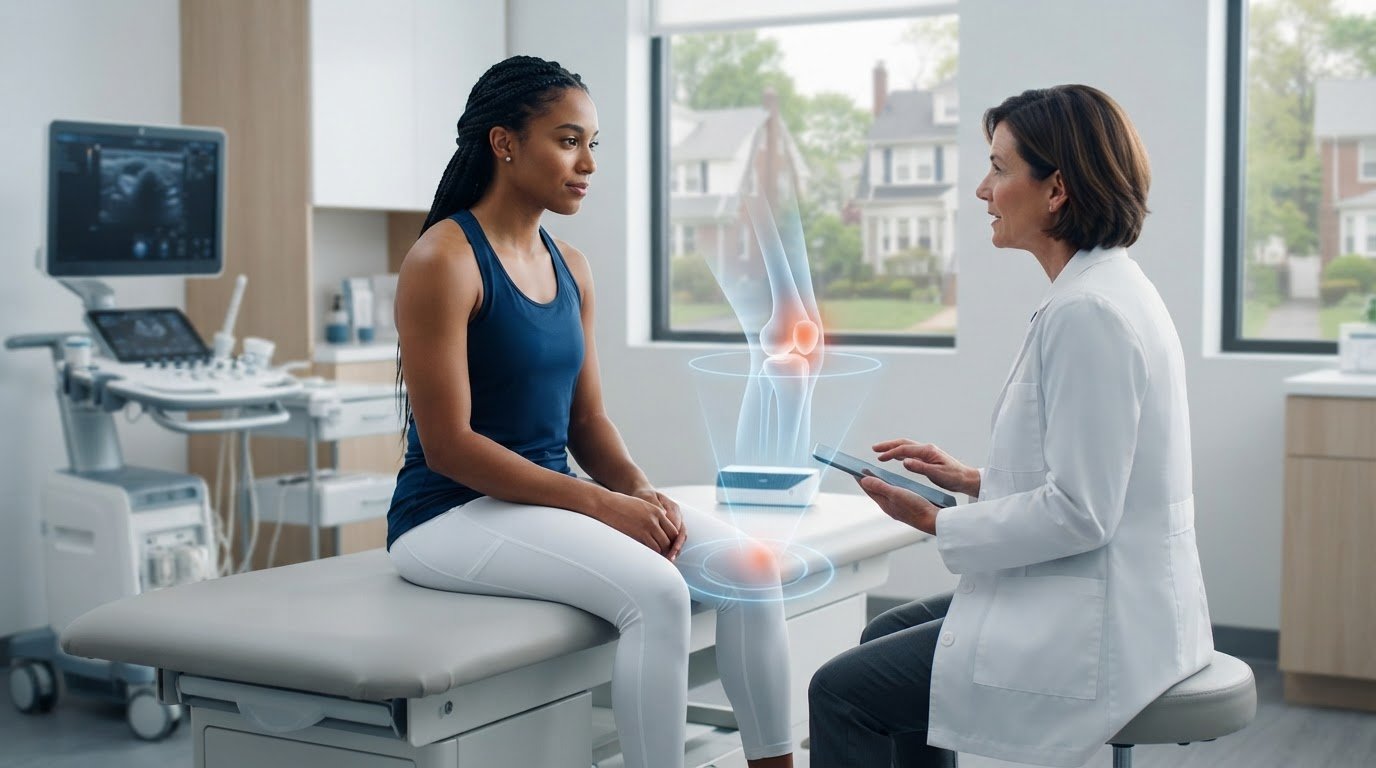
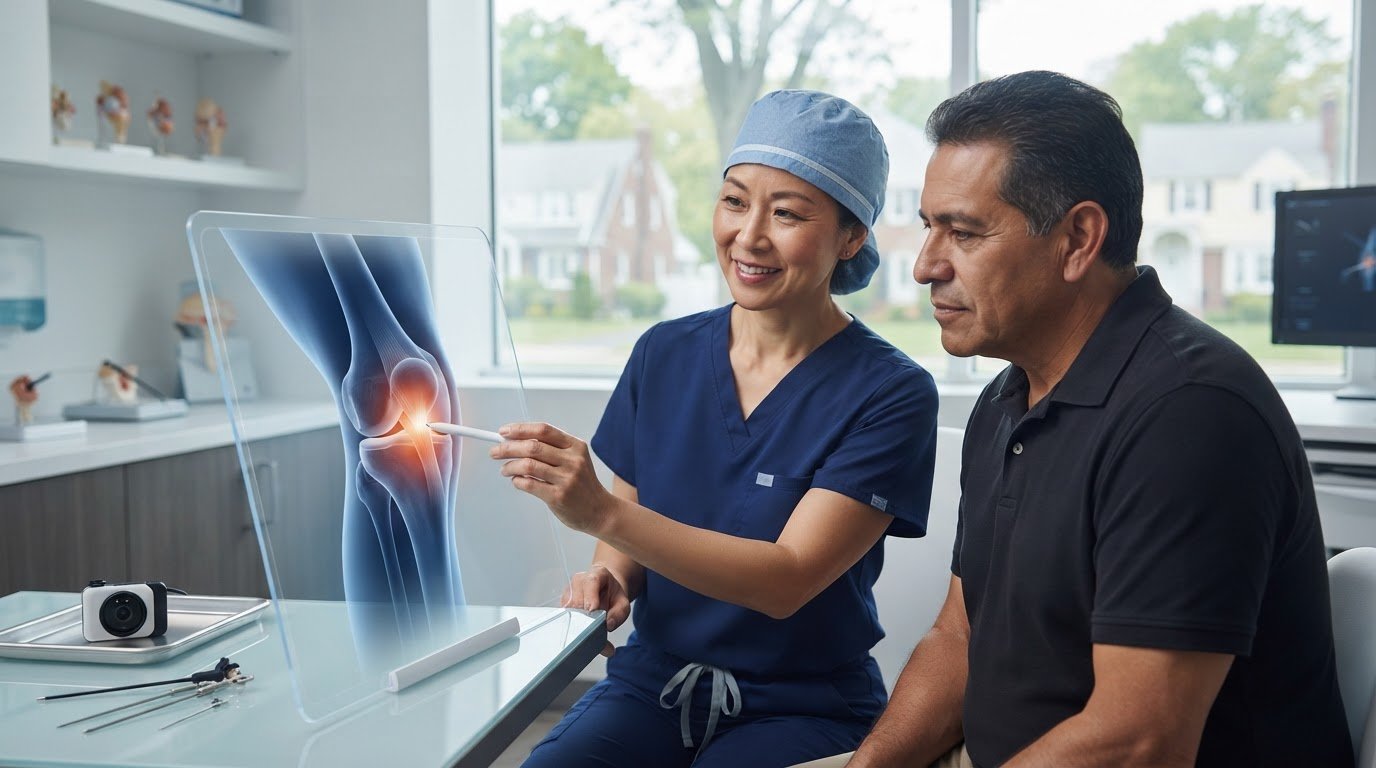
Imagine waking up at 3:00 AM to a deep, persistent ache in your hip or shoulder that refuses to subside, no matter how you adjust. For many active residents in Essex County, this isn’t just a minor annoyance; it’s a clear signal that a labral tear is disrupting your sleep and your mobility. You’ve likely grown frustrated with “wait and see” advice from general practitioners that only delays your return to the gym or the court. We understand that finding effective labral tear treatment Bloomfield NJ can be confusing, especially when search results frequently point you toward Connecticut instead of your local community here in New Jersey.
It’s exhausting to manage joint instability while navigating a healthcare system that feels impersonal. This guide provides the clarity you need to move from chronic discomfort to a structured path of recovery. You’ll discover how a board-certified orthopedic specialist provides the clinical precision and empathy required to address these complex cartilage injuries. We’ll explore advanced diagnostic imaging, the specific advantages of minimally invasive arthroscopic repair, and how a personalized recovery plan can help you regain your strength and return to activity with confidence.
Key Takeaways
- Identify local specialized care in Nutley to avoid the confusion of out-of-state search results and ensure your treatment remains convenient.
- Distinguish between the symptoms of shoulder and hip labral tears to better understand how cartilage damage affects your joint mechanics.
- Explore the full spectrum of labral tear treatment Bloomfield NJ, ranging from targeted physical therapy to advanced arthroscopic surgical interventions.
- Learn why board certification and a focus on sports medicine are the essential benchmarks for selecting a qualified orthopedic specialist.
- Preview the structured roadmap of post-operative recovery that balances joint protection with a progressive return to athletic performance.
Navigating Labral Tear Treatment in the Bloomfield and Nutley Area
Finding effective labral tear treatment Bloomfield NJ often presents a unique digital challenge. Many patients discover that search results frequently direct them toward providers in Bloomfield, Connecticut, rather than local New Jersey specialists. This geographic confusion can be frustrating when you’re already dealing with the deep, aching pain of a hip or shoulder injury. At The Orthopaedic & Sports Medicine Institute, we bridge this gap by providing board-certified surgical expertise located conveniently in Nutley. We serve the active residents of Bloomfield, Clifton, and the surrounding Essex County area, offering a specialized alternative to the long commutes and wait times often associated with major New York City medical centers.
Why Proximity Matters for Labral Recovery
Recovery from a complex cartilage injury, such as a SLAP lesion, is a multi-phase process that extends far beyond the initial consultation. Choosing a local specialist offers several clinical advantages that directly impact your outcome:
- Reduced Travel Stress: Minimizing time spent in a car is essential during the acute phase of joint pain or immediately following a minimally invasive procedure.
- Coordinated Rehabilitation: We work closely with physical therapists in Bloomfield and Nutley to ensure your recovery plan is executed with precision.
- Streamlined Diagnostics: Accessing follow-up imaging and diagnostic tests in North Jersey is faster and more convenient than navigating large hospital systems.
Frequent post-operative check-ups are vital for monitoring joint stability and range of motion. When your surgeon is just minutes away, these appointments become manageable milestones rather than logistical burdens. This proximity allows for a more responsive treatment approach, as we can quickly adjust your recovery protocol based on your real-time progress.
Your Local Resource for Essex County Sports Medicine
Our practice operates as a specialized boutique, focusing on high-level orthopedic care for the active community. Led by a board-certified surgeon, we specialize in minimally invasive arthroscopic repair designed to preserve as much natural tissue as possible. When seeking labral tear treatment Bloomfield NJ residents deserve a surgeon who combines technical mastery with a deep understanding of local athletic needs.
We prioritize a diagnostic mindset that values accuracy and patient education. By choosing a dedicated sports medicine specialist in your own neighborhood, you gain a partner who understands your lifestyle and is committed to your long-term joint health. We provide the sophisticated methodology of a major institution within a patient-centered environment that values your time and your specific recovery goals. This localized focus ensures that you aren’t just another number in a large hospital network, but a valued member of our community returning to health.
Understanding Labral Tears: Shoulder vs. Hip Stability
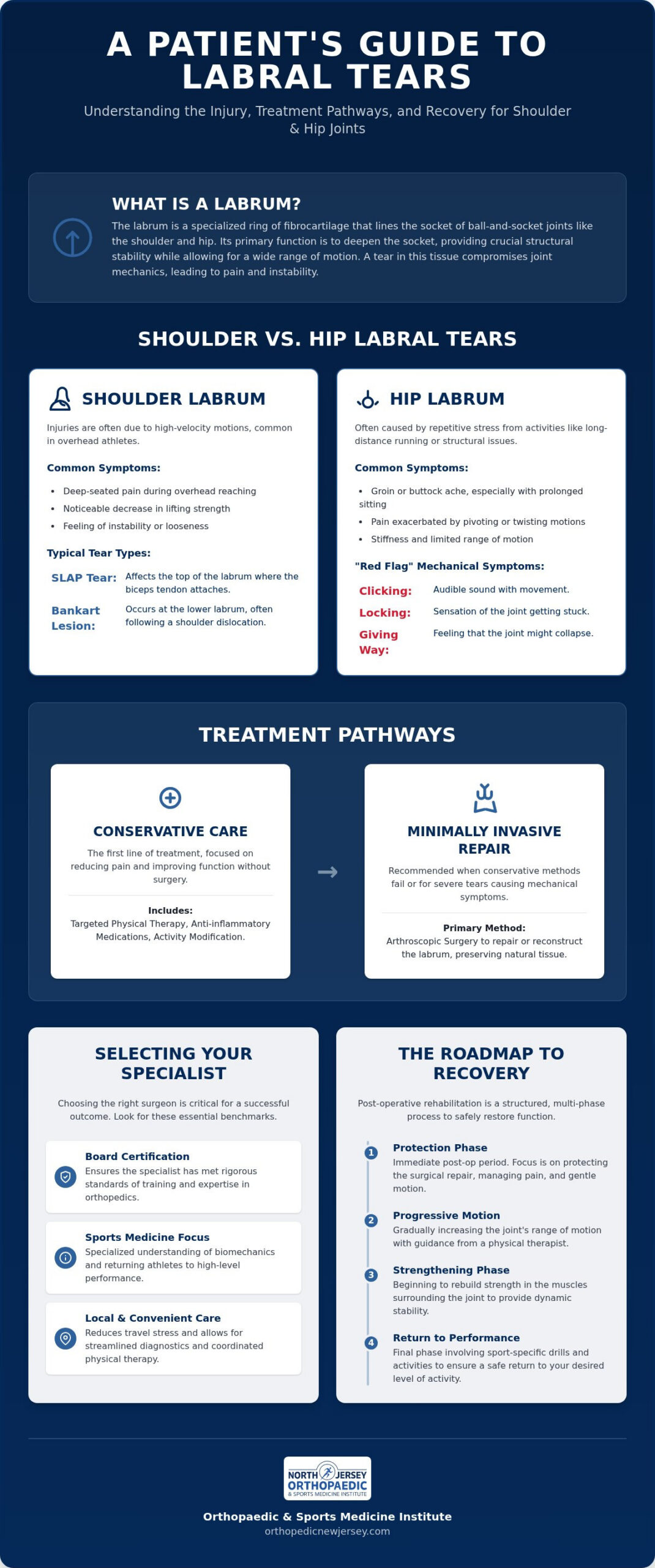
The labrum is a specialized ring of fibrocartilage that lines the acetabulum in the hip and the glenoid in the shoulder. Its primary function is to deepen the joint socket, providing essential structural stability while allowing for a wide range of motion. When this tissue is compromised, the mechanics of the entire limb are altered. Seeking labral tear treatment Bloomfield NJ starts with understanding whether the injury is acute or the result of progressive wear over time.
Repetitive biomechanical stress, common in overhead athletes or long-distance runners, often leads to micro-tears that compromise joint integrity. Symptoms differ significantly between the two joints; shoulder injuries often involve pain during overhead reach, while hip tears are exacerbated by prolonged sitting or pivoting. Patients should be aware of “red flag” symptoms that indicate a mechanical disruption. These include audible clicking, a sensation of locking, or a feeling that the joint might “give way” during routine activity.
Shoulder Labrum: SLAP Tears and Bankart Lesions
In the shoulder, the labrum is particularly susceptible to injuries during high-velocity motions. A Superior Labrum from Anterior to Posterior, commonly known as a SLAP tear, occurs where the biceps tendon attaches to the top of the labrum. This often results in deep-seated pain and a noticeable decrease in lifting strength. Bankart lesions, conversely, typically occur following a shoulder dislocation, involving the lower portion of the labrum and leading to chronic instability. For those experiencing these symptoms, a comprehensive labral tear shoulder treatment plan is necessary to restore the joint’s integrity and prevent recurrent dislocations.
Hip Labrum: FAI and Structural Instability
The hip labrum is a robust structure, yet it’s frequently damaged by Femoroacetabular Impingement (FAI). In FAI, the bone of the hip or the socket has an irregular shape, causing them to rub against each other during movement. This friction eventually frays or tears the labrum, manifesting as deep groin pain that many patients mistakenly attribute to a simple muscle strain. Early diagnosis and treatment of a hip labral tear is critical to prevent long-term joint degeneration. Without professional intervention, the loss of labral integrity can lead to early-onset osteoarthritis, making prompt clinical evaluation essential for maintaining an active lifestyle.
Treatment Pathways: Conservative Care to Minimally Invasive Repair
Choosing the right labral tear treatment Bloomfield NJ requires a methodical approach that prioritizes joint preservation and long-term stability. Most clinical protocols begin with conservative management, particularly when the injury doesn’t present with immediate mechanical locking or significant structural instability. This initial phase focuses on reducing inflammation and restoring biomechanical harmony through targeted intervention. We don’t view surgery as the first resort; instead, it’s a precise solution for cases where the joint’s integrity cannot be restored through non-operative means.
Non-Surgical Management Strategies
For many patients, Nonsurgical treatment for shoulder labral tears provides a successful pathway to pain relief and functional improvement. This process relies heavily on professional physical therapy designed to strengthen the secondary stabilizers of the joint. In the shoulder, this involves optimizing the rotator cuff’s ability to center the humeral head; in the hip, the focus shifts to the gluteal and core musculature to reduce stress on the acetabular rim.
Clinical success during this phase often depends on patient compliance with activity modification and anti-inflammatory management. We monitor your progress closely to determine if the joint can be stabilized without surgical intervention. However, conservative care has definitive limits. If a structural mechanical block exists, such as a displaced fragment of cartilage, or if deep-seated instability persists after six months of therapy, we transition the discussion toward modern procedural solutions.
Minimally Invasive Arthroscopic Labrum Repair
When surgery is the most appropriate clinical path, we utilize minimally invasive orthopedic surgery NJ to repair the damaged tissue with extreme precision. Unlike traditional open surgery, which requires large incisions and significant muscle disruption, arthroscopy uses a high-definition camera and specialized instruments through tiny portals. This allows us to visualize the entire joint environment and securely anchor the labrum back to the bone using advanced bio-absorbable materials.
The benefits of this arthroscopic approach are significant for the active Bloomfield community. By minimizing trauma to the surrounding soft tissues, we drastically reduce the formation of post-operative scar tissue. This leads to less pain during the early stages of healing and a more predictable recovery timeline. Patients typically experience a faster transition from the initial protection phase into the strengthening phase, allowing for a more efficient return to the sports and daily activities they value most.
Selecting a Board-Certified Labral Tear Specialist in North Jersey
When you research labral tear treatment Bloomfield NJ, the credentials of your surgeon are the most significant factor in your long-term success. While many practitioners offer orthopedic services, a specialist focused on sports medicine and cartilage preservation provides a higher level of diagnostic and surgical precision. This expertise is particularly vital for labral injuries, where the margin for error in anchoring tissue is incredibly small. A specialist who understands the nuances of both hip and shoulder stability can better identify if your pain stems from a tear or an adjacent structural issue.
The Importance of Board Certification
Board certification represents more than just a license to practice; it’s the gold standard for surgical safety and clinical excellence. This designation requires a surgeon to pass rigorous written and oral examinations while committing to ongoing education in the latest surgical advancements. For labral tears, a general orthopedist who treats everything from broken toes to spine issues may lack the specialized volume required to master arthroscopic labral repair. Specialists who focus on sports medicine often achieve better outcomes because they understand the complex mechanics of joint stability and the specific demands placed on athletes.
What to Expect During Your Specialized Consultation
A thorough consultation in our Nutley office begins with a methodical diagnostic process. We don’t rely on surface-level assessments. Instead, we combine a detailed physical examination with advanced imaging, such as Magnetic Resonance Angiography (MRA) or high-resolution MRI, to visualize the exact extent of the cartilage damage. This accuracy is necessary to distinguish between simple fraying and a full-thickness tear that requires stabilization.
Once we have an accurate diagnosis, we develop a personalized treatment roadmap. This isn’t a one-size-fits-all protocol. We consider your age, activity level, and specific symptoms to determine if conservative care or minimally invasive surgery is the superior path. Our communication style is designed to be reassuring and transparent, ensuring you understand every step of your recovery journey. Consider asking these questions during your visit:
- How many arthroscopic labral repairs do you perform annually?
- What is your specific success rate for return-to-sport in patients with my injury?
- Do you specialize in both hip and shoulder labral pathology?
If you are ready to address your joint pain with a specialist, schedule a consultation with our board-certified surgeon to begin your recovery.
The Roadmap to Recovery: Rehabilitation for Bloomfield Patients
Success in labral tear treatment Bloomfield NJ doesn’t end in the operating room; it’s a structured evolution that requires a close partnership between your surgeon and your local physical therapist. We coordinate with rehabilitation specialists throughout Essex County to ensure your protocol matches the specific biological requirements of your repair. This collaborative approach ensures that every exercise and milestone is aligned with the current stage of tissue healing, providing a safe and predictable path back to full function.
Phase-Based Recovery Protocol
Rehabilitation is divided into distinct clinical phases, each with specific objectives designed to protect the joint while gradually restoring its capabilities. We lead you through this progression with a focus on precision and patience:
- Initial Protection: The first six weeks are dedicated to protecting the surgical anchors. During this time, we manage inflammation and allow the labrum to securely re-attach to the bone. You’ll use a sling or brace to prevent movements that could jeopardize the structural integrity of the repair.
- Intermediate Phase: Once the initial healing is established, typically between weeks six and twelve, we transition to restoring your range of motion. This phase involves controlled functional strengthening and reclaiming joint mobility without overstressing the healing tissue.
- Advanced Phase: Beginning around the three to four-month mark, this stage focuses on sport-specific drills and power development. We don’t clear patients based on a calendar date alone; we use objective strength and stability benchmarks to ensure you’re ready for high-intensity activity.
Returning to Your Active Lifestyle in North Jersey
Setting realistic milestones is crucial for Bloomfield athletes and weekend warriors alike. Whether you’re aiming to return to competitive overhead sports or simply want to sleep through the night without shoulder pain, our Nutley team at The Orthopaedic & Sports Medicine Institute monitors your progress at every follow-up appointment. We provide the clinical oversight needed to prevent a premature return to play, which is a leading cause of re-injury in cartilage repairs.
If you’re looking for specialized care nearby, our expertise as a trusted sports medicine clinic serving Bloomfield and the wider North Jersey area ensures you have access to elite-level rehabilitation guidance. We bridge the gap between surgical repair and peak physical performance, guiding you through a steady, methodical return to the activities that define your lifestyle. By following this roadmap, you can regain confidence in your joint’s stability and return to your favorite North Jersey parks and gyms stronger than before.
Regaining Your Mobility Through Specialized Orthopedic Care
Restoring joint stability and eliminating chronic pain begins with a commitment to clinical precision. We’ve explored how advanced diagnostic imaging provides the baseline for an accurate recovery plan, ensuring that every treatment decision is based on the specific pathology of your cartilage. Whether your injury requires conservative management or the technical mastery of minimally invasive arthroscopy, the goal remains a safe and efficient return to your active lifestyle. Choosing a local, board-certified specialist ensures that your recovery is managed with the high-level expertise you deserve, right here in Essex County.
Don’t let deep-seated joint instability dictate your daily activities or disrupt your sleep any longer. Accessing specialized labral tear treatment Bloomfield NJ is a vital step toward reclaiming your physical performance and long-term joint health. Our Nutley office is dedicated to serving the Bloomfield, Nutley, and Clifton communities with a patient-centered approach that values accuracy and transparency. Schedule Your Labral Tear Consultation in Nutley today to begin your personalized roadmap to recovery. We’re here to guide you through every phase of healing with the confidence that comes from specialized surgical training.
Frequently Asked Questions
How do I know if my shoulder pain is a labral tear or just a strain?
A muscle strain typically involves localized tenderness that improves with rest, while a labral tear often presents as a deep, aching pain within the joint. Strains usually resolve within two to three weeks of conservative care. If you experience persistent clicking, catching, or a sensation that your shoulder might “give way” during overhead movements, these are mechanical signs that suggest the cartilage socket is damaged rather than just the surrounding muscle.
Is labral tear surgery always necessary for hip pain in Bloomfield residents?
Surgery is not the immediate requirement for every patient seeking labral tear treatment Bloomfield NJ. We prioritize a conservative approach, utilizing targeted physical therapy and activity modification to stabilize the hip joint. Many local residents find significant relief through these non-operative methods. Surgery becomes the clinical recommendation only if a structural mechanical block exists or if persistent instability prevents you from performing daily activities after several months of dedicated therapy.
What is the difference between a SLAP tear and a Bankart lesion?
The primary difference lies in the anatomical location of the tear on the glenoid socket. A SLAP tear occurs at the top of the labrum where the biceps tendon attaches, often causing pain during lifting or throwing motions. A Bankart lesion occurs at the lower portion of the socket and is frequently the result of a shoulder dislocation. Both injuries compromise joint stability but require different surgical anchoring techniques during a minimally invasive repair.
How long is the recovery time after minimally invasive labrum repair?
Most patients return to light daily activities within six weeks, though full recovery typically spans four to six months. The initial protection phase is critical for allowing the labrum to securely re-attach to the bone. This is followed by a progressive strengthening phase where you reclaim functional power. We provide a structured roadmap to ensure you don’t rush the biological healing process, which is essential for preventing long-term joint degeneration or re-injury.
Do you accept local insurance for orthopedic consultations in Nutley?
We accept most major local insurance plans for consultations and specialized treatments at our Nutley office. Our team works closely with providers to verify your coverage for diagnostic imaging and orthopedic care. Because insurance requirements for prior authorization have become more stringent in 2026, we help navigate the documentation needed for your plan. Please contact our office directly to confirm your insurance details and lead times before your scheduled visit.
Can a labral tear heal on its own with physical therapy?
The labrum has a limited blood supply, so it doesn’t typically “knit” back together like a skin cut; however, physical therapy can effectively manage the symptoms. Therapy focuses on strengthening the surrounding rotator cuff or gluteal muscles to compensate for the lost stability. For many non-mechanical tears, this compensation is enough to eliminate pain and restore function. If the tear causes persistent locking or significant instability, minimally invasive intervention may be necessary.
What should I bring to my first appointment at the Nutley office?
Please bring your insurance card, a valid photo ID, and any previous imaging reports such as X-rays or MRIs on a disc. Having your prior medical records allows our board-certified surgeon to develop a more accurate diagnostic profile. It’s also helpful to prepare a list of specific activities or movements that trigger your joint pain. This information helps us create a personalized recovery plan that addresses your unique lifestyle and athletic goals.
How soon can I return to sports after hip arthroscopy?
Athletes can generally expect to begin sport-specific drills around four months, with a full return to play occurring between six and nine months post-surgery. This timeline depends on passing objective stability and strength benchmarks during your rehabilitation. We monitor your progress through every phase of recovery, ensuring the hip can handle the pivoting and high-impact forces required for your sport. Rushing this process increases the risk of aggravating the newly repaired cartilage.