What if effective shoulder surgery pain relief depends on more than medication alone? The first days can bring intense discomfort, restless nights, and questions about whether a symptom is part of healing or a reason to call your surgeon. This guide to managing pain after shoulder surgery North Arlington NJ residents can use starts with a clear plan: follow your surgical team’s guidance and use practical comfort measures at home.
Learn how pain may change as recovery progresses, how to make rest and everyday routines more comfortable, and how to use prescribed medication safely. You’ll also find signs that call for prompt medical attention, so you’re not left guessing about what’s normal.
Recovery varies, and your surgeon’s instructions should guide your care. The Orthopaedic & Sports Medicine Institute, led by a board-certified orthopedic surgeon in nearby Nutley, serves patients in North Arlington with minimally invasive shoulder procedures, including rotator cuff and labral tear repairs. The sections ahead explain how clinical pain management and home care can work together during recovery.
Key Takeaways
- Pain can vary by procedure and stage of healing. Ask your surgeon what changes to expect during recovery.
- A clinician-guided pain plan may combine different approaches. Check with your care team about medication safety and NSAID use.
- Cold therapy and supported sleeping positions may improve comfort when used according to your post-operative instructions.
- Use passive movement and physical therapy only as prescribed, and stay within your surgeon’s restrictions.
- For managing pain after shoulder surgery North Arlington NJ, learn which warning signs may indicate a complication and when to contact your orthopedic surgeon.
Managing Pain After Shoulder Surgery North Arlington NJ: What to Expect
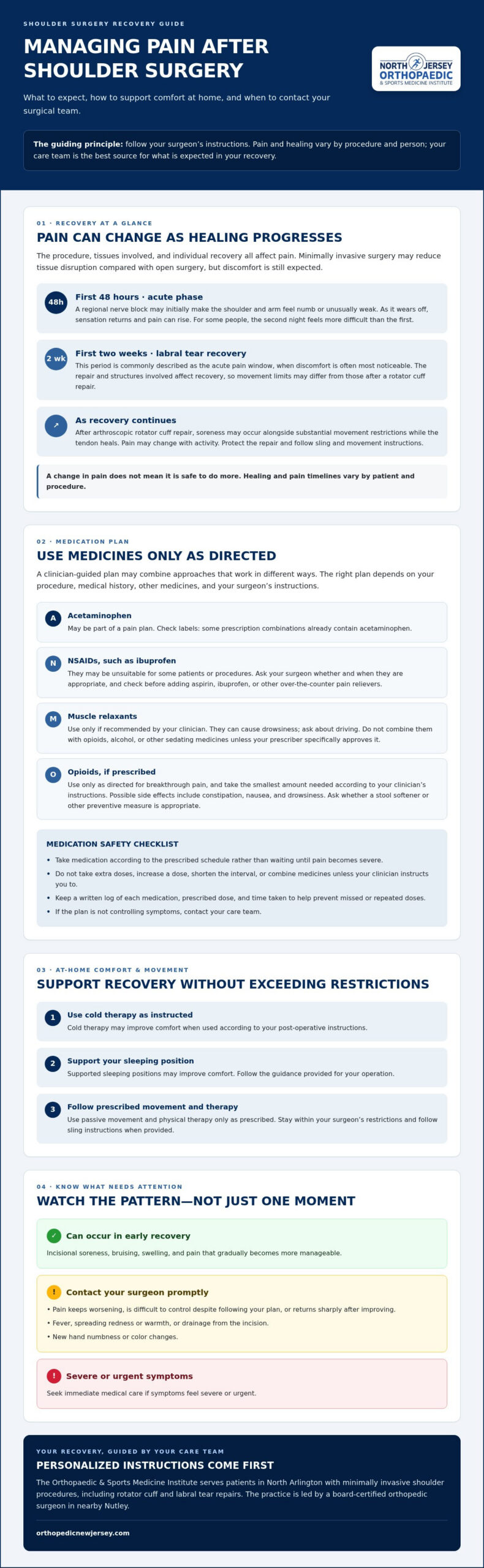
Pain after shoulder surgery is part of the body’s inflammatory healing response, but its intensity and pattern depend on the procedure, the tissues involved, and your recovery. Minimally invasive techniques use smaller incisions and may reduce tissue disruption and post-operative pain compared with traditional open surgery, though discomfort is still expected. Your surgeon’s instructions are the most reliable guide to what’s typical for your operation.
The First 48 Hours: The Acute Phase
If you receive a regional nerve block, your shoulder and arm may feel numb or unusually weak at first. As the block wears off, sensation returns and pain can rise. For some people, the second night feels more difficult than the first. How long a block provides relief varies with the technique and individual factors. Before you leave, ask your care team what to expect and follow your discharge plan for transitioning to prescribed oral medication.
“Staying ahead of the pain” means taking medication according to the prescribed schedule rather than waiting until pain becomes severe. Don’t take extra doses or combine medicines unless your clinician instructs you to. Keep your medication plan and your surgeon’s contact instructions close at hand during the first days of recovery in North Arlington.
Pain Timelines for Common Shoulder Procedures
After an arthroscopic rotator cuff repair NJ, soreness may occur alongside substantial movement restrictions while the repaired tendon heals. Pain can change with activity, so protect the repair and follow the prescribed sling and movement instructions. Don’t use pain relief as a signal that it’s safe to do more.
After labral tear shoulder treatment, recovery depends on the repair and the structures involved. Movement limits may differ from those after a cuff repair. The first two weeks are commonly described as the acute pain window, when discomfort is often most noticeable, though pain and healing timelines vary by patient and procedure. For broader background on post-operative analgesia, see this overview of shoulder replacement surgery.
What’s Expected, and What Needs Attention?
Incisional soreness, bruising, swelling, and pain that gradually becomes more manageable can occur during early recovery. Pay attention to the trend. Contact your surgeon if pain keeps worsening, becomes difficult to control despite following your plan, or returns sharply after improving. Fever, spreading redness or warmth, incision drainage, or new hand numbness or color changes also warrant prompt medical advice. If symptoms feel severe or urgent, seek immediate medical care.
Clinical Pain Management: Medications and Protocols
A clinician-guided pain plan may combine medications that work in different ways to control discomfort while limiting reliance on opioids. The right combination depends on your procedure, medical history, other medications, and your surgeon’s instructions. Research on post-operative pain management protocols discusses options such as acetaminophen and NSAIDs, but it does not replace individualized advice from your surgical team.
The Multimodal Approach to Recovery
Acetaminophen, commonly known by the brand name Tylenol, and ibuprofen may be included in the same plan because they work differently. That doesn’t mean everyone should take both. NSAIDs can be unsuitable for some patients or procedures, so ask your surgeon whether and when they’re appropriate. Check before adding aspirin, ibuprofen, or other over-the-counter pain relievers. Read labels carefully, too, since some prescription combinations already contain acetaminophen.
Use prescribed muscle relaxants only if your clinician recommends them for muscle spasms. They can cause drowsiness, so ask about driving. Don’t combine them with opioids, alcohol, or other sedating medicines unless your prescriber specifically approves it.
A written medication log can help prevent missed or repeated doses, especially when someone else is helping with your care. Record each medication, the prescribed dose, and the time taken. Use medicines exactly as directed. Don’t increase a dose or shorten the interval if pain breaks through. Contact your care team if the plan isn’t controlling your symptoms.
Opioid Safety and Side-Effect Prevention
If an opioid is prescribed, use it only as directed for breakthrough pain, and take the smallest amount needed according to your clinician’s instructions. Opioids can cause constipation, nausea, and drowsiness. Ask whether a stool softener or other preventive measure is appropriate, and follow your care team’s advice about fluids and dietary fiber. Store medication securely and dispose of unused doses according to clinician or pharmacy guidance.
Minimally Invasive Benefits for Pain
Minimally invasive orthopedic surgery NJ uses smaller incisions and can limit disruption to surrounding tissues compared with traditional open approaches. This may help reduce early post-operative discomfort, but it doesn’t eliminate pain or guarantee a faster recovery. The procedure and your individual healing remain important factors. Discuss questions about long-term pain risk with your surgeon.
For patients managing pain after shoulder surgery North Arlington NJ, a board-certified orthopedic surgeon at the Orthopaedic & Sports Medicine Institute in nearby Nutley can explain how the medication plan relates to a rotator cuff or labral repair. Learn more about the practice’s minimally invasive orthopedic care.
Non-Pharmacological Strategies for At-Home Comfort
Comfort measures can complement your prescribed pain plan, especially during rest and everyday activities. Cold therapy may temporarily numb the area and help manage swelling, while supported positioning can reduce strain on the healing shoulder. Follow your surgeon’s procedure-specific instructions because restrictions can differ after rotator cuff and labral repairs.
Effective Icing Protocols
Use a cold pack or prescribed cold-compression unit according to your care team’s directions. A commonly suggested starting pattern is 20 minutes of cold followed by at least 20 minutes off, but your device instructions and surgeon’s guidance take priority. Never put ice directly on your skin. Use a cloth barrier, check your skin regularly, and stop if you notice burning, unusual discoloration, or increasing numbness. Take extra care if sensation is reduced.
A cold-compression machine may make it easier to apply consistent cooling around the shoulder, while gel packs are a simpler option. Neither is automatically more effective for every patient. Use the option your surgical team recommends. Don’t extend sessions or fall asleep with a cold pack in place.
Sleeping Strategies for Shoulder Patients
Sleeping flat can allow the arm and shoulder to shift into a painful position. Many patients find it more comfortable to rest partially upright in a recliner or in bed with a wedge pillow. Arrange pillows to support your back and keep the operated arm resting comfortably in front of you. Avoid letting the arm fall backward or hang unsupported, which can strain the shoulder and contribute to nighttime throbbing.
There’s no universal week for returning to a traditional bed. The suggested four-to-six-week window isn’t a rule for every repair. Ask your surgeon when it’s appropriate based on your healing and sling instructions. Change positions gradually and keep supporting your arm as directed.
Gentle Movement Without Straining the Repair
Unless your surgeon has restricted them, gentle hand, wrist, and elbow movement can help you stay comfortable while the shoulder remains protected. Open and close your hand, bend and straighten your wrist, and move your elbow only as instructed. Don’t add shoulder exercises or remove your sling to try a movement without clearance. The American Academy of Orthopaedic Surgeons’ Shoulder Surgery Exercise Guide offers examples, but your own rehabilitation plan takes precedence.
As you manage pain after shoulder surgery in North Arlington, make comfort strategies part of a consistent routine. Check with your surgical team before changing your icing, sleep position, or movement plan.
The Role of Physical Therapy in North Arlington
Physical therapy supports more than strength. When prescribed at the right stage, guided movement can help maintain mobility, manage stiffness, and build confidence in using the arm safely. The plan must match the procedure because movement that’s appropriate after one shoulder repair may put another repair at risk.
Passive vs. Active Motion
In passive range of motion, a therapist or caregiver moves the arm while you keep the shoulder muscles relaxed. Active motion requires you to use those muscles. Your surgeon determines when each type is appropriate. Some repairs require strict limits on shoulder movement early in recovery.
“No pain, no gain” is not a safe rule after surgery. Don’t push through sharp or escalating pain, add exercises from a generic online routine, or progress without approval. Within your surgeon-approved limits, early passive movement can encourage circulation around the joint and reduce prolonged immobility that contributes to stiffness.
Supervised sessions also give you a chance to ask questions and learn how to move without placing unnecessary strain on the repair. Knowing which sensations and movements are expected may ease fear-related guarding, when worry leads you to tense up or avoid movement. Tell your therapist if pain rises during or after an exercise so the plan can be reviewed with your surgical team.
Local Recovery Resources
For residents of North Arlington, Lyndhurst, Bloomfield, Clifton, Belleville, Kearny, and Verona, choose a physical therapist who will follow your surgeon’s specific protocol. Share your procedure details, sling instructions, and written restrictions. Ask how the therapist will coordinate with your surgeon before advancing exercises. Physical therapy should complement surgical follow-up, not replace it.
Attend post-operative visits as arranged so your surgeon can assess healing and adjust guidance. Gentle walking at a local park may help you stay active, but wait until your care team says it’s safe. Follow instructions about your sling, and avoid vigorous arm swing, uneven paths, or anything that risks a fall.
If pain persists unexpectedly or worsens, contact your surgeon rather than arranging imaging on your own. After evaluating your symptoms, the surgeon can determine whether imaging is appropriate and coordinate next steps.
For guidance on shoulder surgery and recovery planning, contact the Nutley orthopedic practice serving North Arlington patients.
When to Contact Your North Jersey Orthopedic Surgeon
Some soreness, bruising, and swelling can occur after shoulder surgery, but symptoms that intensify or appear unexpectedly deserve attention. Follow the warning signs and contact instructions provided at discharge. If you’re unsure whether a change is part of healing, contact your surgical team rather than trying to diagnose it yourself.
Warning Signs and Red Flags
Contact your surgeon promptly about a fever, spreading redness or warmth around the incision, new or increasing drainage, or pain that’s getting worse instead of gradually easier to manage. Discuss pain that continues to escalate after the first week with your care team, especially if it comes with incision changes or new symptoms.
Watch for possible blood-clot symptoms, too. New calf pain or swelling needs prompt medical assessment. Sudden shortness of breath or chest pain may signal a medical emergency. Call emergency services or go to an emergency department immediately, and don’t wait for a routine office appointment.
Preparing for Your First Post-Operative Check-Up
Your first follow-up is a chance to review incision healing, pain control, sling use, and the next stage of recovery. Bring your medication list and note when pain tends to worsen, what helps, and any new symptoms. Write down questions in advance, such as when to adjust your activity or begin a new movement. These details help your surgeon assess your progress and clarify your plan.
If you have a concern during recovery, use the contact information and instructions in your discharge materials. For non-emergency questions, contact the Nutley office during its business hours. The Orthopaedic & Sports Medicine Institute serves North Arlington patients, and its board-certified orthopedic surgeon can assess concerns and guide follow-up. If symptoms are severe or potentially life-threatening, seek emergency care rather than waiting for the office to reopen.
Specialized Shoulder Care Near North Arlington
Recovery guidance should reflect both the operation and the condition being treated. The practice uses minimally invasive shoulder techniques, and its surgeon treats conditions including shoulder arthritis. Individual expectations and follow-up plans vary, so ask your surgeon which milestones apply to your procedure.
Clear guidance can make managing pain after shoulder surgery North Arlington NJ less uncertain. Schedule a consultation or follow-up at the Nutley office to discuss shoulder care and recovery with the practice.
Move Forward With a Clearer Recovery Plan
Shoulder recovery is easier to approach when you know what to expect, follow a medication plan prescribed for your needs, and use home comfort measures without exceeding your surgeon’s activity restrictions. Physical therapy should progress according to your specific repair. Worsening pain, incision changes, or other warning signs warrant prompt medical guidance.
For managing pain after shoulder surgery North Arlington NJ, individualized follow-up can clarify what’s normal for your procedure and which steps may support recovery. The Orthopaedic & Sports Medicine Institute serves North Arlington and the surrounding communities of Nutley, Bloomfield, Clifton, Belleville, Lyndhurst, Kearny, and Verona. Its board-certified orthopedic surgeon specializes in minimally invasive shoulder procedures, including rotator cuff and labral repairs.
To discuss shoulder care and recovery, contact the Orthopaedic & Sports Medicine Institute in Nutley.
Frequently Asked Questions
How long will I need to take pain medication after shoulder surgery?
The duration depends on your procedure, symptoms, health history, and prescribed plan. Some patients need prescription medication only during the early phase, while others may use nonprescription options longer if their surgeon approves. Take each medicine only as directed, and ask your care team before changing the dose, stopping a medication, or adding an over-the-counter pain reliever. Contact your surgeon if pain remains difficult to manage or worsens.
Why is the pain worse at night after a rotator cuff repair?
Nighttime discomfort can feel more noticeable because you’re resting, have fewer distractions, or shift into a position that strains the shoulder. The effects of a nerve block may also wear off during early recovery. Follow your prescribed medication schedule and positioning instructions, and mention persistent sleep-disrupting pain at follow-up. If pain suddenly intensifies or comes with new symptoms, contact your surgical team rather than assuming it’s routine.
Can I use a heating pad on my shoulder after surgery?
Don’t apply a heating pad to the operated shoulder unless your surgeon specifically approves it. Heat may increase swelling in the early healing period, and reduced sensation can make it harder to notice a skin burn. Use cold therapy only as instructed in your discharge plan, with a protective barrier and regular skin checks. Ask your care team when, if ever, heat is suitable for your recovery.
Is it normal to feel clicking or popping in my shoulder during recovery?
Some clicking or popping can occur as the shoulder moves during recovery, but the sound alone can’t confirm whether healing is on track. Note when it happens and whether it’s painful. Contact your surgeon if the noise comes with increasing pain, a new loss of movement or strength, locking, or a sudden change in function. Avoid testing the shoulder repeatedly or adding movements to see whether you can reproduce the sound.
How soon can I start physical therapy in North Arlington?
Start physical therapy only when your surgeon’s protocol says to. Timing and permitted movement depend on the repair. Early care may involve protected passive motion, while active shoulder exercises can be restricted. For managing pain after shoulder surgery North Arlington NJ, choose a therapist who will follow your surgical instructions and coordinate with your surgeon. The Nutley-based Orthopaedic & Sports Medicine Institute serves patients from North Arlington, Lyndhurst, Bloomfield, Clifton, Belleville, Kearny, and Verona.
When can I stop wearing my sling after surgery?
Stop wearing your sling only when your surgeon instructs you to. Timing varies by procedure and healing, and removing it too early may expose the repair to unwanted strain. Your care team can explain when it may come off for bathing, dressing, or approved exercises, and when it should remain on. If the sling feels uncomfortable or seems poorly positioned, ask for adjustment guidance rather than changing your use schedule.
What happens if I accidentally move my arm too soon?
One accidental movement doesn’t automatically mean you’ve damaged the repair, but stop the movement and support your arm as instructed. Note what happened and whether your pain changed. Contact your surgeon if you felt a sudden pop followed by persistent or severe pain, new weakness, increased swelling, or a noticeable loss of function. Don’t test the repair with more movement. Seek urgent medical care for severe or emergency symptoms.