Imagine waking up without the dread of that stiff, heavy sensation in your shoulder that makes reaching for a coffee mug feel like a significant physical challenge. For many residents, this persistent discomfort isn’t just a minor nuisance. It’s a barrier to the hobbies and daily tasks that define a fulfilling life. If you’re searching for a shoulder arthritis specialist Verona NJ, you likely understand the frustration of limited mobility and the fear that traditional open surgery is the only path forward. It’s exhausting to manage chronic pain while worrying about a long, grueling recovery process that keeps you away from the golf course or your garden.
You deserve a treatment plan that prioritizes joint preservation and utilizes the most advanced medical innovations available in 2026. This guide explores how modern, minimally invasive techniques and non-surgical interventions are shifting the standard of care toward faster recovery and better functional outcomes. We’ll examine the latest diagnostic protocols, compare surgical versus non-surgical recovery timelines, and show you how a board-certified specialist can help you reclaim your range of motion without relying on heavy medication. From the continued shift toward outpatient procedures to specialized arthroscopic repairs, you’ll discover exactly what to expect on your journey to lasting relief.
Key Takeaways
- Learn how a comprehensive physical exam and weight-bearing X-rays provide a definitive diagnosis of glenohumeral arthritis and joint space narrowing.
- Discover why joint preservation strategies and specialized physical therapy are the primary focus for managing early to mid-stage arthritis.
- Learn how a shoulder arthritis specialist Verona NJ utilizes modern, minimally invasive techniques to restore range of motion while significantly reducing recovery times.
- Compare advanced surgical innovations, such as Reverse Shoulder Arthroplasty, to understand how modern medicine addresses severe bone loss or rotator cuff damage.
- Recognize the clinical advantage of localized care in North Jersey for frequent post-operative monitoring and coordinated physical therapy.
What is Shoulder Arthritis and Why Does it Require a Specialist?
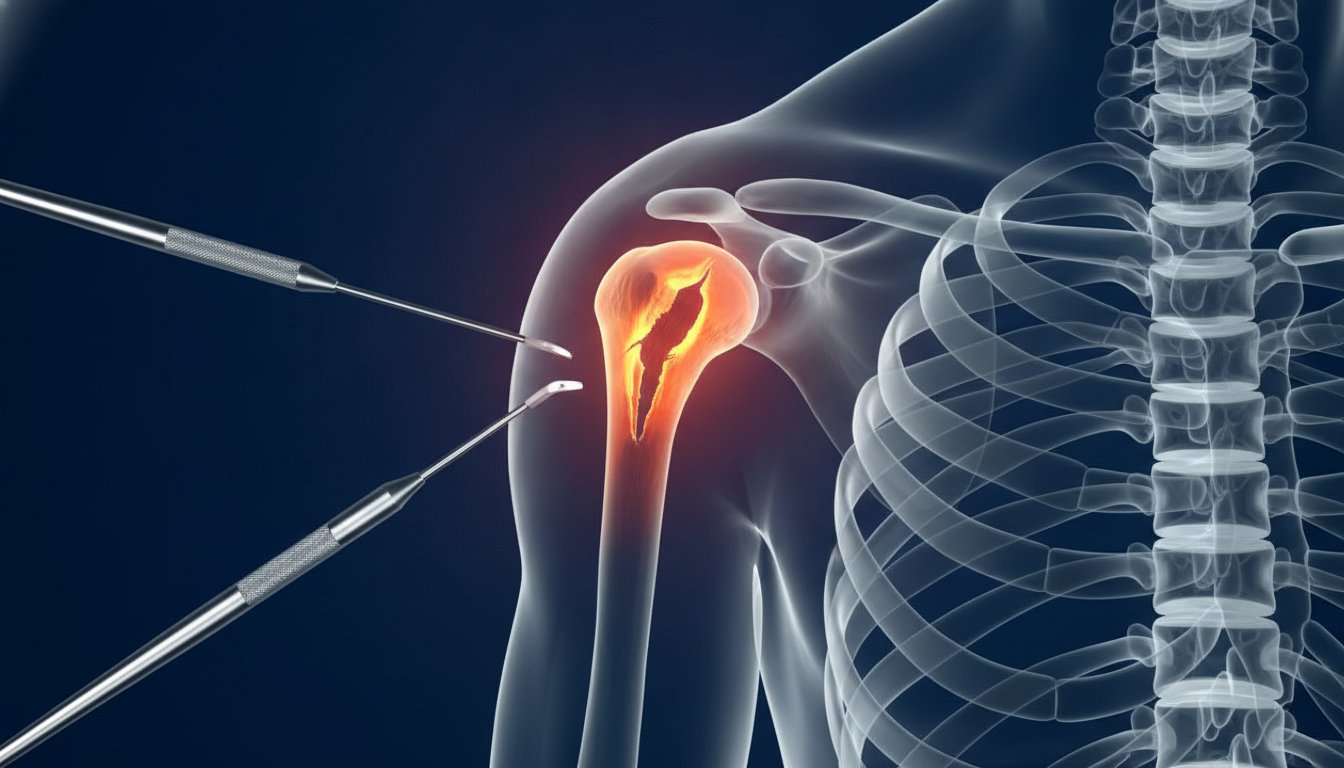
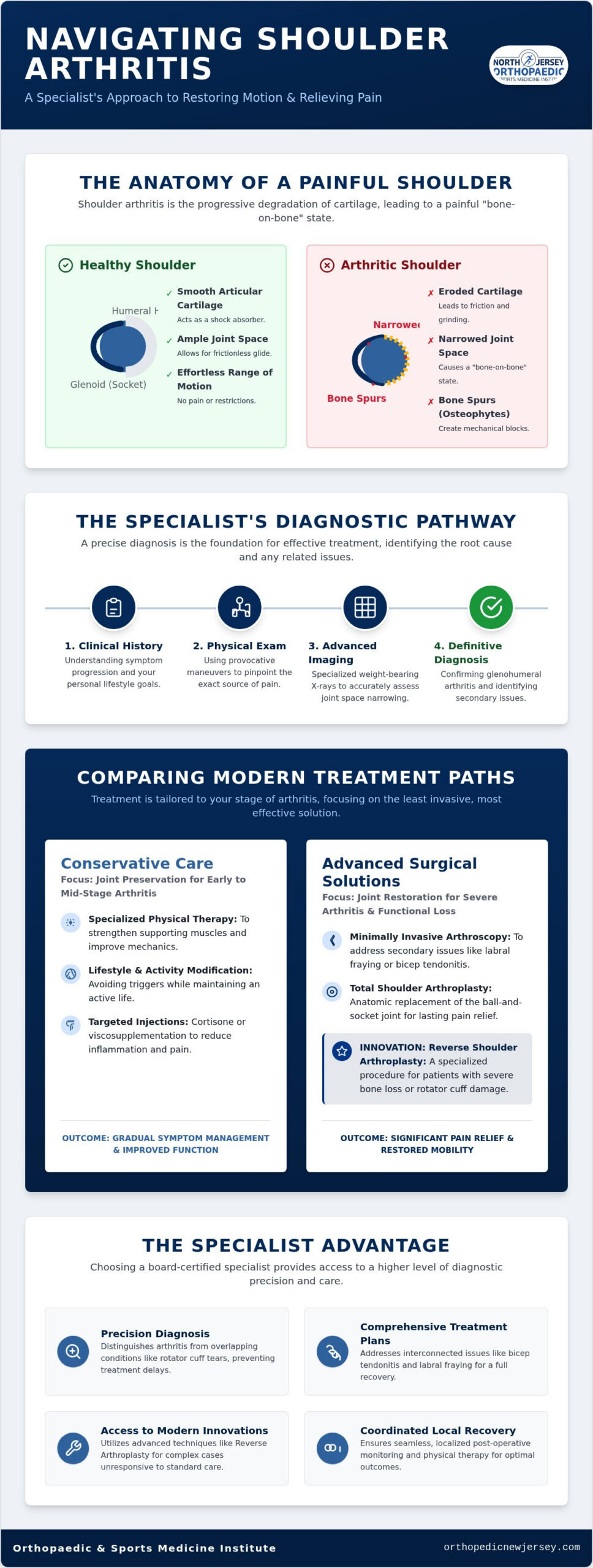
Shoulder arthritis, specifically glenohumeral arthritis, is the progressive degradation of the smooth articular cartilage that caps the ball-and-socket joint. In a healthy shoulder, this cartilage acts as a low-friction shock absorber, allowing the humeral head to glide effortlessly within the glenoid. When this tissue erodes, the resulting friction creates a deep, persistent aching pain that often intensifies during rest, leading to a significant loss of sleep. Many patients also experience crepitus, which is a clinical term for the grinding, clicking, or popping sensations felt during arm rotation. Consulting a shoulder arthritis specialist Verona NJ is vital because these symptoms frequently overlap with other conditions, such as chronic rotator cuff tears or adhesive capsulitis.
Most patients present with osteoarthritis, the “wear-and-tear” variety that develops over decades of use. However, post-traumatic arthritis can also occur, often following a previous fracture or a severe dislocation that altered the joint’s mechanics. A board-certified specialist provides the diagnostic precision needed to distinguish between these pathologies. This distinction is critical; treating a mechanical cartilage problem as a simple muscle strain can lead to unnecessary delays in effective relief and further joint deterioration.
The Anatomy of a Degenerative Shoulder
The biological hallmark of arthritis is the loss of the joint’s “clearance.” As the articular cartilage thins, the joint space narrows until the shoulder reaches a “bone-on-bone” state. This lack of cushioning triggers the body to produce osteophytes, or bone spurs, in an attempt to stabilize the area. While these spurs are a natural response to instability, they act as physical barriers that catch on surrounding tissues, severely restricting your range of motion and causing sharp, mechanical pain during overhead activities.
Specialist vs. General Practitioner: The Diagnostic Gap
General practitioners are often the first line of defense, but they may lack the specialized imaging protocols required to detect subtle arthritic changes. A specialist utilizes specific weight-bearing X-rays to visualize the exact degree of joint space narrowing, a detail often missed on standard non-weight-bearing views. Expert evaluation also uncovers secondary issues that frequently travel alongside arthritis, including:
- Bicep tendonitis: Irritation caused by the tendon rubbing against new bone spurs.
- Labral fraying: The wearing down of the joint’s stabilizing ring due to irregular bone movement.
- Subscapularis pathology: Weakness in the front of the rotator cuff resulting from altered joint alignment.
By identifying these interconnected issues early, a specialist creates a comprehensive roadmap for recovery that a generalist might overlook.
Advanced Diagnostics: How a Verona Shoulder Specialist Evaluates Joint Health
A thorough diagnostic protocol is the cornerstone of effective care. When you visit a shoulder arthritis specialist Verona NJ, the process begins with a detailed clinical history to understand the progression of your symptoms. Unlike a general check-up, this evaluation focuses specifically on the biomechanics of the glenohumeral joint. We look beyond the pain to identify the specific movements that trigger discomfort, ensuring that the treatment plan aligns with your anatomical reality and lifestyle goals.
The Physical Evaluation Process in North Jersey
During the physical examination, we perform specific provocative maneuvers to pinpoint the source of your pain. The Neer and Hawkins signs are clinical tests used to assess for impingement, where bone or tissue catches during movement. We also evaluate the integrity of the rotator cuff muscles through targeted strength testing, as arthritis frequently coexists with tendon wear. This assessment includes measuring functional loss, such as your ability to reach for a seatbelt, perform overhead grooming, or place items on a high shelf. These data points allow us to quantify the impact of the disease on your daily life and track your progress throughout treatment.
Imaging Technology and Precision Mapping
Modern imaging provides the clarity required for a precise diagnosis. Digital X-ray technology offers immediate visualization of the joint, allowing us to see the exact degree of joint space narrowing while you’re in the office. For patients who aren’t yet candidates for surgery, we often discuss non-operative shoulder arthritis treatments that focus on symptom management and functional preservation. If the arthritis has progressed significantly, we utilize CT scans to create a 3D map of your bone structure. This precision mapping is essential for assessing bone stock and ensuring that any potential implants are placed with sub-millimeter accuracy.
While X-rays and CTs focus on bone, an MRI is critical for evaluating the surrounding soft tissues. We use these scans to inspect the tendons and ligaments for fraying or tears that could complicate your recovery. By combining these advanced imaging modalities with your personal lifestyle goals, we develop a tailored strategy that addresses your specific needs. If you’re ready to move past the uncertainty of chronic pain, consulting with a board-certified specialist can provide the clear answers you need to start your recovery journey.
Comparing Treatment Paths: Conservative Care vs. Minimally Invasive Procedures
A board-certified shoulder arthritis specialist Verona NJ adopts a conservative-first philosophy for patients presenting with early-stage cartilage loss. The goal isn’t just to mask the pain; we aim to optimize the joint’s environment to slow the progression of the disease. This begins with specialized physical therapy designed to improve synovial fluid circulation. Synovial fluid provides essential nutrients to the remaining articular cartilage, and maintaining its flow through movement is vital for joint health.
Specialized injections play a significant role in modern inflammation control. Corticosteroids provide targeted relief for intense flares by calming the synovial lining of the joint. In contrast, hyaluronic acid serves as a viscosupplementation agent. It effectively lubricates the joint to reduce mechanical friction, helping patients who find that oral anti-inflammatories are no longer sufficient for daily comfort.
Non-Surgical Management Strategies
For Verona residents active in golf, tennis, or weightlifting, activity modification is a cornerstone of long-term success. We focus on ergonomic adjustments that allow you to stay active without overloading the glenohumeral joint. Following established clinical guidelines for diagnosing and managing shoulder osteoarthritis, we emphasize joint-friendly exercises like swimming or resistance band work. These movements preserve the muscle mass of the rotator cuff and deltoid, which offloads the joint and provides better stability during daily tasks. Lifestyle adjustments, such as anti-inflammatory nutrition and proper sleep positioning, further support the body’s natural healing processes.
Minimally Invasive Surgical Interventions
When conservative measures no longer provide adequate relief, we transition to arthroscopic interventions. This involves minimally invasive orthopedic surgery NJ techniques where tiny incisions allow for the insertion of a high-definition camera and specialized micro-instruments. During this procedure, known as debridement, the surgeon cleans the joint space by removing loose bodies of cartilage and smoothing down bone spurs that cause mechanical catching. While this isn’t a permanent cure for advanced arthritis, it serves as a critical bridge. It can significantly delay the need for a total joint replacement by restoring a smoother gliding surface and reducing the inflammatory burden within the shoulder joint.
Surgical Innovations: From Total Joint Replacement to Reverse Arthroplasty
When joint preservation and minimally invasive debridement are no longer sufficient to manage chronic pain, a shoulder arthritis specialist Verona NJ utilizes advanced arthroplasty techniques to restore mobility. Modern surgical care in 2026 has transitioned toward extreme precision. We now use computer-assisted navigation and 3D pre-operative planning to map your unique anatomy before the first incision is made. This technology ensures that implants are positioned with sub-millimeter accuracy, which is critical for the long-term stability and wear-resistance of the new joint.
Total Shoulder Replacement: Restoring the Natural Joint
Total Shoulder Arthroplasty (TSA) remains the gold standard for patients with severe arthritis who still have a functional, intact rotator cuff. During this procedure, the damaged humeral head is replaced with a polished medical-grade metal ball, while the glenoid socket is resurfaced with a highly durable plastic liner. Modern implants are designed for longevity; many are expected to last 15 to 20 years with proper care. Patients typically reach significant recovery milestones quickly, often returning to driving within six weeks and resuming light activities like swimming or low-impact fitness shortly thereafter. This anatomical approach mirrors your natural movement, providing a fluid range of motion that feels intuitive.
Reverse Shoulder Arthroplasty: A Solution for Complex Cases
For patients suffering from “cuff tear arthropathy” or significant bone loss, traditional replacement isn’t effective because the rotator cuff can’t support the new joint. Reverse Shoulder Arthroplasty (RSA) solves this by switching the positions of the ball and socket. By placing the ball on the shoulder blade and the socket on the arm bone, the deltoid muscle is empowered to lift the arm, bypassing the damaged tendons entirely. As of April 2026, RSA procedures account for 65% of all shoulder arthroplasties performed nationally due to their predictable outcomes and dramatic pain relief. To understand how this fits into your long-term wellness plan, you can read more about shoulder arthritis treatment NJ and the specific recovery protocols involved.
A significant trend in 2026 is the shift toward outpatient surgery. Many patients now undergo these advanced replacements in specialized Ambulatory Surgery Centers (ASCs), returning home the same day to recover in a familiar environment. This shift reduces infection risks and allows for a more personalized, home-based rehabilitation experience. If you’re tired of living with a restricted range of motion, it’s time to schedule a surgical consultation to discuss which of these modern innovations is right for your lifestyle.
Navigating Your Recovery in Verona: The Specialist-Led Path to Relief
Successful recovery from shoulder intervention is rarely the result of a single procedure; it’s the product of a disciplined, localized rehabilitation strategy. When you choose a shoulder arthritis specialist Verona NJ, you’re securing a clinical partner for the entire healing journey. Localized care is essential for the frequent post-operative check-ups required to monitor wound healing and early joint mechanics. For residents in the Verona and Nutley area, this proximity eliminates the physical stress of long-distance travel. This is particularly important during the early stages of recovery when the joint is most vulnerable to jarring movements or prolonged sitting in traffic.
Our practice maintains a close partnership with local North Jersey physical therapists who specialize in advanced orthopedic rehabilitation. This collaborative approach ensures that your surgeon and therapist stay in constant communication, allowing for real-time adjustments to your protocol based on your specific progress. Relying on a board-certified specialist within your community provides a level of continuity that high-volume city hospitals often struggle to match. It’s about more than convenience; it’s about having a dedicated team that knows your history and your goals.
The First 90 Days: A Structured Recovery Timeline
The recovery process is divided into three distinct clinical phases. Each is designed to protect the integrity of the joint while gradually restoring function.
- The Protection Phase (Weeks 0-6): The primary goal is to allow the soft tissues to heal. You’ll likely use a sling and perform gentle, passive range-of-motion exercises guided by your therapist to prevent stiffness without straining the repair.
- The Strengthening Phase (Weeks 6-12): Once the initial healing is confirmed, we transition to active motion. You’ll begin light resistance training to rebuild the deltoid and rotator cuff muscles that support the new joint or the debrided space.
- The Functional Phase (Months 3 and beyond): This final stage focuses on returning to the activities you love. Whether it’s perfecting your golf swing at a local course or tending to your garden in Verona, we tailor these exercises to your specific recreational goals.
Why Proximity Matters for Orthopedic Success
For many patients, the convenience of the Nutley/Verona corridor is a significant factor in surgical success. Post-operative care requires multiple visits over several months. Having direct access to your surgical team for questions or concerns provides a sense of security that’s invaluable during recovery. You won’t have to navigate heavy traffic or complex parking garages just to have a ten-minute follow-up or a quick suture check.
By staying local, you ensure that your recovery remains the priority. If you’re ready to take the next step toward a pain-free life, we encourage you to schedule an orthopedic consultation in Nutley. Our team is dedicated to providing elite-level care right in your neighborhood, ensuring you return to your normal life with confidence and strength.
Taking the Next Step Toward Lasting Shoulder Mobility
The path to relief from shoulder arthritis in 2026 is defined by precision and personalization. We’ve explored how modern diagnostics and joint preservation strategies allow many patients to delay or even avoid major surgery. When intervention is necessary, innovations like computer-assisted navigation and reverse arthroplasty ensure that even complex cases have predictable, successful outcomes. By partnering with a dedicated shoulder arthritis specialist Verona NJ, you’re choosing a board-certified expert who understands the clinical nuances of your condition and the importance of localized, accessible care.
Our practice is specialized in minimally invasive joint preservation and advanced surgical techniques, offering residents of Verona and Nutley elite-level care right in their neighborhood. This proximity is a clinical advantage, ensuring your recovery is monitored closely by the team that performed your procedure. You don’t have to settle for limited motion or chronic discomfort. Reclaiming your active lifestyle starts with a clear diagnosis and a tailored treatment plan. Schedule Your Shoulder Consultation with Our Board-Certified Specialist today and discover how modern orthopedics can help you return to the hobbies and daily tasks you love with renewed strength.
Frequently Asked Questions
Is shoulder arthritis a normal part of aging for New Jersey residents?
Shoulder arthritis is a common condition among older adults, but it’s not an inevitable consequence of aging that requires living in pain. While articular cartilage naturally thins over time, the transition to bone-on-bone contact is a specific pathological process. Many active residents in North Jersey maintain excellent joint health well into their senior years. If you experience persistent stiffness, consulting a specialist helps determine if your symptoms are standard wear or a treatable medical condition.
Can shoulder arthritis be treated without surgery?
Yes, many patients successfully manage symptoms through non-surgical interventions. A shoulder arthritis specialist Verona NJ typically begins with conservative care, including specialized physical therapy to improve joint lubrication and range of motion. Other options include corticosteroid injections to reduce acute inflammation or viscosupplementation with hyaluronic acid. These treatments focus on joint preservation and functional improvement, allowing many individuals to maintain their active lifestyles without immediate surgical intervention.
What is the difference between a total shoulder and a reverse shoulder replacement?
The primary difference lies in which muscles power the joint. Total Shoulder Arthroplasty (TSA) resurfaces the natural anatomy and requires a healthy, intact rotator cuff to function correctly. In contrast, Reverse Shoulder Arthroplasty (RSA) switches the positions of the ball and socket. This design allows the deltoid muscle to take over for a damaged or non-functional rotator cuff. Your specialist will use advanced imaging to determine which mechanical approach best suits your specific anatomy.
How long is the recovery time after minimally invasive shoulder surgery?
Recovery timelines vary based on the specific procedure, but minimally invasive arthroscopic debridement generally allows for a faster return to daily tasks than traditional open surgery. Most patients transition out of a sling within one to two weeks and reach significant functional milestones by the six-week mark. Complete biological healing and a full return to high-impact sports or heavy lifting typically occur between three and six months, depending on the patient’s adherence to physical therapy.
Will I need physical therapy after my shoulder arthritis treatment?
Physical therapy is a mandatory component of both surgical and non-surgical treatment plans. It’s the primary mechanism for restoring range of motion and rebuilding the musculature that supports the glenohumeral joint. Our practice coordinates closely with local North Jersey therapists to ensure your rehabilitation protocol is precisely calibrated to your surgical findings. Skipping this phase often leads to permanent stiffness and suboptimal functional outcomes, regardless of how successful the initial medical or surgical intervention was.
Does the Orthopaedic & Sports Medicine Institute accept local NJ insurance plans?
We work with a wide range of major health insurance plans common to New Jersey residents. Because coverage details and provider networks frequently change, we recommend contacting our office directly to verify your specific plan’s participation. Our administrative team is experienced in navigating the authorization process for both conservative treatments and advanced surgical procedures. This ensures you have a clear understanding of your benefits before beginning your specialist-led path to relief.
What happens if I delay treatment for my shoulder arthritis?
Delaying treatment often leads to progressive bone loss and the permanent shortening of surrounding tendons and ligaments. As the joint continues to degrade, the humeral head may become decentralized, making future surgical interventions more complex and potentially less predictable. Chronic pain also leads to compensatory movements that strain the neck and back. Early evaluation by a shoulder arthritis specialist Verona NJ is critical to preserve your existing bone stock and maintain a wider range of treatment options.
Are there any restrictions on activity after a shoulder replacement?
Modern implants are highly durable, but we generally advise against repetitive, high-impact activities like heavy weightlifting or contact sports to maximize the joint’s lifespan. Most patients successfully return to hobbies such as golf, swimming, tennis, and gardening without significant limitations. The goal of 2026 arthroplasty is to return you to a high level of function. We provide specific guidelines based on your implant type and the quality of your bone and soft tissue.