You reach for a heavy object on a high shelf and feel a sharp, deep catch in your shoulder, followed by a persistent ache that refuses to fade. It doesn’t feel like a simple muscle strain; instead, it feels as though something is fundamentally disconnected deep within the joint. Many active individuals in Nutley and the surrounding North Jersey area initially dismiss these symptoms of a torn labrum shoulder as temporary fatigue, hoping a few days of rest will restore their full range of motion.
If you’re struggling with a deep, unreachable ache or the unsettling sensation that your arm might slip out of its socket, you aren’t alone. Recognizing these mechanical warning signs is the first step toward preserving your long-term joint health and avoiding secondary complications. This specific injury requires a precise diagnostic approach to distinguish it from more common, less severe shoulder conditions that often present with similar discomfort.
We’ll help you identify the six critical warning signs that necessitate a specialist’s evaluation. You’ll learn how a board-certified orthopedic surgeon uses advanced diagnostics to confirm a tear and explore the modern, minimally invasive treatment options designed to return you to your active lifestyle with confidence and strength.
Key Takeaways
- Understand the vital role of the shoulder labrum, a specialized rim of fibrocartilage that deepens the joint socket to maintain stability and prevent dislocation.
- Learn to distinguish the specific mechanical symptoms of a torn labrum shoulder, such as deep-seated joint pain and persistent clicking or catching sensations during overhead movement.
- Discover the clinical differences between SLAP and Bankart tears, which occur in different regions of the socket and require unique diagnostic and treatment approaches.
- Identify the critical timeline for seeking a professional orthopedic evaluation, particularly when instability or a sensation of the shoulder “giving out” persists for more than two weeks.
- Explore modern recovery pathways that prioritize minimally invasive techniques and specialized physical therapy to restore strength and return you to peak physical performance.
What is a Shoulder Labrum Tear? Understanding the Anatomy
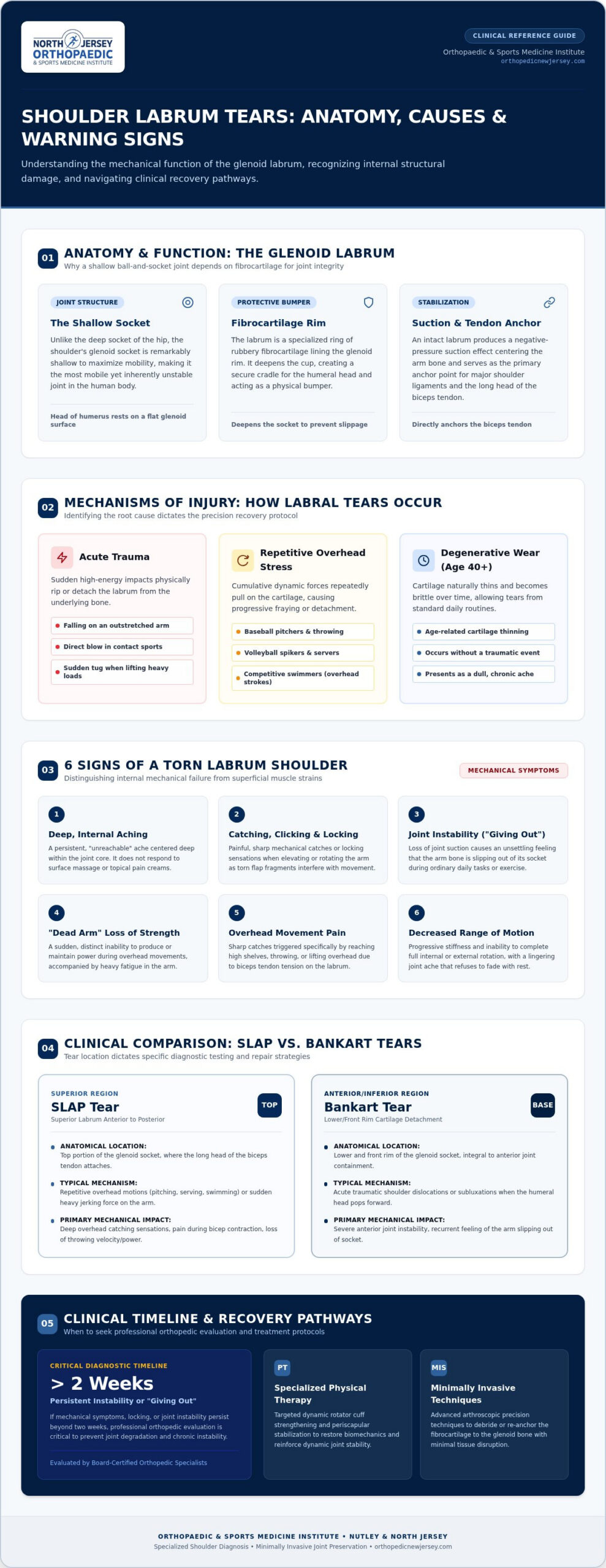
The shoulder is the most mobile joint in the human body, but this impressive range of motion comes at the cost of inherent stability. Unlike the hip joint, where the ball sits deep within a bony socket, the shoulder socket is remarkably shallow. To provide the necessary depth and security for movement, the joint relies on the labrum. This specialized rim of rubbery fibrocartilage lines the edge of the glenoid, which is the shoulder socket, effectively creating a deeper cup for the head of the humerus to rest within.
A tear occurs when this cartilage is physically separated or ripped away from the underlying bone. This detachment often happens due to sudden trauma, such as a fall, or through the cumulative effects of repetitive overhead motion. Because the labrum also serves as a critical attachment point for the long head of the biceps tendon, a tear in the superior region can significantly impact your arm’s overall mechanical function. Understanding the glenoid labrum anatomy and function is essential for recognizing why certain movements trigger the sharp, catching symptoms of a torn labrum shoulder.
The Role of the Labrum in Shoulder Stability
Think of the labrum as a flexible “bumper” that surrounds the joint. It doesn’t just deepen the socket; it provides a stable anchor point for several major shoulder ligaments that keep the joint in place. When the labrum remains intact, it creates a subtle suction effect that keeps the arm bone centered during complex movements. If the labrum is damaged, that suction is lost. This often results in the unsettling “loose” feeling many patients describe, where it feels as though the shoulder might pop out of place during routine activities or exercise. This instability is one of the most common symptoms of a torn labrum shoulder that we evaluate at our Nutley practice.
Common Causes: From Sports to Sudden Falls
Labral injuries generally fall into three distinct categories based on how the damage occurs. Identifying the mechanism of injury helps our specialists determine the most effective recovery path.
- Acute Trauma: A sudden injury is a frequent culprit. This commonly includes falling on an outstretched arm, a direct blow to the shoulder during contact sports, or a sudden tug on the arm when lifting a heavy object.
- Repetitive Stress: Athletes involved in overhead sports, such as baseball pitchers, volleyball players, and swimmers, subject their labrum to extreme forces. Over time, these repetitive motions can fray or detach the cartilage from the bone.
- Degenerative Wear: As we age, our cartilage naturally thins and becomes more brittle. In patients over 40, a labral tear may develop through everyday use rather than a single traumatic event, often manifesting as a dull, persistent ache.
Regardless of the cause, recognizing these changes in your joint’s performance is vital. Addressing the injury early can prevent further degradation of the joint and protect you from long-term instability or chronic pain.
6 Signs Your Shoulder Pain is From a Torn Labrum
Identifying the symptoms of a torn labrum shoulder requires looking beyond the surface level discomfort associated with a typical muscle strain. Because the labrum is located deep within the joint, the pain it produces is often described as “unreachable.” It doesn’t respond to topical creams or simple massage because the pathology is internal. Understanding these specific signals is the only way to differentiate between a minor inflammation and a structural injury that requires professional intervention.
If you’re experiencing persistent discomfort, look for these six warning signs:
- Deep, Internal Aching: You feel a dull, persistent ache that seems to reside in the very center of the shoulder joint rather than in the surrounding muscles.
- Mechanical Sensations: Your shoulder clicks, catches, or even “locks” when you move your arm in certain directions. This isn’t a harmless pop; it’s often painful and sharp.
- Joint Instability: You experience a frequent, unsettling sensation that your shoulder might “give out” or slip out of its socket during routine tasks.
- Loss of Strength: Often called “dead arm” syndrome, this manifests as a sudden inability to maintain power, particularly during overhead activities or throwing motions.
- Limited Range of Motion: Reaching behind your back to put on a coat or reaching into the backseat of a car becomes difficult or triggers a sharp catch.
- Pain with Specific Positions: Discomfort intensifies when you lift your arm overhead or hold it in a “cocked” position, such as when preparing to throw a ball or serve in tennis.
The “Mechanical” Difference: Clicking vs. Popping
It’s common to hear occasional pops or cracks in your joints. However, a pathological “click” caused by a labral tear is fundamentally different. This sensation occurs when the torn piece of cartilage becomes trapped between the ball and socket as the arm rotates. It’s a physical obstruction that disrupts the smooth gliding of the joint. This is why these symptoms often worsen during the high-velocity phases of athletic movement. For a deeper look at how these mechanical issues are diagnosed, you can review SLAP tear symptoms and treatment from the American Academy of Orthopaedic Surgeons.
Labrum Tear vs. Rotator Cuff Tear: How to Tell
Patients frequently confuse labral injuries with rotator cuff tears, but the clinical presentations differ significantly. Rotator cuff pain is usually felt on the outside of the shoulder or upper arm and is primarily associated with weakness when lifting the arm. In contrast, labrum pain is deeper and more closely tied to joint instability and mechanical catching. While rotator cuff tears involve muscle-to-bone connections, labral tears involve the joint’s structural cartilage rim. If these symptoms are impacting your daily life, consulting a board-certified orthopedic surgeon in Nutley can help you determine the exact nature of your injury and the best path toward recovery.
Types of Labral Tears: SLAP vs. Bankart
While the general symptoms of a torn labrum shoulder include deep pain and clicking, the specific location of the tear significantly influences your clinical presentation. Orthopedic specialists categorize these injuries based on their position on the clock face of the glenoid rim. Identifying whether a tear is superior, inferior, or posterior is crucial because each type affects the mechanical integrity of the joint differently. This anatomical distinction guides the diagnostic process and ultimately determines the most appropriate surgical or conservative intervention.
SLAP Tears and the Biceps Connection
A SLAP tear, which stands for Superior Labrum Anterior to Posterior, occurs at the very top of the shoulder socket. This area is clinically significant because it serves as the primary anchor point for the long head of the biceps tendon. When this portion of the labrum is damaged, the tension from the biceps can pull the cartilage further away from the bone, causing sharp pain at the front of the shoulder. Overhead athletes, such as baseball pitchers and tennis players, frequently experience these injuries during the high-stress “cocking” phase of their motion. During a physical evaluation, a specialist may perform the O’Brien Test. This involves placing the arm in a specific forward-flexed and internally rotated position. If downward pressure on the arm elicits deep joint pain that disappears when the palm is turned upward, it highly suggests a superior labral injury.
Bankart Tears and Chronic Instability
Bankart tears are located on the lower rim of the labrum and are almost always the result of a traumatic shoulder dislocation. When the head of the humerus is forced out of the socket, it often shears the labrum and the attached ligaments off the bone. This damage creates a permanent defect in the joint’s “bumper” system, which leads to chronic instability. Individuals with this pathology often report an unsettling feeling of the shoulder “slipping” or “giving way” during simple daily activities, such as reaching into a backseat or putting on a heavy coat. Because this type of tear rarely heals on its own due to the constant tension on the lower joint capsule, many patients eventually require professional intervention. Reviewing labral tear shoulder treatment pathways can provide clarity on how these structural defects are surgically repaired to restore joint security.
Posterior Labral Tears: The Powerlifter’s Injury
Though less common than SLAP or Bankart lesions, posterior labral tears affect the back of the shoulder socket. These are frequently seen in athletes who engage in heavy bench pressing or contact sports like football, where repetitive force is driven through the arm into the back of the joint. The primary symptoms include a deep, localized ache in the rear of the shoulder and a loss of strength during pushing movements. Because these tears don’t always present with the obvious instability of a Bankart tear, they can be challenging to diagnose without high-resolution imaging and a thorough clinical exam by a board-certified specialist.
When to See a Shoulder Specialist in Nutley, NJ
Many active individuals in North Jersey attempt to self-manage shoulder discomfort using rest, ice, and over-the-counter anti-inflammatories. While this is a logical first step for a minor strain, structural damage to the labrum requires a more sophisticated approach. If you have been managing the symptoms of a torn labrum shoulder for more than two to four weeks without significant improvement, professional intervention is necessary to prevent long-term joint degradation.
Delaying a specialist evaluation can lead to compensatory injuries, such as rotator cuff tendinitis or chronic joint stiffness. You should schedule an appointment immediately if you experience any of the following:
- Recurrent episodes of the shoulder “giving out” or feeling unstable during routine tasks.
- Mechanical locking or painful catching that prevents you from completing a full range of motion.
- A noticeable loss of strength that interferes with your professional duties or athletic performance.
- Pain that disrupts your sleep or persists even when the arm is at rest.
A board-certified orthopedic evaluation provides the clarity needed to move from uncertainty to a structured recovery plan. In our Nutley office, we prioritize a diagnostic process that respects your time and your goals for returning to peak physical activity.
What to Expect During Your Orthopedic Exam
An orthopedic evaluation is a methodical process designed to isolate the source of your pain. Your surgeon will begin by reviewing the mechanism of your injury and your clinical history. This is followed by specific physical provocation tests, where the arm is moved into positions that stress the labrum to check for instability or catching. While the labrum is soft tissue, an X-ray is almost always the first diagnostic step. This allows the specialist to rule out underlying bone issues, such as fractures or advanced arthritis, which can mimic the symptoms of a torn labrum shoulder.
The Role of Advanced Imaging (MRI and MRA)
Confirming a labral tear requires high-resolution imaging. A standard MRI can be useful, but it occasionally misses small or complex tears because the cartilage is packed tightly within the joint. For the most accurate diagnosis, we often recommend a Magnetic Resonance Angiogram (MRA). This procedure involves injecting a contrast dye into the joint before the scan. The dye seeps into the tear, making it clearly visible to the radiologist and surgeon. This diagnostic tool is essential for patients in Nutley, Bloomfield, and Clifton who need a definitive answer before beginning treatment. If your shoulder pain is limiting your lifestyle, you can schedule a consultation with our shoulder specialist to discuss your diagnostic and imaging options.
Treatment Options for a Labral Tear in North Jersey
Once you receive a definitive diagnosis, the clinical focus shifts from identification to restoration. The primary objective of any treatment plan is to eliminate the mechanical catching and deep pain that characterize the symptoms of a torn labrum shoulder. Not every patient requires a surgical intervention; in fact, many individuals find lasting relief through a structured, non-operative approach. However, for high-level athletes or those with significant joint instability, modern surgical techniques offer a reliable path back to peak physical performance.
The choice between conservative management and surgical repair depends on several factors, including the type of tear, your age, and your desired activity level. Our board-certified specialists work with you to develop a personalized strategy that prioritizes long-term joint health while minimizing your time away from work or sport.
Non-Surgical Recovery Path
Conservative management is often the first line of defense, especially for degenerative tears or minor SLAP lesions. This process centers on specialized physical therapy designed to strengthen the rotator cuff muscles. By increasing the dynamic stability of the shoulder, these muscles can compensate for the damaged labrum, effectively keeping the humeral head centered in the socket. Patients must also commit to activity modification, which involves temporarily avoiding the specific overhead or reaching movements that trigger the “catching” sensation. Typically, we monitor progress over a six to twelve-week period. If functional goals are not met during this time, we may discuss more advanced options, such as minimally invasive orthopedic surgery NJ, to address the underlying structural defect.
Minimally Invasive Labrum Repair
For active patients in Nutley, Clifton, and Bloomfield who experience recurrent instability or persistent pain, arthroscopic labrum repair is the gold standard. This procedure utilizes a small camera, known as an arthroscope, and specialized instruments inserted through tiny incisions. Your surgeon uses these tools to remove frayed tissue and reattach the torn cartilage to the bone using small, bio-absorbable anchors. Because this technique avoids large incisions, it results in significantly less tissue trauma and a more manageable recovery period compared to traditional open surgery. This precision-focused approach is particularly beneficial for athletes who need to restore the exact tension of their shoulder ligaments to return to competitive play.
Our Nutley facility serves as a specialized resource for residents of Belleville, Kearny, and Verona seeking expert sports medicine care. We prioritize a recovery timeline that balances thorough healing with an efficient return to daily life. If the persistent symptoms of a torn labrum shoulder are preventing you from reaching your physical potential, it is time to seek a professional opinion. Schedule your shoulder consultation in Nutley today to begin your journey toward a stable, pain-free shoulder.
Restore Your Shoulder Stability and Strength
Ignoring the persistent mechanical catching or deep aching in your joint can lead to chronic instability and secondary injuries. By understanding the specific symptoms of a torn labrum shoulder, you’ve taken the first step toward reclaiming your active lifestyle. Whether your injury is a superior SLAP tear or a Bankart lesion following a dislocation, a precise diagnosis is the key to an effective recovery. Modern orthopedics offers a range of interventions, from specialized physical therapy to advanced, minimally invasive arthroscopic repair.
As a board-certified orthopedic surgeon specializing in minimally invasive shoulder repair, I am dedicated to providing the Nutley and Clifton communities with the highest standard of specialized care. Our facility is designed to lead you through a structured diagnostic process, ensuring you receive a treatment plan tailored to your specific athletic or professional goals. You don’t have to live with the uncertainty of a “loose” or painful joint. Take the next step toward a full recovery and regain the confidence to perform at your peak.
Request an Appointment with our Board-Certified Shoulder Specialist today to discuss your symptoms and explore your treatment options.
Frequently Asked Questions
Can a torn shoulder labrum heal on its own?
A torn labrum rarely heals on its own because fibrocartilage lacks a robust blood supply. While physical therapy can strengthen the surrounding rotator cuff muscles to compensate for the injury, the physical detachment of the cartilage from the bone typically remains. For many patients in Nutley, conservative management makes the injury manageable, but active individuals often require specialized intervention to restore the joint’s original mechanical integrity and prevent future instability.
What happens if you leave a torn shoulder labrum untreated?
Leaving this injury untreated often leads to chronic shoulder instability and a higher risk of recurrent dislocations. When the labrum is damaged, the humeral head doesn’t sit securely in the socket, which causes abnormal wear on the joint surfaces. Over time, this mechanical imbalance can lead to early-onset osteoarthritis. Addressing the symptoms of a torn labrum shoulder early helps preserve the long-term health of the joint and prevents permanent cartilage degradation.
Is a labral tear the same as a rotator cuff tear?
These are distinct injuries involving different anatomical structures. A labral tear involves the rubbery cartilage rim that deepens the shoulder socket, while a rotator cuff tear involves the tendons that connect muscles to the bone. Labral injuries typically cause sensations of catching or instability. In contrast, rotator cuff tears primarily manifest as weakness when lifting the arm. A board-certified surgeon in our Nutley office can differentiate these conditions through specific physical provocation tests.
How do I know if my shoulder pain is serious enough for a doctor?
You should seek a professional evaluation if your shoulder pain persists for more than two weeks despite rest and icing. Serious warning signs include a feeling that the shoulder is slipping, painful locking during movement, or a sudden loss of strength during overhead activities. If the discomfort prevents you from performing your job or participating in sports in Clifton or Bloomfield, it’s time to consult a specialist for an accurate structural diagnosis.
Will I need an MRI to diagnose a labral tear?
A standard MRI provides a general view, but a Magnetic Resonance Angiogram (MRA) is often necessary for a definitive diagnosis. During an MRA, a specialist injects a contrast dye into the joint to highlight the separation between the cartilage and bone. This gold standard imaging ensures that even small SLAP or Bankart tears aren’t missed. We coordinate these specialized diagnostics for our patients to ensure the most precise treatment plan possible.
Can I still play sports with a torn labrum?
Continuing to play high-demand sports with an untreated tear often causes the injury to worsen. Athletes in overhead sports, like baseball or volleyball, usually find that the dead arm sensation and sharp pain make competitive play impossible. While some individuals can manage low-impact activities through physical therapy, the underlying instability remains a risk. Our goal for athletes in Nutley is a safe, structured return to play using minimally invasive techniques when necessary.
What is the recovery time for labrum surgery?
Recovery from a minimally invasive labrum repair is a methodical process that typically spans six to nine months for a full return to sports. You’ll likely wear a sling for the first four to six weeks to protect the repair while the cartilage reattaches to the bone. Physical therapy begins early to restore range of motion, followed by a strengthening phase. We guide our North Jersey patients through every milestone to ensure a successful, stable outcome.
How do I tell the difference between a SLAP tear and a Bankart tear?
The primary difference lies in the location of the tear on the socket rim. A SLAP tear occurs at the top of the socket where the biceps tendon attaches, often causing pain at the front of the shoulder. A Bankart tear occurs at the lower rim and is typically the result of a shoulder dislocation. While both cause symptoms of a torn labrum shoulder, Bankart tears are more closely associated with chronic joint instability and slipping.