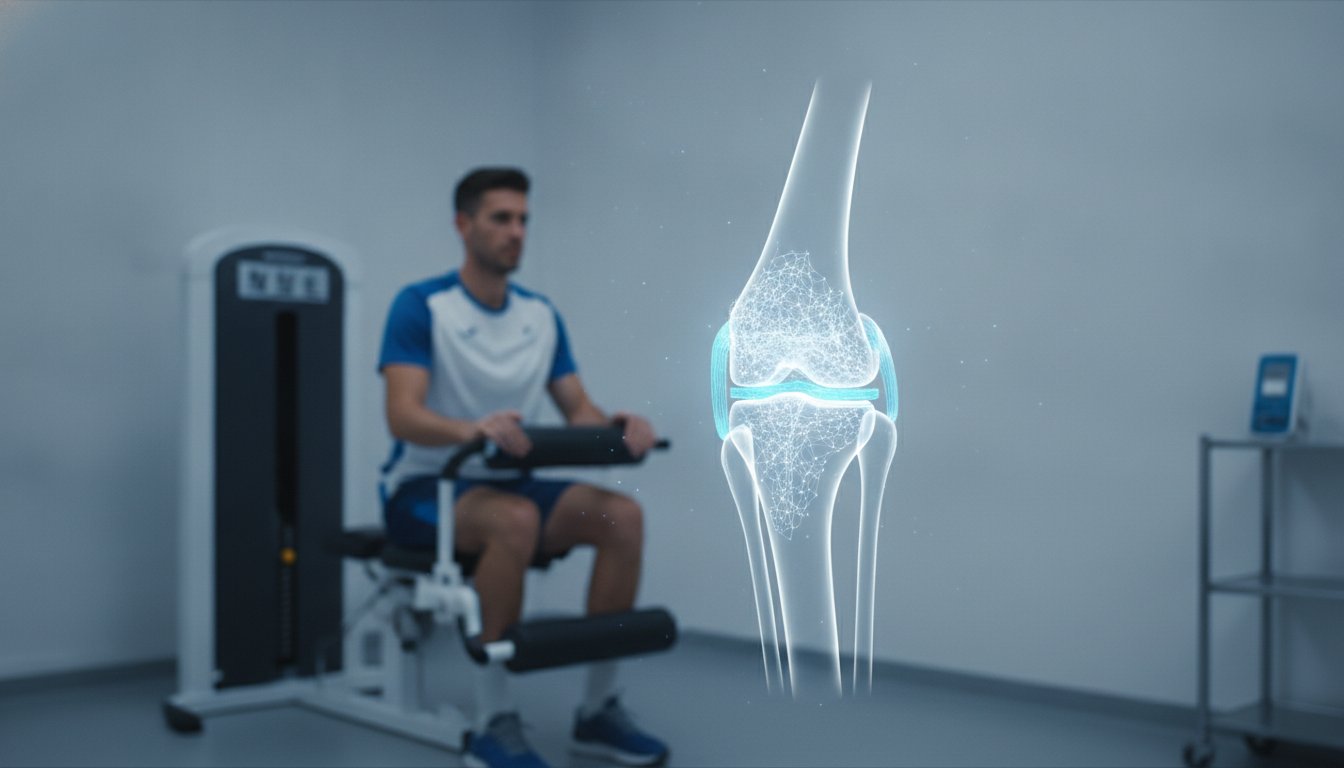
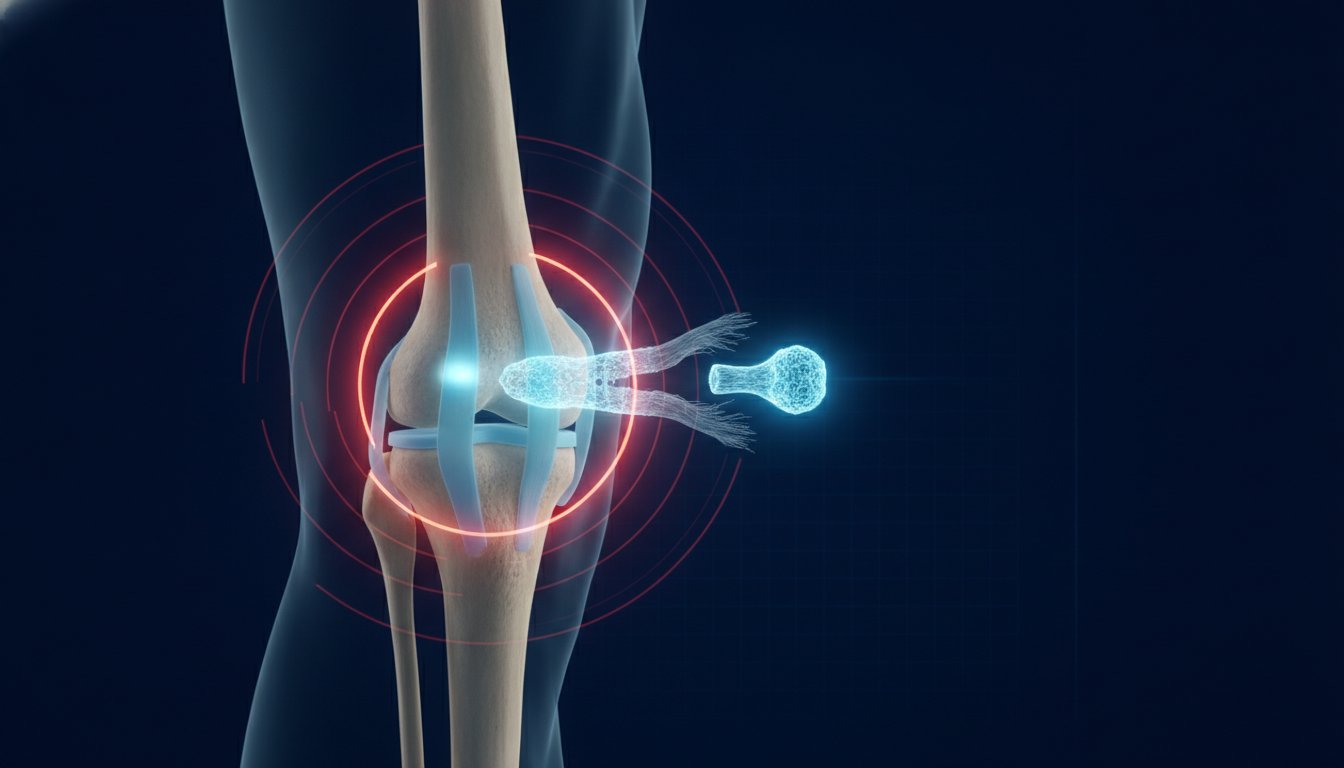
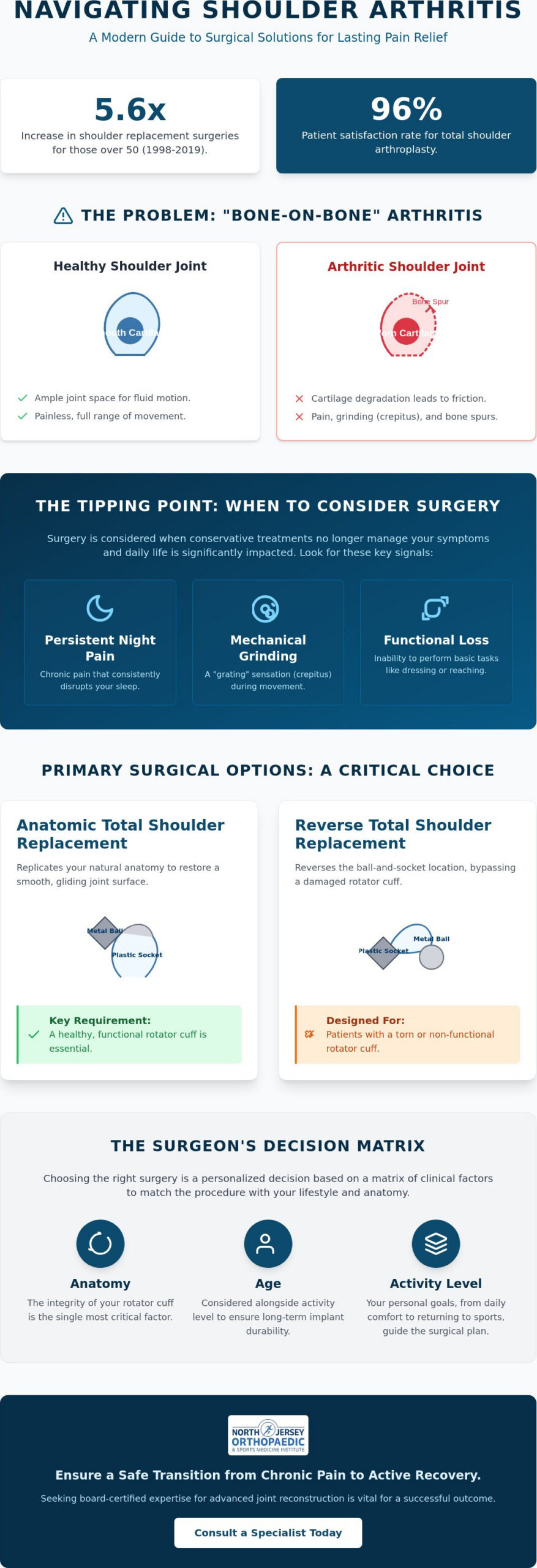
Did you know that the number of shoulder replacement surgeries for individuals over the age of 50 increased by more than 5.6 times between 1998 and 2019? This significant rise highlights a shift in how patients and surgeons approach joint health, as more people seek out advanced shoulder arthritis surgery options to regain their independence. If you’re struggling with chronic “bone-on-bone” pain that disrupts your sleep and limits your range of motion, you understand how deeply joint degradation affects your daily life. It’s exhausting to live with a shoulder that no longer follows your lead, making even the simplest tasks feel like a challenge.
The good news is that modern orthopaedic medicine offers highly successful solutions. With patient satisfaction rates for total shoulder arthroplasty reaching 95% to 96%, the goal of returning to an active lifestyle is more attainable than ever. This guide explores the latest surgical interventions, from minimally invasive debridement to sophisticated reverse total shoulder replacements. We’ll examine why the best procedure for you depends not just on the level of joint wear, but on the integrity of your surrounding soft tissues. You’ll gain a clear understanding of how we navigate these choices to help you achieve a pain-free future.
Key Takeaways
- Identify the clinical markers that signal when conservative therapies like injections or physical therapy are no longer managing your joint degradation effectively.
- Differentiate between anatomic and reverse total shoulder replacements to understand which procedure aligns with your rotator cuff’s functional integrity.
- Examine the role of minimally invasive arthroscopic debridement in smoothing frayed cartilage and removing loose bodies to restore mechanical fluid motion.
- Learn how specialized surgeons use a diagnostic matrix of age, activity levels, and anatomy to determine the most appropriate shoulder arthritis surgery options for your lifestyle.
- Discover the importance of seeking board-certified expertise for advanced joint reconstructions to ensure a safe transition from chronic pain to active recovery.
Understanding Shoulder Arthritis and When to Consider Surgery
Glenohumeral arthritis is a progressive condition characterized by the degradation of the hyaline cartilage that coats the humeral head and the glenoid cavity. In a healthy joint, this smooth tissue allows the ball and socket to glide without friction. As this protective layer thins, the underlying bone becomes exposed, leading to increased friction, inflammation, and structural changes within the joint. This isn’t merely a consequence of aging; it’s a clinical failure of the joint’s mechanical environment. When the cartilage disappears, the body often responds by producing osteophytes, or bone spurs, which further restrict movement and exacerbate discomfort.
Determining the right time to explore shoulder arthritis surgery options requires a careful evaluation of your symptoms and your response to conservative care. Most patients begin their journey with physical therapy, activity modification, or corticosteroid injections. However, these treatments have a “ceiling effect.” When you experience persistent night pain that prevents sleep, or when mechanical grinding makes basic tasks like dressing or driving impossible, conservative measures have likely reached their limit. We look for these functional tipping points to decide when a surgical intervention becomes the most responsible path toward recovery.
Diagnostic imaging plays a pivotal role in this decision-making process. While an MRI is excellent for evaluating soft tissue like the rotator cuff, a weight-bearing X-ray is often the most critical tool for diagnosing arthritis. It allows us to visualize joint space narrowing and bone-on-bone contact. In complex cases, we utilize CT scans with 3D reconstruction to map the specific contours of your bone loss. This level of precision is necessary because waiting too long for surgery can lead to significant glenoid bone erosion. If the socket wears down excessively, it complicates the placement of implants and may limit the success of shoulder replacement surgery.
The “Bone-on-Bone” Threshold
As the joint space disappears, the humerus begins to rub directly against the glenoid. This mechanical friction creates a “grating” sensation known as crepitus. Beyond the pain, this stage often triggers the growth of large bone spurs that act as physical blocks to motion. You might find you can no longer reach behind your back or lift your arm to shoulder height. End-stage shoulder arthritis is the specific clinical point where conservative care fails to provide functional relief or meaningful pain management.
Surgical Goals: Pain Relief vs. Functional Restoration
The primary objective of any surgical intervention is to improve your quality of life, but the specific goals can vary. Some procedures are designed primarily to eliminate the constant, dull ache of “bone-on-bone” contact, while more advanced reconstructions aim to restore your ability to reach overhead or return to sports like tennis or golf. Consulting with a shoulder pain specialist Nutley NJ ensures that your surgical plan aligns with your personal activity goals. We focus on setting realistic expectations, ensuring you understand how modern implants can bridge the gap between chronic disability and an active, mobile lifestyle.
Anatomic vs. Reverse Total Shoulder Replacement
When conservative care fails to manage joint degradation, the next stage of treatment involves selecting from several shoulder arthritis surgery options. The primary choice for most patients lies between an anatomic and a reverse replacement. These procedures are not interchangeable; they are distinct mechanical solutions tailored to the specific condition of your soft tissues and bone structure. Choosing the correct approach is the most critical factor in ensuring a successful, long-term outcome.
Anatomic Total Shoulder Arthroplasty (TSA) replicates your natural anatomy by replacing the “ball” of the humerus with a metal component and resurfacing the “socket” of the glenoid with a durable plastic. This procedure is designed to restore a smooth gliding surface. However, it relies heavily on the surrounding soft tissue for stability and movement. For an anatomic replacement to succeed, you must have a functional, healthy rotator cuff. If these tendons are intact, an anatomic TSA offers the most natural range of motion and exceptional durability.
Reverse Total Shoulder Arthroplasty (RTSA) is a biomechanical innovation that swaps the positions of the ball and socket. In this design, a metal ball is attached to the shoulder blade, and a socket is placed on the upper arm. This configuration shifts the joint’s center of rotation, allowing the deltoid muscle to power the arm instead of the rotator cuff. It’s the ideal solution for “cuff tear arthropathy,” a condition where severe arthritis is coupled with a massive, non-repairable rotator cuff tear. This procedure has revolutionized surgical reconstruction for shoulder arthritis for patients who previously had no viable options.
Comparing Outcomes and Longevity
As of 2026, both procedures demonstrate exceptional longevity and high patient satisfaction. The 10-year survival rate for anatomic implants is 94.6%, while reverse implants maintain a 90.4% survival rate over the same period. Success rates for pain relief are consistently high, with 90% to 96% of patients reporting significant improvement. In North Jersey, the reverse TSA has evolved into the “gold standard” for complex reconstructions because it provides predictable results even when the joint is severely compromised.
Which Implant is Right for You?
Your surgeon evaluates bone quality, age, and lifestyle to determine the best fit. High-impact activity goals, such as swimming or golf, also influence the decision. If your rotator cuff is repairable, we may first consider an arthroscopic rotator cuff repair NJ to preserve your natural joint mechanics. If you’re ready to explore how these advanced implants can restore your mobility, our team is here to guide you through the diagnostic process to find the right fit for your lifestyle.
Minimally Invasive Options: Arthroscopic Debridement and Resurfacing
Not every patient with joint pain requires a full prosthetic reconstruction. For those in the earlier stages of joint degradation, minimally invasive shoulder arthritis surgery options focus on preserving the native anatomy while addressing specific mechanical symptoms. Arthroscopic debridement, often referred to as a “joint clean-out,” involves using small incisions and a specialized camera to visualize the joint space directly. During this procedure, the surgeon removes loose bodies, which are small fragments of bone or cartilage that have broken free, and smooths out frayed tissue that causes painful catching or locking.
This approach is particularly effective for patients whose primary complaint is mechanical interference rather than deep, constant aching. According to Johns Hopkins Medicine on shoulder arthritis, these arthroscopic interventions can provide significant temporary relief by reducing the inflammatory load within the joint. While debridement doesn’t reverse the underlying arthritic process, it addresses the specific “debris” that contributes to day-to-day discomfort and limited fluid motion. If you’ve been experiencing shoulder pain that won’t go away despite rest and conservative care, understanding whether your symptoms stem from mechanical debris or deeper joint wear is a critical first step.
The Role of Arthroscopy in Arthritis Management
The primary advantage of arthroscopy is the preservation of the surrounding musculature. Because the surgeon accesses the joint through portals roughly the size of a buttonhole, there’s minimal disruption to the deltoid and rotator cuff. This leads to a faster initial recovery compared to traditional open surgery. In many clinical scenarios, we utilize debridement as a “bridge” procedure. This strategy aims to delay the need for a total replacement by several years, allowing younger patients to maintain an active lifestyle while they wait for the optimal surgical window. Minimally invasive techniques are most effective for patients with focal cartilage defects rather than global arthritis.
Biological Resurfacing and Hemiarthroplasty
For younger, high-demand individuals, preserving native bone is a top priority to ensure future options remain available. Hemiarthroplasty, or partial shoulder replacement, involves replacing only the “ball” of the joint while leaving the natural socket intact. This is frequently combined with biological resurfacing, where tissue grafts are used to “re-surface” the glenoid cavity. This advanced methodology is often reserved for high-demand athletes or younger patients who aren’t yet candidates for a full prosthetic but require more than a simple debridement to maintain function. Our approach to minimally invasive orthopedic surgery NJ prioritizes these bone-sparing techniques whenever they’re clinically viable, ensuring a balance between immediate pain relief and long-term joint health.
The Decision Matrix: Age, Activity, and Anatomy
Navigating shoulder arthritis surgery options involves more than just identifying joint wear. It requires a strategic evaluation of three critical pillars: your chronological age, your physical demands, and your unique bone anatomy. While many patients worry they might be “too young” for a replacement, modern orthopaedic standards have shifted the focus from age to functional necessity. If a patient can no longer perform daily tasks or sleep through the night, delaying surgery can sometimes lead to secondary issues like muscle atrophy or progressive bone loss that makes future reconstruction more difficult. Working with a joint pain specialist in North Jersey ensures that these complex variables are evaluated together to build a surgical plan tailored to your specific anatomy and lifestyle demands.
We prioritize advanced diagnostic imaging to map out the surgical field before any incision is made. While X-rays show the joint space, CT scans are essential for 3D surgical planning. These scans allow us to assess your “bone stock,” which is the volume and quality of bone available to support an implant. If there is significant erosion on the socket side, we can use patient-specific instrumentation to ensure the implant is positioned with mathematical precision. This level of planning is what differentiates a standard procedure from a high-level joint reconstruction tailored to your specific frame.
Age and Implant Wear
Historically, surgeons advised patients to wait until their mid-60s to ensure the implant would last their lifetime. However, the introduction of highly cross-linked polyethylene has significantly improved the wear characteristics of modern components. These materials show exceptional durability, allowing us to offer relief to younger, active individuals who don’t want to spend their most productive years in pain. The trade-off is clear: early intervention provides immediate quality of life, though it carries a statistically higher risk of needing a minor revision surgery several decades later compared to someone who waits.
Rotator Cuff Integrity: The Dealbreaker
The health of your rotator cuff is the single most important factor in determining the surgical roadmap. If a patient receives an anatomic replacement but has a hidden or underlying rotator cuff tear, the joint will lack the stability needed to function, often leading to early failure. We use high-resolution MRI to verify the integrity of these tendons before selecting an anatomic implant. If the cuff is significantly compromised, a reverse replacement becomes the safer, more reliable choice because it bypasses the need for those specific tendons entirely.
Lifestyle demands also play a role in the final decision. A patient involved in heavy manual labor may require a different surgical approach or post-operative restriction profile than someone with a sedentary lifestyle. If you’re ready to see which path is right for your specific anatomy, contact us to discuss Shoulder Arthritis Treatment and begin your personalized diagnostic evaluation.
Specialized Shoulder Care in Nutley and North Jersey
Residents of Nutley, Bloomfield, and Clifton have access to world-class orthopaedic expertise right in their community. At the Orthopaedic & Sports Medicine Institute, our approach to shoulder preservation is rooted in the latest clinical advancements and a commitment to restoring patient mobility. When you’re exploring shoulder arthritis surgery options, the quality of your surgical team and their familiarity with modern joint reconstruction techniques are paramount. Our board-certified practitioners specialize in the complex anatomy of the shoulder, ensuring that every patient receives a diagnostic plan as unique as their physical demands.
Choosing a local specialist offers more than just convenience; it creates a seamless bridge between the operating room and the recovery phase. We understand that a successful outcome isn’t just about the surgery itself but the comprehensive care that follows. By maintaining our practice in the heart of North Jersey, we’re able to provide the attentive, high-level guidance that complex joint reconstructions require. You won’t be just another case in a distant city hospital; you’ll be a patient in a practice that values transparency, education, and professional standards.
Our Minimally Invasive Philosophy
We prioritize muscle-sparing techniques whenever possible to facilitate a more efficient rehabilitation process. By minimizing disruption to the deltoid and surrounding soft tissues, we help patients start their physical therapy sooner and with less initial discomfort. This philosophy extends to our post-operative care, where we coordinate closely with local physical therapists to monitor your progress. Having your surgical team nearby means that any questions during the healing process can be addressed quickly, providing a sense of security that’s often lost in larger medical systems. This local coordination is a cornerstone of our Minimally Invasive Orthopaedic Surgery approach.
Booking Your Consultation in Nutley
Your initial consultation is a diagnostic discovery process designed to provide clarity and hope. To prepare, we recommend gathering your full medical history and any previous imaging, such as X-rays or MRIs, that you’ve had performed. This allows us to hit the ground running, using 3D surgical planning tools if necessary to map out your joint’s specific bone stock. We’ll discuss the risks and benefits of each procedure, ensuring you have a clear understanding of the roadmap ahead. Our goal is to move you from a state of chronic “bone-on-bone” pain toward a lifestyle defined by movement and independence.
If you’re tired of living with a restricted range of motion and persistent discomfort, it’s time to take the next step. Our commitment to the North Jersey community is built on a foundation of specialized orthopedic care and a forward-thinking approach to traditional medicine. Don’t let joint degradation dictate your future. Schedule your shoulder arthritis evaluation today to begin your journey toward a pain-free life.
Reclaim Your Mobility and Active Lifestyle
Living with chronic joint degradation doesn’t have to be your permanent reality. By understanding the full range of shoulder arthritis surgery options, you can move from a state of frustration toward a clear, diagnostic roadmap for recovery. This guide has detailed how the integrity of your rotator cuff determines whether an anatomic or reverse replacement is the right mechanical fit, and why bone-sparing debridement serves as a vital tool for younger, active patients.
Our board-certified orthopedic surgeons have served the Nutley and North Jersey community for years; we specialize in the minimally invasive techniques that facilitate a faster return to the activities you love. You deserve a care plan that prioritizes precision and patient-centered empathy. Whether you’re looking to return to competitive sports or simply want to sleep through the night without discomfort, specialized local care is within reach.
Take the first step toward a pain-free future by scheduling a consultation with our dedicated team. Request an Appointment with our Shoulder Specialists to discuss your personalized treatment plan. We look forward to helping you rediscover the freedom of fluid, effortless movement.
Frequently Asked Questions
How long is the recovery after shoulder arthritis surgery?
Recovery timelines depend on the specific procedure performed and your overall health. Most patients achieve 90% pain improvement at 6 weeks post-surgery and near-complete functional recovery by 6 months. While you’ll wear a sling for several weeks to protect the healing joint, you’ll start gentle range of motion exercises almost immediately to prevent stiffness and promote blood flow to the surgical site.
Can I still play sports like golf or tennis after a shoulder replacement?
Yes, most patients return to low-impact or moderate-impact sports once they’ve completed their rehabilitation. Golf, swimming, and doubles tennis are common activities for post-surgical patients. However, high-impact sports or heavy weightlifting may increase wear on the implant components. We’ll discuss your specific athletic goals during your consultation to ensure your surgical plan supports your desired activity level and long-term joint health.
What is the difference between a total and a reverse shoulder replacement?
An anatomic total replacement mimics your natural joint by replacing the ball and socket in their original positions. This requires a healthy rotator cuff to function. In contrast, a reverse replacement swaps the ball and socket, allowing the deltoid muscle to power the arm. This is a critical choice among shoulder arthritis surgery options for patients with massive rotator cuff tears or severe bone loss.
Is shoulder arthritis surgery performed as an outpatient procedure?
Yes, many modern shoulder procedures are now performed in outpatient settings. Advances in minimally invasive techniques and anesthesia allow healthy patients to return home the same day as their surgery. This shift reduces costs and allows you to recover in the comfort of your own environment. Your surgeon will determine if you’re a candidate for outpatient care based on your medical history and home support system.
What are the risks of ignoring shoulder arthritis pain?
Delaying treatment often leads to progressive bone erosion and muscle atrophy. When the glenoid socket wears down significantly, it becomes much harder to anchor an implant securely during future surgery. Chronic pain can also lead to permanent loss of motion and a decrease in your quality of life. Addressing these issues early preserves your bone stock and keeps more shoulder arthritis surgery options available to you for the future.
How long does a shoulder replacement implant typically last?
Modern implants demonstrate exceptional longevity, with 10-year survival rates ranging from 90.4% to 94.6% depending on the implant type. Most patients can expect their replacement to function well for 15 to 20 years or more. We use highly cross-linked polyethylene materials designed to minimize wear. Your activity level and bone quality also play significant roles in the long-term durability of the joint reconstruction.
Will I need physical therapy after my shoulder surgery?
Physical therapy is a non-negotiable part of the recovery process and is essential for a successful outcome. You’ll typically work with a therapist for three to four months to restore strength and flexibility. The initial phase focuses on passive motion to protect the healing tissues, followed by active strengthening exercises. This structured approach ensures the best possible functional results and helps you return to daily tasks safely.
Are there non-surgical options I should try before considering surgery?
We always recommend exhausting conservative treatments before proceeding to surgery. This includes physical therapy, activity modification, anti-inflammatory medications, and corticosteroid or hyaluronic acid injections. If these methods fail to provide meaningful relief for end-stage arthritis, we’ll then transition the discussion toward modern surgical interventions. Our goal is to find the least invasive path that restores your quality of life and eliminates chronic discomfort.