What if the choice between “fixing” your knee and “removing” a part of it determined whether you could still run five years from now? It’s frustrating to feel your knee give way during a simple walk or to worry that a meniscus tear is a permanent exit from the sports you love. You’ve likely heard conflicting advice about whether to repair or remove the damaged tissue, leaving you concerned about long-term stability and the looming threat of arthritis.
By consulting a board-certified meniscus tear specialist Nutley NJ residents trust, you can access advanced, joint-preserving treatments designed to protect your natural anatomy. Professional intervention focuses on more than just temporary relief; it’s about a return to the activities that define your life. This guide explores how minimally invasive techniques and modern surgical innovations, such as the BEAR® Implant, are shifting the focus from simple removal to sophisticated knee restoration. We will outline the diagnostic process and the clear path available to help you return to an active, pain-free lifestyle through precise, patient-centered care.
Key Takeaways
- Identify the meniscus as your knee’s primary shock absorber and learn to distinguish between acute athletic injuries and age-related degenerative tears.
- Understand how a board-certified meniscus tear specialist Nutley NJ residents rely on performs targeted clinical exams, such as the McMurray test, to ensure diagnostic accuracy.
- Clarify the critical distinction between meniscus repair, which preserves your natural cartilage, and meniscectomy, which involves the surgical removal of unstable tissue.
- Gain a clear perspective on the phased recovery process, moving from initial protection and swelling management to functional strengthening and a return to sport.
- Discover how modern, minimally invasive surgical techniques prioritize joint preservation to reduce the risk of long-term arthritis and restore total knee function.
Understanding Meniscus Tears: More Than Just a Knee Injury
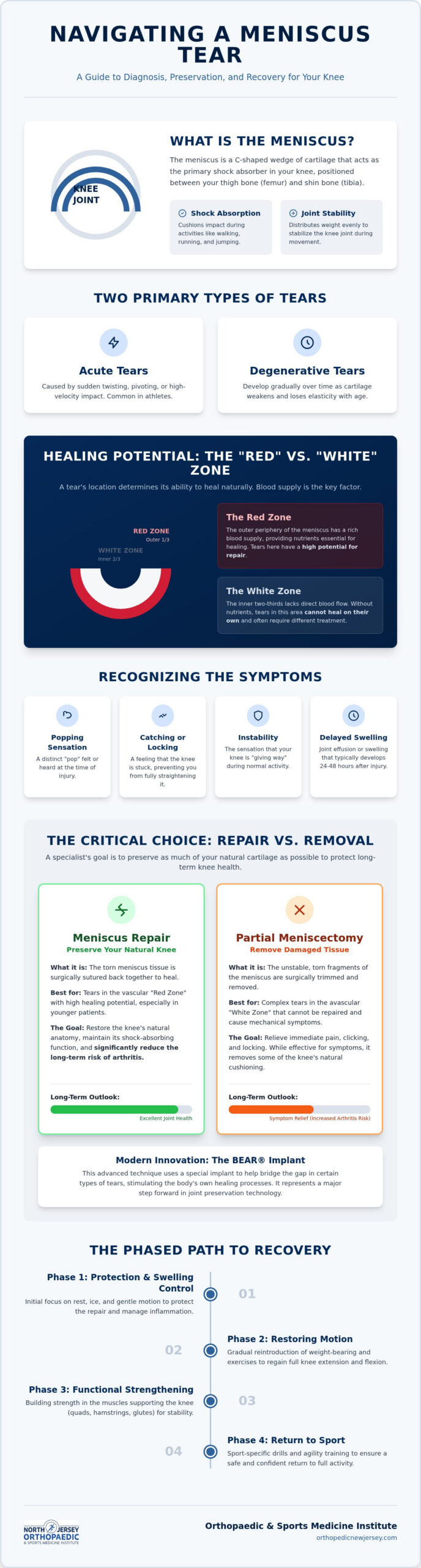
The meniscus acts as the knee’s primary shock absorber, a critical wedge of C-shaped fibrocartilage positioned between the femur (thigh bone) and the tibia (shin bone). This structure is essential for stabilizing the joint and distributing weight evenly across the articular surfaces. When a tear occurs, this delicate balance is disrupted. Understanding Meniscus Tears requires recognizing that not all injuries are identical; they’re broadly categorized into acute traumatic events and chronic degenerative changes. Acute tears typically result from high-velocity pivoting or sudden deceleration, whereas degenerative tears develop gradually as the cartilage loses its elasticity over time.
A pivotal factor in clinical decision-making is the vascularity of the tissue. Surgeons divide the meniscus into the “Red Zone” and the “White Zone.” The Red Zone is the outer periphery, which receives a rich blood supply. Tears in this region have a higher potential for biologic healing because the blood provides the necessary nutrients for repair. Conversely, the White Zone represents the inner two-thirds of the cartilage, which lacks direct blood flow. Because nutrients can’t reach this area easily, tears here often require more complex interventions or partial removal. Consulting a meniscus tear specialist Nutley NJ residents trust ensures that your specific tear pattern is analyzed with this vascular anatomy in mind.
Common Symptoms of a Torn Meniscus
Patients often report a distinct “popping” sensation at the moment of injury. Unlike a ligamentous rupture, the pain from a meniscus tear might not be immediate or debilitating. However, mechanical symptoms often follow. You might experience catching, clicking, or a sensation that the knee is “locked” in place, preventing you from fully straightening the leg. Swelling, or effusion, typically develops 24 to 48 hours later as the joint reacts to the internal disruption. Ignoring these signs increases the risk of accelerated joint wear and early-onset osteoarthritis.
Why Nutley Athletes Are at Higher Risk
Expert Diagnosis with a Meniscus Tear Specialist in Nutley, NJ
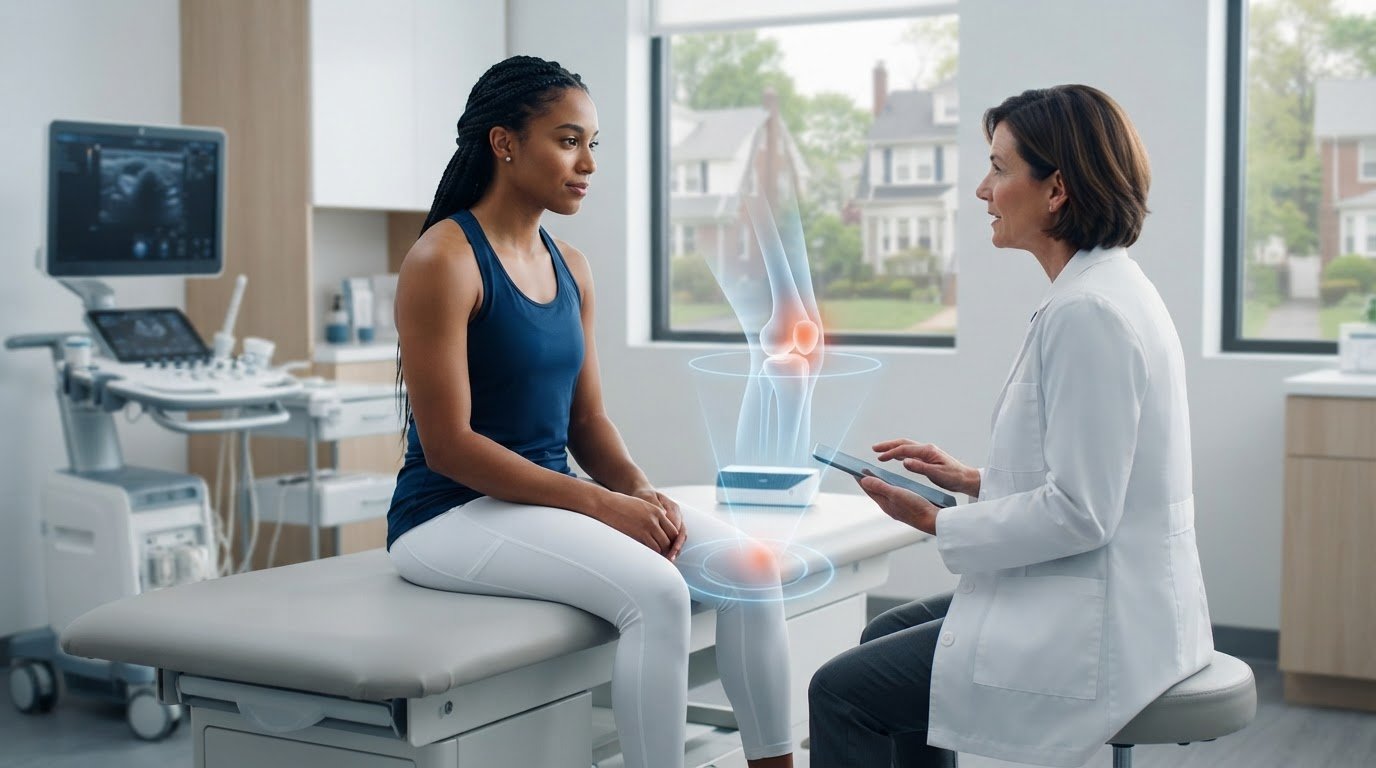
Precision in diagnosis is the foundation of any successful orthopedic intervention. While general practitioners provide essential primary care, a meniscus tear specialist Nutley NJ brings a concentrated focus to the mechanical complexities of the knee joint. The diagnostic process begins with a comprehensive physical examination, utilizing specific provocative maneuvers designed to isolate the meniscus. Two primary assessments include the McMurray test, where the surgeon rotates the knee through its range of motion to elicit a characteristic click or pain, and the Joint Line Tenderness assessment, which involves palpating the exact anatomical space where the meniscus resides.
Expertise is especially critical when differentiating meniscus pain from other common ailments. Symptoms often mimic an ACL tear or pes anserine bursitis, an inflammation of the tendons on the inner side of the shin bone. A specialist’s refined clinical eye ensures these conditions aren’t misdiagnosed, preventing ineffective treatments. High-resolution MRI technology serves as the final piece of the puzzle, allowing for the precise mapping of tear patterns. Whether the imaging reveals a radial tear, a complex flap tear, or a bucket-handle tear, this detailed meniscus tear diagnosis and treatment strategy dictates whether the tissue can be preserved or requires surgical modification.
Specialist vs. Generalist: Why it Matters
A board-certified specialist prioritizes joint preservation, viewing every tear through the lens of long-term knee health rather than simple symptom management. This distinction is vital because a generalist may lack the specialized training required to identify subtle tear patterns that are eligible for advanced repair. Choosing an experienced orthopedic surgeon Nutley NJ ensures that you receive a recommendation grounded in the latest evidence-based protocols, maximizing your chances of avoiding premature arthritis.
What to Expect During Your Nutley Consultation
Your initial consultation is a thorough evaluation of your physical function and long-term activity goals. Beyond the physical exam, we conduct an in-office gait analysis to observe how your injury affects your natural movement patterns. We also perform rigorous range-of-motion testing to identify any mechanical blocks. This data culminates in a personalized Knee Preservation Plan, a roadmap tailored to your specific anatomy and lifestyle. If you’re struggling with persistent knee instability, consulting a meniscus tear specialist Nutley NJ can provide the clarity needed to start your recovery.
Treatment Options: Meniscus Repair vs. Partial Meniscectomy
The decision between repairing a meniscus or performing a partial meniscectomy is a critical crossroads in orthopedic care. When a meniscus tear specialist Nutley NJ evaluates your injury, the primary goal is joint preservation. A “repair” involves surgically stitching the torn edges back together, effectively saving the knee’s natural shock absorber. This approach is ideal for tears where blood supply is sufficient to support biologic healing. On the other hand, a partial meniscectomy involves removing only the unstable, frayed portion of the cartilage that causes mechanical symptoms like catching or locking. While removing tissue provides immediate relief, preserving as much native meniscus as possible is vital for maintaining long-term joint stability.
Several factors influence the surgical path. Younger patients with high tissue quality are often prime candidates for repair, as their bodies possess a robust capacity for healing. The location of the tear is equally important; peripheral tears are much more likely to successfully knit back together than those in the central, avascular regions. By prioritizing meniscus tear recovery through repair, surgeons aim to restore the native ligamentous integrity of the knee. This preservation ensures the joint continues to distribute loads effectively, protecting the underlying bone from the friction that leads to osteoarthritis.
Minimally Invasive Arthroscopic Surgery
Modern interventions utilize arthroscopy, a minimally invasive technique that requires only tiny incisions. A specialized camera, or arthroscope, provides a high-definition view of the internal structures, allowing for extreme precision without the trauma of open surgery. Because these are outpatient procedures, patients can typically return home to Nutley the same day. This approach significantly lowers the risk of infection and accelerates the scarring recovery process, as there’s minimal disruption to the surrounding healthy tissue.
Non-Surgical Management: When is it an Option?
Surgery isn’t always the immediate answer. For small, stable tears or degenerative changes, a conservative anti-inflammatory protocol combined with targeted physical therapy can be highly effective. Strengthening the quadriceps and hamstrings provides external support to the joint, offloading the pressure on the damaged cartilage. Activity modification and “watchful waiting” are often appropriate for older adults where the tear doesn’t cause significant mechanical interference. A meniscus tear specialist Nutley NJ will help you determine if your specific injury can be managed through these non-invasive methods or if surgical restoration is necessary to protect your mobility.
Recovery Timeline: Getting Back to Life in North Jersey
Successful recovery from a meniscus procedure is a methodical journey that requires both clinical precision and patient dedication. Your specific timeline depends heavily on whether the tissue was repaired or partially removed, but the foundational milestones follow a structured progression. In Phase 1 (Weeks 0 to 2), the primary focus is joint protection and swelling management. This initial period is critical for controlling inflammation and restoring early range of motion through gentle, non-weight-bearing exercises. Maintaining a calm environment for the joint during these first fourteen days prevents early complications and sets the stage for more intensive work.
Phase 2 (Weeks 2 to 6) marks the transition toward active strengthening. During this stage, many patients begin weaning off assistive devices like crutches, provided they can demonstrate a stable gait. By Phase 3 (Weeks 6 to 12), the focus shifts to functional movements and low-impact cardiovascular activities, such as stationary cycling or swimming. Finally, Phase 4 (3 Months and beyond) introduces sport-specific training. This is when the knee is tested under dynamic conditions to ensure it can handle the rigors of high-impact activity. Consulting a meniscus tear specialist Nutley NJ ensures that each phase is tailored to your biologic healing rate.
The Role of Local Physical Therapy
Recovery doesn’t happen in a vacuum; it requires a coordinated effort between your surgeon and a physical therapist in Nutley or Clifton. A central goal of therapy is restoring proprioception, which is the brain’s ability to sense the knee’s position in space. Without this neurological re-training, the joint remains vulnerable to unstable movements that could lead to re-injury. Working with a knee injury specialist NJ allows for a seamless transition from the operating room to the gym, ensuring your rehabilitation protocol matches the specific nuances of your surgical repair.
Return to Sport Protocol
Before you’re cleared to return to local softball, soccer, or golf leagues, you must meet objective clinical criteria. We don’t rely on “feeling ready” alone. Instead, we utilize rigorous testing to confirm your readiness:
- Strength Symmetry: Ensuring the surgical leg has regained at least 90% of the strength found in the healthy leg.
- Jump and Hop Testing: Assessing the knee’s ability to absorb and distribute force during explosive movements.
- Biomechanical Analysis: Identifying and correcting any movement patterns that might place undue stress on the meniscus.
Proper biomechanics are your best defense against future tears. If you’re ready to reclaim your active lifestyle with confidence, contact a meniscus tear specialist Nutley NJ to develop your personalized recovery roadmap.
Why The Orthopaedic & Sports Medicine Institute for Meniscus Care
Selecting a surgeon is the most critical decision in your recovery journey. At The Orthopaedic & Sports Medicine Institute, we provide a sophisticated blend of board-certified expertise and patient-centered empathy. As a meniscus tear specialist Nutley NJ athletes and families trust, our focus remains squarely on joint preservation. We don’t just manage symptoms; we implement long-term solutions that protect your knee’s future health. From the initial diagnostic exam through the final return-to-sport clearance, our team offers a steady, methodical path back to full function for residents in Bloomfield, Clifton, and Belleville.
Our state-of-the-art facility is designed to provide comprehensive orthopedic care under one roof. We understand that a meniscus tear isn’t just a clinical finding on an image; it’s a disruption to your daily life and personal goals. Our surgical philosophy prioritizes minimally invasive techniques that reduce surgical trauma and accelerate the biologic healing process. By maintaining a high standard of clinical excellence and staying current with evolving industry trends, we’ve established our practice as a leader in specialized knee restoration within the North Jersey region. We bridge the gap between traditional medical wisdom and the future of specialized care.
Advanced Technology: Beyond Standard Care
We stay at the forefront of medical innovation to provide our patients with superior outcomes. This includes expertise in complex procedures like the BEAR® Implant, which represents a new standard for native ligament restoration. Our commitment to technology isn’t just about using new tools; it’s about applying them to preserve your articular integrity and prevent the long-term risks of osteoarthritis. We look beyond the pixels of an MRI to understand the functional challenges you face. This patient-centered approach ensures that every meniscus tear specialist Nutley NJ recommendation is tailored to your unique anatomy and lifestyle demands.
Convenient Access in Nutley
Expert orthopedic care shouldn’t require an exhausting commute into a major metropolitan area. Our facility is centrally located in Nutley, making it easily accessible for patients in Lyndhurst, Kearny, and Verona. We’ve designed our practice to meet the needs of busy North Jersey professionals, offering a streamlined consultation process that respects your time without sacrificing diagnostic accuracy. Whether you’re a high school athlete or a weekend warrior, we provide the authoritative guidance needed to navigate your recovery. If you’re ready to address your knee pain with a dedicated expert, schedule your meniscus consultation in Nutley today and take the first step toward a stronger, more stable future.
Restoring Your Mobility Through Specialized Knee Care
A meniscus tear doesn’t have to be the end of your active lifestyle. By prioritizing joint preservation and advanced diagnostic accuracy, you can protect your knee from long-term wear and the early onset of arthritis. Choosing a board-certified orthopedic surgeon who specializes in minimally invasive techniques ensures that your treatment is tailored to your specific anatomy and recovery goals. Whether you’re navigating the complexities of a repair or require a precise partial meniscectomy, the focus remains on restoring your native ligamentous integrity and joint function.
By partnering with a meniscus tear specialist Nutley NJ residents can access high-level surgical expertise right in their own community. Our practice is proud to serve patients throughout Nutley, Clifton, and Bloomfield with a commitment to clinical excellence and patient-centered empathy. We lead you through every milestone of the recovery process, from your initial evaluation to the final return-to-sport clearance. Don’t let persistent knee pain dictate your future mobility. You can take the first step toward a stronger, more stable joint today. Schedule a Consultation with our Meniscus Specialist in Nutley and rediscover the confidence to move without limitation.
Frequently Asked Questions
How do I know if I need a meniscus tear specialist in Nutley NJ?
Persistent mechanical symptoms like locking, catching, or a sensation that the knee is giving way indicate a need for specialized evaluation. If your joint feels unstable during lateral movements or fails to respond to rest and icing, a board-certified specialist can provide a definitive diagnosis. General practitioners often lack the specific provocative testing tools required to distinguish between a minor strain and a complex tear that threatens your long-term joint health.
Can a meniscus tear heal on its own without surgery?
Healing depends entirely on the tear’s location and the blood supply to that specific area. Tears in the outer periphery often heal with conservative management like physical therapy because they have a rich vascular network. However, tears in the inner avascular zones typically cannot repair themselves without surgical intervention. A meniscus tear specialist Nutley NJ can determine your healing potential through high-resolution imaging and a targeted physical examination.
What is the difference between a meniscus repair and a meniscectomy?
A repair involves stitching the torn tissue back together to preserve the knee’s natural shock-absorbing capacity. In contrast, a meniscectomy is the surgical removal of the damaged, unstable portion of the cartilage. While a meniscectomy often leads to a faster initial recovery, a repair is generally preferred for younger patients. It maintains joint volume and significantly reduces the risk of developing early-onset osteoarthritis by keeping the natural anatomy intact.
How long is the recovery time for meniscus surgery in Nutley?
Recovery timelines vary based on the specific procedure performed. A partial meniscectomy typically allows for a return to light activity within 4 to 6 weeks. A full repair requires a more conservative approach, often involving 6 weeks of restricted weight-bearing to allow the tissue to knit together. Most patients return to high-impact sports after 3 to 4 months of dedicated rehabilitation and strength testing to ensure total joint stability.
Will I be able to run or play sports again after a meniscus tear?
Most athletes return to their previous level of performance following a successful repair or removal. The key to returning to sport is a structured rehabilitation program that focuses on quadriceps strength and neuromuscular control. We utilize objective criteria, such as jump testing and strength symmetry assessments, to clear you for high-impact activities. This methodical approach ensures your knee can safely handle the dynamic demands of competitive local leagues.
What happens if I leave a torn meniscus untreated?
Ignoring a tear can lead to progressive joint damage and chronic instability. An untreated tear often acts as a mechanical irritant, causing the surrounding articular cartilage to wear down prematurely. This acceleration of joint wear significantly increases your risk of developing painful osteoarthritis. Over time, what began as a treatable soft tissue injury may evolve into a condition requiring more invasive procedures, such as a total knee replacement, later in life.
Do you accept local insurance plans for meniscus surgery?
We work with various insurance providers to ensure our specialized care remains accessible to the community. Because coverage details and out-of-pocket requirements vary significantly between individual policies, we recommend contacting your insurance carrier directly to verify your specific benefits. A meniscus tear specialist Nutley NJ can then assist you in understanding the administrative requirements for your consultation and any subsequent minimally invasive procedures needed to restore your knee function.