What if the sharp, localized pain in your groin or the frustrating catching sensation in your shoulder isn’t something you simply have to live with? For many athletes and active residents in North Jersey, these symptoms signal a labral tear, a condition that can feel like a permanent roadblock to the activities you love. Consulting a labral tear expert Lyndhurst NJ is the first step toward recovery, as a precise diagnosis is the only way to stop the cycle of joint instability and discomfort. You’ve likely tried resting or modifying your movement, yet the deep ache remains, making even routine tasks feel like a significant challenge.
It’s frustrating to feel sidelined, but modern orthopedic medicine offers a clear path back to peak performance. You can find lasting relief through expert diagnosis and minimally invasive repair techniques that prioritize preserving your native anatomy. Recent data from February 2026 shows that advanced labral reconstructions now maintain a 91.8% survivorship rate over a ten year period, highlighting the long term effectiveness of specialized, board-certified care. This article provides a comprehensive roadmap for your recovery, from sophisticated diagnostic imaging to arthroscopic procedures that restore stability without the trauma of invasive open surgery. We’ll explore how these modern interventions help you regain your range of motion and return to your sport with confidence.
Key Takeaways
- Understand the critical role the labrum plays as a stabilizing cartilage ring and why specialized expertise is required to repair these complex ball-and-socket joints.
- Discover how targeted imaging and provocative clinical exams allow a labral tear expert Lyndhurst NJ to accurately distinguish between shoulder and hip pathologies.
- Learn about the “native-first” treatment philosophy that prioritizes non-operative care and minimally invasive techniques to preserve your joint’s natural anatomy.
- Gain a clear understanding of the recovery roadmap, from immediate pain management to the structured physical therapy needed to return to sports safely.
- Explore the advantages of receiving board-certified orthopedic care locally, ensuring a patient-centered approach focused on restoring long-term joint stability.
Understanding Labral Tears: Why Specialist Expertise Matters
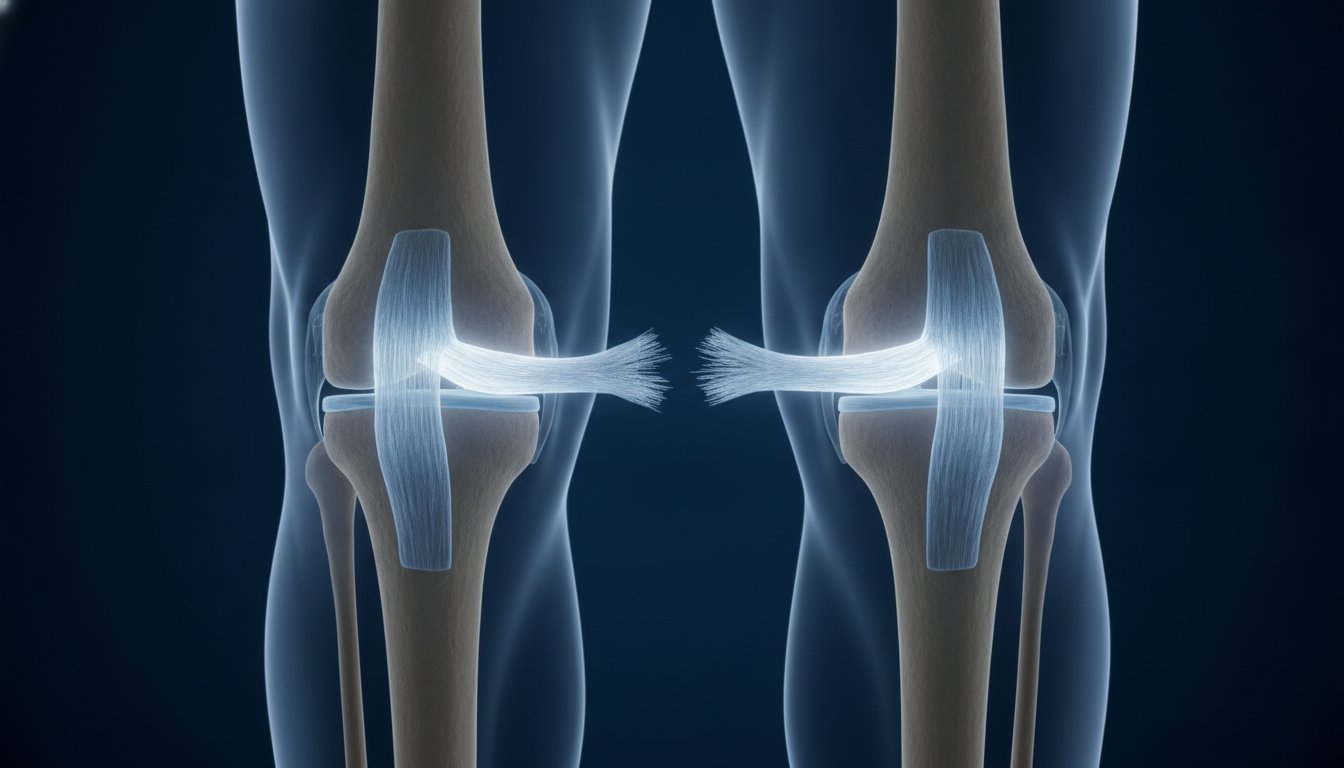
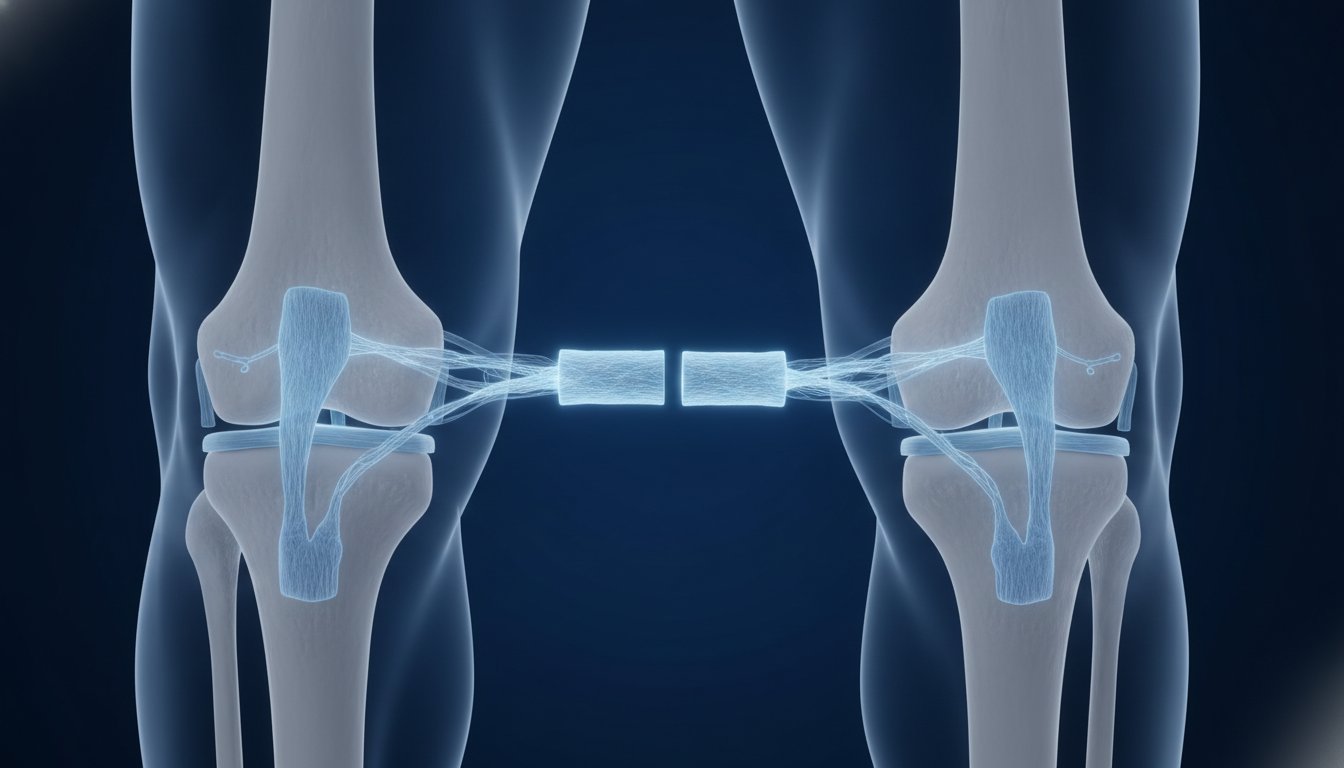
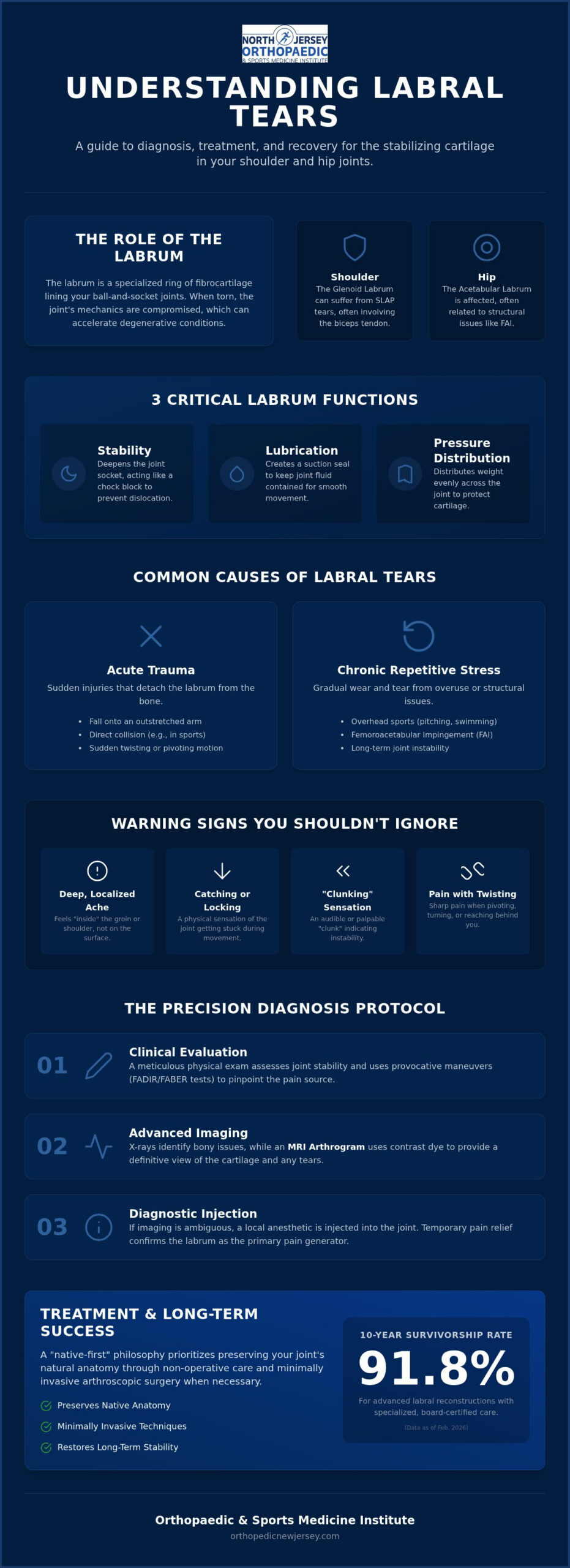
The labrum is a specialized ring of fibrocartilage that lines the socket of your shoulder and hip joints. It functions as a gasket, deepening the socket to provide essential stability while maintaining a critical suction seal. This seal keeps the joint fluidly lubricated and distributes weight evenly across the joint surface. When this tissue tears, the mechanics of the entire joint are compromised. This disruption increases focal pressure on the articular cartilage, which can accelerate the onset of degenerative conditions if left unaddressed. Consulting a labral tear expert Lyndhurst NJ is the most effective way to protect your long term joint health through an accurate, early diagnosis.
While many people associate labral injuries solely with the hip, the shoulder is equally susceptible. In the shoulder, the glenoid labrum can suffer from Superior Labrum Anterior to Posterior (SLAP) tears, which often involve the biceps tendon attachment. In the hip, a hip labral tear involves the acetabular labrum. A board-certified specialist must differentiate these tears from bursitis, hip flexor strain, or early-onset arthritis. General imaging often misses the subtle nuances of a tear. A dedicated expert uses specific provocative maneuvers, such as the FADIR or FABER tests, to elicit a diagnostic response that confirms the source of your pain.
Common Causes of Labral Injuries in Athletes
Athletic injuries often stem from two distinct mechanisms. Acute trauma, such as a fall onto an outstretched arm or a direct collision on the field, can instantly detach the labrum from the bone. Conversely, chronic repetitive stress is a frequent culprit for overhead athletes. Pitchers and swimmers often develop tears due to the extreme range of motion required in their sports. In the hip, structural issues like Femoroacetabular Impingement (FAI) create abnormal contact between the ball and socket, gradually fraying the labrum over time.
Warning Signs You Should Not Ignore
You shouldn’t ignore sensations that suggest mechanical instability within the joint. Patients often describe a deep, localized ache that feels “inside” the shoulder or groin rather than on the surface. A hallmark sign is a physical “clunk,” “catch,” or “locking” sensation during specific movements. If you experience sharp pain when pivoting, twisting, or reaching behind your back, it’s time to consult a specialist. If these warning signs sound familiar, scheduling an evaluation with a labral tear expert Lyndhurst NJ can prevent a minor fray from becoming a major surgical challenge. These mechanical symptoms indicate that a flap of tissue may be interfering with normal joint gliding, which risks further damage to the surrounding cartilage.
Precision Diagnosis for Patients in Lyndhurst, NJ
Achieving an accurate diagnosis requires more than just a quick scan. For those seeking a labral tear expert Lyndhurst NJ, the process begins with a meticulous clinical evaluation. This stage is vital because labrum pathology often mimics other conditions like bursitis or simple muscle strain. Accessing a labral tear expert Lyndhurst NJ ensures you receive a diagnosis rooted in both clinical experience and advanced technology, preventing the common mistake of treating the symptoms rather than the underlying structural cause.
While X-rays cannot visualize the cartilage itself, they are essential for identifying bony abnormalities like cam or pincer lesions. These structural issues often cause the tear in the first place. For a definitive view, we often recommend an MRI Arthrogram. This involves injecting a contrast agent into the joint to highlight small flaps or detachments. This is particularly helpful for identifying a Shoulder Labrum Tear, which can be elusive on standard imaging. If results remain ambiguous, a diagnostic injection provides final clarity. By placing a local anesthetic directly into the joint space, we can determine if the labrum is the primary pain generator. If the pain vanishes temporarily, the diagnosis is confirmed.
The Physical Examination Protocol
Our protocol involves a comprehensive assessment of joint stability and range of motion. We look beyond the joint itself to identify secondary muscle weakness or compensation patterns. Often, a chronic injury causes the body to over-rely on surrounding muscles, leading to a cascade of discomfort in the lower back or neck. We use specific maneuvers to isolate the tissue, ensuring we understand the exact mechanism of your pain before recommending treatment.
Advanced Imaging in North Jersey
Patients traveling from Lyndhurst or North Arlington benefit from our coordination with local imaging centers utilizing 3T MRI technology. This high-field strength provides superior resolution compared to standard 1.5T machines. It’s an essential component in our philosophy, allowing us to plan the least invasive intervention possible. If you are experiencing persistent joint “catching,” you may want to consult with our specialist to begin this diagnostic journey.
Minimally Invasive Labral Tear Treatment Options
Not every tear requires a trip to the operating room. A labral tear expert Lyndhurst NJ will typically start with conservative measures for minor fraying or stable tears that do not cause significant mechanical locking. This “native-first” philosophy focuses on restoring function through non-operative protocols before considering surgical intervention. As noted by the Mayo Clinic, diagnosing and treating a hip labral tear often involves a strategic trial of physical therapy to stabilize the joint by strengthening the surrounding musculature. For many patients, improving joint mechanics is enough to alleviate the deep ache and prevent further damage.
When conservative paths fail to provide relief, or if the tear is structurally significant, we transition to advanced surgical strategies. The choice between debridement and repair is critical. Debridement involves smoothing down ragged, unstable edges of the labrum that may be catching in the joint. While this provides quick relief, a formal repair is often preferred for younger or more active patients. Repairing the tissue involves reattaching the labrum to the bone to restore the joint’s essential suction seal. This seal is vital for distributing pressure evenly across the articular cartilage and maintaining long-term joint health.
Non-Surgical Recovery Paths
Targeted physical therapy is the cornerstone of non-operative care. For the hip, we focus on the gluteal and core muscles to reduce the load on the joint socket. For the shoulder, we prioritize the rotator cuff and scapular stabilizers. Anti-inflammatory protocols, sometimes supplemented by biologic injection options like Platelet-Rich Plasma (PRP), can help manage symptoms during this phase. Minor fraying may respond well to these treatments over a period of six to twelve weeks, allowing patients to return to daily activities without surgery.
Arthroscopic Labral Repair Techniques
Modern minimally invasive orthopedic surgery NJ utilizes high-definition arthroscopic technology to perform complex repairs through tiny incisions. A labral tear expert Lyndhurst NJ uses a small camera to visualize the joint interior with extreme precision. During the procedure, we use bio-absorbable anchors to secure the detached tissue back to the rim of the socket. These anchors are designed to integrate with your bone over time, leaving no permanent metal hardware behind. This approach minimizes trauma to healthy surrounding tissue, which leads to less post-operative pain and a more streamlined recovery process compared to traditional open surgery.
Recovery Timeline: Returning to Action Safely
The success of a labral repair depends as much on the biological healing process as it does on the surgical technique. Recovery is a methodical progression that cannot be rushed, as the reattached tissue needs time to form a secure bond with the bone. Working with a labral tear expert Lyndhurst NJ ensures you have a structured protocol that balances joint protection with the necessary movement to prevent stiffness. While every patient’s biology is unique, most recoveries follow a predictable trajectory designed to restore full function without risking graft failure.
During the first 48 hours, the primary focus is on pain management and inflammation control through cryotherapy and localized rest. Between weeks two and six, you’ll transition into a passive range of motion phase. This involves moving the joint with the assistance of a therapist to prevent scar tissue from limiting your future mobility. A labral tear expert Lyndhurst NJ will monitor these milestones closely to ensure the graft is protected during the most vulnerable stages of healing. By month three, the focus shifts toward building strength and incorporating functional training to prepare the joint for higher loads.
Post-Operative Milestone Guide
Navigating the early weeks requires patience, especially during the “protection” phase. If you’ve had a shoulder repair, you’ll likely remain in a sling for four to six weeks to prevent the biceps tendon from pulling on the new repair. For hip repairs, crutches are often necessary to limit weight-bearing while the labrum stabilizes. Most patients return to light office work within one to two weeks, but driving is restricted until you are off all narcotic pain medications and have sufficient joint control. Clearance for full-contact sports occurs only after you’ve demonstrated at least 90% strength symmetry compared to your uninjured side.
Physical Therapy Partners in Lyndhurst and Nutley
Successful outcomes are built on the collaboration between your surgeon and your physical therapist. We work closely with local PT providers in Nutley and Bloomfield to ensure they follow our specific post-operative protocols. It’s vital to remember that “pushing through the pain” is counterproductive during labral recovery; sharp, mechanical pain is a signal to scale back. If you’re looking for specialized guidance on athletic recovery, you can explore our sports medicine clinic Nutley NJ resources to understand how we bridge the gap between clinical repair and peak performance. To begin your own recovery journey with a customized treatment plan, schedule a comprehensive evaluation with our team today.
Why Choose Our Labral Tear Experts Near Lyndhurst, NJ
Residents of Lyndhurst don’t have to travel to major city centers to receive elite orthopedic care. Our board-certified surgical team, located in the heart of Nutley, provides the sophisticated diagnostic and treatment capabilities typically found in academic medical institutions. As a dedicated labral tear expert Lyndhurst NJ, we understand that every patient brings a unique set of physical demands, whether you’re a competitive athlete or someone focused on maintaining an active lifestyle in the North Jersey community. We take pride in being a local resource that combines world-class surgical precision with the personalized attention of a community-focused practice.
Our approach is fundamentally patient-centered, which means we never rush toward surgery. We believe in exhausting every non-operative avenue first, utilizing the latest advancements in physical therapy and biologic interventions to promote natural healing. This commitment to conservative care has made us a trusted destination for patients from Bloomfield, Clifton, and North Arlington who seek a balanced perspective on joint health. We focus on the person, not just the pathology, ensuring your treatment plan aligns with your specific recovery goals and lifestyle requirements.
A Specialized Focus on Native Joint Preservation
Preserving your natural anatomy is our highest priority. When surgical intervention is necessary, we utilize the most advanced minimally invasive technology available to minimize tissue disruption and accelerate recovery. This “native-first” philosophy is particularly evident in our labral tear shoulder treatment protocols, where we prioritize the long-term stability of the joint. By using high-definition arthroscopy and bio-absorbable anchors, we help our patients achieve superior outcomes with less post-operative discomfort. We don’t just repair the tear; we work to restore the joint’s original mechanics to prevent future degeneration.
Schedule Your Consultation Today
Starting your journey toward pain-free movement is straightforward. During your initial consultation at our Nutley office, you’ll receive a comprehensive evaluation that includes a thorough review of your imaging and a series of specialized orthopedic tests. We assist with insurance and referral requirements for North Jersey residents to ensure your focus remains entirely on your recovery. Our office is conveniently located just minutes from Lyndhurst and North Arlington, providing easy access for those ready to address their joint pain. If you’re ready to work with a labral tear expert Lyndhurst NJ, we’re here to provide the clinical clarity and surgical expertise you deserve to get back in the game.
Restoring Your Active Lifestyle with Specialized Care
A labral tear doesn’t have to be a permanent barrier to your physical performance. We’ve explored how a native-first philosophy prioritizes precise diagnosis and minimally invasive repair to restore joint stability. By utilizing advanced arthroscopic techniques and a structured recovery plan, you can protect your long-term cartilage health while returning to the activities you love. This specialized approach ensures that every intervention is tailored to your unique anatomical needs and specific goals.
Partnering with a labral tear expert Lyndhurst NJ provides you with the clinical expertise required to navigate the complexities of shoulder and hip pathology. Our board-certified orthopedic surgeon and minimally invasive specialists are proud to be serving Lyndhurst, Nutley, and Bloomfield with patient-centered care. We focus on providing a clear roadmap for recovery, moving you from the frustration of joint catching to the confidence of pain-free movement. You deserve a treatment plan that values your time and your athletic longevity.
If you’re ready to find relief from persistent joint pain, we’re here to help. Schedule a Consultation with a Labral Tear Expert today to discuss your symptoms and explore your modern treatment options. Your path back to peak performance starts with an expert evaluation.
Frequently Asked Questions
Can a labral tear heal on its own without surgery?
A labral tear doesn’t typically heal on its own because the fibrocartilage tissue has a limited blood supply. While the physical tear remains, many patients can manage their symptoms effectively without surgery. This is achieved by strengthening the surrounding muscles to compensate for the lost stability. If conservative treatments fail to restore function, a labral tear expert Lyndhurst NJ may recommend a minimally invasive repair to reattach the tissue.
How long does it take to recover from labral repair surgery?
Full recovery from labral repair surgery typically takes four to six months. The first six weeks focus on protecting the repair, often requiring a sling for the shoulder or crutches for the hip. After this initial phase, you’ll begin a structured physical therapy program to restore range of motion. Most athletes return to full-contact sports after demonstrating strength symmetry, which usually occurs toward the end of the six-month mark.
Is a labral tear in the hip the same as a shoulder labral tear?
While both involve the same type of fibrocartilage ring, the anatomy and functional demands differ. A hip tear affects the acetabular labrum, which stabilizes the weight-bearing joint of the leg. A shoulder tear affects the glenoid labrum, which facilitates the wide range of overhead motion. Both conditions cause “catching” or “locking” sensations, but the diagnostic tests and surgical approaches are specific to each joint’s unique structure.
What happens if you leave a labral tear untreated?
Leaving a labral tear untreated often leads to progressive joint instability and accelerated wear on the articular cartilage. Because the labrum maintains the joint’s suction seal, a tear causes uneven pressure distribution during movement. Over time, this mechanical dysfunction increases the risk of developing early-onset osteoarthritis. Seeking a labral tear expert Lyndhurst NJ early can help prevent this degenerative cycle by restoring the joint’s natural mechanics.
Will I need physical therapy even if I don’t have surgery?
Yes, physical therapy is the primary treatment for patients choosing a non-surgical path. The goal is to strengthen the muscles surrounding the joint to provide secondary stability. For a hip tear, this involves the gluteal and core muscles; for a shoulder tear, the focus is on the rotator cuff. This targeted strengthening reduces the load on the damaged labrum, allowing many patients to return to their normal activities pain-free.
Can I still exercise with a suspected labral tear?
You can often continue to exercise, but you must modify your routine to avoid aggravating the joint. It’s essential to avoid high-impact activities, deep squatting, or heavy overhead lifting that might cause the torn tissue to catch or lock. Focus on low-impact movements like swimming or cycling until a specialist provides a definitive diagnosis. Continuing to push through sharp pain can worsen the tear and damage the surrounding cartilage.
Does an MRI always show a labral tear?
A standard MRI might miss small or subtle tears. To improve diagnostic accuracy, we often use an MRI Arthrogram, which involves injecting a contrast dye into the joint. This dye seeps into the tear, making it much easier to visualize on the scan. Even with advanced imaging, the clinical physical exam remains a vital component of the diagnostic process, as some tears are only confirmed during a diagnostic injection or arthroscopic visualization.
Is labral repair surgery considered a major procedure?
Labral repair is a significant orthopedic procedure, but it’s performed using minimally invasive arthroscopic techniques. Instead of a large open incision, the surgeon uses a tiny camera and specialized instruments through small portals. This approach reduces trauma to the surrounding muscles and skin, leading to less post-operative pain and a faster initial recovery. While it’s an outpatient same-day surgery, the biological healing of the tissue still requires a dedicated, months-long rehabilitation period.