What if the persistent, deep-seated ache in your joint isn’t a simple strain, but a mechanical issue that requires more than just rest? For many active individuals, the frustration of a shoulder or hip that “catches” or “locks” during movement becomes a significant barrier to the activities they love. If you’ve spent weeks in physical therapy without seeing the results you expected, you aren’t alone in your search for more effective labral tear treatment in Clifton NJ. It’s common to feel discouraged when standard conservative measures fail to address the underlying pathology of a torn labrum.
This article provides a clear path forward by exploring modern diagnostic tools and advanced surgical interventions designed to preserve your natural joint. You’ll discover how a board-certified specialist utilizes specialized imaging and minimally invasive arthroscopic techniques to provide an accurate diagnosis and a tailored recovery plan. We’ll examine the transition from chronic pain to restored function, focusing on procedures that prioritize faster healing and a return to sports. By understanding your options for professional care, you can move toward a life defined by movement rather than limitation.
Key Takeaways
- Understand the anatomical importance of the labrum as a stabilizer and shock absorber for the shoulder and hip joints.
- Identify the specific mechanical symptoms, such as locking or clicking, that distinguish a labral tear from a standard muscle strain.
- Evaluate the criteria for choosing between conservative therapy and advanced labral tear treatment in Clifton NJ to ensure long-term joint health.
- Learn how minimally invasive arthroscopic techniques minimize tissue disruption and facilitate a more efficient return to daily activities.
- Discover the essential phases of post-operative rehabilitation required to protect your repair and regain full athletic performance.
What is a Labral Tear? Understanding Joint Cartilage Injuries
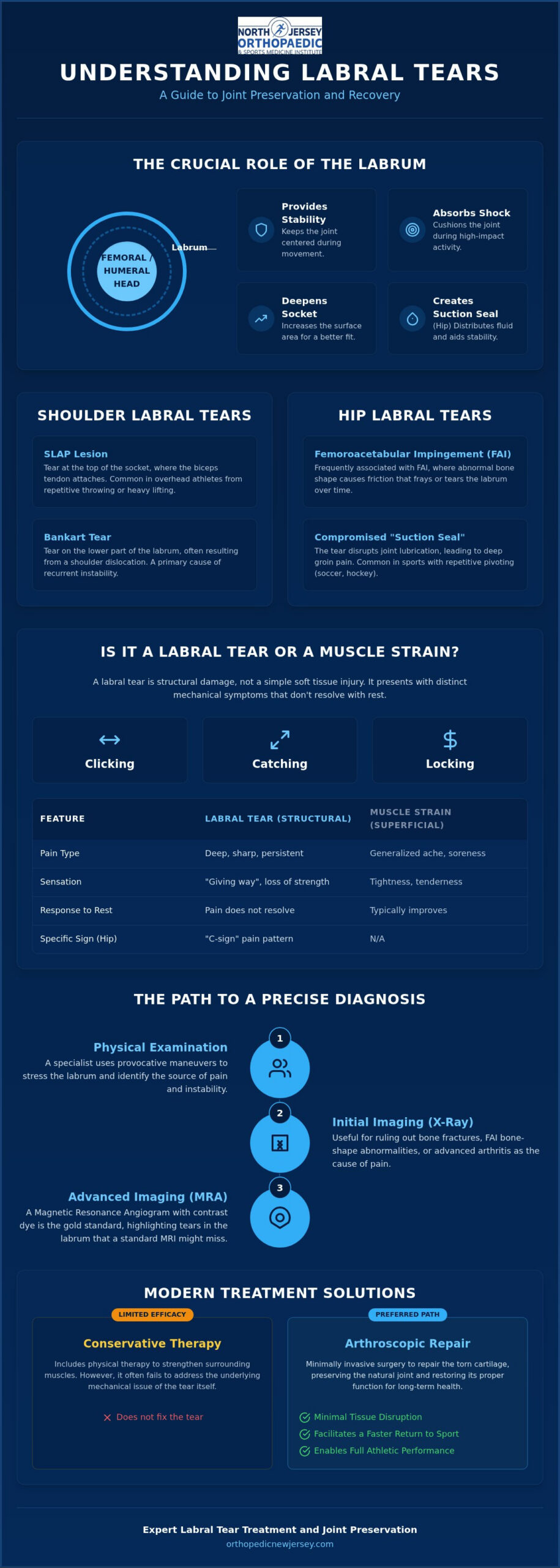
The labrum is a specialized ring of fibrocartilage that lines the joint socket, playing a pivotal role in the biomechanics of both the shoulder and the hip. It’s far more than a simple lining. This tissue functions as a critical structural component that deepens the socket, providing the necessary stability to keep the joint centered while simultaneously acting as a robust shock absorber during intense physical activity. When this ring is damaged, the joint loses its mechanical integrity, often leading to a cascade of secondary issues including increased friction and decreased range of motion.
Local athletes in Clifton who participate in high-impact sports or repetitive overhead activities are particularly susceptible to these injuries. Whether it’s a sudden trauma on the field or the cumulative wear of years of training, a torn labrum requires a sophisticated diagnostic approach. Accessing expert labral tear treatment in Clifton NJ allows patients to address these injuries before they lead to permanent joint degradation or chronic instability.
Shoulder Labral Tears (SLAP and Bankart)
In the shoulder, or glenoid, the labrum is frequently injured through two primary mechanisms. A SLAP lesion (Superior Labrum from Anterior to Posterior) occurs at the top of the socket where the long head of the biceps tendon attaches. These are common in overhead athletes and are often the result of repetitive throwing motions, heavy lifting, or a fall on an outstretched arm. Conversely, a Bankart tear typically occurs on the lower portion of the labrum, often following a shoulder dislocation. This type of injury is a primary driver of recurrent shoulder instability, as the torn labrum no longer provides the “bumper” effect needed to keep the humerus securely in place.
Hip Labral Tears and FAI
Symptoms and Diagnosis: Identifying a Labrum Injury
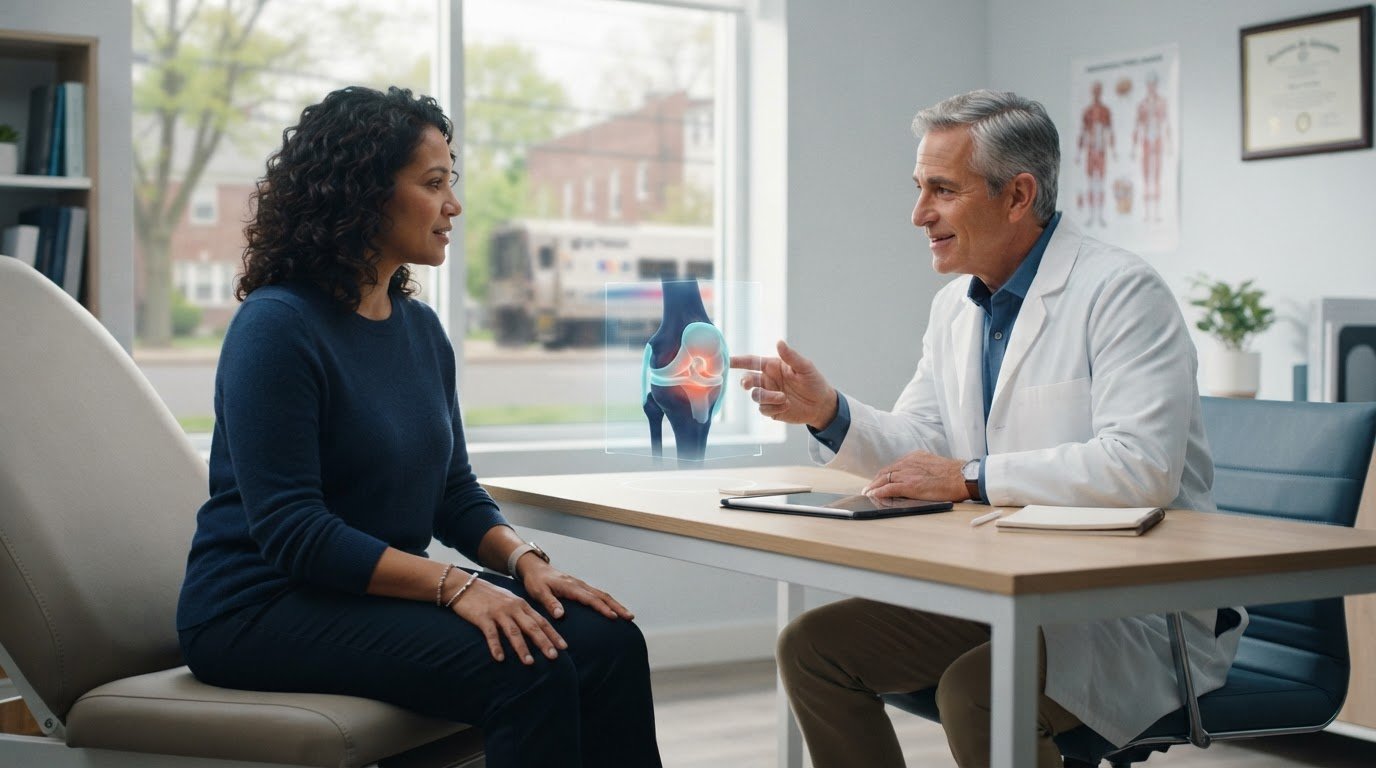
Identifying a labral tear requires a high index of clinical suspicion and specialized training. Accessing specialized labral tear treatment in Clifton NJ starts with a precise diagnostic process, as many patients seek care after months of treating what they believed was a routine muscle strain or a minor pull. Unlike a pulled muscle, which typically resolves with rest and ice, a labral tear involves structural damage to the fibrocartilage ring. This results in persistent, deep-seated pain that doesn’t respond to standard home remedies or generic stretching routines. A thorough physical exam by a board-certified specialist is essential for differentiating these complex joint issues from superficial soft tissue injuries. This exam involves specific provocative maneuvers designed to stress the labrum and elicit a response, providing clues that imaging alone might miss.
Clinical Warning Signs to Watch For
Mechanical symptoms are the hallmark of a structural cartilage injury. You might experience a distinct clicking, catching, or locking sensation during specific ranges of motion. In the hip, patients often demonstrate the “C-sign” by placing their hand in a C-shape over the side of the hip to describe how the pain radiates from the groin to the buttock. Shoulder patients frequently report a loss of strength or a “giving way” sensation during overhead tasks or heavy lifting. This discomfort often intensifies with prolonged sitting or during high-intensity athletic maneuvers that require rapid changes in direction.
Advanced Imaging in North Jersey
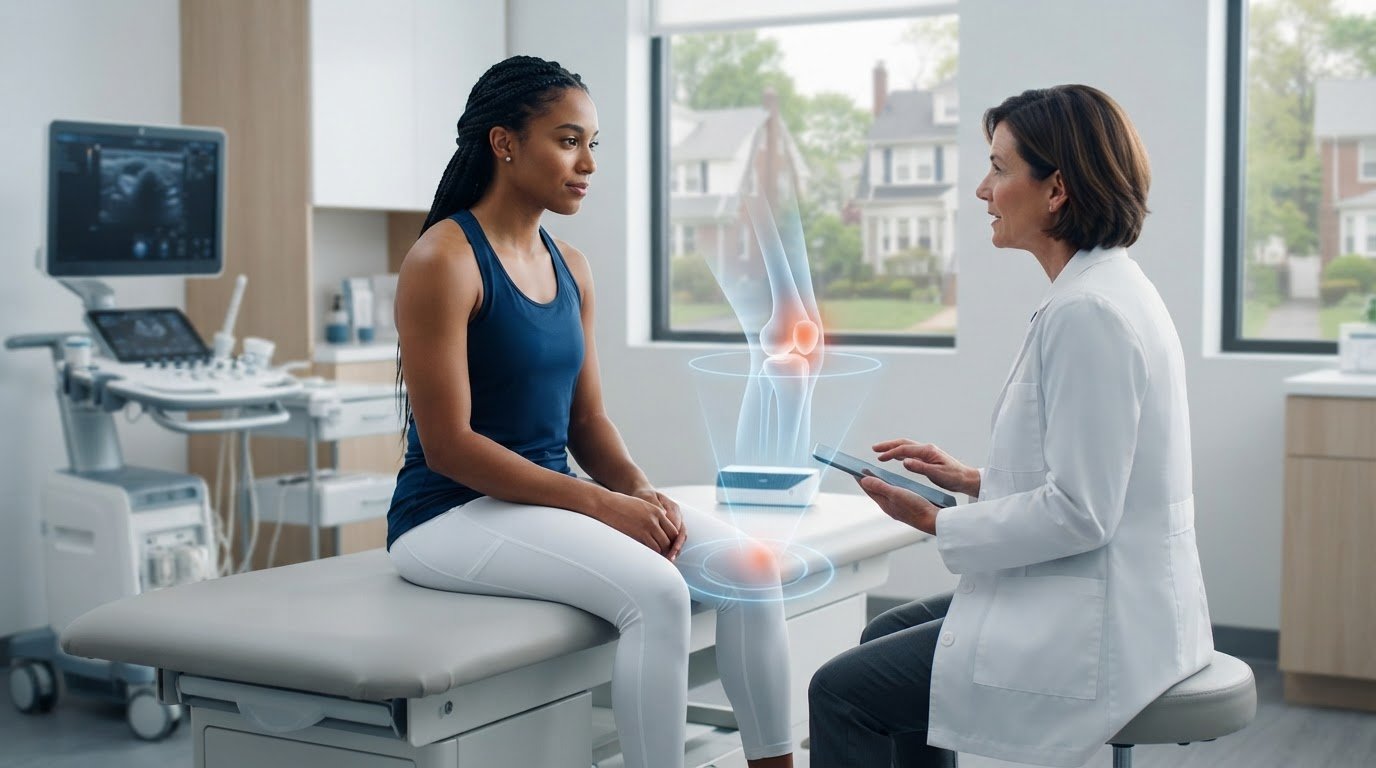
Standard X-rays are useful for ruling out bone fractures or advanced arthritis, but they’re insufficient for visualizing the labrum. For a definitive diagnosis, we rely on advanced imaging techniques available in North Jersey. A Magnetic Resonance Angiogram (MRA) remains a primary tool. During this procedure, a contrast dye is used to highlight fissures in the cartilage that a standard MRI might overlook. A 3T MRI provides superior clarity for cartilage by utilizing a higher magnetic field strength to produce high-resolution images of the joint’s internal structures. To complement these images, diagnostic injections help confirm the labrum as the pain source. If a local anesthetic provides immediate, temporary relief within the joint, it validates the clinical findings and guides the next steps of your care.
Seeking a precise evaluation from an expert in labral tear treatment in Clifton NJ ensures you receive a diagnosis based on clinical evidence rather than guesswork. Accurate identification is the only way to move from managing symptoms to treating the root cause of your pain.
Treatment Options: Non-Surgical vs. Labral Repair Surgery
Determining the most effective labral tear treatment in Clifton NJ begins with a clinical assessment of whether the tear is stable or unstable. A stable tear is one where the fibrocartilage remains largely attached to the bone despite some fraying, whereas an unstable tear involves a structural separation that interferes with the joint’s mechanical function. Our primary objective is always joint preservation, which often starts with a conservative protocol designed to reduce inflammation and optimize the mechanics of the surrounding musculature. This approach allows the body to compensate for the injury while we monitor for improvements in pain and mobility.
If persistent mechanical symptoms like locking or catching continue to limit your daily activities, we may recommend transitioning to minimally invasive orthopedic surgery NJ. Modern surgical techniques have evolved to focus on anatomical restoration rather than just symptom management, ensuring the joint remains healthy and functional for years to come.
Conservative Management Strategies
For many patients, a structured non-surgical approach provides significant relief without the need for an operating room. Targeted physical therapy is the cornerstone of this phase, focusing on strengthening the dynamic stabilizers of the joint. In the shoulder, this involves the rotator cuff; in the hip, it focuses on the gluteal and core muscles. We may also incorporate biologic options such as platelet-rich plasma (PRP) to support the healing environment or cortisone injections to manage acute inflammation. Typically, we monitor your progress over a six-to-twelve-week timeline. If symptoms don’t resolve within this period, it may indicate that the tear requires a mechanical fix.
Arthroscopic Labral Repair
When conservative efforts aren’t enough to restore your quality of life, arthroscopic surgery offers a precise, low-impact solution. Using small cameras and specialized instruments through tiny incisions, we can address the tear with exceptional accuracy. Depending on the specific damage, we may perform a debridement to trim away frayed edges that cause irritation or a full repair. During a repair, small anchors and high-strength sutures are used to re-secure the labrum to the bone, effectively restoring the stability of the joint. This arthroscopic approach provides several distinct advantages, including reduced scarring, minimal blood loss, and a faster outpatient recovery process that allows you to begin your rehabilitation sooner.
Recovery and Rehabilitation: The Path Back to Performance
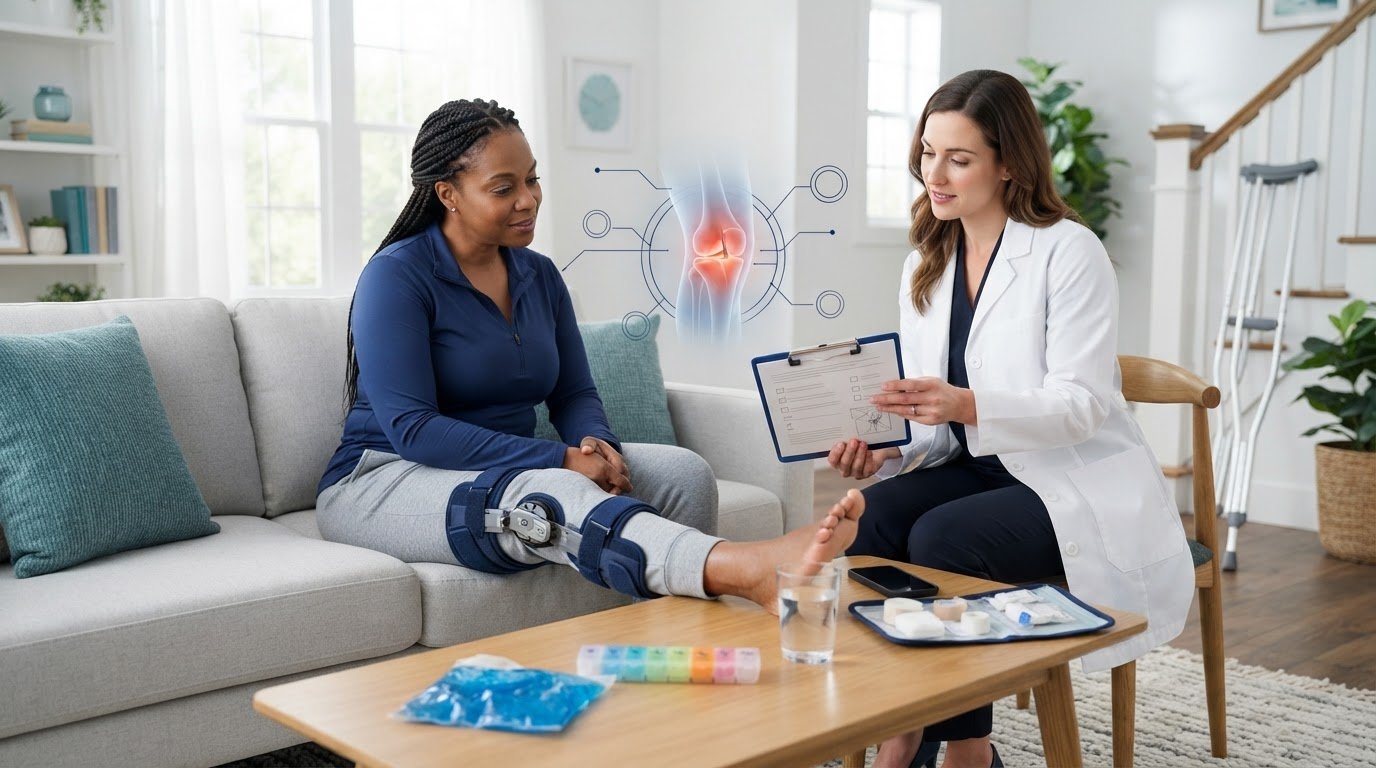
Successful labral tear treatment in Clifton NJ extends far beyond the operating room. While minimally invasive arthroscopy minimizes initial tissue trauma, the biological healing of the fibrocartilage remains a methodical and active process. Recovery isn’t just about waiting for the pain to subside; it’s about a structured partnership between the patient and their clinical team. Immediate post-operative care focuses on protecting the surgical site, which often requires the use of a sling for shoulder repairs or crutches for hip repairs to prevent premature weight-bearing or excessive rotation. Biological healing for cartilage typically requires 6 to 12 weeks for the tissue to firmly anchor to the bone, and rushing this window can compromise the long-term integrity of the repair.
Progressive physical therapy in North Jersey clinics plays a critical role in this journey. By working with specialists who understand the nuances of labral biomechanics, you ensure that the joint is moving correctly as it heals. Long-term success depends on biomechanical correction, which means identifying and fixing the movement patterns that contributed to the tear in the first place.
Phase-Based Recovery Timeline
- Weeks 0-4: The priority is protection and passive range-of-motion exercises. During this time, the goal is to prevent stiffness without putting stress on the new anchors.
- Weeks 4-12: Strengthening begins as we restore full mobility. We transition from passive movement to active-assisted exercises, gradually reintroducing low-impact functional tasks.
- Month 4+: This phase involves sport-specific drills and rigorous return-to-play testing. We evaluate strength, balance, and agility to ensure the joint can handle the high-velocity loads required for athletic performance.
Avoiding Complications During Healing
The road to recovery requires patience and precision. Post-surgical stiffness or adhesive capsulitis, commonly known as frozen shoulder, can occur if the rehab protocol is ignored or if the joint is immobilized for too long. Conversely, it’s vital that you don’t “push through” sharp pain during rehab. While muscle soreness is a natural part of the process, sharp or catching pain is a signal to scale back and consult your specialist. We also monitor for signs of secondary impingement, ensuring that the surrounding muscles are firing correctly to maintain proper joint alignment. If you’re ready to start your journey toward a pain-free life, contact us to discuss expert labral tear treatment in Clifton NJ today.
Expert Labral Tear Treatment Near Clifton, NJ
Choosing the right specialist for labral tear treatment in Clifton NJ involves more than just finding a surgeon; it requires a dedicated partner in your long-term joint health. Local expertise provides a distinct advantage, particularly during the intensive rehabilitation phase described previously. Being close to your provider simplifies the frequent follow-up appointments necessary to monitor healing and allows for seamless coordination with North Jersey physical therapy clinics. This integrated approach ensures that your surgeon and therapist are aligned on your progress, reducing the risk of communication gaps that can occur within large, impersonal hospital systems. At The Orthopaedic & Sports Medicine Institute, we prioritize this continuity of care to ensure every patient feels secure in their recovery journey.
A Specialized Approach to Shoulder and Hip Care
Our practice offers a high-level consultancy model for patients experiencing joint instability or chronic pain. We focus extensively on labral tear shoulder treatment, utilizing board-certified surgical precision to address complex lesions in high-school athletes, collegiate performers, and dedicated weekend warriors alike. We understand that an injury to the labrum isn’t just a clinical finding; it’s a disruption to your lifestyle. By combining sophisticated diagnostic imaging with a community-focused setting, we provide the specialized care of a major medical center with the personalized attention of a local practice.
Convenient Access for Clifton Patients
Our facility is strategically located to serve the Clifton, Nutley, and Bloomfield communities, ensuring that advanced orthopaedic care is never out of reach. We’ve streamlined our diagnostic process to move you efficiently from your initial physical exam to a comprehensive recovery plan. This commitment to innovation is reflected in our adoption of cutting-edge procedures, such as the BEAR implant ACL repair New Jersey, which demonstrates our dedication to joint-preserving technologies across all areas of sports medicine. Whether you’re dealing with a recent sports injury or a long-standing mechanical issue, you don’t have to navigate your recovery alone.
If you’re seeking expert labral tear treatment in Clifton NJ, the first step toward pain-free movement is an accurate diagnosis. We invite you to schedule a consultation with our board-certified team to discuss your symptoms and explore the minimally invasive options available to you. Let’s work together to restore your joint function and return you to the activities you value most.
Restore Your Joint Integrity and Mobility
Addressing a labral injury requires more than temporary pain management; it demands a clinical focus on restoring the mechanical stability of your shoulder or hip. By prioritizing accurate diagnostics and understanding the structural nature of cartilage damage, you can transition from chronic discomfort to active recovery. Whether your path involves targeted physical therapy or specialized arthroscopic repair, the goal remains the preservation of your natural joint and a return to the physical performance you expect. It’s a methodical journey that moves from identifying the source of your pain to implementing a precise, medical solution.
Finding effective labral tear treatment in Clifton NJ is the first step toward reclaiming your quality of life. Our board-certified orthopedic surgeon leverages specialized, minimally invasive techniques to provide local patients with advanced care in a community-focused setting. We remain dedicated to serving Clifton and the surrounding North Jersey areas with a patient-centered approach that prioritizes long-term outcomes. If you’re ready to address your joint pain with professional precision, we invite you to request a consultation with our labral tear specialist. You don’t have to live with the limitation of a joint injury when modern, effective solutions are available right here in your community.
Frequently Asked Questions
Can a labral tear heal on its own without surgery?
A labral tear does not typically heal on its own because the fibrocartilage has a limited blood supply. While the structural damage remains, many patients find that specialized physical therapy and activity modification successfully manage their pain and restore function. If conservative measures fail to provide relief, surgical intervention may be necessary to re-anchor the tissue to the bone and prevent further joint degradation.
How long is the recovery after labral tear surgery in Clifton?
Recovery from labral tear treatment in Clifton NJ generally follows a four to six month timeline for a full return to high impact sports. The initial six to twelve weeks are dedicated to biological healing, where you’ll use a sling or crutches to protect the repair. Following this phase, you’ll progress through structured strengthening and functional drills designed to restore the joint’s full range of motion and athletic power.
What happens if a labral tear is left untreated?
Leaving a labral tear untreated often leads to chronic joint instability and an increased risk of early onset osteoarthritis. Because the labrum helps distribute synovial fluid and stabilize the joint, a persistent tear causes abnormal wear on the articular cartilage. Over time, this mechanical dysfunction can result in permanent joint damage, potentially requiring more extensive reconstructive procedures in the future.
Is an MRI always necessary to diagnose a labral tear?
While a physical exam provides vital clues, an advanced imaging study like a 3T MRI or an MRA is usually necessary to confirm a labral tear. Standard X-rays only visualize bone and cannot detect cartilage damage. An MRA, which uses contrast dye, is particularly effective at highlighting small fissures in the labrum that might be missed by conventional imaging techniques.
Can I still exercise with a labral tear?
You can often continue to exercise with a labral tear, provided you avoid movements that cause a “catching” or “locking” sensation. Low impact activities like swimming or cycling are typically well tolerated and help maintain cardiovascular health without stressing the joint. It’s essential to work with a specialist to identify which specific exercises are safe and which repetitive motions might exacerbate the injury.
What is the difference between a labral tear and a rotator cuff tear?
A labral tear involves the ring of cartilage that deepens the shoulder socket, whereas a rotator cuff tear involves the tendons and muscles that move the arm. While both injuries cause shoulder pain, a labral tear often presents with mechanical clicking or a sensation of the joint “giving way.” A rotator cuff injury typically results in profound weakness when lifting the arm overhead or reaching behind the back.
How do I know if my hip pain is a labral tear or just bursitis?
Hip labral tears usually cause deep pain in the groin or the front of the hip, often described using the “C-sign.” In contrast, bursitis typically causes sharp or aching pain on the outer side of the hip that is tender to the touch. If your pain involves mechanical clicking or worsens with prolonged sitting, it’s more likely related to a labral injury rather than superficial inflammation.
Does insurance typically cover arthroscopic labral repair?
Most major insurance providers cover arthroscopic labral repair when it’s deemed medically necessary after a period of failed conservative treatment. Since this is a standard orthopaedic procedure for restoring joint function, it’s typically included in sports medicine benefits. We recommend contacting your insurance carrier directly to verify the specific details of your coverage, including any requirements for pre-authorization or specialist referrals.