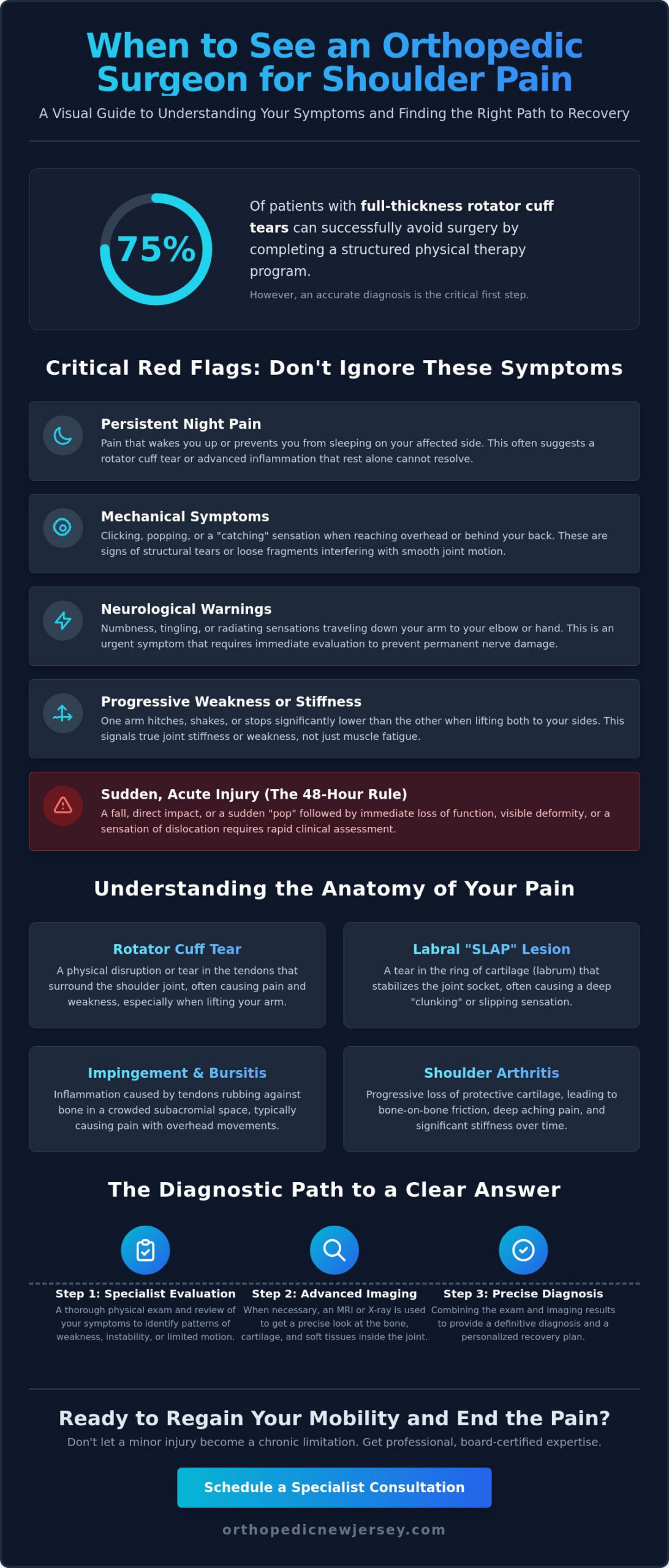
Did you know that approximately 75% of patients with full-thickness rotator cuff tears can successfully avoid surgery by completing a structured physical therapy program? While this statistic is encouraging, it highlights the importance of knowing exactly when to see orthopedic surgeon for shoulder pain to ensure you receive the correct diagnosis before a minor injury becomes a chronic limitation. It’s incredibly frustrating when weeks of “rest and ice” fail to yield results, especially if you can no longer sleep on your affected side or fear losing the use of your dominant arm.
You deserve a clear understanding of your symptoms and the confidence that comes from professional, board-certified expertise. This article identifies the critical warning signs that necessitate a specialist’s evaluation and explores the latest minimally invasive recovery options available today. We’ll examine both surgical and non-surgical alternatives, providing a methodical path toward recovery for patients in Nutley and surrounding communities who are ready to regain their mobility and rest without discomfort.
Key Takeaways
- Identify the specific clinical thresholds, such as persistent night pain and significant weakness, that indicate exactly when to see orthopedic surgeon for shoulder pain.
- Distinguish between common muscle strains and structural pathologies, including rotator cuff tears, labral “SLAP” lesions, and progressive shoulder arthritis.
- Understand the diagnostic sequence used by specialists, including why certain physical exam patterns and advanced imaging are required for a precise diagnosis.
- Explore modern recovery options that bridge the gap between conservative physical therapy and cutting-edge, minimally invasive surgical interventions.
- Learn how board-certified expertise in Nutley and Montclair provides a personalized, diagnostic mindset focused on restoring mobility and physical performance.
Identifying the Red Flags: When Shoulder Pain Becomes a Medical Necessity
Distinguishing between temporary muscle soreness and a structural injury is the first step in a successful recovery journey. While soreness typically resolves with minor lifestyle adjustments within a few days, clinical pathology involves damage to the bone, cartilage, or connective tissues that requires professional intervention. Understanding when to see orthopedic surgeon for shoulder pain often comes down to recognizing the “red flags” that indicate your body can no longer self-repair. Knowing exactly when to see orthopedic surgeon for shoulder pain helps prevent the progression of minor tears into irreversible joint damage.
Persistent night pain is one of the most reliable indicators of a significant issue. If you find yourself unable to lie on your side or waking up repeatedly due to deep, aching discomfort, it often suggests a rotator cuff tear or advanced inflammation that rest alone cannot resolve. Mechanical symptoms also demand professional attention. If you experience clicking, popping, or a “catching” sensation when reaching overhead or behind your back, these are signs of intra-articular disruption. These common shoulder problems often involve loose fragments or structural tears that interfere with the joint’s fluid motion.
Neurological warnings are perhaps the most urgent symptoms to monitor. If your shoulder pain is accompanied by numbness, tingling, or radiating sensations that travel down to your elbow or hand, the cervical spine or brachial plexus might be involved. This requires immediate evaluation by a board-certified specialist to prevent the risk of permanent nerve damage or chronic muscle atrophy.
Since neck health is closely linked to shoulder function, those interested in the impact of spinal alignment can consult Upper Cervical Care to learn more about how the upper spine influences nerve pathways throughout the upper body.
The 48-Hour Rule for Acute Injuries
Acute injuries caused by a fall, a direct impact, or a sudden “pop” during heavy lifting require rapid clinical assessment. If the joint appears deformed or you cannot move your arm at all, you may be experiencing a dislocation or subluxation. Acute shoulder trauma is defined as a sudden, high-force event resulting in immediate loss of function, visible deformity, or a sensation of the joint slipping out of its socket, indicating significant structural instability.
Chronic Discomfort vs. Progressive Weakness
Many patients wait too long to seek help, unconsciously compensating for pain by using their neck or back muscles to lift their arm. This leads to secondary strain and further complicates the diagnostic process. You can perform a simple home test by standing in front of a mirror and slowly raising both arms to your sides. If one arm hitches, shakes, or stops significantly lower than the other, you are likely dealing with true joint stiffness or progressive weakness rather than simple muscle fatigue. Distinguishing between these states is vital; fatigue feels like a temporary burn that fades with rest, while structural stiffness feels like a physical “stop” within the joint itself.
Understanding the Anatomy of Pain: Rotator Cuffs, Labral Tears, and Arthritis
The human shoulder is the most mobile joint in the body, but this flexibility comes at the cost of inherent stability. Understanding the specific anatomy of your discomfort is essential for determining when to see a doctor for shoulder pain. While simple tendonitis involves temporary inflammation of the rotator cuff tendons, a tear represents a physical disruption of the tissue that often requires a specialist’s intervention. If your pain is accompanied by a deep, “clunking” sensation or a feeling of the joint slipping, you may be dealing with a labral tear, specifically a SLAP lesion, which affects the ring of cartilage stabilizing the joint socket.
Impingement and bursitis occur when the subacromial space becomes crowded, causing tendons to rub against bone during movement. This differs significantly from arthritis, which is the progressive loss of protective cartilage. Distinguishing between these conditions is why knowing when to see orthopedic surgeon for shoulder pain is critical; a sports injury requires a different rehabilitative framework than degenerative wear. If you are experiencing persistent discomfort, exploring options for specialized shoulder evaluation can help identify the root cause before structural damage worsens.
Rotator Cuff Tear Symptoms and Warning Signs
A rotator cuff tear often manifests as a physical inability to perform routine tasks, such as reaching into a back pocket or lifting a gallon of milk. The pain typically radiates down the lateral aspect of the arm but rarely extends past the elbow. During a clinical evaluation, a surgeon may perform the “Drop Arm” test. If you’re unable to slowly lower your arm from a raised position without it suddenly dropping, it’s a strong clinical indicator of a significant tear that likely necessitates surgical consideration.
Shoulder Arthritis and Degenerative Changes
Unlike the sharp, stabbing pain of an acute tear, shoulder arthritis often presents as a dull, constant ache accompanied by crepitus, a distinct grinding or clicking sensation within the joint. This discomfort is frequently more pronounced in the morning or during shifts in barometric pressure. While arthritis is a long-term condition, board-certified specialists utilize modern protocols to preserve joint function, making it clear when to see orthopedic surgeon for shoulder pain to discuss advanced interventions. Total shoulder replacement, for instance, has a 90-96% patient satisfaction rate according to 2026 data, with 90% of patients reporting significant pain improvement within six weeks post-surgery.
The Diagnostic Path: What to Expect During a Specialist Consultation
Once you’ve identified the signs you should not ignore, the next step is a structured diagnostic evaluation. A consultation with a board-certified specialist is a methodical process designed to pinpoint the mechanical or biological source of your discomfort. Many patients wonder exactly when to see orthopedic surgeon for shoulder pain, but the answer often lies in the clinical exam itself. During this visit, a surgeon will move your arm through specific planes of motion to isolate individual tendons and ligaments. These provocative maneuvers allow the specialist to differentiate between referred pain from the neck and a localized injury within the glenohumeral joint.
Your medical history serves as a critical roadmap for the surgeon. Past athletic activity, repetitive vocational tasks, or previous minor injuries often leave a trail of cumulative damage that manifests as current pain. For residents in Montclair, Bloomfield, or surrounding areas, finding a local expert ensures continuity of care, especially if your treatment plan requires multiple follow-up visits or coordinated rehabilitation. A specialist who understands your lifestyle and activity goals can better tailor a diagnostic and recovery framework that fits your specific needs. Understanding when to see orthopedic surgeon for shoulder pain is as much about the timing of the injury as it is about the functional limitations you experience daily.
Imaging technology provides the visual evidence needed to confirm a clinical suspicion. While a digital X-ray is the standard first step to rule out fractures or bone spurs, it cannot visualize soft tissue damage. If your symptoms suggest a rotator cuff or labral tear, an MRI is often the next logical step in the diagnostic path, providing the high-resolution detail necessary for surgical or non-surgical planning.
Advanced Imaging for Shoulder Injuries
Digital X-rays are highly effective at identifying structural abnormalities such as calcific tendonitis or joint space narrowing caused by arthritis. However, when complex soft tissue injuries like a SLAP lesion are suspected, an MRI Arthrogram, which involves a contrast dye injection, provides the clarity required for a definitive diagnosis. It is vital to remember that while advanced imaging is a powerful tool, it remains only one piece of the diagnostic puzzle that must be correlated with your physical symptoms and clinical exam findings.
Preparing for Your Nutley Orthopedic Appointment
Maximizing the value of your visit requires brief preparation. Before arriving for your Orthopedic Consultation Nutley NJ, track the frequency and intensity of your pain, noting which specific movements trigger the sharpest discomfort. Be prepared to discuss any previous attempts at conservative care, such as physical therapy or corticosteroid injections, as these details help your surgeon determine the most effective next step in your treatment. Bringing copies of previous imaging reports or a list of current medications ensures a more efficient and thorough diagnostic experience.
Non-Surgical vs. Minimally Invasive: Modern Recovery Frameworks
A consultation with a specialist doesn’t automatically mean you’re headed for the operating room. In fact, data from May 2026 indicates that approximately 75% of patients with full-thickness rotator cuff tears can successfully avoid surgery by completing a structured, professionally supervised physical therapy program. This is why understanding when to see orthopedic surgeon for shoulder pain is so valuable; it allows for the implementation of conservative care before a condition progresses. Initial treatments typically focus on targeted rehabilitation to restore muscle balance and the use of non-steroidal anti-inflammatories to manage acute discomfort.
When physical therapy alone isn’t sufficient, modern pain management offers several intermediary steps. While traditional corticosteroid injections remain a standard tool for reducing inflammation, there is a growing trend in 2026 toward biological options. These regenerative treatments aim to support the body’s natural healing processes in damaged tissues. For those who do require intervention, the “major operation” is largely a thing of the past. Most modern shoulder procedures, including rotator cuff and labral repairs, are now performed as outpatient arthroscopic surgeries, allowing patients to return home the same day.
If you’ve exhausted conservative options without relief, it’s time to schedule a surgical consultation to discuss advanced recovery pathways.
When Is Surgery Truly Necessary?
Knowing when to see orthopedic surgeon for shoulder pain is vital because early surgical intervention for certain tears actually improves long-term success rates, which range between 75% and 90% depending on the size of the injury. Surgery is generally reserved for specific clinical scenarios where structural integrity cannot be restored through external means. Criteria for intervention often include full-thickness rotator cuff tears that result in significant functional loss or chronic shoulder instability that physical therapy fails to stabilize. Minimally invasive arthroscopic techniques utilize “keyhole” incisions, which significantly reduce trauma to surrounding healthy tissue and result in less post-operative pain.
The Recovery Timeline: From Sling to Strength
Recovery is a methodical process that requires patience and commitment. During the first six weeks following an arthroscopic procedure, the focus is on protecting the repair, which typically involves wearing a sling to limit movement. As the tissue heals, you’ll transition into a structured rehabilitation program. In 2026, many specialists are utilizing Remote Therapeutic Monitoring (RTM) to track patient progress between office visits. On average, patients undergoing arthroscopic shoulder repair can expect to return to most non-strenuous daily activities within 12 to 16 weeks of surgery. For a detailed week-by-week breakdown of what to expect after your procedure, our comprehensive guide to rotator cuff surgery recovery provides evidence-based protocols and expert-led rehabilitation milestones.
Specialized Shoulder Care at the Orthopaedic & Sports Medicine Institute
The Orthopaedic & Sports Medicine Institute serves as a dedicated resource for patients seeking resolution for complex shoulder conditions. Our board-certified surgeons in Nutley, NJ, combine clinical expertise with a patient-centered approach to ensure every individual receives a precise diagnosis and an effective recovery strategy. Knowing when to see orthopedic surgeon for shoulder pain is the first step toward reclaiming your quality of life. Choosing a provider who utilizes advanced methodology and minimally invasive techniques is what ultimately determines the speed and quality of your functional recovery. We are committed to supporting the active population of North Jersey, providing specialized care for athletes and active adults who refuse to let joint discomfort dictate their lifestyle.
Our focus on minimally invasive orthopaedic surgery means we prioritize procedures that minimize tissue disruption and reduce scarring. Whether you require a specialized rotator cuff repair or treatment for advanced shoulder arthritis, our team utilizes modern procedural solutions to restore anatomical function. By integrating cutting-edge technology with a deep understanding of sports medicine, we provide a clear, methodical pathway for a faster return to sport and daily activity for patients in Nutley, Clifton, and Bloomfield. This rhythmic discovery experience ensures that every question about your symptoms is met with a structured, professional explanation.
Why Choose a Board-Certified Orthopedic Surgeon?
Board certification is a critical identifier of professional standards and specialized knowledge. It ensures that your surgeon has undergone rigorous training and maintains a high level of expertise in the latest advancements in orthopedic care. This level of specialization is particularly crucial for shoulder pathology, where the intricate balance of ligaments and tendons requires a diagnostic mindset and careful surgical precision. Our team acts as a high-level consultant for the communities of Belleville and Lyndhurst, offering the weight of seasoned practitioners who are also bold innovators in their field. We believe in transparency and education, guiding you through the complexities of your recovery with confidence.
Take the First Step Toward Shoulder Relief
Regaining your mobility and ending the frustration of failed “rest and ice” approaches begins with a comprehensive evaluation. During your initial visit to our Nutley facility, you can expect a thorough diagnostic process that moves from symptom analysis to imaging review and a provocative physical exam. Our specialists prioritize transparency, ensuring you understand every aspect of your condition and the non-surgical or minimally invasive alternatives available to you. Scheduling is designed for ease of navigation, allowing you to secure an appointment by phone or through our digital platform for our Nutley, Clifton, or Bloomfield locations. If you’ve been questioning when to see orthopedic surgeon for shoulder pain, the answer is when your pain begins to interfere with your sleep, your work, or your passions. Schedule your shoulder consultation today to begin your journey back to pain-free movement.
Restore Your Mobility and Rest Easy
Identifying the threshold between a simple strain and structural pathology is the first step toward reclaiming your active lifestyle. Whether you’re struggling with a suspected rotator cuff tear or the persistent ache of arthritis, a professional diagnosis provides the clinical clarity needed to move forward. By recognizing red flags like night pain and mechanical instability, you ensure that medical intervention begins before secondary compensations or muscle atrophy complicate your recovery journey.
Knowing exactly when to see orthopedic surgeon for shoulder pain empowers you to explore modern, minimally invasive solutions that prioritize a rapid return to function. At the Orthopaedic & Sports Medicine Institute, our board-certified specialists have spent years serving Nutley, Montclair, and the broader North Jersey community with a focus on advanced, patient-centered care. Most patients find that a structured diagnostic path leads to effective non-surgical or outpatient interventions rather than the major operations they initially feared.
Don’t let chronic discomfort limit your potential or disrupt your sleep any longer. Book Your Shoulder Consultation with Board-Certified Surgeons in Nutley and take a definitive step toward a pain-free future. You have the strength to recover, and we have the expertise to guide you there.
Frequently Asked Questions
Can shoulder pain go away on its own without seeing a doctor?
Minor muscle strains often resolve with rest and ice within 7 to 10 days, but structural injuries do not. If your discomfort persists beyond two weeks or involves mechanical symptoms like catching or popping, it’s a sign of underlying pathology. Ignoring these signals can lead to chronic inflammation or secondary strain in the neck and back. A board-certified specialist can determine if your pain is a temporary inflammatory response or a condition requiring professional intervention.
How do I know if my shoulder pain is a rotator cuff tear?
A rotator cuff tear typically manifests as significant weakness when lifting your arm overhead or reaching behind your back. Unlike simple tendonitis, a tear often causes deep, aching pain that prevents you from sleeping on the affected side. While home assessments can suggest a problem, only a clinical examination and advanced imaging can confirm the size and type of the tear. Early diagnosis is vital to prevent the muscle from retracting and becoming unrepairable.
What is the most common cause of shoulder pain in adults over 50?
Degenerative rotator cuff disease and subacromial impingement are the most frequent causes of shoulder discomfort in patients over 50. As we age, the blood supply to the tendons naturally decreases, making them more susceptible to wear and tear over time. This often leads to progressive weakness and a grinding sensation known as crepitus. Understanding when to see orthopedic surgeon for shoulder pain in this age group is critical for maintaining long-term joint health and mobility.
Is it better to see a physical therapist or an orthopedic surgeon first?
Consulting an orthopedic surgeon first is generally recommended to establish a definitive structural diagnosis. While physical therapists are experts in rehabilitation, a surgeon uses diagnostic imaging to rule out full-thickness tears or fractures that might be aggravated by certain exercises. This diagnosis-first approach ensures that your physical therapy program is specifically tailored to your actual injury, maximizing the safety and efficiency of your recovery journey.
What happens if I ignore a torn rotator cuff?
Ignoring a torn rotator cuff can lead to permanent muscle atrophy and a specialized type of joint degeneration called rotator cuff tear arthropathy. Over time, the untreated tear may enlarge, causing the humerus to shift upward and damage the surrounding cartilage. This progression often makes future repairs more complex or, in some cases, impossible. Seeking professional guidance early protects the integrity of the joint and preserves your long-term range of motion.
Does a shoulder specialist always recommend surgery?
A shoulder specialist does not always recommend surgery; in fact, many treatment plans begin with conservative, non-invasive protocols. The goal of a board-certified surgeon is to restore function using the least disruptive method possible. This might include targeted physical therapy, activity modification, or modern biological injections. Surgery is typically considered a secondary option, reserved for cases where structural damage is too severe for the body to repair on its own.
How long does a typical orthopedic shoulder consultation take?
An initial orthopedic consultation typically lasts between 30 and 45 minutes, depending on the complexity of your medical history. During this time, the specialist conducts a thorough physical exam and reviews any available imaging. This deliberate pace ensures that every symptom is accounted for and that you have a clear understanding of your diagnostic results. It’s an educational process designed to move you from uncertainty to a structured recovery plan.
Will I need an MRI for my shoulder pain diagnosis?
While not every patient requires an MRI, it’s often the gold standard for diagnosing soft tissue injuries that don’t appear on standard X-rays. If your clinical exam suggests a rotator cuff tear or a labral injury, an MRI provides the high-resolution detail needed to plan your treatment. Determining when to see orthopedic surgeon for shoulder pain often leads to this diagnostic step, ensuring that your care plan is based on objective, anatomical evidence.