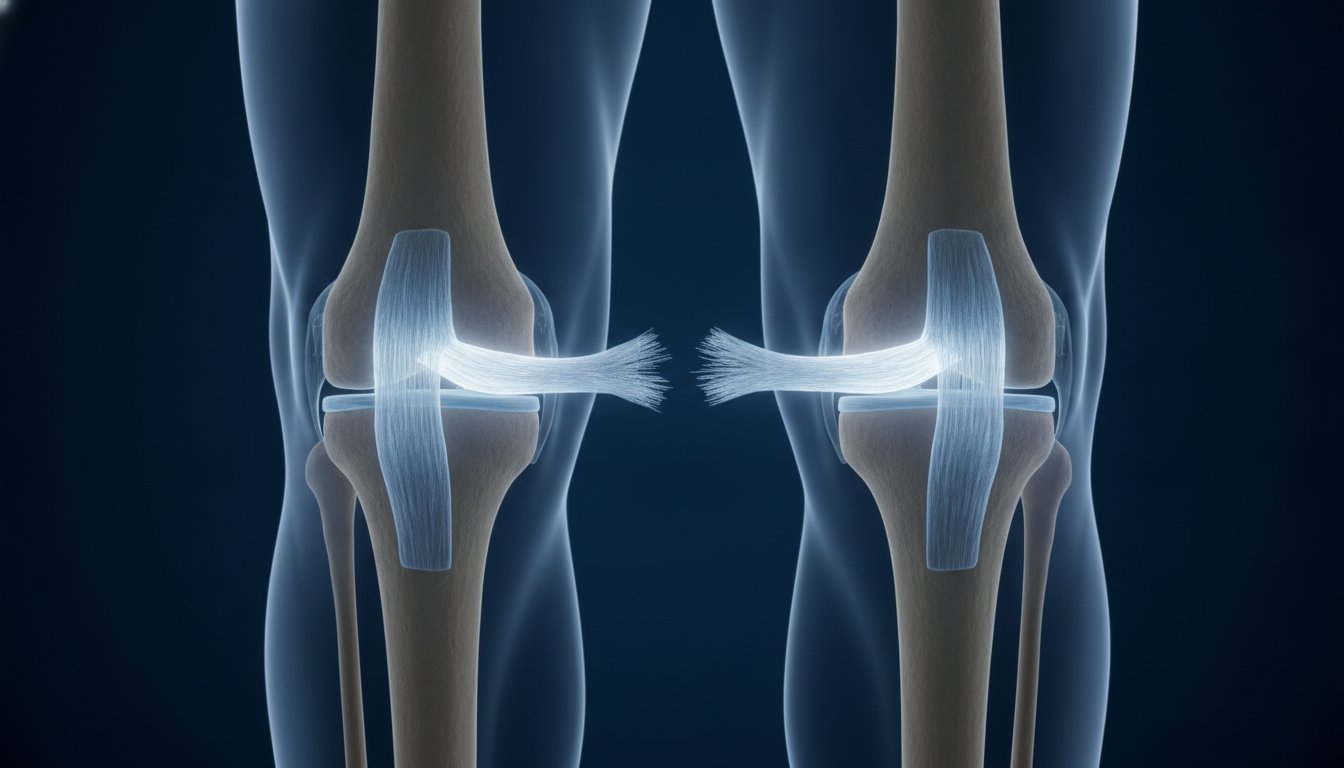
Did you know that six years after surgery, only 5.7% of patients treated with a BEAR implant show signs of osteoarthritis, compared to a staggering 33% of those who received traditional grafts? For many active individuals near Belleville, an ACL tear feels like a countdown to chronic joint pain. You might be worried about the long-term health of your knee or feel hesitant about the invasive nature of harvesting your own tendons for a reconstruction. If you’re looking for a specialized BEAR implant surgeon Belleville NJ, you’re likely searching for a way to preserve your body’s natural anatomy rather than replacing it.
This article provides a clear look at how the revolutionary BEAR® Implant allows your body to heal its own native ACL using a bio-engineered collagen sponge. You’ll learn why this procedure must typically happen within 50 days of your injury and how local, board-certified expertise in Nutley can streamline your recovery. We’ll cover everything from the science of ligament restoration to the convenience of receiving advanced orthopaedic care right in your neighborhood.
Key Takeaways
- Understand why restoring your natural ACL is a superior alternative to traditional reconstruction methods that replace the ligament with a donor or autograft.
- Discover how the BEAR® Implant eliminates the need for harvesting your own healthy tendons, significantly reducing surgical trauma and preserving your anatomy.
- Find out how a board-certified BEAR implant surgeon Belleville NJ can help you navigate the critical timeframe required for optimal biologic healing.
- Explore the structured recovery phases that prioritize protecting the healing tissue while safely restoring your range of motion and strength.
- Identify the specific clinical criteria and tear types that make you an ideal candidate for this minimally invasive restoration procedure.
Seeking a BEAR Implant Surgeon in Belleville, NJ? Modern ACL Restoration
North Jersey’s active population, from high school athletes in Belleville to weekend warriors in Nutley, faces a high incidence of ACL tears. Historically, the only path forward was reconstruction, a process that involves replacing the torn ligament with tissue from another part of the body or a donor. However, finding a specialized BEAR implant surgeon Belleville NJ allows patients to access a restorative approach that was once unavailable. This technology focuses on healing the patient’s original tissue rather than discarding it. It’s a shift from simply “fixing” a joint to truly restoring its natural biological function.
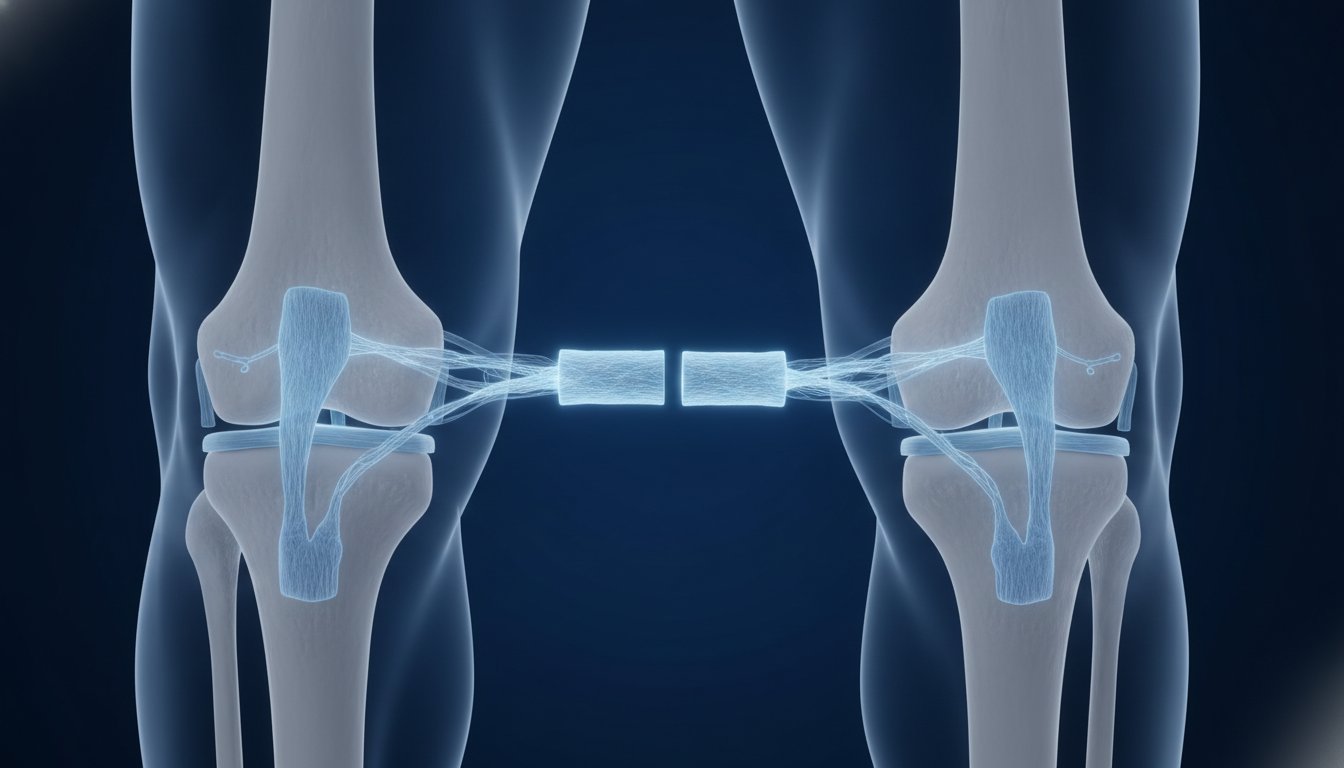
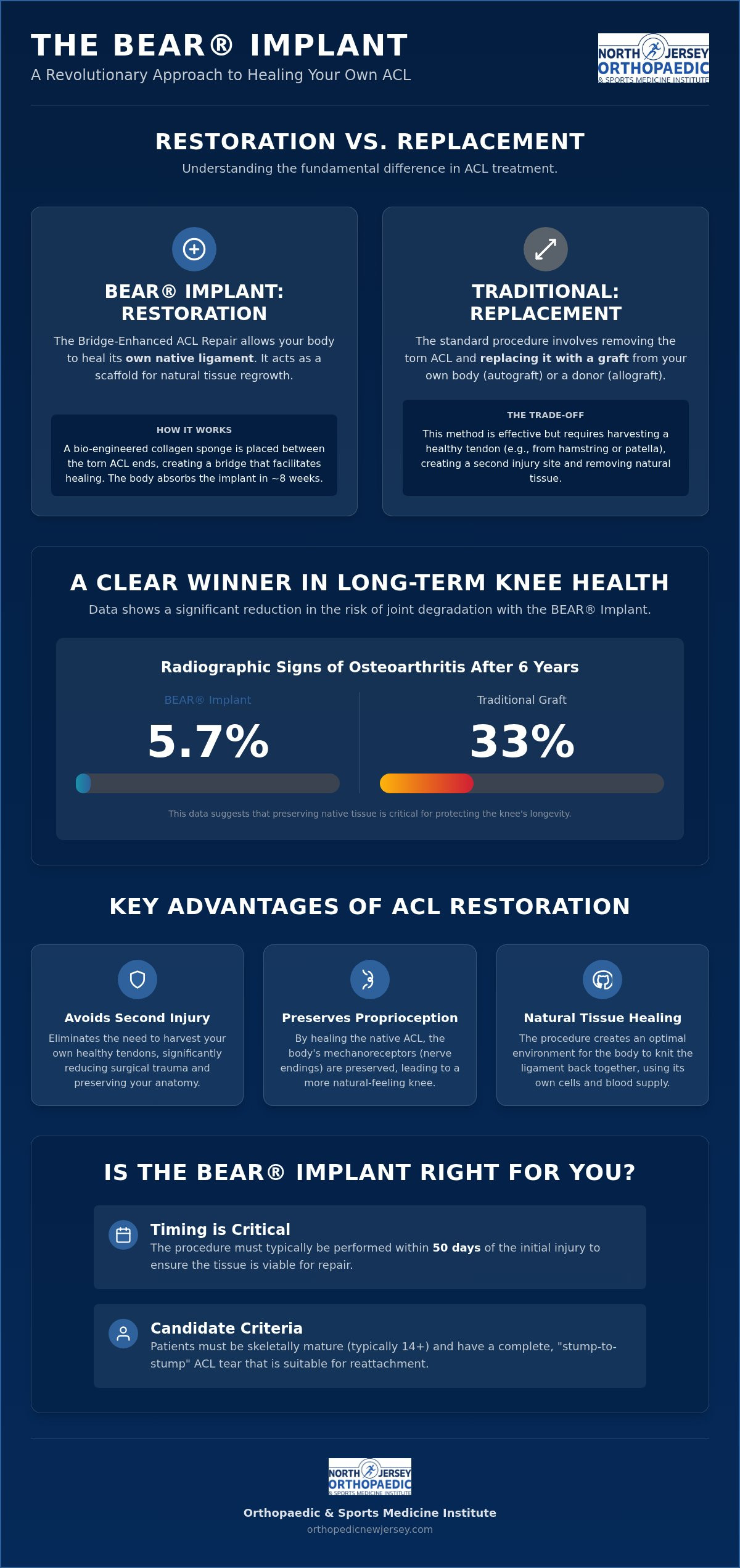
The Bridge-Enhanced ACL Repair (BEAR®) Implant is a bio-engineered collagen sponge that stabilizes the blood clot between the two ends of a torn ACL. It is the first FDA-approved technology for native ACL healing. By providing this structural bridge, the implant enables the body to migrate its own cells into the gap and knit the ligament back together. Within approximately eight weeks, the body resorbs the collagen sponge, leaving behind a healed, functional native ligament.
The Paradigm Shift: From Replacement to Restoration
Traditional Bridge-Enhanced ACL Restoration (BEAR) techniques rely on an autograft or allograft to create a new ligament. While effective, this “replacement” model often leads to donor site morbidity or a loss of natural proprioception, which is the body’s ability to sense the joint’s position in space. The BEAR implant represents a fundamental shift. It treats the ACL like a broken bone that can heal, provided it has the right environment. Because the native nerve fibers are preserved, many patients report that the knee feels more natural during recovery compared to those who undergo traditional reconstruction.
Why Local Expertise Matters for Your ACL Journey
Choosing a BEAR implant surgeon Belleville NJ isn’t just about the surgery itself. It’s about the comprehensive care that follows. The first few weeks after a BEAR procedure are critical for the resorption of the collagen sponge and the initial stages of tissue growth. Having a board-certified specialist at The Orthopaedic & Sports Medicine Institute in Nutley ensures that Belleville residents can attend frequent post-operative evaluations without the stress of a long commute. We are committed to bringing this new standard of care to our community, integrating surgical precision with local rehabilitation standards to optimize every patient’s outcome.
BEAR Implant vs. Traditional ACL Reconstruction: A Comparison
For decades, the clinical standard for a ruptured anterior cruciate ligament has been reconstruction. This process involves removing the remaining native tissue and replacing it with a graft, typically harvested from your own hamstring or patellar tendon. While functional, this method essentially creates a second injury site. When you consult with a BEAR implant surgeon Belleville NJ, you’re exploring a restorative alternative that avoids this trade-off. Instead of a replacement, the BEAR procedure uses a bio-engineered collagen sponge to facilitate the healing of your original ligament.
The differences in long-term joint health are becoming increasingly clear. A 2026 clinical review highlighted a significant disparity in post-traumatic osteoarthritis rates. Six years after surgery, only 5.7% of patients treated with the BEAR implant showed radiographic signs of osteoarthritis. In contrast, 33% of patients who received traditional hamstring autografts showed similar signs of joint degradation. This data suggests that preserving the native tissue may be a critical factor in protecting the knee’s longevity.
Preserving Your Native Ligament and Proprioception
One of the most profound advantages of restoration is the preservation of mechanoreceptors. These tiny nerve endings in your natural ACL tell your brain where your knee is in space, a sense known as proprioception. Traditional reconstruction destroys these nerves. Because the BEAR procedure allows the original tissue to knit back together, it preserves the natural blood supply and neural pathways. Duke Health explains the BEAR procedure as a way to let the torn ACL heal itself, which often results in a knee that feels more “natural” to the patient during high-level athletic pivots and turns.
Graft-Related Complications You Can Avoid
By choosing restoration, you eliminate the risks associated with graft harvesting. Patients undergoing traditional reconstruction often struggle with permanent hamstring weakness or chronic pain when kneeling if a patellar tendon graft was used. Using a donor graft (allograft) carries its own set of risks, including slower integration and a slightly higher risk of infection. The BEAR implant resorbs into the body within about eight weeks, leaving no foreign material or harvested tissue behind. Recent 2026 data from the Bridge Registry shows a 5% retear rate for BEAR, which is highly competitive with traditional graft-based methods. If you’re weighing these options, it’s beneficial to consult with an orthopedic specialist who understands the nuances of native ligament restoration.
Are You a Candidate for Bridge-Enhanced ACL Repair?
Determining your eligibility for native ligament restoration requires a precise clinical evaluation. Unlike traditional reconstruction, which can often be performed months or even years after an injury, the BEAR procedure is time-sensitive. A BEAR implant surgeon Belleville NJ must assess the quality of your remaining tissue to ensure it can successfully integrate with the collagen sponge. While many active individuals are ideal candidates, specific biological and diagnostic criteria must be met to ensure the best possible outcome for your recovery.
The primary factor for candidacy is the location and nature of the tear. The BEAR implant is specifically designed for mid-substance tears where the ligament ends can be approximated. In March 2025, the FDA expanded clearance for the BEAR implant to include children, adolescents, and those with partial tears, making this technology accessible to a broader range of patients than ever before. However, patients with certain inflammatory conditions or those whose ACL has completely pulled away from the bone (avulsion) may still require traditional methods.
The Importance of the 50-Day Timeline
The most critical factor in your eligibility is what surgeons call the “Golden Window.” For the BEAR implant to function as a scaffold for new tissue growth, the procedure must typically be performed within 50 days of the initial injury. During this period, the native ACL fibers remain viable and capable of healing. If you wait too long, the ligament stumps begin to retract and scar over, losing the biological potential necessary for the bridge to work. Immediate consultation after a knee injury is vital for BEAR eligibility, as it allows your surgeon to schedule the procedure before this window closes.
What to Expect During Your Initial Consultation
Your journey begins with a comprehensive physical examination at our Nutley office, conveniently located for those seeking a BEAR implant surgeon Belleville NJ. During this visit, we perform specialized clinical tests, such as the Lachman test and the Pivot Shift test, to assess the degree of knee laxity and instability. These manual assessments are paired with high-resolution MRI reviews to visualize the exact location of the tear and the health of the surrounding tissue.
We believe in a highly personalized approach to care. By consulting with a minimally invasive orthopedic surgery NJ expert, you’ll receive a detailed analysis of your imaging and a clear explanation of your surgical options. We consider your age, specific sports goals, and daily activity levels to customize a treatment plan that prioritizes the long-term biological integrity of your knee joint. If you’ve recently suffered a knee injury, the first step is obtaining a definitive diagnosis to see if restoration is still an option for you.
The BEAR Implant Recovery Journey in Belleville
The recovery process following a BEAR procedure is a deliberate, phased journey designed to protect the biological “bridge” while your body heals. When working with a BEAR implant surgeon Belleville NJ, you’ll find that the protocol differs significantly from traditional reconstruction. In a reconstruction, the graft is mechanically strong on day one. With the BEAR implant, we are fostering the growth of new tissue, which requires a more cautious initial approach to ensure the ligament fibers knit together securely.
This restorative path is built on patience and biological timing. Because we aren’t just replacing a part but rather encouraging your body to regenerate its own, the early stages focus heavily on protecting the delicate cellular migration occurring within the knee. This specialized care ensures that the resulting ligament is as strong and functional as the original.
A Specialized Post-Operative Protocol
During Phase 1, which spans from surgery through week four, the primary goal is protection. You’ll use a specialized brace typically locked in extension to prevent unnecessary stress on the healing tissue. Weight-bearing is strictly restricted during these first few weeks. This limitation is essential because the bio-engineered collagen sponge is actively stabilizing the blood clot that will become your new ACL. By roughly week eight, your body completely resorbs the implant, replacing it with native tissue.
We monitor your progress closely at our Nutley facility. Frequent check-ups allow us to adjust your range of motion settings on the brace as your healing progresses. This high-touch approach is a hallmark of our patient-centered care. We ensure that every milestone, from the first time you put weight on the leg to your first unassisted step, is managed with clinical precision. This proximity to Belleville makes these frequent, necessary evaluations much more manageable for our patients.
Returning to Sport: The North Jersey Athlete’s Path
Transitioning back to an active lifestyle requires collaboration between your surgical team and local rehabilitation experts. We frequently coordinate with physical therapists in Belleville and Clifton to ensure your recovery remains on track. Unlike traditional methods, clinical evidence suggests that BEAR patients often experience a faster recovery of muscle strength, particularly in the quadriceps, because no donor tissue was harvested.
A safe return to play is not determined by the calendar alone. We use objective testing criteria to evaluate your progress. This includes symmetry in muscle strength between the injured and healthy leg, stability during functional movements like hopping, and the successful completion of a progressive running program. Most athletes begin a return-to-run program around the six-month mark, with a goal of returning to competitive sports between nine and twelve months. If you are ready to begin your restoration journey, you can schedule a consultation with our team to discuss your specific recovery timeline.
Expert ACL Care at The Orthopaedic & Sports Medicine Institute
Residents in Belleville often feel they must travel to major academic centers in Manhattan or Philadelphia to access cutting-edge medical treatments. However, finding a specialized BEAR implant surgeon Belleville NJ is possible right here in Nutley. At The Orthopaedic & Sports Medicine Institute, we combine the high-level expertise of a board-certified surgeon with the personalized attention of a community-focused practice. Our goal is to provide a seamless transition from your initial injury to a successful BEAR implant ACL repair New Jersey, ensuring you don’t have to sacrifice convenience for quality.
Our facility is strategically located to serve patients from Belleville, Nutley, Bloomfield, and Clifton. This proximity is vital for the frequent post-operative check-ups and specialized rehabilitation sessions required for native ligament restoration. We understand that an ACL tear is a significant life event. We prioritize a patient-centered approach that values transparency, clear communication, and a shared commitment to your long-term joint health.
Board-Certified Expertise in Modern Orthopedics
Success in restorative surgery depends heavily on the surgeon’s precision and experience with advanced biological scaffolds. Our focus on minimally invasive orthopedic surgery NJ allows us to perform the BEAR procedure through small incisions, which helps reduce trauma to the surrounding knee structures. This methodology is particularly beneficial for athletes who want to preserve as much of their natural anatomy as possible.
We remain at the forefront of surgical innovation by integrating the latest industry trends and clinical data into our practice. By choosing a BEAR implant surgeon Belleville NJ who is board-certified, you’re ensuring that your care meets the highest professional standards in sports medicine. We don’t just treat the injury; we evaluate the entire biomechanical function of your knee to prevent future issues and promote a lasting recovery.
Your Recovery Starts Here in North Jersey
Time is of the essence when dealing with an ACL rupture. Because the BEAR procedure must typically be performed within 50 days of the injury, we offer streamlined scheduling for patients with acute knee trauma. During your initial appointment in Nutley, we’ll review your high-resolution MRI and conduct a thorough clinical exam to determine if you’re a candidate for restoration. Please bring any previous imaging reports and a list of your specific activity goals to this consultation.
Taking the first step toward healing your native ACL is a decision that can protect your joint for decades to come. If you’re ready to explore a restorative path that avoids the need for a graft, we’re here to guide you. You can request a consultation today to secure your priority evaluation and begin your journey back to the activities you love.
Restore Your Natural ACL Function
The choice to restore your native ACL rather than replace it with a graft represents a significant advancement in orthopedic science. By preserving your original ligament, you maintain the natural nerve endings and blood supply that are essential for long-term joint stability and proprioception. It’s important to remember that the 50-day window for candidacy makes immediate action necessary after a knee injury. Finding an expert BEAR implant surgeon Belleville NJ allows you to receive this high-level, restorative care without the burden of a long commute for your frequent follow-up evaluations.
Our board-certified team at The Orthopaedic & Sports Medicine Institute is dedicated to providing specialized, minimally invasive solutions that prioritize your biological healing. We offer a structured, patient-centered recovery path right here in Nutley, ensuring you have the expert support needed for a safe return to competitive sports and daily activities. You don’t have to settle for traditional reconstruction when a restorative alternative is available in your neighborhood.
Schedule Your BEAR Implant Consultation in Nutley Today
Your path to a stronger, more natural-feeling knee begins with a definitive diagnosis and a personalized treatment plan. We look forward to guiding you through every step of your recovery journey.
Frequently Asked Questions
Is the BEAR implant better than traditional ACL surgery?
The BEAR implant is often considered a superior option for patients who prioritize preserving their natural anatomy and avoiding the morbidity of a graft harvest. While traditional reconstruction replaces the ligament with a tendon from another site, the BEAR procedure restores your native tissue. Clinical studies from 2026 indicate that this restorative approach leads to significantly lower rates of post-traumatic osteoarthritis six years after surgery compared to traditional hamstring autografts.
How long does the BEAR implant surgery take?
The surgical procedure typically takes between 60 and 90 minutes to complete. It is performed as a minimally invasive, outpatient surgery at our facility near Belleville, allowing most patients to return home the same day. During this time, the surgeon carefully prepares the torn ligament ends and secures the bio-engineered collagen sponge, which then acts as a scaffold to facilitate the body’s natural healing process.
Will my insurance cover the BEAR implant procedure in New Jersey?
Most major insurance providers in New Jersey currently cover the BEAR implant and the associated post-operative rehabilitation as of June 2026. The billing and coding for this procedure are generally consistent with traditional ACL reconstruction, which helps streamline the approval process. We recommend that patients bring their insurance information to their initial evaluation so our team can help verify specific coverage details and out of pocket requirements.
What is the success rate of the BEAR implant compared to reconstruction?
The success rate of the BEAR implant is highly competitive with traditional graft-based methods. Recent 2026 data from the Bridge Registry shows a 5% retear rate, which is comparable to standard reconstruction outcomes. Furthermore, many patients experience a faster return of quadriceps muscle strength because the surgeon does not need to harvest a healthy tendon from the patient’s own body to create a graft.
Can the BEAR implant be used for old ACL tears?
The BEAR implant is generally not an option for chronic or “old” ACL tears that occurred months or years ago. For the restoration to be successful, the native ligament tissue must still be viable and capable of healing. Once the tissue has retracted or significant scarring has occurred, the bridge can no longer facilitate a repair. In these cases, traditional reconstruction remains the recommended clinical standard for restoring knee stability.
How soon after an ACL tear should I see a BEAR implant surgeon?
You should schedule an evaluation with a BEAR implant surgeon Belleville NJ as soon as possible after a suspected injury. Because the procedure must typically be performed within the 50-day “Golden Window” to ensure tissue viability, early intervention is critical. Delaying your consultation could result in the loss of your eligibility for this restorative technique, leaving reconstruction as your only surgical option.
Is the BEAR implant made of natural or synthetic material?
The BEAR implant consists of a bio-engineered collagen sponge derived from bovine sources. It is designed to be a temporary scaffold rather than a permanent synthetic fixture in your joint. Your body naturally resorbs the collagen material within approximately eight weeks, replacing it with your own native ACL tissue. This process ensures that no foreign material or hardware remains in the knee long-term after the ligament has healed.
What are the risks associated with the BEAR implant?
Risks include standard surgical concerns such as infection, joint stiffness, or the potential for a retear if the protocol is not followed. While a BEAR implant surgeon Belleville NJ uses minimally invasive techniques to minimize trauma, the early recovery phases are delicate. Patients must strictly adhere to weight-bearing restrictions and specialized bracing requirements during the first several weeks to ensure the healing tissue is protected as it bridges the gap.