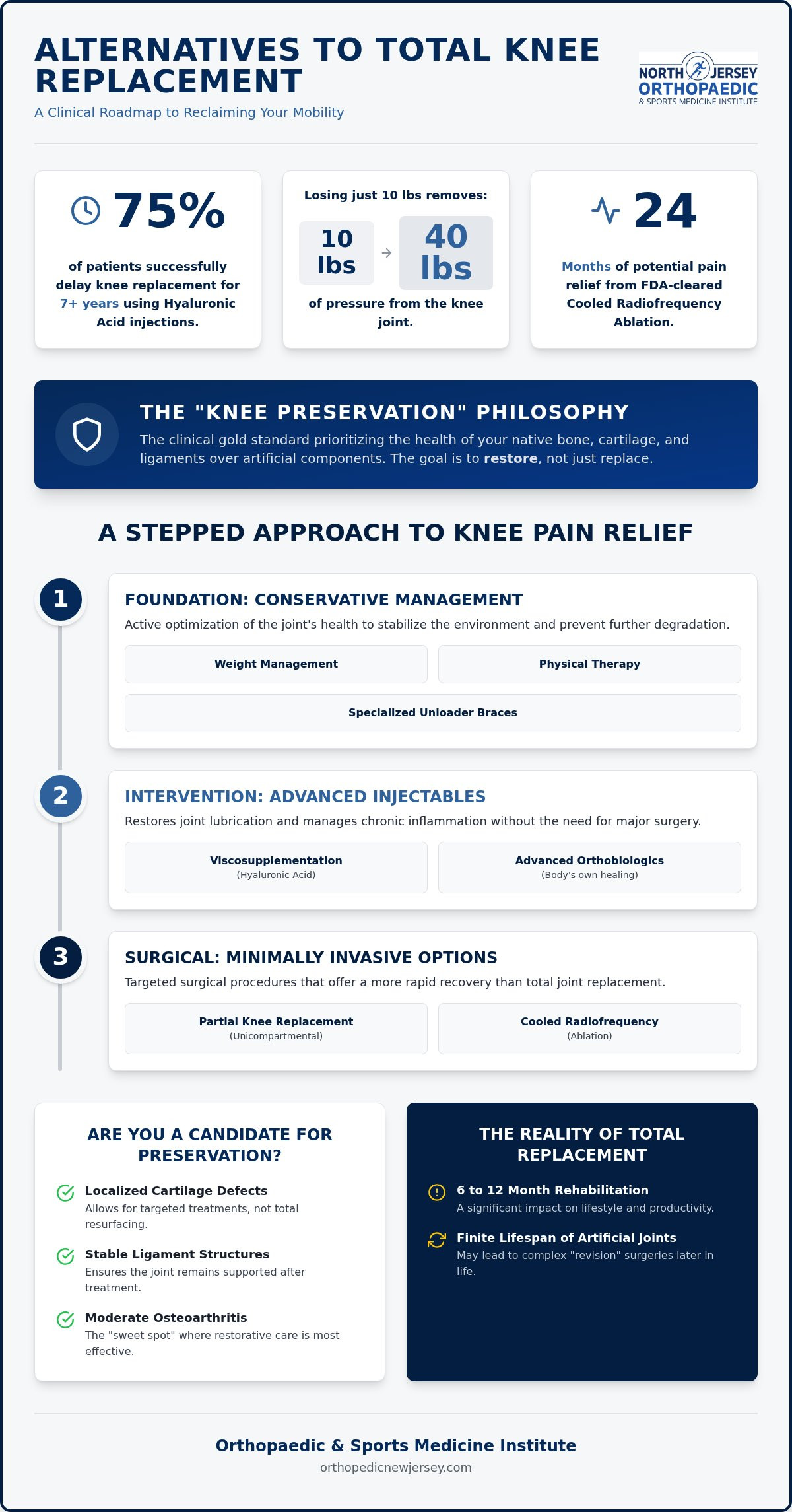
Did you know that approximately 75% of patients who receive hyaluronic acid injections successfully delay the need for a total knee replacement by seven years or more? For many in North Jersey, the persistent ache during a walk through Brookdale Park or a sharp sting on the tennis court isn’t just a physical burden; it’s a threat to an active lifestyle. You may feel caught between the fear of a major operation and the confusion of conflicting medical advice. If you’re exploring knee replacement alternatives NJ specialists provide, you’re likely seeking a path that prioritizes joint preservation over aggressive reconstruction.
This guide offers a clinical roadmap to the latest non-surgical and minimally invasive treatments available to help you reclaim your mobility. You’ll discover how advanced interventions, such as FDA-cleared cooled radiofrequency ablation, can provide up to 24 months of relief. We’ll also examine precision-guided viscosupplementation and other evidence-based options that bridge the gap between traditional physical therapy and the operating room. Our goal is to help you return to the hobbies you love with confidence, avoiding the grueling recovery of a total replacement through professional, specialized guidance.
Key Takeaways
- Learn why the “Knee Preservation” philosophy is the clinical gold standard, prioritizing the health of your native bone and ligaments over artificial joint components.
- Discover how losing just 10 pounds can remove 40 pounds of mechanical pressure from your knee joint, significantly enhancing the efficacy of North Jersey rehabilitation programs.
- Explore the role of advanced orthobiologics and viscosupplementation in restoring joint lubrication and managing chronic inflammation without the need for major surgery.
- Understand the diagnostic criteria for minimally invasive surgical options, such as partial knee replacement, which often offer a more rapid recovery than total joint surgery.
- Identify the essential steps for developing a personalized care plan for knee replacement alternatives NJ specialists recommend to exhaust all conservative options first.
What Are Knee Replacement Alternatives and Why Seek Them First?
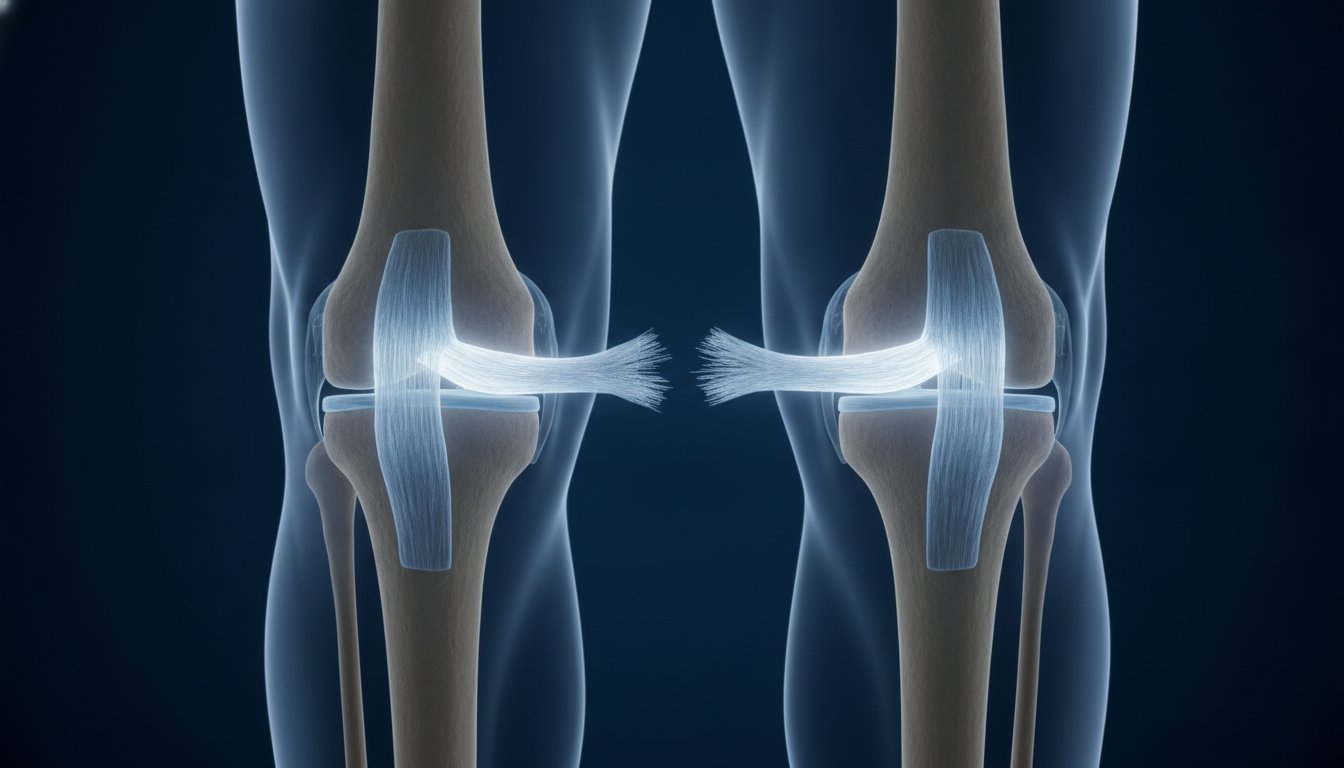
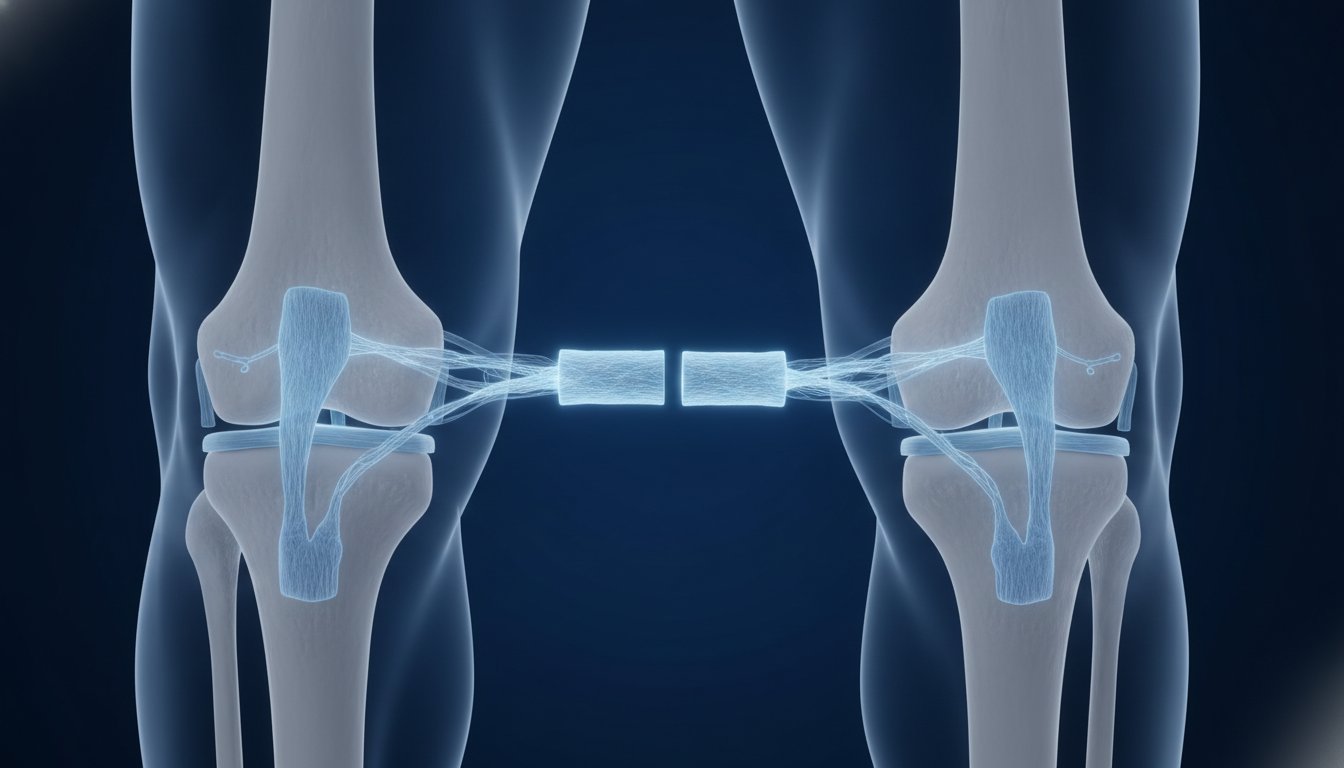
Knee replacement alternatives encompass a broad spectrum of medical interventions designed to restore joint mechanics and alleviate pain while specifically avoiding the introduction of artificial hardware. For many patients in North Jersey, the goal isn’t just to stop the pain but to preserve the biological integrity of the knee. This “Knee Preservation” philosophy represents the clinical gold standard in Nutley orthopedics. By prioritizing your native bone, cartilage, and ligaments, we maintain the natural proprioception and “feel” of the joint that a prosthetic simply cannot replicate.
Early intervention is the cornerstone of successful joint preservation. When you address symptoms of Osteoarthritis in their early or mid-stages, you have access to a much wider range of knee replacement alternatives NJ specialists can offer. Waiting until the joint has reached a state of advanced collapse often limits your options. Proactive care allows us to use minimally invasive techniques that stabilize the joint before irreversible damage occurs, effectively shifting the focus from “replacement” to “restoration.”
The Hidden Costs of Total Knee Replacement
A total joint replacement is a significant physiological event that requires a substantial commitment to recovery. Most patients face a 6 to 12 month rehabilitation timeline before they feel fully restored to their pre-injury activity levels. This is a considerable impact on your lifestyle and professional productivity. Beyond the time commitment, there’s the reality of “revision” surgery. Artificial joints have a finite lifespan. For younger, active patients in the North Jersey area, undergoing a total replacement too early may necessitate a more complex, invasive revision procedure later in life. This is why we exhaust every conservative and minimally invasive option first.
Who is a Candidate for Knee Preservation?
Determining your eligibility for preservation starts with a clinical evaluation of your symptoms and lifestyle. You might be an ideal candidate if you experience mechanical “catching,” localized swelling, or pain that fluctuates with activity. We utilize high-resolution imaging to assess the joint space accurately. While an X-ray might show a “bone-on-bone” appearance, a detailed physical exam and MRI often reveal that specific compartments of the knee are still healthy. Many patients are surprised to learn that even with significant wear, they don’t always require an immediate total replacement. We look for several clinical indicators:
- Localized cartilage defects that can be addressed with targeted treatments rather than total resurfacing.
- Stable ligament structures that support the success of joint preservation techniques.
- Moderate osteoarthritis that responds well to advanced orthobiologics and lifestyle modifications.
If you’re still able to perform daily tasks but find that chronic pain is limiting your peak performance, you’re likely in the “sweet spot” for restorative care. Our diagnostic process focuses on identifying exactly where the joint is failing to provide a tailored, less disruptive solution.
Conservative Management: The Foundation of Knee Pain Relief
Successful recovery starts with foundational shifts in how you move and manage joint stress. Many patients seeking knee replacement alternatives NJ specialists recommend find that clinical outcomes improve significantly when mechanical load is addressed first. Conservative management for knee pain focuses on stabilizing the joint environment to prevent further degradation. This phase of care isn’t just a waiting period; it’s an active process of optimizing the joint’s biological health before considering more invasive measures.
Mechanical stress is a primary driver of cartilage wear. For every pound you lose, you remove four pounds of pressure from the knee joint during daily activities. This means a modest 10-pound weight loss equates to a 40-pound reduction in force with every step you take. We often combine these efforts with specialized unloader braces. These devices are engineered to shift pressure from a damaged compartment, typically the medial side, to a healthier area of the joint. This mechanical “unloading” can immediately extend your walking distance and reduce the daily need for oral pain medications. For those seeking additional support through specialized orthopedic aids, you can explore Insumos para curaciones at Ortopedia Suiza to assist in your recovery.
The ‘NJ Active’ Exercise Protocol
Residents near Nutley have access to excellent resources for low-impact conditioning, which is essential for joint longevity. We prioritize exercises that strengthen the glutes and the Vastus Medialis Obliquus (VMO). This specific muscle group acts as a natural stabilizer for the patella. We often remind patients that “motion is lotion.” Controlled movement encourages the production of synovial fluid, which lubricates the joint naturally. Transitioning from high-impact sports like running on hard pavement to low-impact alternatives like cycling or swimming preserves the cartilage while maintaining cardiovascular fitness. If you’re unsure which exercises are safe for your specific condition, a consultation with a board-certified specialist can help define a safe path forward.
Anti-Inflammatory Strategies
Managing systemic inflammation is equally critical for long-term comfort. While NSAIDs are common, we often recommend medical-grade topical gels to minimize potential gastrointestinal side effects. Nutrition also plays a role in your recovery. Diets rich in Omega-3 fatty acids and antioxidants can help manage joint swelling from the inside out. We focus on a holistic approach that combines these strategies into a cohesive plan. For many patients, integrating specialized spinal alignment from Chiropractic Lifestyle Family Practice P.C. helps ensure that the body’s overall mechanics support joint health. Conservative care has its limits, though. If your pain remains recalcitrant despite dedicated physical therapy and lifestyle changes, it’s time to evaluate advanced biological options that go beyond traditional symptom management.
Advanced Injectables and Orthobiologics: Beyond Cortisone
Biological interventions represent a significant advancement for patients who haven’t found sufficient relief through physical therapy alone. When exploring knee replacement alternatives NJ residents often prioritize treatments that address the underlying inflammatory environment of the joint. While traditional corticosteroid injections offer rapid, temporary relief for acute flare-ups, they don’t contribute to long-term joint health. In fact, repetitive use can lead to cartilage degradation. This is why our clinical focus has shifted toward orthobiologics and viscosupplementation, which aim to support the joint’s natural environment.
Viscosupplementation involves injecting hyaluronic acid, a naturally occurring substance found in healthy synovial fluid, directly into the knee. Think of this as “greasing the gears” of the joint. It restores the lubricating properties of the fluid, reducing friction and allowing for smoother movement. According to Johns Hopkins Medicine on knee replacement alternatives, these injections are particularly effective for patients with mild to moderate osteoarthritis who wish to delay surgical intervention.
Platelet-Rich Plasma (PRP) therapy utilizes your body’s own healing mechanisms. We draw a small sample of your blood, concentrate the platelets, and reinject them into the joint space. These concentrated growth factors work to modulate the inflammatory response and potentially support the health of existing tissues. For these treatments to be effective, precision is paramount. We utilize ultrasound-guided technology for every injection. Research indicates that “blind” injections can miss the joint space up to 30% of the time, whereas imaging ensures the medication is delivered exactly where it’s needed.
The concept of using the body’s own regenerative potential is a growing trend across multiple medical disciplines. For instance, while orthopedics uses these methods for joint health, aesthetic medicine utilizes similar biostimulation techniques for skin health; you can visit RJ Clinic to explore how these innovative treatments promote natural tissue restoration in other fields.
PRP vs. Hyaluronic Acid: Which is Right for You?
Choosing the right knee replacement alternatives NJ specialists provide requires a nuanced understanding of your specific pathology. Hyaluronic acid is primarily a mechanical lubricant, while PRP is a biological modulator. Many patients experience relief for six months to a year, though some clinical studies suggest that combining these therapies may offer synergistic benefits. A board-certified surgeon should always oversee this plan to ensure the injectable choice aligns with your long-term joint preservation goals and clinical history.
The Future of Orthobiologics in North Jersey
The field of orthobiologics is rapidly evolving. In May 2026, the FDA granted fast-track designation to 4P004, an intra-articular GLP-1 agonist analog, signaling a move toward more targeted biochemical treatments for osteoarthritis. While some providers promote unproven “miracle” cures, we remain committed to evidence-based protocols. As of July 2026, the FDA hasn’t approved any stem cell product for osteoarthritis, and Medicare does not cover these therapies for joint pain. If biological injectables don’t provide the desired outcome, we transition to minimally invasive orthopedic surgery NJ options that offer a middle ground between conservative care and total joint replacement.
Minimally Invasive Surgical Alternatives: The Middle Ground
Many patients view orthopedic care as a binary choice between physical therapy and total joint replacement. However, a significant “middle ground” exists within the clinical spectrum. These minimally invasive surgical options allow for targeted correction of specific joint defects while leaving healthy tissue undisturbed. By utilizing advanced arthroscopic techniques, we reduce surgical trauma to the surrounding Nutley patient’s muscle tissue, which facilitates a faster return to daily activities. These procedures represent some of the most sophisticated knee replacement alternatives NJ specialists offer to those who aren’t ready for the finality of a prosthetic joint.
Arthroscopic debridement is a primary example of this targeted approach. We utilize high-definition cameras and specialized instruments to clean out “loose bodies,” such as bone spurs or torn meniscus fragments, that cause mechanical catching and pain. By stabilizing these internal structures, we can often halt the inflammatory cycle that accelerates joint wear. This philosophy of native tissue preservation is a cornerstone of modern orthopedics, ensuring that we only address the damaged components of the joint while protecting your natural anatomy.
Partial vs. Total Knee Replacement
If your arthritis is confined to a single compartment of the knee, a partial knee replacement (PKR) is often a superior clinical choice. The primary advantage of a partial procedure is the preservation of your native Anterior Cruciate Ligament (ACL) and Posterior Cruciate Ligament (PCL). These ligaments provide the essential stability and sensory feedback required for complex movements. Because the healthy bone and ligaments remain intact, the joint typically feels more “natural” during activity than a total prosthetic. North Jersey surgical centers specializing in these techniques often see reduced blood loss and significantly faster discharge times compared to total joint procedures. For patients dealing with specific ligament injuries, BEAR implant ACL repair New Jersey options provide a revolutionary way to heal your native tissue rather than replacing it with a graft.
Arthroscopic Meniscus Repair
A torn meniscus is a common catalyst for progressive arthritis. When the meniscus is damaged, it can no longer distribute weight evenly across the joint, leading to accelerated cartilage loss. Arthroscopic repair uses a “keyhole” surgery approach to stabilize these tears through very small incisions. The recovery timeline for these procedures is measured in weeks, allowing you to return to light activity far sooner than traditional open surgery. By addressing these mechanical issues early, we can often delay or entirely eliminate the need for more invasive reconstructions later in life. If you’re experiencing localized pain or mechanical locking, schedule a diagnostic evaluation with our board-certified surgeon to explore these muscle-sparing alternatives.
Developing Your Personalized Knee Preservation Plan in Nutley, NJ
Creating an effective strategy to avoid joint replacement requires more than just a list of procedures. It demands a structured, clinical framework that adapts to your specific biological response. For residents in Nutley, Bloomfield, and the surrounding North Jersey communities, this journey begins with a commitment to joint preservation rather than immediate reconstruction. A personalized plan ensures that every available conservative and minimally invasive option is utilized in its proper sequence, maximizing the lifespan of your natural knee. When exploring knee replacement alternatives NJ patients deserve a clear roadmap that moves from the least disruptive to the more specialized interventions.
The diagnostic process follows a logical progression of four essential steps:
- Step 1: Comprehensive Evaluation. This includes high-resolution diagnostic imaging and a thorough physical exam with a board-certified surgeon to identify the precise stage of joint wear.
- Step 2: Exhaustive Conservative Care. We prioritize medical-grade physical therapy and precision-guided injections, as discussed in earlier sections, to stabilize the joint environment.
- Step 3: Minimally Invasive Evaluation. If conservative measures don’t meet your functional goals, we evaluate targeted surgical options like partial replacements or arthroscopic debridement.
- Step 4: Goal Setting and Maintenance. We establish realistic benchmarks for pain-free living, whether that involves walking the trails in local parks or returning to competitive sports.
Why Board Certification Matters for Your Knee
There is a significant clinical difference between a general “joint specialist” and a board-certified orthopedic surgeon. A surgeon’s deep understanding of internal anatomy and surgical outcomes actually makes them better equipped to manage non-surgical care. They know exactly when a conservative treatment is likely to succeed and, more importantly, when it’s failing. This perspective prevents you from wasting months on ineffective “miracle” cures. During your first consultation, ask your NJ orthopedic surgeon about their experience with native ligament preservation and their specific success rates with minimally invasive techniques. This transparency is the anchor of a trusted patient-doctor relationship.
Taking the Next Step Toward Relief
Preparation is key to a productive clinical consultation. When you visit our Nutley office, bring all previous X-rays, MRIs, and a detailed history of past treatments, including specific injection dates and physical therapy progress notes. This data allows us to bypass redundant testing and move directly into advanced decision-making. If you’re ready to transition from managing pain to restoring function, consulting an Orthopedic sports medicine specialist NJ ensures you’re receiving care that aligns with the highest professional standards. Our focus is on providing the most sophisticated knee replacement alternatives NJ has to offer, helping you maintain an active lifestyle without the need for total joint surgery.
Reclaiming Your Mobility Through Joint Preservation
The path to long-term joint health is rarely a straight line from chronic pain to a total replacement. As we’ve explored, the clinical gold standard is a hierarchical approach that prioritizes the integrity of your native anatomy. By combining foundational lifestyle modifications with advanced orthobiologics and precision-guided injectables, many patients successfully restore function without the need for major hardware. When conservative measures reach their limit, minimally invasive surgical options provide a targeted solution that preserves your ligaments and significantly accelerates your recovery timeline.
Navigating the various knee replacement alternatives NJ specialists provide requires a diagnostic mindset and professional expertise. Our practice is dedicated to serving the Nutley, Clifton, and Bloomfield communities with a focus on these less disruptive interventions. As a board-certified orthopedic surgeon specialized in minimally invasive techniques, I evaluate each patient through the lens of joint preservation first. You don’t have to accept chronic pain as an inevitable part of aging or jump straight to a total joint reconstruction. If you’re ready to explore a personalized recovery plan, Schedule a Consultation with our Board-Certified Knee Specialist in Nutley today. We look forward to helping you return to the active lifestyle you enjoy.
Frequently Asked Questions
Is there a permanent alternative to knee replacement?
There isn’t a single “permanent” cure for advanced joint degeneration, but a combination of knee replacement alternatives NJ specialists provide can manage symptoms for decades. The goal of a preservation plan is to maintain your natural joint function as long as possible. For many patients, this clinical approach effectively eliminates the need for total replacement by stabilizing the joint and slowing the progression of wear.
How long can you delay knee surgery with injections?
Clinical evidence suggests that many patients successfully delay surgery for several years through a structured injection protocol. A study on viscosupplementation found that 75% of patients delayed total replacement by seven years or more. Newer options like COOLIEF radiofrequency ablation, which is FDA-cleared, can provide targeted pain relief for up to 24 months. Individual results vary based on the severity of your joint wear and activity levels.
Does insurance cover PRP or regenerative knee treatments in NJ?
Medicare and most private insurance plans in New Jersey currently cover physical therapy and hyaluronic acid injections, but they generally don’t cover PRP or stem cell therapies. Patients should be aware that the 2026 ACA out-of-pocket maximum is $9,450 for an individual. Because regenerative treatments are often considered elective, it’s essential to verify your specific plan’s coverage for orthobiologics before beginning a treatment course.
Can physical therapy actually regrow knee cartilage?
Physical therapy can’t regrow lost cartilage, but it’s highly effective at improving the mechanical environment of the knee. By strengthening the supporting musculature, therapy reduces the direct load on the articular surfaces. This stabilization prevents further degradation and manages pain. While it doesn’t replace the biological tissue, it optimizes the function of the remaining cartilage to keep you active and mobile.
What is the newest alternative to total knee replacement in 2026?
One of the most significant advancements in 2026 is the FDA’s Fast Track designation for 4P004, an intra-articular GLP-1 agonist analog designed to treat knee osteoarthritis. Additionally, large-scale Phase III clinical trials for umbilical cord blood-derived mesenchymal stem cell therapy began in early 2026. These emerging treatments represent the next frontier in biochemical joint management, offering hope for more targeted, non-surgical relief in a clinical setting.
Is a partial knee replacement considered a major surgery?
A partial knee replacement is a surgical procedure, but it’s significantly less disruptive than a total joint replacement. It involves resurfacing only the damaged compartment while preserving your healthy bone and ligaments. Patients typically experience less blood loss and a more rapid return to function. Because it’s a minimally invasive technique, many individuals are discharged from North Jersey surgical centers on the same day as their procedure.
How do I know if I’m ‘too young’ for a knee replacement?
Being “too young” is usually a clinical assessment of the risk for future revision surgery. Artificial joints have a finite lifespan; if you receive one in your 40s or 50s, you’ll likely require a complex revision later. We prioritize joint preservation for younger patients to keep their natural anatomy intact as long as possible. Your surgeon will evaluate your pain levels and functional needs against these long-term mechanical risks.
Will weight loss really stop my knee pain?
Weight loss is one of the most powerful tools for reducing knee pain because of the mechanical leverage involved in joint movement. Losing just one pound of body weight removes four pounds of pressure from the knee joint during daily activities. This reduction in force can significantly decrease inflammation and slow the rate of cartilage wear. While it may not reverse existing damage, it often makes other conservative treatments much more effective. If you are looking for medical support to achieve these weight goals and protect your joints, check out My NuEra Rx.