What if the structural damage appearing on your MRI isn’t the primary cause of your shoulder pain? For many patients in North Jersey, the fear of a long recovery following arthroscopic labral tear surgery NJ is a significant burden that often leads to delayed care. You might feel a deep, localized ache or a catching sensation during overhead movements, leaving you wondering if you’re facing months of downtime from your career or favorite sports. It’s common to feel overwhelmed by the technical jargon and the pressure to choose between living with pain or undergoing an invasive procedure.
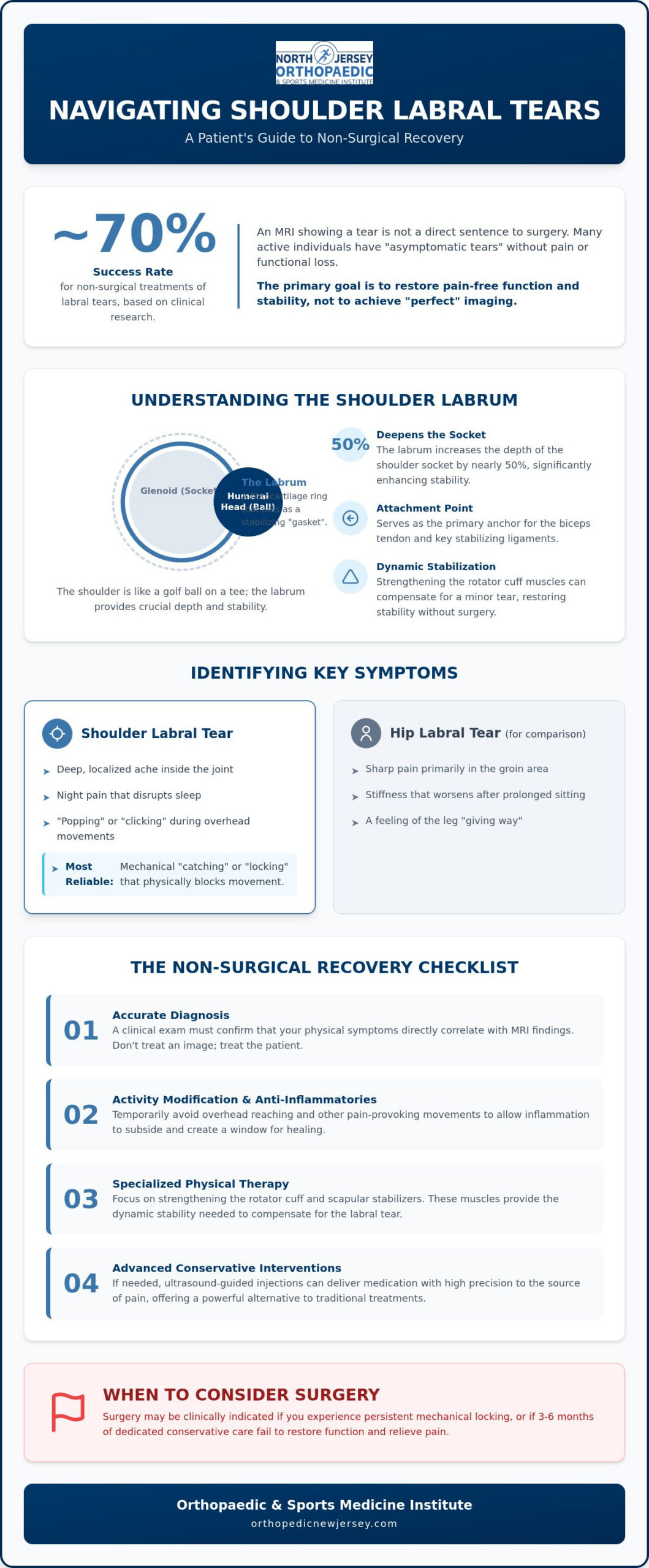
We understand that your goal is a return to pain-free movement without the disruption of a major operation. Clinical research indicates that non-surgical treatments for labral tears, including specialized physical therapy—such as the expert rehabilitation provided by RED Physiotherapy—and targeted injections, have a success rate of approximately 70%. This article provides a clear, structured roadmap to help you identify specific labral tear shoulder symptoms and navigate a conservative recovery path available in Nutley and the surrounding Essex County area. You’ll discover why prioritizing functional stability over “perfect” imaging can be the fastest route to regaining your strength and avoiding the operating table.
Key Takeaways
- Understand why a labrum tear doesn’t always require an operation, as many functional adults have structural changes without experiencing localized pain.
- Access a structured 2026 recovery checklist that prioritizes precise diagnosis and the identification of specific shoulder impingement zones.
- Learn about advanced conservative interventions, such as ultrasound-guided injections, which offer a high-precision alternative to traditional treatments.
- Recognize the mechanical red flags that signal a failure of conservative care and determine when arthroscopic labral tear surgery NJ is clinically indicated.
- Find out how our Nutley-based specialist uses a patient-centered approach to restore overhead movement while minimizing professional and athletic downtime.
Understanding the Labrum: Why Tears Don’t Always Mean Surgery
The shoulder joint is a marvel of mobility, often compared to a golf ball sitting on a shallow tee. To provide the necessary depth and stability, a specialized ring of fibrocartilage called the glenoid labrum lines the rim of the socket. This structure serves as a critical gasket, deepening the socket by nearly 50 percent and acting as the primary attachment point for the biceps tendon and various stabilizing ligaments. While a disruption to this tissue sounds catastrophic, a labral tear is a structural disruption that requires functional compensation. In many cases, the body can adapt without surgical intervention.
Many active adults in North Jersey live with labral tears and don’t even realize it. Clinical research frequently identifies “asymptomatic tears” in overhead athletes and individuals over the age of 40 who report no pain or functional loss. This phenomenon occurs because the shoulder is a dynamic system; if the surrounding musculature is healthy, it can often stabilize the joint despite minor structural imperfections. While imaging may suggest a significant injury, the decision to undergo arthroscopic labral tear surgery NJ depends heavily on whether the tear is causing mechanical limitations or just structural changes on a screen.
We distinguish between two primary types of injury: traumatic and degenerative. Traumatic tears, such as a SLAP (Superior Labrum from Anterior to Posterior) injury, often result from a sudden fall on an outstretched arm or a heavy lifting incident. Degenerative wear, conversely, happens gradually as the tissue loses its elasticity over time. Regardless of the cause, our clinical focus remains on restoring your quality of life through the most conservative means possible.
Labral Tear Shoulder Symptoms vs. Hip Symptoms
Patients often present with confusion regarding the source of their discomfort, particularly because labral tissue exists in both the shoulder and the hip. Shoulder labral symptoms typically involve a deep, localized ache within the joint, night pain that disrupts sleep, and a distinct “popping” sensation during overhead reaching. In contrast, hip labral issues usually manifest as sharp groin pain or stiffness that worsens after sitting for long periods, such as a commute through Nutley or Bloomfield. The most reliable indicator for a shoulder tear is a mechanical “catching” or “locking” sensation that physically prevents smooth movement.
The Anatomy of Non-Surgical Healing
The success of conservative labral tear shoulder treatment relies on the principle of dynamic stabilization. If the labrum is the “gasket,” the rotator cuff is the “engine” that keeps the humeral head centered in the socket. By specifically strengthening the rotator cuff and scapular stabilizers, we can often compensate for a minor tear. This rehabilitation process helps maintain the “negative pressure” seal within the joint, which is essential for passive stability. If the rotator cuff is sufficiently conditioned, many patients find they don’t need arthroscopic labral tear surgery NJ to return to their baseline activity levels in sports or the workplace.
The Non-Surgical Labral Tear Recovery Checklist for 2026
Transitioning from a diagnosis to a functional recovery requires a systematic approach that prioritizes joint mechanics over simply masking pain. While many patients assume that a structural issue necessitates an immediate operation, clinical data suggests that non-surgical interventions have a success rate of approximately 70 percent. This success depends on following a precise order of operations to ensure the joint is protected while the surrounding musculature is conditioned to compensate for the injury. Before considering arthroscopic labral tear surgery NJ, we recommend completing this structured checklist to determine if your shoulder can achieve stability through conservative means.
- Step 1: Obtain an accurate labral tear diagnosis in New Jersey. A clinical examination must correlate your physical pain with imaging findings, as a Shoulder Labrum Tear often appears on MRIs of patients who are entirely asymptomatic.
- Step 2: Implement activity modification. This involves identifying and temporarily removing movements that enter “impingement zones,” where the humeral head pinches the damaged labral tissue.
- Step 3: Begin targeted neuromuscular re-education. You must train the scapular stabilizers to provide a solid foundation for the shoulder blade, reducing the load on the labrum itself.
- Step 4: Monitor for mechanical symptoms. If joint locking, catching, or giving way persists despite six weeks of dedicated rehab, it may indicate a flap of tissue that requires a more direct intervention.
Phase 1: Inflammation Management and Protection
The initial goal is to break the cycle of chronic inflammation. You must identify trigger movements that aggravate the joint; common culprits include heavy bench presses, behind-the-neck lat pulldowns, or repetitive overhead throws. During this phase, we utilize strategic icing and anti-inflammatory protocols to quiet the joint. Sleep positioning is also vital for patients in Nutley and surrounding areas. We advise against sleeping on the affected side and suggest using a pillow to support the arm, which prevents the shoulder from “dropping” and tensioning the labrum overnight.
Phase 2: Functional Stability and Strength
Once pain is managed, the focus shifts to building a “dynamic sleeve” around the joint. Working with a sports medicine physical therapist in Clifton or Bloomfield is essential for mastering proprioception. This involves training the joint’s sensory receptors to react quickly to movement, providing stability even when the labrum is compromised. We place a heavy emphasis on the serratus anterior and lower trapezius muscles. Correcting these kinetic chain deficiencies ensures that the shoulder blade moves in harmony with the arm. If you are struggling to find the right starting point, consulting a specialist for a labral tear shoulder treatment plan can help you avoid the downtime associated with arthroscopic labral tear surgery NJ.
Advanced Conservative Therapies Available in North Jersey
When physical therapy alone doesn’t provide the expected relief, advanced clinical interventions can often bridge the gap between persistent pain and the need for arthroscopic labral tear surgery NJ. A board-certified orthopedic surgeon in NJ evaluates candidates for these therapies by determining if the pain is truly intra-articular. We often utilize diagnostic blocks, which involve injecting a local anesthetic into the joint space to see if your symptoms temporarily vanish. If the pain subsides, it confirms the labrum as the primary pain generator, allowing us to move forward with a targeted therapeutic plan.
Precision is the most critical factor in the success of these treatments. Traditional “blind” injections, which rely on external anatomical landmarks, frequently fail to reach the deep, narrow recesses where a Shoulder Labrum Tear is located. At our Nutley facility, we use high-resolution ultrasound guidance for every procedure. This technology allows us to visualize the needle in real-time, ensuring that therapeutic agents are delivered directly to the damaged tissue rather than into the surrounding muscle or fat, which often leads to the false assumption that conservative care has failed.
Corticosteroids and Hyaluronic Acid
Corticosteroid injections are highly effective tools for “quieting” a hot, inflamed joint. By rapidly reducing swelling within the joint capsule, these shots can break a chronic pain cycle and open a window of opportunity for more aggressive physical therapy. However, we manage expectations carefully; steroids provide temporary relief rather than structural repair. We also limit the frequency of these injections, as repetitive steroid use can potentially compromise the long-term health of the surrounding articular cartilage.
The Role of Regenerative Options
For patients dealing with chronic labral irritation or degenerative wear that hasn’t responded to rest, orthobiologic options like Platelet-Rich Plasma (PRP) offer a modern alternative. PRP utilizes a concentrated dose of your own growth factors to signal the body’s natural repair mechanisms. These therapies are most effective when applied during a specific “healing window”-typically after the initial acute inflammation has subsided but before the joint has developed advanced secondary arthritis. To achieve the best outcomes, these biological treatments must be paired with high-level neuromuscular re-education to ensure the joint remains stable as it recovers. This comprehensive approach helps many of our North Jersey patients return to their active lifestyles while avoiding the significant downtime associated with arthroscopic labral tear surgery NJ.
When to Consider Arthroscopic Labral Tear Surgery in NJ
While we emphasize a “biological first” approach, surgery becomes a necessary clinical consideration when the structural integrity of the joint prevents functional progress. In the medical community, we define the “failure of conservative care” as a period of three to six months where dedicated physical therapy and advanced injections haven’t restored your quality of life. If you’ve reached this threshold without significant improvement, arthroscopic labral tear surgery NJ may be the most predictable path toward long-term stability and pain relief.
Specific mechanical red flags often dictate the transition from conservative management to a surgical consult. If you experience persistent joint locking, catching, or a sensation that the shoulder is “giving way” during routine tasks in Nutley, it typically indicates a physical flap of tissue that cannot be resolved through strengthening alone. Additionally, persistent night pain that prevents restorative sleep is a major indicator that the joint inflammation has become chronic and requires direct intervention. Utilizing minimally invasive orthopedic surgery in NJ allows us to address these structural issues through small incisions, which significantly reduces trauma to the surrounding muscles and accelerates your return to work or sports.
The Quality of Life Assessment
Deciding on surgery is a collaborative process between the patient and the specialist. You can use this simple three-question test to evaluate your current status:
- Does your shoulder pain prevent you from completing a full day of work or household responsibilities?
- Are you unable to participate in the sports or recreational activities that define your lifestyle?
- Has your range of motion decreased despite consistent rehabilitation efforts?
If the answer to two or more of these is “yes,” it’s time to discuss surgical options. Balancing the desire to avoid surgery against the risk of further joint damage is vital. Waiting too long when a mechanical tear is present can sometimes lead to secondary shoulder arthritis, as the joint surfaces rub together unevenly.
Modern Arthroscopic Repair vs. Debridement
Modern surgical techniques are highly tailored to the specific nature of your injury. A “debridement” is essentially a clinical cleanup where frayed edges of the labrum are smoothed to prevent catching. This typically has a faster recovery timeline. Conversely, a full labral anchor repair involves reattaching the torn tissue to the bone, which requires a more deliberate recovery period to ensure the biological bond is secure. Having a local Nutley surgeon is vital for this post-operative phase, as frequent monitoring ensures your rehabilitation stays on track. If you’re ready to discuss your options with a board-certified specialist, schedule a surgical consultation to determine the best path forward for your specific injury.
Specialized Labral Care at The Orthopaedic & Sports Medicine Institute
The Orthopaedic & Sports Medicine Institute serves as a specialized resource for patients seeking clarity after a shoulder injury. Our clinic in Nutley, NJ, is designed around a patient-centered model where surgery is viewed as a definitive solution only after conservative options are exhausted. We believe that a board-certified specialist should act as a consultant who guides you through the recovery process, helping you determine if functional stability can be achieved without invasive measures. This dedication to non-operative labral tear shoulder treatment ensures that our patients receive the most modern, least disruptive care available.
Recovery doesn’t happen in isolation. We’ve cultivated a robust network of trusted physical therapy partners in Lyndhurst, Kearny, and North Arlington to ensure your rehabilitation is seamless and geographically convenient. By coordinating closely with local therapists, we ensure that every phase of your recovery checklist is monitored with clinical precision. If your symptoms eventually require arthroscopic labral tear surgery NJ, our surgical team utilizes minimally invasive techniques to preserve as much healthy tissue as possible, facilitating a faster return to your professional and athletic life.
Serving Essex and Passaic Counties
Our Nutley office provides convenient access for residents of Bloomfield, Clifton, and Belleville who are struggling with joint instability. We specialize in treating a broad spectrum of injuries, from acute athletic SLAP tears to the complex degenerative wear often seen in active adults. Our commitment to minimally invasive methodology means we prioritize techniques that limit post-operative discomfort and maximize long-term joint health. We understand the local community’s needs and provide a boutique, high-level alternative to large hospital systems.
Your Path Back to Performance
Your first diagnostic consultation is a comprehensive session focused on more than just imaging results. We integrate your specific lifestyle goals, whether that involves returning to competitive sports or simply reaching overhead without pain, into a personalized recovery roadmap. We analyze your movement patterns and identify the functional gaps that need to be addressed. If a structural repair through arthroscopic labral tear surgery NJ is clinically indicated, we provide a transparent overview of the procedure and the expected recovery timeline. Schedule your labral tear evaluation in Nutley today to begin a structured journey toward pain-free movement.
Regain Your Active Lifestyle in North Jersey
Recovering from a labral tear doesn’t always require a trip to the operating room. By following a structured roadmap that prioritizes functional stability and utilizing advanced, ultrasound-guided interventions, many patients find relief without significant downtime. We’ve seen that strengthening the surrounding musculature can effectively compensate for structural changes, allowing you to return to the activities you love. However, if mechanical symptoms like locking or persistent night pain continue to interfere with your daily life, arthroscopic labral tear surgery NJ remains a highly successful, minimally invasive option for restoring joint integrity.
Our board-certified orthopedic surgeon specializes in both conservative management and modern surgical techniques, providing personalized care to the communities of Nutley, Bloomfield, and Clifton. We’re here to act as your consultant, ensuring you have a clear understanding of every treatment phase. Don’t let shoulder pain dictate your physical limits any longer. Consult with a Labral Tear Specialist in Nutley, NJ to develop a recovery plan tailored to your specific goals. You have the power to move forward with confidence and reclaim your performance.
Frequently Asked Questions
Can a labral tear heal on its own without surgery?
Labral tissue has a limited blood supply, which means it doesn’t typically reattach to the bone or knit back together on its own. However, many patients achieve a symptom-free state because the surrounding muscles learn to stabilize the joint effectively. You don’t necessarily need the labrum to be structurally perfect to have a high-functioning, pain-free shoulder in your daily life.
How long does non-surgical treatment for a labral tear take?
A standard non-surgical recovery period typically spans three to six months. The first few weeks focus on reducing inflammation and protecting the joint from aggravating movements. Subsequent months are dedicated to progressive strengthening of the rotator cuff. If you don’t see functional progress within this timeframe, it’s appropriate to discuss arthroscopic labral tear surgery NJ with a board-certified specialist.
What exercises should I avoid if I have a shoulder labral tear?
You should avoid movements that place the shoulder in high-stress positions, such as heavy bench presses, overhead military presses, and behind-the-neck lat pulldowns. These exercises can pinch the damaged labral tissue between the bone surfaces. Dips and wide-grip pullups also tend to aggravate the joint by increasing the shearing forces on the labrum, which can delay your recovery progress.
Is physical therapy effective for a torn labrum?
Physical therapy is highly effective and serves as the primary treatment for the majority of patients. Clinical data indicates that conservative management, centered on specialized rehabilitation, has a success rate of approximately 70 percent. By improving the dynamic stability of the shoulder, therapy allows the rotator cuff to take over the stabilizing duties of the damaged labrum, often eliminating the need for surgery.
Will a labral tear get worse if I don’t have surgery?
A labral tear won’t necessarily enlarge over time, but untreated mechanical instability can lead to secondary issues. If the joint remains loose, the articular cartilage can wear down prematurely, potentially leading to early-onset shoulder arthritis. Monitoring your symptoms with a professional ensures that you aren’t ignoring red flags that could complicate your long-term joint health or surgical outcomes later.
How do I know if my labral tear treatment is working?
You’ll know your treatment is successful when you experience a significant reduction in night pain and a return of smooth overhead movement. A key indicator of progress is the disappearance of mechanical symptoms, such as the clicking or catching sensations that previously hindered your activities. Consistent improvements in your strength and range of motion are signs that your dynamic stabilizers are compensating effectively.
Are cortisone shots recommended for labral tears?
Cortisone injections are often recommended to manage acute inflammation and break a cycle of chronic pain. While these shots don’t repair the structural tear, they can quiet the joint enough to allow you to participate more fully in physical therapy. We typically use ultrasound-guided injections to ensure the medication reaches the precise area of irritation within the joint capsule for maximum efficacy.
Can I still play sports with a labral tear?
Many athletes successfully return to their sports after completing a comprehensive rehabilitation program. Your ability to play depends on the sport’s demands and the severity of your symptoms. While a pitcher or a competitive swimmer might eventually require arthroscopic labral tear surgery NJ to regain elite-level performance, many recreational athletes find they can play pain-free through dedicated maintenance and targeted strength training.