What if that persistent, deep ache in your shoulder or hip isn’t a permanent sentence to the sidelines, but a treatable condition that doesn’t always require a major operation? Many patients in North Jersey struggle with the frustrating sensation of a joint that feels like it’s “catching” or “locking” during simple movements. If you’re searching for labral tear treatment options NJ specialists provide, you’ve likely felt the fear that a diagnosis means months of grueling recovery. It’s exhausting to lose sleep because of joint instability or to wonder if you’ll ever return to your favorite sport.
You deserve a clear path back to your active lifestyle without unnecessary delays. This guide explores the full spectrum of non-surgical and minimally invasive interventions designed to restore your mobility and eliminate pain. We’ll examine the critical differences between shoulder and hip labrum pathology and show you how a board-certified surgeon in Nutley or Lyndhurst can tailor a recovery plan to your specific needs. From advanced diagnostic protocols to modern procedural solutions, you’ll learn exactly how to regain the stability required for pain-free movement.
Key Takeaways
- Differentiate between shoulder and hip labral pathology and the specific way each injury impacts your joint’s structural stability.
- Learn why provocative physical testing is a critical diagnostic tool for identifying the mechanical “catching” sensations associated with labral damage.
- Explore the most effective labral tear treatment options NJ specialists recommend for managing acute pain and inflammation without immediate surgery.
- Compare arthroscopic debridement and re-anchoring techniques to understand which minimally invasive surgical approach best supports your long-term recovery goals.
- Discover how working with a board-certified expert in Nutley or Lyndhurst provides a tailored, community-focused alternative to large hospital networks.
Understanding Labral Tears: Shoulder vs. Hip Injuries
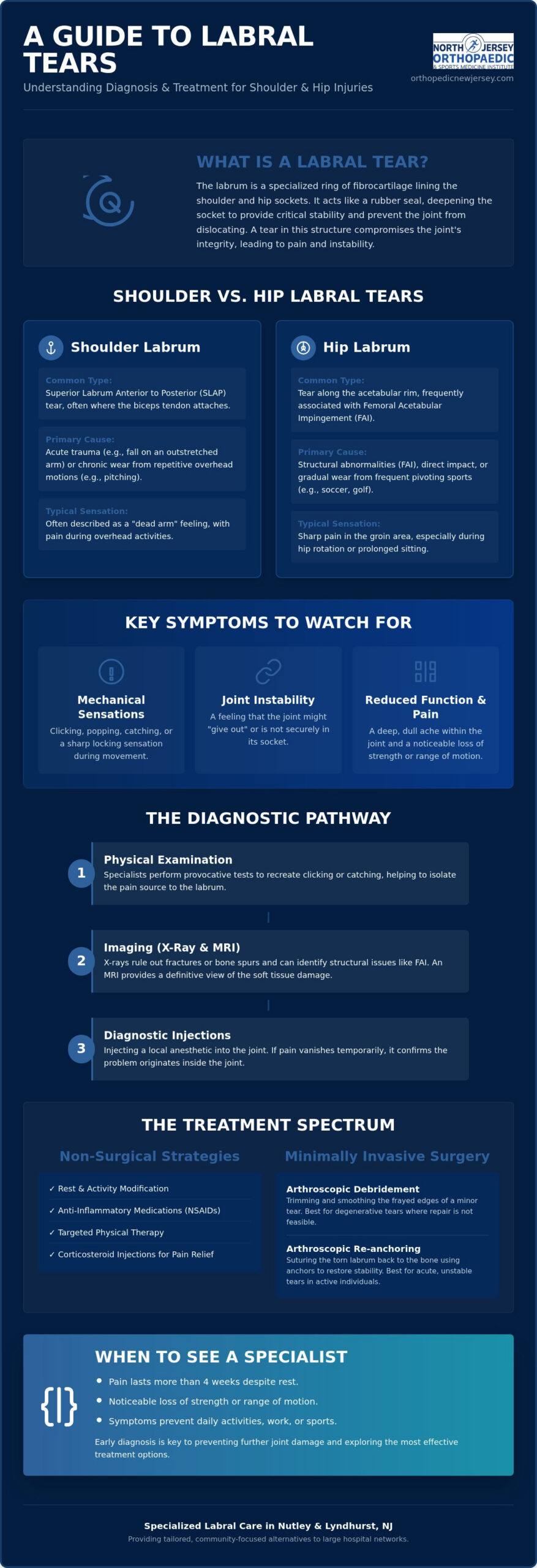
The labrum is a specialized ring of fibrocartilage that lines the sockets of the shoulder and hip joints. By deepening the socket, it provides a crucial seal that maintains joint pressure and prevents the ball of the joint from slipping out of place. The labrum serves as the essential stabilizer for ball-and-socket joints. While many discussions regarding Understanding Acetabular Labral Tears focus exclusively on the hip, it’s vital to recognize that the shoulder is equally susceptible to these injuries.
In the shoulder, a Superior Labrum Anterior to Posterior (SLAP) tear often occurs at the point where the biceps tendon attaches to the labrum. This differs significantly from hip labral tears, which involve the acetabular rim and often result from structural abnormalities like femoral acetabular impingement (FAI). Whether the injury is in the upper or lower extremity, identifying the right labral tear treatment options NJ residents need starts with understanding these anatomical nuances.
Causes generally fall into two categories: acute trauma or chronic wear. A sudden fall on an outstretched arm or a direct impact on the hip can cause immediate tearing. Conversely, athletes involved in repetitive overhead motions, such as baseball pitchers, or those in sports requiring frequent pivoting, like soccer players, may develop tears through gradual degradation of the tissue. Understanding the mechanism of injury is the first step toward a successful recovery.
Symptoms That Signal a Labrum Injury
Identifying a labral tear can be challenging because the pain often feels internal and diffuse. Unlike a muscle strain, which is easy to point to, labral pain is typically described as a deep, dull ache. Patients often report the following symptoms:
- Mechanical Sensations: You might experience clicking, catching, or a sharp locking sensation when moving the joint through its full range.
- Joint Instability: A hallmark of this injury is the feeling that the joint might “give out” or is no longer securely seated in the socket.
- Reduced Function: You may notice a “dead arm” sensation in the shoulder or a sharp pain in the groin area during hip rotation.
When to See a Specialist in Nutley, NJ
Minor joint irritation often resolves with rest, but labral tears are structural issues that rarely heal on their own without professional intervention. Seeking a consultation at our Nutley facility is recommended if you experience persistent pain lasting more than four weeks despite activity modification. We also advise an evaluation if you have a noticeable loss of strength or a restricted range of motion that prevents participation in sports or daily work. Early diagnosis is key to exploring the most effective labral tear treatment options NJ specialists offer before the condition leads to secondary issues like accelerated joint wear.
Diagnostic Options for Labral Tears in New Jersey
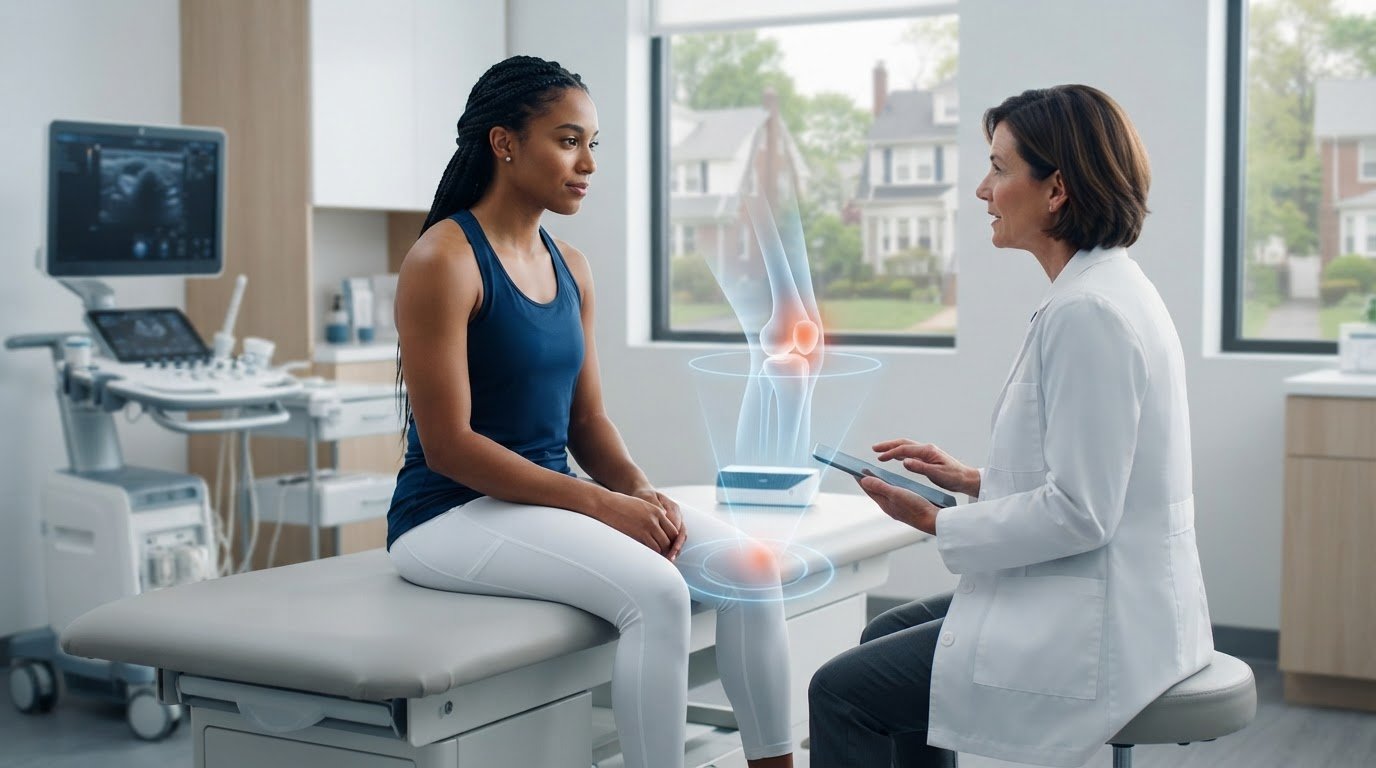
Determining the source of deep joint pain requires a methodical diagnostic approach. A clinical evaluation always begins with a detailed physical examination where a specialist performs provocative testing. These maneuvers are designed to recreate the specific mechanical symptoms, such as clicking or catching, that you experience during daily activities. By stressing the joint in specific planes of motion, a physician can often isolate whether the pathology lies within the labrum or the surrounding musculature. This initial step is vital for narrowing down the most appropriate labral tear treatment options NJ specialists might recommend.
While standard X-rays are a routine part of the initial workup, they cannot visualize the fibrocartilage of the labrum itself. Instead, we utilize X-rays to rule out concurrent issues like fractures or bone spurs. In many cases, structural abnormalities such as femoral acetabular impingement (FAI) are visible on X-ray and provide context for why a labral tear occurred. However, for a definitive diagnosis of the soft tissue, we must transition to more advanced modalities.
The Role of Diagnostic Injections
Diagnostic injections serve as a powerful tool for localized confirmation. By injecting a local anesthetic directly into the joint space, we can observe your immediate response to pain relief. If your symptoms vanish temporarily after the injection, it confirms that the pain originates from within the joint rather than from external structures like the bursa or tendons. This distinction is critical when evaluating various labral tear treatment options, as it ensures we are targeting the true source of your discomfort. Patients typically experience only mild pressure during the procedure, which is performed in a controlled clinical setting.
Advanced Imaging: MRI vs. MRA
Magnetic Resonance Imaging (MRI) is the standard for joint visualization, but a Magnetic Resonance Angiogram (MRA) is often preferred for suspected labral detachments. An MRA involves a small amount of contrast dye injected into the joint, which seeps into any tears and makes them significantly easier to identify on the scan. Residents in Nutley and Bloomfield have access to high-resolution imaging centers that specialize in these specific orthopedic protocols. The resulting images dictate the transition from conservative management to more advanced interventions.
Accurate interpretation of these scans is as important as the technology itself. A board-certified orthopedic evaluation ensures that imaging findings are correlated with your clinical symptoms to avoid over-diagnosis or unnecessary procedures. If you are experiencing persistent joint instability, reaching out to an orthopedic specialist in Nutley is the most effective way to secure a precise diagnosis and begin your recovery journey.
Non-Surgical Labral Tear Treatment Strategies
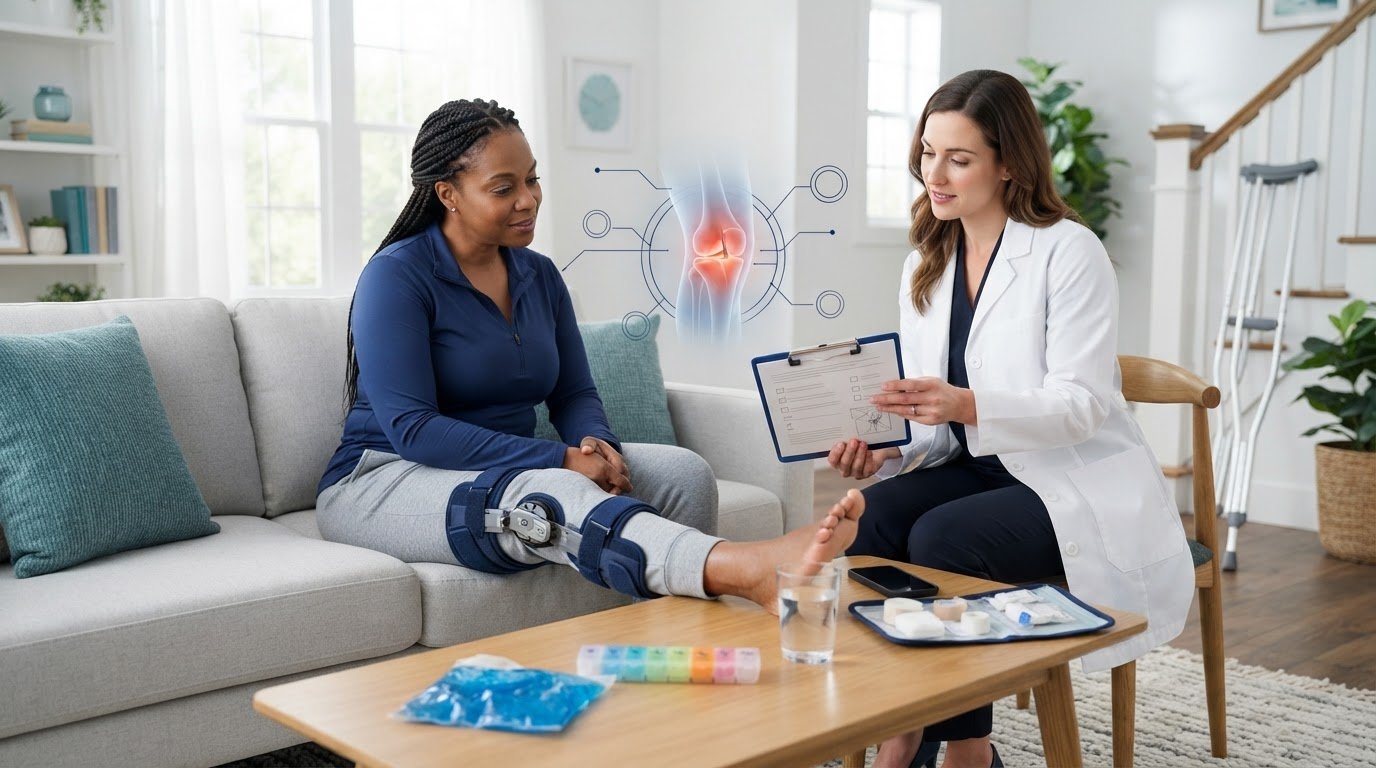
Not every labral injury requires a trip to the operating room. For many patients, the primary goal is managing inflammation and restoring mechanical balance through non-invasive means. We begin by identifying “trigger” movements that aggravate the joint and cause pain flare-ups. For a shoulder injury, this often involves avoiding heavy overhead lifting. For a hip injury, it might mean limiting deep squatting or repetitive pivoting. When exploring labral tear treatment options NJ patients can access, these conservative modifications form the foundation of a successful recovery plan.
Anti-inflammatory protocols also play a vital role in the early stages of treatment. Over-the-counter medications or prescribed anti-inflammatories help reduce the swelling within the joint capsule. This reduction in pressure often alleviates the “catching” sensation that makes daily activities difficult. However, these medications are most effective when paired with a structured rehabilitation program designed by a board-certified specialist.
Physical Therapy and Functional Rehabilitation
Physical therapy is the most critical component of non-surgical care. Since the labrum provides structural stability, its compromise requires the surrounding “stabilizer” muscles to compensate. In the shoulder, we focus on rotator cuff strengthening to keep the humeral head centered in the socket. For hip injuries, gluteal activation is essential to prevent excessive shearing forces on the acetabular rim. By choosing the right labral tear treatment options NJ specialists recommend, patients can often avoid surgery while seeing significant functional improvement within a 6 to 12 week window of consistent rehabilitation.
Cortisones and Biologics
Injections are often utilized to bridge the gap between acute pain and functional recovery. Corticosteroids provide powerful anti-inflammatory effects that can quiet a “hot” joint, though they don’t repair the underlying tear. For patients interested in long-term joint health, biologic options like Platelet-Rich Plasma (PRP) are increasingly common. These treatments aim to optimize the joint environment and support the body’s natural response to injury. As noted by the Mayo Clinic, evaluating various labral tear treatment options requires a balance between symptom relief and structural repair.
If a patient completes a full course of conservative therapy without achieving their desired activity level, we transition to more advanced interventions. This is where minimally invasive orthopedic surgery NJ specialists provide can offer a definitive solution. By re-anchoring the cartilage or cleaning the joint space, we address the mechanical issues that physical therapy alone cannot resolve.
Minimally Invasive Labral Repair Surgery
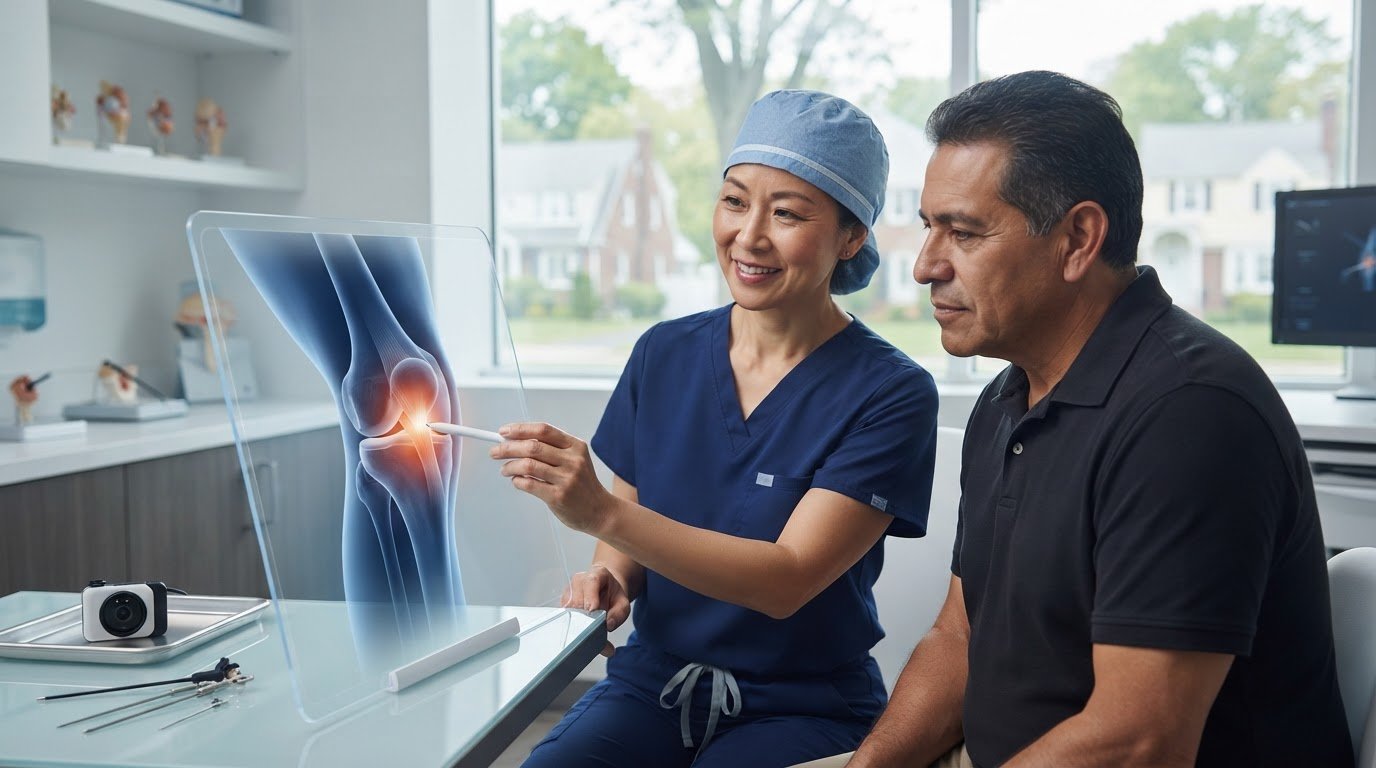
When conservative methods prove insufficient, exploring surgical labral tear treatment options NJ provides becomes the next logical step in your recovery. Traditional open surgeries, which once required large incisions and lengthy hospital stays, have largely been replaced by arthroscopic techniques. This minimally invasive approach utilizes a small camera, known as an arthroscope, to visualize the internal structures of the joint through minute portals. By avoiding the disruption of large muscle groups, patients experience significantly less post-operative pain and minimal scarring compared to older methods.
The specific goal of the procedure depends on the nature of the damage. In some cases, a simple debridement is performed to clean and smooth frayed edges of the cartilage that are causing mechanical irritation. However, if the labrum has detached from the bone, a formal repair is necessary to restore joint stability. Specialized arthroscopic anchors secure the labrum back to the bone to restore the joint’s natural suction seal and structural integrity.
The Surgical Process: What to Expect
Most modern labral tear shoulder treatment and hip procedures are performed on an outpatient basis. This means you return home the same day to begin your recovery in a comfortable environment. Surgery is typically conducted under general anesthesia, often supplemented with a regional nerve block to manage pain in the immediate hours following the procedure. Following the “keyhole” incision method, the joint is protected with a sling or brace to ensure the repaired tissue remains undisturbed during the initial healing phase.
Recovery Timeline and Return to Sport
Recovery is a phased process that prioritizes protection before progression. During the first 2 to 4 weeks, the focus is on passive range of motion and tissue protection. You’ll work closely with a physical therapist to prevent stiffness without stressing the repair site. By months 3 to 6, the emphasis shifts toward strengthening and functional movements tailored to your specific goals. For athletes in North Jersey sports leagues, this gradual progression is vital for a safe return to high-impact activities. Long-term outcomes for patients in Nutley and Lyndhurst show that a disciplined approach to post-operative rehabilitation leads to a high rate of return to pre-injury performance levels.
If you’re ready to address joint instability with a board-certified expert, contact our Nutley office to discuss your surgical options.
Specialized Labral Care in Nutley and Lyndhurst, NJ
Choosing a specialist who lives and works in the North Jersey community offers a distinct advantage during your recovery journey. Our practice provides a high-level, patient-centered alternative to the large, impersonal hospital systems often found in metropolitan hubs. By focusing on the specific needs of local athletes and active residents, we ensure that the labral tear treatment options NJ patients receive are both sophisticated and accessible. We prioritize the least invasive interventions first, only moving toward surgical solutions when conservative measures fail to restore your desired quality of life.
While labral pathology is a primary focus, our clinical expertise extends to the full spectrum of joint preservation. We specialize in advanced techniques for arthroscopic rotator cuff repair NJ athletes often require alongside labral stabilization. Our commitment to modern technology is evident in our use of the BEAR® implant for bridge-enhanced ACL restoration, ensuring our patients have access to the latest advancements in orthopedic science. We also provide a compassionate, evidence-based approach to shoulder arthritis treatment NJ residents can rely on when chronic wear begins to limit their mobility. This comprehensive perspective allows us to treat the joint as a whole, addressing secondary issues that often accompany a labral tear.
Schedule Your Consultation
Our facility is conveniently located for residents throughout Nutley, Lyndhurst, and North Arlington, providing expert care without the need for a stressful commute. To make your first orthopedic appointment as productive as possible, please bring any recent imaging on a disc, a list of current medications, and your insurance information. We’ll perform a thorough evaluation to determine the exact state of your joint health and discuss the most effective labral tear treatment options NJ specialists can provide for your specific case. Don’t let a “catching” sensation or deep joint ache dictate your activity level. Contact our office today to secure a professional evaluation and take the first step toward pain-free movement.
Restore Your Joint Stability and Active Lifestyle
Recovering from a labral injury requires a clear understanding of your specific pathology and the available interventions. We’ve examined how precise diagnostics and specialized physical therapy form the foundation of recovery, while minimally invasive arthroscopic techniques offer a definitive solution when conservative care isn’t enough. Accessing the right labral tear treatment options NJ provides allows you to address mechanical symptoms like catching or locking before they lead to further joint degradation.
Our board-certified orthopedic surgeon is a specialist in minimally invasive techniques and has dedicated years to serving patients in Nutley, Bloomfield, and throughout North Jersey. We prioritize a patient-centered approach that balances clinical expertise with your personal recovery goals. You deserve a treatment plan that is as unique as your injury, delivered by a practitioner who understands the demands of your active lifestyle.
Take the first step toward pain-free movement today. Request a Consultation with Our Board-Certified Surgeon in Nutley to discuss your path to a full recovery. We’re ready to help you regain the confidence to move without limits.
Frequently Asked Questions
Can a labral tear heal on its own without surgery?
A labral tear does not typically heal on its own because fibrocartilage has a limited blood supply. While the structural tear remains, many patients find relief through non-surgical labral tear treatment options NJ specialists recommend. These strategies focus on reducing inflammation and strengthening the joint’s supporting muscles. If mechanical symptoms like catching or locking persist despite these efforts, surgical intervention is often necessary to restore the joint’s structural integrity and prevent further damage.
How do I know if my shoulder pain is a labral tear or a rotator cuff injury?
Distinguishing between these injuries requires a professional evaluation, as symptoms often overlap. Labral tears typically cause a deep, aching pain accompanied by mechanical sensations like clicking or “catching” during movement. In contrast, rotator cuff injuries often manifest as specific weakness when lifting the arm or sharp pain during overhead reaching. While both conditions limit mobility, a board-certified surgeon uses provocative testing and advanced imaging to pinpoint the exact source of your discomfort in the shoulder joint.
Is surgery always necessary for a hip labral tear?
Is surgery always necessary for a hip labral tear?
Surgery is not the immediate answer for every hip labral tear. Many patients successfully manage their symptoms through targeted physical therapy, activity modification, and anti-inflammatory protocols. We prioritize conservative care for 6 to 12 weeks before considering operative solutions. Since hip stability is often influenced by foot mechanics, you may also want to check out Narellan Foot Clinic for advice on proper gait and support. If your daily life remains restricted by persistent groin pain or joint instability after completing a structured rehabilitation program, we may then discuss minimally invasive arthroscopic repair to fix the underlying structural damage.
Success rates for arthroscopic labral repair are generally high, with most clinical studies reporting that 80% to 90% of patients return to their previous level of activity. The outcome depends heavily on the quality of the repair and the patient’s commitment to post-operative rehabilitation. By using small cameras and specialized anchors, we minimize tissue disruption, which supports a more reliable recovery process. Long-term satisfaction is particularly high among athletes who follow a disciplined return-to-sport protocol.
How long is the recovery period before I can return to sports?
The timeline for returning to sports typically spans 4 to 6 months. The initial 4 weeks focus on protecting the repair, followed by several months of progressive strengthening and functional training. Contact sports or high-impact activities require the longest recovery window to ensure the cartilage has fully anchored to the bone. We monitor your progress through objective strength testing at our Nutley facility to ensure you don’t return to the field before your joint is ready.
Will I need physical therapy after my labral tear treatment?
Physical therapy is an essential component of every recovery plan, whether you choose surgical or non-surgical labral tear treatment options NJ. Therapy sessions focus on gluteal activation for hip injuries or rotator cuff stabilization for shoulder issues. This specialized training ensures that the muscles surrounding the joint can effectively support the labrum. Skipping rehabilitation often leads to persistent weakness and increases the risk of re-injury during daily activities or athletic performance.
What happens if I leave a labral tear untreated?
Leaving a labral tear untreated often leads to accelerated joint wear and the early onset of osteoarthritis. Because the labrum is responsible for maintaining joint pressure and stability, its damage causes the bones to rub together abnormally. Over time, this friction destroys the smooth articular cartilage, potentially leading to chronic pain that requires more extensive procedures, such as a joint replacement. Early intervention preserves your natural joint anatomy and helps maintain your long-term mobility.
Does insurance typically cover arthroscopic labral repair in NJ?
Most major insurance providers in New Jersey cover arthroscopic labral repair when it is deemed medically necessary. However, new CMS regulations for 2026 have tightened the requirements for prior authorization, often requiring a documented period of conservative treatment first. Our administrative team works closely with payers to navigate these electronic prior authorization mandates, which now require decisions within 7 calendar days. It’s always best to verify your specific plan’s requirements for outpatient orthopedic procedures before scheduling surgery.