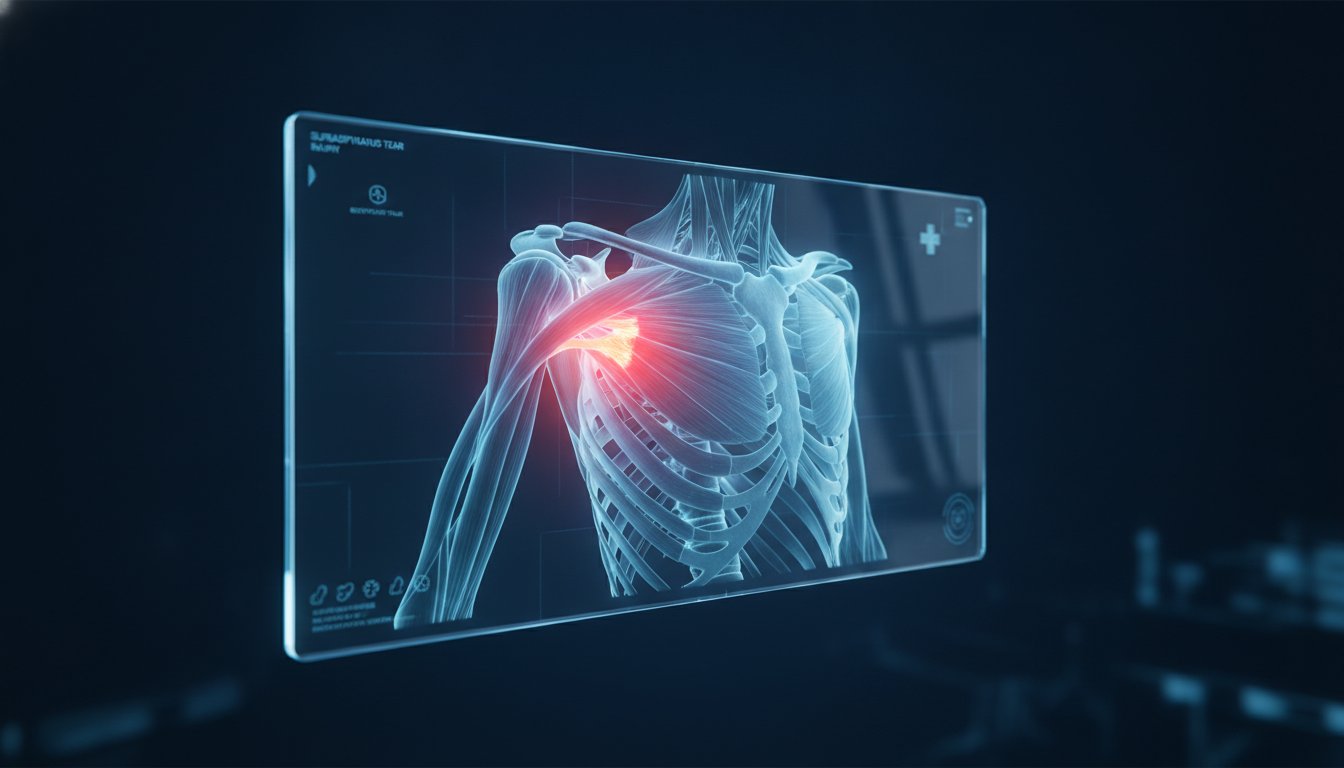
Imagine reaching for a coffee mug in your Kearny kitchen or trying to toss a ball at West Hudson Park, only to be met with a sharp, debilitating catch in your shoulder. For many local residents, the persistent ache of a torn tendon doesn’t just limit movement; it steals sleep and makes daily life feel like an uphill battle. If you’re searching for options for rotator cuff repair Kearny NJ, you’re likely caught between the frustration of limited mobility and the fear that a surgical solution will sideline you for months.
We understand that the decision to pursue surgery is significant. You might be struggling to determine if physical therapy is enough or if a more permanent intervention is necessary to restore your quality of life. Our goal is to provide clarity on how modern arthroscopic techniques and local board-certified expertise can facilitate a faster, more efficient recovery than traditional open procedures. By prioritizing native tissue preservation and using precision-guided technology, we help you return to your professional and athletic pursuits with confidence.
In this article, we’ll examine the specific benefits of minimally invasive shoulder repairs, the diagnostic steps required to confirm a tear, and what you can expect during the rehabilitation process as you work toward a pain-free range of motion.
Key Takeaways
- Identify the anatomical structures involved in shoulder stability and the common environmental factors that lead to tendon degeneration or acute injury.
- Explore the advantages of modern arthroscopic technology, which allows for smaller incisions and more precise visualization during a rotator cuff repair Kearny NJ.
- Distinguish between partial-thickness and full-thickness tears to better understand when surgical intervention becomes a clinical necessity for restoring strength.
- Gain a clear perspective on the post-operative recovery timeline, including the critical phases of passive protection and active motion weaning.
- Learn how specialized, board-certified care at The Orthopaedic & Sports Medicine Institute provides Kearny residents with high-level surgical solutions close to home.
Navigating Rotator Cuff Injuries in Kearny, NJ
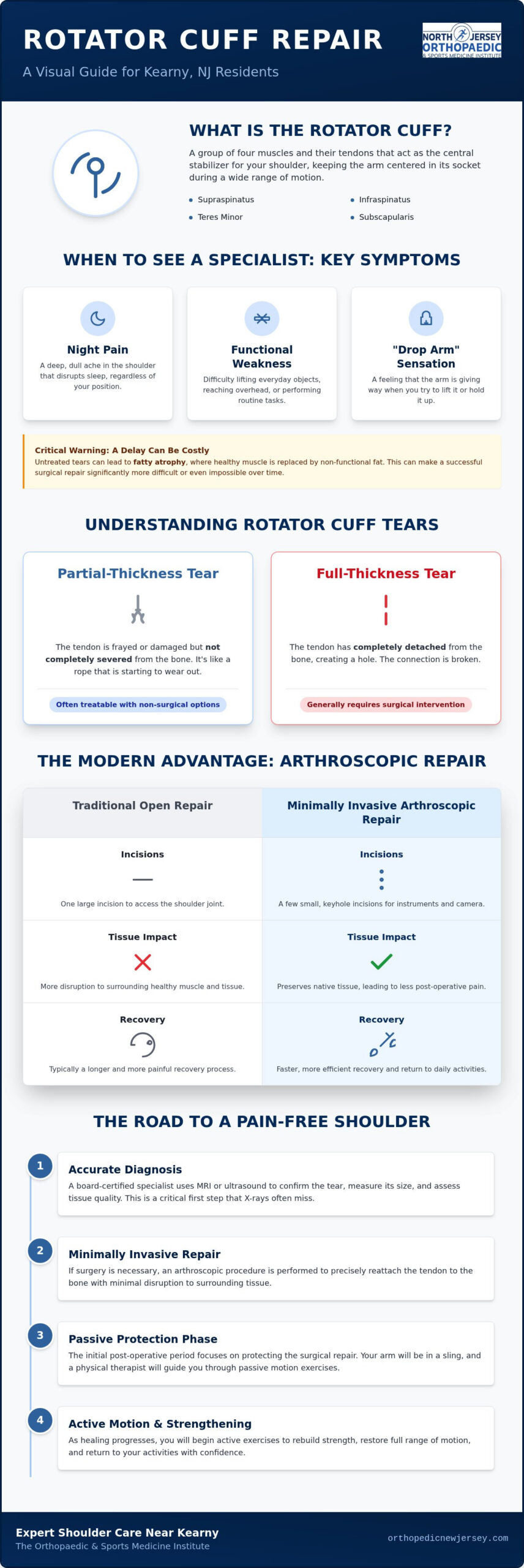
The rotator cuff is a specialized anatomical complex composed of four primary muscles and tendons: the supraspinatus, infraspinatus, teres minor, and subscapularis. This group acts as the central stabilizer of the glenohumeral joint, ensuring the arm remains centered in its socket during a wide range of motion. For many in Kearny, injuries to this system aren’t always the result of a single traumatic event. While a sudden fall can cause an acute tear, many residents experience degenerative changes over time. This is particularly common among local workers in manual trades or athletes who frequent local fields for overhead sports.
Seeking a definitive diagnosis for rotator cuff repair Kearny NJ early in the process is a clinical necessity. If a tear is left untreated, the affected muscle can undergo fatty atrophy. This process involves the replacement of healthy muscle fibers with non-functional fat cells; this can make a successful surgical repair significantly more difficult or even impossible if the tissue quality degrades too far. Understanding Rotator Cuff Tears involves recognizing that these injuries are often progressive. Whether you’re dealing with a partial-thickness tear, which is an incomplete fraying of the tendon, or a full-thickness tear, which represents a complete detachment, the structural deficit requires a professional evaluation to prevent long-term disability.
When Shoulder Pain Becomes a Surgical Concern
Pain that disrupts your sleep is one of the most reliable indicators of a structural injury. This “night pain” often feels like a deep, dull ache that persists regardless of your sleeping position. Beyond the discomfort, functional weakness is a major red flag. If you find it difficult to lift a heavy object or reach for an item on a high shelf, the mechanical leverage of your shoulder is likely compromised. A rotator cuff tear is a mechanical failure of the tendon-to-bone interface. When this connection is lost, the muscle can no longer effectively move the bone, leading to the “drop arm” sensation many patients report during daily activities.
Local Access to Specialized Diagnostic Care
Kearny residents, from those living near the Passaic River to families spending weekends at West Hudson Park, have access to sophisticated diagnostic tools in the immediate area. While a general practitioner or an urgent care center might offer basic X-rays, these only visualize bone and often miss the underlying soft tissue damage. A board-certified orthopedic specialist utilizes MRI or high-resolution ultrasound to see the tendons in detail. This specialized approach ensures an accurate prognosis. It allows the surgeon to measure tendon retraction and tissue quality, factors that a generalist might overlook but are critical for designing a successful rotator cuff repair Kearny NJ strategy.
Understanding the Types of Rotator Cuff Tears
Classification of a shoulder injury is essential because the mechanism of the tear dictates the most effective clinical response. In clinical practice, we categorize these injuries primarily by their cause and their severity. Whether an injury is acute or degenerative determines whether the goal is immediate structural restoration or a more gradual management of chronic symptoms. For patients considering rotator cuff repair Kearny NJ, understanding these distinctions helps set realistic expectations for the recovery timeline and the surgical approach required.
Partial-thickness tears involve fraying or damage to the tendon that doesn’t completely sever the connection to the humerus. In many cases, these respond well to non-surgical interventions like physical therapy or specialized injections. However, full-thickness tears represent a complete mechanical failure where the tendon has pulled away from the bone. These structural deficits generally require surgical intervention to restore strength and prevent the tendon from retracting further. While some partial tears respond well to conservative management, a specialist can help you weigh various rotator cuff treatment options based on your functional needs and pain levels. Chronic impingement, often caused by bone spurs under the acromion, can accelerate this damage by repeatedly “pinching” the tendon during overhead movements.
Acute Injuries in Kearny Athletes
Acute tears are often the result of sudden trauma, such as a fall onto an outstretched arm or an abrupt jerking motion while lifting a heavy object. These injuries are common in younger, active individuals or local residents involved in demanding physical labor. Because acute tears often involve healthy tissue that has been suddenly disrupted, there’s a clinical urgency to perform a rotator cuff repair Kearny NJ before the muscle begins to weaken or retract. This focus on preserving native anatomy and promoting biological healing is a cornerstone of our practice, much like the advanced BEAR® Implant ACL Repair in New Jersey we offer for knee injuries.
Degenerative Tears and Aging
Most rotator cuff issues are degenerative, meaning they develop slowly over time. This is particularly prevalent in patients over the age of 40. As we age, the blood supply to the rotator cuff tendons naturally diminishes, which impairs the body’s ability to repair minor “wear and tear” from daily activities. These tears are often asymptomatic at first; you might not even realize a tear exists until it reaches a certain threshold of size or inflammation. If you’re experiencing a new onset of shoulder pain or weakness, it’s wise to speak with a specialist to determine if a degenerative tear is progressing toward a more serious structural failure.
Minimally Invasive Arthroscopic Repair vs. Traditional Surgery
Traditional shoulder surgery once necessitated large, invasive incisions that required detaching the deltoid muscle to access the underlying tendons. This “open” approach, while effective for certain complex reconstructions, often resulted in prolonged post-operative pain and a higher risk of joint stiffness. Today, the standard for rotator cuff repair Kearny NJ has evolved toward arthroscopy. This technique utilizes several small portals, typically less than one centimeter each, allowing the surgeon to address the injury without disrupting the surrounding musculature.
The primary advantage of this modern approach is the use of an arthroscope, a specialized fiber-optic camera that projects high-definition images of the joint onto a monitor. This provides a level of visualization that is often superior to traditional methods, as the surgeon can inspect the entire joint capsule from multiple angles. By preserving the native tissue and minimizing trauma to the healthy parts of the shoulder, patients experience a lower risk of infection and a significant reduction in surgical scarring. The rotator cuff recovery journey is heavily influenced by these initial surgical choices; choosing a less disruptive method helps prevent the biological complications that can lead to failed repairs.
The Mechanics of Arthroscopic Repair
During the procedure, the surgeon uses specialized instruments to perform debridement, which involves cleaning away frayed edges of the tendon and removing inflammatory tissue. If bone spurs are present, they are smoothed down to prevent future impingement. The actual repair is achieved using suture anchors, small devices made of bio-composite or high-strength materials that are placed into the humerus bone. These anchors hold the tendon securely in its original anatomical position until the body completes its natural healing process. For those seeking a deeper understanding of these techniques, our guide on Minimally Invasive Orthopedic Surgery in NJ offers a comprehensive look at how we apply these principles across various joints.
Why Kearny Patients Prefer Minimally Invasive Options
Local residents often select arthroscopic solutions because they prioritize a return to their active lifestyles without the burden of a long, painful recovery. Because the deltoid muscle isn’t detached during a minimally invasive rotator cuff repair Kearny NJ, patients generally report less immediate post-operative pain and require fewer narcotics. This allows for a much faster transition to passive range-of-motion exercises in physical therapy. Beyond the functional benefits, the cosmetic outcomes are superior; the small portal sites heal discreetly, leaving minimal evidence of the intervention compared to the prominent scars associated with older techniques.
The Recovery Journey: What Kearny Patients Should Expect
Recovery from a rotator cuff repair Kearny NJ is a structured biological progression. While arthroscopic techniques minimize external trauma, the internal healing of the tendon to the bone follows a specific physiological timeline that requires patience and precision. Even with the most advanced surgical intervention, the body necessitates a phased approach to restore full functionality without risking a re-tear of the delicate repair site.
The rehabilitation process is generally divided into three clinical phases:
- Phase 1 (Weeks 0-6): Protection and Passive Motion. During this initial window, the primary goal is to protect the repair while preventing joint stiffness. You’ll wear a sling constantly, even while sleeping. Your physical therapist will perform “passive” movements, where they move your arm for you to maintain flexibility without engaging the repaired muscles.
- Phase 2 (Weeks 6-12): Active Motion. Once the tendon has sufficiently anchored to the bone, you’ll begin weaning from the sling. You’ll start moving the arm under your own power, focusing on “active-assisted” and eventually full active range of motion. Heavy lifting remains strictly prohibited during this stage.
- Phase 3 (Months 3-6): Strengthening. This final phase focuses on resistance training and restoring the power of the rotator cuff. For Kearny residents, this involves tailoring exercises to specific work tasks or sports-related movements to ensure a safe return to full activity.
Managing Pain and Logistics Post-Surgery
Modern pain management has moved away from heavy reliance on opioids. Most patients receive a regional nerve block during surgery, which provides significant numbness and pain relief for the first 12 to 24 hours. Post-operatively, we utilize a multimodal approach including non-steroidal anti-inflammatories and cryotherapy. Sleeping is often the biggest logistical challenge; many patients find comfort sleeping in a recliner or propped up with several pillows to prevent the shoulder from dropping backward. Regarding your Kearny commute, driving is typically restricted for at least six weeks, as you cannot safely operate a vehicle while wearing a sling or while taking certain pain medications.
Long-Term Outcomes and Success Rates
Success in shoulder surgery is measured by the restoration of a pain-free range of motion and the ability to return to daily activities. Clinical data indicates that approximately 90% of patients report significant pain relief following a successful repair. However, individual outcomes are influenced by several factors, including the initial size of the tear, the quality of the remaining tendon tissue, and the patient’s smoking status, as nicotine significantly impairs tendon-to-bone healing. If you are ready to begin your path toward recovery, you can consult with our board-certified team to develop a personalized surgical and rehabilitation plan.
Expert Shoulder Care Near Kearny: The Orthopaedic & Sports Medicine Institute
Selecting a surgical partner is a decision that impacts your long-term mobility and quality of life. At The Orthopaedic & Sports Medicine Institute, we prioritize board-certified expertise because specialized credentials correlate with superior surgical outcomes. For a procedure as intricate as a rotator cuff repair Kearny NJ, the precision of the surgeon’s hands is just as important as the technology they use. Our practice bridges the gap between high-level clinical innovation and the personalized attention of a community-based specialist.
We view the recovery process as a collaborative partnership. From your initial diagnostic consultation through the final stages of your rehabilitation, our team provides consistent, expert guidance. We don’t just treat the injury; we treat the individual, ensuring that your recovery plan aligns with your specific professional or athletic goals. This patient-centered approach is why we remain a trusted resource for residents in Kearny, North Arlington, and Lyndhurst.
Why Choose Our Nutley Practice for Your Kearny Care
Logistics and accessibility are critical factors in a successful recovery. Our Nutley office is located just a short drive from the center of Kearny, making it convenient for patients to attend follow-up appointments without the stress of a long commute. This proximity allows for a more seamless transition between surgical care and the frequent monitoring of your progress. We provide comprehensive services, including the high-level review of MRI scans and the coordination of post-operative physical therapy protocols tailored to your unique healing rate.
Our commitment to minimally invasive techniques ensures that you receive the most advanced care available in the North Jersey area. By focusing on arthroscopic solutions, we provide Kearny residents with options that prioritize faster healing and less post-operative discomfort. For a deeper look at our specific surgical methodology and what makes our approach different, you can explore our Arthroscopic Rotator Cuff Repair in NJ guide.
Schedule Your Consultation Today
Your path to a pain-free shoulder begins with a thorough clinical evaluation. To prepare for your first visit, we recommend bringing any recent imaging, such as X-rays or MRI reports, along with a detailed medical history. During the physical examination, we’ll assess your range of motion, test specific muscle strength, and identify the mechanical triggers of your pain. This data-driven approach allows us to confirm if you’re a candidate for a rotator cuff repair Kearny NJ or if conservative management remains a viable first step.
Don’t let chronic shoulder pain dictate your lifestyle. Whether you’re an athlete looking to return to the field or a professional needing to regain full function for work, our team is ready to help you navigate your recovery journey. You can schedule your rotator cuff evaluation at our Nutley office today to take the first step toward lasting relief and restored mobility.
Restoring Your Active Lifestyle in North Jersey
Living with chronic shoulder pain shouldn’t be your permanent reality. Modern advancements in arthroscopic surgery have transformed the landscape of rotator cuff repair Kearny NJ, allowing for precise anatomical restoration with minimal disruption to healthy tissue. By choosing a minimally invasive approach, you prioritize a recovery that focuses on native tissue preservation and a more efficient return to your daily routines. This methodical progression from diagnosis to rehabilitation ensures that your shoulder joint remains stable and functional for years to come.
Our Nutley practice is dedicated to providing specialized, board-certified care to the Kearny and Nutley communities. Whether you’re an athlete or a professional managing a demanding workload, our focus on cutting-edge methodology ensures you receive a treatment plan tailored to your specific needs. We combine clinical precision with a patient-centered mindset to guide you through every phase of the healing process.
Request a Consultation with our Board-Certified Surgeon near Kearny to take the next step in your healing journey. We’re here to help you regain the strength and mobility you deserve.
Frequently Asked Questions
How long does a rotator cuff repair surgery take?
A standard rotator cuff repair Kearny NJ typically takes between 60 and 120 minutes to complete. The exact duration depends on the size of the tear and whether additional procedures, such as debridement of bone spurs, are necessary. While the surgical time is relatively short, patients should plan for several hours at the facility to account for pre-operative preparation and post-anesthesia recovery.
Will I need physical therapy after my shoulder surgery in Kearny?
Comprehensive physical therapy is a non-negotiable component of the recovery process. Most patients begin a structured rehabilitation program within one to two weeks following their procedure. This starts with passive range of motion to prevent joint stiffness and progresses to active strengthening over several months. Local coordination with a therapist ensures that your clinical progress is monitored closely and adjusted based on your specific healing rate.
Is rotator cuff surgery considered a major surgery?
Rotator cuff repair is considered a major surgical intervention because it involves the structural reattachment of soft tissue to bone. Even when performed using minimally invasive arthroscopic techniques, the biological healing process is complex and requires significant time. The major designation refers to the critical nature of the post-operative restrictions and the months of rehabilitation required to ensure the tendon successfully anchors to the humerus.
Can a rotator cuff tear heal on its own without surgery?
Full-thickness rotator cuff tears do not have the biological capacity to heal on their own because tendons have a limited blood supply. While conservative treatments like injections and physical therapy can reduce inflammation and improve compensation, they cannot bridge a mechanical gap in the tissue. If left untreated, these tears often enlarge over time, potentially leading to irreversible muscle atrophy and permanent loss of function.
What is the success rate for arthroscopic rotator cuff repair?
Clinical data from 2026 indicates that success rates for arthroscopic rotator cuff repair range from 75% to 90%. Outcomes are highly dependent on the initial size of the injury; small tears often see success rates as high as 95%, while massive tears may have lower structural success. Patient adherence to post-operative protocols and the quality of the native tissue are also primary drivers of a successful long-term result.
When can I return to work after shoulder surgery?
Your timeline for returning to professional duties depends heavily on the physical demands of your role. Patients with sedentary desk jobs can often return within two to three weeks, provided they don’t need to drive. Those involved in manual labor or overhead activities typically require four to six months before they can safely resume full duties. Your surgeon will provide specific clearances based on your strength and range of motion.
Does insurance typically cover rotator cuff repair in New Jersey?
Most insurance plans in New Jersey provide coverage for rotator cuff repair Kearny NJ when it’s deemed medically necessary. This necessity is usually established through a combination of physical examination findings and diagnostic imaging like an MRI. It’s advisable to verify your specific plan’s requirements for pre-authorization and to confirm that your surgical facility and anesthesiology team are within your provider’s network.
How do I know if my shoulder pain is a tear or just tendonitis?
Distinguishing between tendonitis and a structural tear requires a professional clinical evaluation and diagnostic imaging. Tendonitis is an inflammatory condition that often responds to rest and medication, while a tear represents a mechanical failure of the tendon. Key indicators of a tear include significant weakness when lifting the arm and persistent night pain that prevents sleep, symptoms that typically don’t resolve with conservative measures alone.