Imagine waking up at 3:00 AM because a simple shift in your sleep position sent a sharp, stabbing pain through your shoulder. For many residents seeking rotator cuff repair Verona NJ, this isn’t just a hypothetical. It’s a nightly reality that makes even basic tasks feel like monumental challenges.
It’s understandably draining when the activities that define your lifestyle, such as a weekend golf game or a tennis match, are sidelined by a persistent loss of strength. You may also feel a sense of trepidation regarding the surgical process, fearing that a long and painful recovery is the only way to find relief.
This guide provides a professional overview of how advanced minimally invasive techniques and board-certified local care help patients overcome these obstacles. You’ll learn to distinguish between arthroscopic and open surgical approaches while gaining a clear, structured roadmap for your return to an active lifestyle. We’ll explore the latest clinical advancements that prioritize precision and patient comfort to ensure you can return to the activities you enjoy most.
Key Takeaways
- Understand why persistent shoulder discomfort often stems from complex tendon pathology and how distinguishing between acute and degenerative tears is the first step toward effective treatment.
- Learn why advanced arthroscopic rotator cuff repair Verona NJ is now the modern standard for restoring joint stability with significantly less tissue disruption than traditional methods.
- Evaluate your eligibility for conservative management strategies, including specialized physical therapy and biological treatments, before committing to a surgical intervention.
- Gain a comprehensive understanding of the two-phase recovery roadmap, including the critical initial protection period and the subsequent transition to active range of motion.
- Discover the benefits of receiving specialized, board-certified care within your local community to streamline your journey back to sports and daily activities.
Understanding Rotator Cuff Tears: Why Verona Residents Seek Expert Care
The rotator cuff is a sophisticated anatomical structure comprised of four primary tendons that stabilize the shoulder joint. These tendons; the supraspinatus, infraspinatus, teres minor, and subscapularis, work in concert to ensure the humeral head remains centered within the glenoid socket during movement. When these tissues are compromised, the mechanical integrity of the entire upper extremity is at risk. For patients considering rotator cuff repair Verona NJ, understanding the nature of these tears is the first step toward clinical recovery.
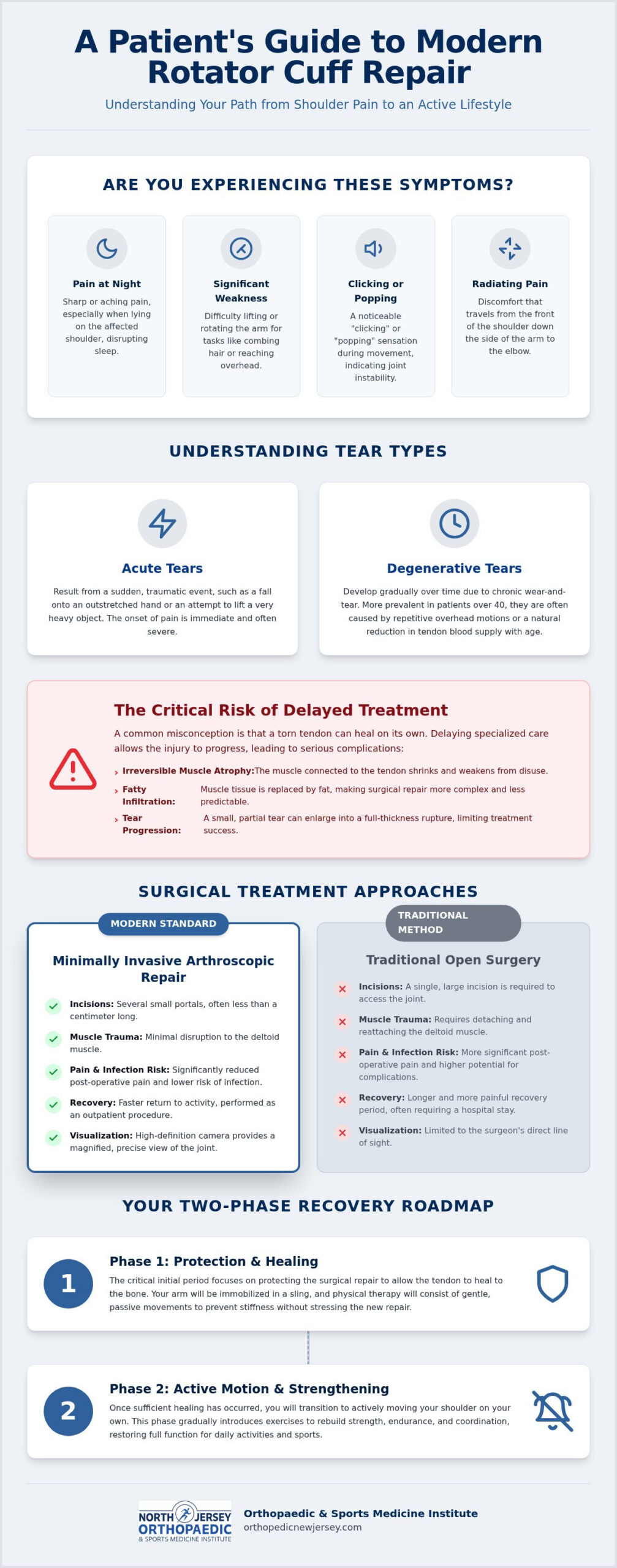
Tears generally fall into two categories: acute and degenerative. Acute injuries often result from sudden trauma, such as a fall onto an outstretched hand or an attempt to lift a heavy object. In contrast, degenerative tears are more prevalent in patients over the age of 40. These are the result of chronic wear and tear, often exacerbated by repetitive overhead motions or a natural reduction in blood supply to the tendon as we age. Understanding Rotator Cuff Tears involves recognizing that these issues rarely resolve without specialized intervention. Early diagnosis is vital for Verona residents because prolonged delay can lead to irreversible muscle atrophy, making eventual surgical outcomes less predictable.
Common Symptoms and Warning Signs
Identifying a tear requires attention to specific clinical signals. Many patients report significant difficulty lifting the arm to perform routine tasks, such as reaching into a cabinet or reaching behind the back. You might notice a distinct “clicking” or “popping” sensation during movement, which often indicates mechanical instability within the joint. Perhaps the most telling symptom is pain that radiates from the shoulder down to the elbow, particularly at night. This nocturnal discomfort frequently prevents restorative sleep, which is a primary reason patients seek a consultation for rotator cuff repair Verona NJ.
The Risk of Delayed Treatment
A common misconception is that a complete tendon tear can heal through rest or physical therapy alone. While therapy is excellent for improving the function of surrounding muscles, it cannot reattach a severed tendon to the bone. Over time, a small partial tear can progress into a full-thickness rupture. If left untreated, the muscle associated with the torn tendon may undergo “fatty infiltration.” This process occurs when muscle tissue is replaced by fat due to disuse; this significantly complicates the surgical repair process and potentially limits the final range of motion. Seeking expert care early ensures the tendon remains pliable and the muscle stays healthy enough for a successful reconstruction.
Minimally Invasive Arthroscopic Repair: The Modern Standard in NJ
Transitioning from diagnosis to treatment involves choosing a method that balances surgical precision with patient comfort. For those seeking rotator cuff repair Verona NJ, arthroscopic surgery has emerged as the definitive standard of care. This technique utilizes several small incisions, often less than a centimeter in length, rather than the large single incision required by traditional open methods. Through these portals, a high-definition camera provides a magnified view of the joint’s internal structures. This allows for an unparalleled level of detail when identifying concurrent issues like labral fraying or biceps tendonitis.
The actual repair involves the use of advanced suture anchors. These specialized devices are made from bio-absorbable materials or high-strength polymers. They’re inserted into the humerus to provide a stable foundation for the reattached tendon. This mechanical bridge ensures the tissue remains in direct contact with the bone, which is essential for biological healing. Because this approach minimizes trauma to the overlying deltoid muscle, most procedures are performed on an outpatient basis. Patients can recover in the comfort of their own homes in Verona on the same day as their surgery.
The Arthroscopic Advantage
Precision is the hallmark of modern rotator cuff repair surgery. By avoiding large muscle dissections, we significantly reduce post-operative pain and the risk of infection. This refined visualization also allows our board-certified surgeon to address multiple pathologies during a single session. For many active individuals, this translates to a faster return to sedentary work and light daily activities. If you’re struggling with persistent shoulder issues, consulting a specialist can help determine if you’re a candidate for this minimally invasive approach.
When is Open Surgery Necessary?
While arthroscopy is versatile, certain clinical scenarios require a more traditional approach. Massive or multi-tendon tears, particularly those with significant tissue retraction, may necessitate an open or “mini-open” repair to ensure adequate tension and fixation. In cases where the native tendon is too damaged for a standard repair, we might utilize tendon transfers to restore function. Our surgical team evaluates each patient’s unique anatomy and injury severity to determine the optimal path. This diagnostic mindset ensures the chosen procedure aligns with the long-term goal of pain-free motion. We don’t believe in a one-size-fits-all approach; instead, we prioritize the technique that offers the highest probability of a durable, lasting repair.
Surgery vs. Conservative Management: Evaluating Your Path
Deciding whether to undergo rotator cuff repair Verona NJ or pursue non-surgical management is a critical step in your recovery journey. Determining the appropriate clinical path requires a nuanced understanding of tear morphology and patient activity levels. While many believe surgery is the only answer, conservative management remains a viable option for specific cases. Physical therapy success rates are generally high for partial-thickness tears, where the goal is to optimize the biomechanics of the remaining healthy tissue. However, for full-thickness tears, conservative care focuses on symptom management rather than anatomical restoration.
Cortisone injections are frequently utilized to reduce acute inflammation, providing a window of relief that allows for more effective engagement in physical therapy. We also explore biological treatments that aim to support the body’s natural healing environment. If imaging reveals significant joint wear, a specialized shoulder arthritis treatment NJ evaluation is necessary to ensure the underlying bone health supports a successful outcome. When these methods fail to restore function, surgery to repair a torn tendon becomes the recommended course of action.
The Case for Non-Surgical Treatment
For patients with lower physical demands or small partial tears, a six to twelve-week trial of structured physical therapy is often the first step. This approach focuses on strengthening the deltoid and other scapular stabilizers to compensate for the compromised rotator cuff. While this doesn’t “heal” a complete tear, it can restore a functional, pain-free range of motion for daily living. We monitor these patients closely to ensure the tear doesn’t progress during the observation period. If symptoms persist or pain continues to interfere with sleep, we then transition the conversation toward surgical options.
Why Active Verona Residents Often Choose Repair
Active individuals in Verona, particularly those participating in overhead sports like tennis or weightlifting, often find that conservative care falls short of their performance goals. Choosing rotator cuff repair Verona NJ allows these patients to regain the structural integrity needed for high-demand activities. Beyond immediate performance, surgical intervention prevents the long-term development of rotator cuff tear arthropathy. This is a specific type of arthritis that occurs when a chronic tear leads to abnormal joint wear. For many, the decision is also driven by the psychological confidence that comes with a permanent mechanical fix, allowing them to return to the gym without the fear of further injury.
The Recovery Timeline: Returning to Activity in Verona
The biological success of a rotator cuff repair Verona NJ relies heavily on the patient’s adherence to a structured rehabilitation protocol. While the surgical repair provides mechanical stability immediately, the tendon requires approximately six weeks to achieve a basic biological bond to the bone. This timeline is significantly enhanced by the precision of minimally invasive orthopedic surgery NJ, which preserves healthy tissue and facilitates a more efficient inflammatory response. Recovery is not a race; it’s a methodical process designed to protect the repair while gradually restoring function.
- Phase 1 (Weeks 1-6): The protection phase. A sling is mandatory during this time to prevent any tension on the newly repaired tendon.
- Phase 2 (Weeks 6-12): The transition phase. Patients begin active-assisted and active range of motion exercises under the guidance of a therapist.
- Phase 3 (Months 3-6): The strengthening phase. This focuses on rotator cuff endurance and functional movements tailored to your specific goals.
Navigating the First 48 Hours
The initial window following surgery is focused on comfort and safety. Most patients receive a regional nerve block, which manages pain for several hours post-procedure. Once this wears off, a combination of ice therapy and prescribed medication is essential for managing inflammation. We recommend sleeping in a reclined position, such as in a recliner chair or propped up with several pillows, to reduce pressure on the shoulder joint. During this time, simple pendulum exercises are initiated. These gentle movements encourage joint fluid circulation and help prevent the development of a frozen shoulder without stressing the repaired tissues.
Returning to Sports and Work
Resuming daily routines requires a phased approach based on individual healing rates. Most patients return to light office work within one to two weeks, provided they don’t need to lift the operative arm. Driving is typically permitted once you’re off narcotic pain medication and can safely manage the steering wheel with both hands; this usually occurs around the six-week mark.
For athletes, the timeline is more deliberate. Returning to golf at local courses or tennis on Verona courts generally occurs between four and six months. This delay ensures the repair can withstand the high-velocity torque required for a swing or serve. We coordinate closely with local physical therapists in the Nutley and Verona area to ensure your rehab progress aligns with our clinical findings. If you’re ready to start your journey toward a pain-free lifestyle, schedule a consultation at our Nutley office today.
Expert Shoulder Care at The Orthopaedic & Sports Medicine Institute
Choosing a provider for rotator cuff repair Verona NJ is a decision that directly impacts your long-term mobility and quality of life. At The Orthopaedic & Sports Medicine Institute, we prioritize a specialized, patient-centered model that contrasts with the impersonal nature of large, corporate hospital systems. Our practice is built on a foundation of clinical excellence and a commitment to utilizing the most advanced surgical interventions available today. We understand that every patient’s shoulder pathology is unique; therefore, we develop customized treatment plans that align with your specific lifestyle goals and recovery expectations.
Why Choose a Board-Certified Specialist?
Board certification represents a standard of surgical mastery that ensures your care is managed by a practitioner who has met rigorous national benchmarks for orthopedic excellence. Our surgeon’s specialized training in sports medicine allows for a sophisticated approach to arthroscopic rotator cuff repair NJ, focusing on techniques that promote native tissue healing. This level of expertise is directly correlated with lower complication rates and more predictable clinical outcomes. By emphasizing minimally invasive methods, we aim to minimize surgical trauma and set the stage for the accelerated rehabilitation protocols required for a full return to activity.
Convenient Access for Verona and North Jersey
Accessing high-level orthopedic care shouldn’t require long commutes to major urban medical centers. Our Nutley office is conveniently located for residents seeking rotator cuff repair Verona NJ, offering a streamlined experience from the initial consultation through post-operative follow-up. We coordinate closely with local imaging centers to ensure your pre-operative MRI is performed efficiently and interpreted with surgical precision. This local integration allows us to act as a dedicated community resource while maintaining the standards of a top-tier surgical boutique. We value transparency and education, ensuring you understand every aspect of your diagnostic findings before deciding on a treatment path.
Taking the first step toward recovery involves a comprehensive physical examination and a detailed review of your medical history. We don’t believe in rushing patients toward surgical intervention; instead, we provide a transparent evaluation of all viable treatment pathways, including the conservative management options discussed earlier. If you’re ready to address your shoulder pain and explore the benefits of specialized care, contact our office to schedule your initial evaluation. Our team is dedicated to guiding you through each phase of the recovery journey with professional expertise and clinical precision.
Reclaim Your Active Lifestyle with Specialized Shoulder Care
Restoring the functional integrity of your shoulder requires a sophisticated combination of surgical precision and a structured rehabilitation roadmap. By prioritizing minimally invasive arthroscopic techniques, patients can achieve a durable repair with less tissue disruption and a more efficient recovery process. It’s essential to address tendon pathology early to prevent irreversible changes like muscle atrophy; this ensures your shoulder remains a viable candidate for successful reconstruction.
The Orthopaedic & Sports Medicine Institute provides local residents with direct access to a board-certified orthopedic surgeon specializing in advanced rotator cuff repair Verona NJ. Our clinical approach is designed to bridge the gap between traditional surgical wisdom and modern, less disruptive alternatives. We remain dedicated to serving the Verona and Nutley communities with patient-centered care that emphasizes long-term joint health and a return to the sports and activities you enjoy most.
Don’t let chronic shoulder pain dictate your daily routine or interfere with your sleep any longer. Take the first step toward a pain-free future by partnering with a specialist who understands your unique recovery goals. Schedule Your Shoulder Consultation Today and start your journey back to full strength and mobility.
Frequently Asked Questions
How long does rotator cuff surgery take as an outpatient procedure?
Most arthroscopic procedures for rotator cuff repair Verona NJ are completed in 60 to 90 minutes. However, your total time at the surgical center will be longer to account for pre-operative preparation and post-anesthesia recovery. Since this is an outpatient procedure, you’ll return home the same day. The actual surgical duration depends on the complexity of the tear and whether additional work, like a labral debridement, is necessary to stabilize the joint.
Will I need physical therapy after my rotator cuff repair?
Yes, structured physical therapy is a mandatory component of the recovery process. Rehab typically begins with passive range of motion exercises to prevent stiffness while the tendon heals. As you progress through the phases of recovery, your therapist will introduce active movements and eventually resistance training. This professional guidance ensures you don’t overstress the repair while rebuilding the strength required for daily activities and the sports you enjoy.
Can a rotator cuff tear heal on its own without surgery?
Full-thickness rotator cuff tears don’t have the biological capacity to reattach to the bone without surgical intervention. While conservative treatments like physical therapy can strengthen surrounding muscles to compensate for the injury, the physical gap in the tendon remains. Small partial tears may stabilize with rest and therapy, but they require careful monitoring to ensure they don’t progress into complete ruptures over time. Professional evaluation is essential to determine your specific healing potential.
What is the success rate for arthroscopic rotator cuff repair?
The success rate for arthroscopic rotator cuff repair is generally between 75% and 90%, with patient satisfaction rates often exceeding 90% for well-indicated procedures. These outcomes are highly dependent on the size of the initial tear and the patient’s commitment to the post-operative rehabilitation protocol. Advanced suturing techniques and minimally invasive approaches have significantly improved the durability of these repairs compared to traditional open surgical methods used in previous decades.
How soon can I drive after shoulder surgery?
Most patients can resume driving approximately six weeks after surgery. You must be completely off narcotic pain medications and have sufficient strength to manage the steering wheel safely with both hands. During the first six weeks, your arm is typically immobilized in a sling, making driving unsafe and often illegal. We provide a specific clinical clearance during your follow-up appointment before you return to the road to ensure your safety.
Do you accept insurance for rotator cuff repair in Verona, NJ?
We accept a wide range of insurance plans for patients seeking rotator cuff repair Verona NJ. Our administrative team works directly with your provider to verify coverage and obtain necessary prior authorizations before your procedure. Because insurance landscapes change frequently, we recommend contacting our Nutley office with your specific policy details. This allows us to provide a clear explanation of your benefits and any potential out-of-pocket responsibilities before you begin treatment.
What happens if I decide not to have surgery for a torn rotator cuff?
Choosing not to have surgery for a full-thickness tear often leads to progressive weakness and a permanent loss of function. Over time, the retracted tendon can undergo fatty infiltration, where muscle tissue is replaced by fat, making a future repair much more difficult or even impossible. Additionally, chronic instability in the shoulder joint can lead to rotator cuff tear arthropathy, which is a complex and painful form of degenerative arthritis.
How is a labral tear different from a rotator cuff tear?
While both injuries cause shoulder instability, they involve different anatomical structures. A rotator cuff tear involves the tendons that move the arm, whereas a labral tear affects the ring of cartilage that deepens the shoulder socket. Labral tears often cause a sensation of catching or locking, while rotator cuff injuries are more closely associated with weakness and radiating pain. Both conditions can often be addressed simultaneously during a single minimally invasive arthroscopic procedure.