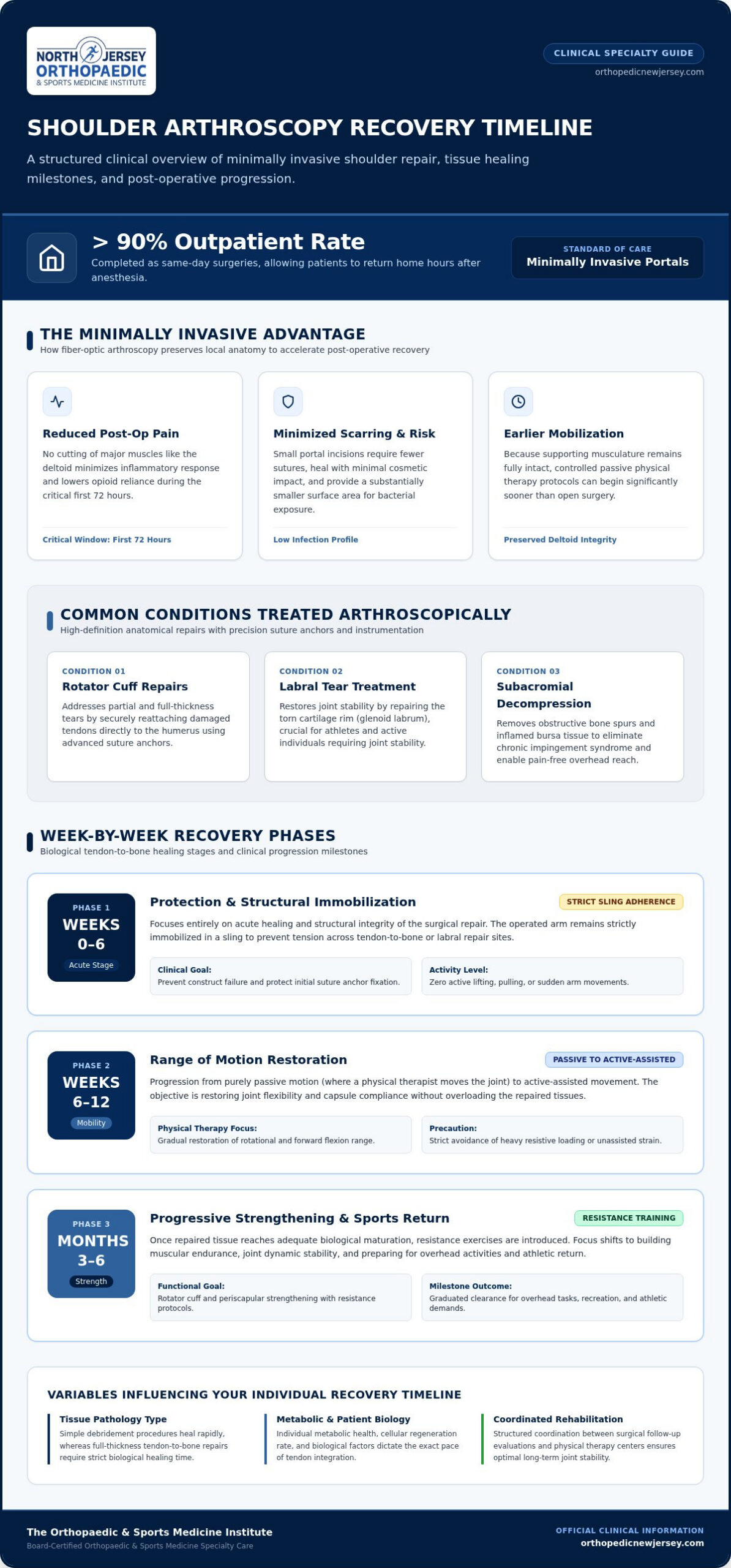
Did you know that over 90% of shoulder arthroscopy procedures are now completed as same-day outpatient surgeries, allowing patients to return home just hours after waking from anesthesia? For residents in West Hudson, understanding your expected shoulder arthroscopy recovery time Kearny NJ is the first step toward reclaiming your independence. Whether you are addressing a rotator cuff tear or a labral injury, the transition from the operating room to your favorite local spot along Kearny Avenue shouldn’t feel like a mystery.
It’s completely normal to feel a sense of dread about weeks of immobility or the frustration of wearing a sling while trying to manage basic daily tasks. You want a clear path back to your active North Jersey lifestyle without the guesswork. This 2026 specialist’s guide provides the precise weekly milestones you need to navigate the healing process. We’ll explore how modern, minimally invasive techniques at The Orthopaedic & Sports Medicine Institute accelerate your progress. You’ll also find a detailed breakdown of what to expect from physical therapy and how to coordinate expert follow-up care right here in the Kearny area.
Key Takeaways
- Learn the specific phases of recovery, from initial protection to regaining full range of motion, to set realistic expectations for your return to work and sports.
- Understand how minimally invasive techniques reduce muscle trauma and scarring, contributing to a more efficient shoulder arthroscopy recovery time Kearny NJ.
- Discover how factors such as the type of tissue repaired and your individual metabolic health dictate the pace of your unique healing journey.
- Explore local coordination strategies between Nutley-based surgical follow-ups and Kearny area physical therapy centers to streamline your post-operative care.
- Gain insights into the specialized, board-certified approach used at The Orthopaedic & Sports Medicine Institute to optimize long-term joint stability.
Understanding Shoulder Arthroscopy: A Minimally Invasive Approach
Shoulder arthroscopy represents a sophisticated advancement in orthopedic medicine, shifting the paradigm from invasive open procedures to precise, high-definition interventions. This minimally invasive arthroscopic surgery utilizes a tiny fiber-optic camera, known as an arthroscope, which allows the surgeon to visualize the internal structures of the joint on a monitor without the need for large, disruptive incisions. In 2026, arthroscopy stands as the gold standard for modern shoulder repair, offering an unparalleled balance of diagnostic accuracy and surgical efficiency.
The technical hallmark of this approach involves creating small “portals” through which specialized instruments are inserted. Because we don’t have to cut through major muscle groups like the deltoid to access the joint, the level of trauma to healthy tissue is significantly reduced. This preservation of local anatomy is a critical variable that directly influences the shoulder arthroscopy recovery time Kearny NJ patients can expect. By maintaining the integrity of the surrounding soft tissues, the body’s natural healing response can focus specifically on the repaired area rather than recovering from the surgical access itself.
Benefits of Minimally Invasive Techniques for Kearny Patients
Choosing a minimally invasive path offers distinct clinical advantages that prioritize both safety and speed of recovery. Patients often find that the transition from the operating room back to their North Jersey homes is smoother than anticipated. Key benefits include:
- Reduced Post-Operative Pain: Minimal tissue disruption generally results in less inflammatory response, often leading to a lower reliance on heavy opioid medications during the first 72 hours.
- Minimized Scarring and Infection Risk: Small portal incisions require fewer sutures and heal with minimal cosmetic impact. These smaller sites also present a lower surface area for potential bacterial exposure.
- Earlier Mobilization: Because the supporting musculature remains intact, we can often initiate controlled, passive physical therapy protocols much sooner than after traditional open surgery.
Common Conditions Treated Arthroscopically
The versatility of modern arthroscopic tools allows us to address a wide range of shoulder pathologies with board-certified precision. We frequently utilize these techniques to treat conditions that cause chronic pain or functional limitations, including:
- Rotator Cuff Repairs: Addressing both partial and full-thickness tears by reattaching the tendon to the humerus using advanced suture anchors.
- Labral Tear Treatment: Restoring stability to the joint by repairing the cartilage rim, which is essential for athletes and active individuals.
- Subacromial Decompression: Removing bone spurs and inflamed bursa tissue to eliminate chronic impingement syndrome and restore pain-free overhead movement.
Shoulder Arthroscopy Recovery Timeline: Week-by-Week
The biological process of tendon-to-bone healing follows a specific physiological schedule that can’t be rushed. For patients tracking their shoulder arthroscopy recovery time Kearny NJ, it’s essential to view the process as a series of distinct phases. Each stage is designed to protect the integrity of the surgical repair while gradually restoring function. While a simple debridement may heal faster, a full rotator cuff repair requires strict adherence to these milestones to ensure long-term stability. Every patient’s unique biology and the specific nature of the tissue repair will ultimately dictate the exact pace of this journey.
- Phase 1: Protection (Weeks 0-6): This initial period focuses on acute healing and protecting the surgical work. Your arm remains strictly immobilized in a sling to prevent tension on the repair sites.
- Phase 2: Range of Motion (Weeks 6-12): We transition from passive movement, where a therapist moves your arm, to active-assisted movement. The goal here is to restore flexibility without overloading the joint.
- Phase 3: Strengthening (Months 3-6): Once the tissue has matured sufficiently, we introduce resistance training to rebuild muscle and prepare for a return to sports or overhead activities.
The First 72 Hours: Managing Post-Op in North Jersey
The immediate post-operative window is critical for managing inflammation and local discomfort. We recommend icing the shoulder for 20 minutes every hour while awake, using a cold therapy unit or specialized ice packs. Sleeping in a propped-up, reclined position often proves much more comfortable than lying flat in bed. You should keep your original bandages clean and dry until your first scheduled change at home. For comprehensive details on shoulder arthroscopy indications and recovery, federal guidelines offer a standard baseline for home care. You should call our office immediately if you experience a fever over 101.5°F or unexpected swelling in the hand or wrist.
Weeks 2-6: The Transition to Passive Physical Therapy
Your first post-operative visit at our Nutley office typically occurs around day 10 for suture removal. During this phase, you’ll begin “passive” range of motion exercises under professional supervision. This prevents the joint capsule from tightening, a condition known as frozen shoulder, without putting any stress on the healing repair. Driving is generally restricted while you’re required to wear the sling, and you’ll need to make ergonomic adjustments if you’re working from a computer. If you’re unsure about your specific timeline for returning to daily tasks, consulting with a board-certified specialist ensures your recovery stays on the safest possible track.
While the standard recovery and rehabilitation timeline provides a structured roadmap, several biological and clinical variables determine your specific progress. At the Orthopaedic & Sports Medicine Institute, we find that the shoulder arthroscopy recovery time Kearny NJ patients experience is most heavily influenced by the nature of the primary injury. A simple debridement, which involves “cleaning up” frayed tissue or bone spurs, typically allows for a much faster return to activity than a procedure requiring tendon-to-bone reattachment.
Your metabolic health and age also play pivotal roles in how quickly your body synthesizes new collagen. For older adults or those with underlying vascular conditions, the “knitting” process of the tendon can be slightly more deliberate. Additionally, your commitment to the prescribed physical therapy protocol is the most significant controllable factor. One of the greatest risks to a successful outcome is “doing too much too soon,” which can jeopardize the surgical anchors before they have fully integrated into the bone. Dr. Russonella’s specialized Minimally invasive orthopedic surgery NJ approach specifically targets these variables by reducing secondary trauma to the surrounding musculature.
Rotator Cuff vs. Labrum: Different Healing Biological Clocks
The biological requirements for a rotator cuff repair differ significantly from those of a labral repair. Rotator cuff tendons are under constant tension. They generally require six to twelve weeks to achieve a secure biological bond with the humerus. In contrast, labral repairs, such as those for SLAP or Bankart lesions, focus heavily on restoring joint stability. For Kearny athletes, this means the first phase of recovery is strictly about “quieting” the joint before any rotational stress is applied. While a debridement patient might return to light sports in eight weeks, a full rotator cuff repair often requires six months of supervised progression.
The Role of Advanced Technology in 2026 Recovery
In 2026, we utilize sophisticated surgical instrumentation and modern biologics that aim to enhance the quality of the repair. Specialized suture anchors now provide higher initial fixation strength, allowing for the earlier “passive” motion discussed in previous sections. Clinical data indicates that subjective stiffness often peaks between weeks three and six due to progressive scar remodeling. Understanding this biological milestone prevents unnecessary concern during the middle of your journey. We also integrate digital PT tracking tools that help Kearny patients monitor their daily exercises and report progress in real-time. This data-driven approach ensures that your shoulder arthroscopy recovery time Kearny NJ is optimized through constant clinical oversight and precise technological intervention.
Optimizing Recovery in Kearny, NJ: Local Resources
Success after surgery depends heavily on the logistical ease of your post-operative care. For residents in West Hudson, managing your shoulder arthroscopy recovery time Kearny NJ is simplified by the proximity of our Nutley facility, located just minutes away via Route 21 or the Garden State Parkway. This geographic advantage is vital for the frequent surgical site monitoring required in the first 14 days. Ensuring that your portal incisions are healing without complication requires consistent professional oversight, which is far more accessible when your specialist is a dedicated community resource rather than a distant urban hospital center.
Home preparation is another critical component of a smooth transition. We recommend that Kearny patients source their post-operative essentials, such as specialized abduction slings or cold therapy units, from local medical supply stores along Kearny Avenue or in nearby North Arlington. Having these tools ready before your procedure minimizes stress during the first 72 hours when mobility is most restricted. If you’re also managing chronic conditions, understanding shoulder arthritis treatment NJ options can help provide context for how your recovery might differ if pre-existing joint wear is present.
Physical Therapy: The Engine of Your Recovery
We maintain close communication with physical therapy centers throughout Kearny, Nutley, and North Arlington to ensure your specific surgical protocol is followed with absolute precision. Your therapist acts as the engine of your recovery, guiding you through the delicate transition from passive to active motion. In the first three months, you should expect to attend formal sessions two to three times per week. This consistent cadence allows for real-time adjustments to your program, ensuring that your shoulder arthroscopy recovery time Kearny NJ stays on schedule while avoiding the pitfalls of overexertion.
Returning to Work and Daily Life in North Jersey
The timeline for returning to professional duties varies significantly based on the physical demands of your role. Patients with sedentary desk jobs can often return to remote work within two weeks, provided they don’t need to drive while in a sling. However, those employed in the industrial or warehousing sectors of Kearny will require a more extended period of light duty, often spanning three to six months, to protect the repair from heavy lifting or repetitive overhead stress. Modifying household chores is also essential; you’ll need to rely on one-handed techniques for grooming and meal preparation during the initial six-week sling phase. For personalized guidance on your specific return-to-work timeline, contact our board-certified team to discuss your occupational requirements.
Expert Shoulder Care at The Orthopaedic & Sports Medicine Institute
Dr. Michael C. Russonella, a board-certified orthopaedic surgeon, leads The Orthopaedic & Sports Medicine Institute with a clinical focus on advanced, minimally invasive joint preservation. For patients navigating their shoulder arthroscopy recovery time Kearny NJ, the choice of a specialist is the most significant variable in the preoperative phase. Our practice bridges the gap between high-level surgical innovation and the personalized care expected from a dedicated community resource. We provide specialized Arthroscopic rotator cuff repair NJ services that prioritize tissue preservation and long-term joint stability for both competitive athletes and active professionals in the North Jersey area.
The difference at our institute lies in the integration of cutting-edge surgical instrumentation with a patient-first philosophy. We don’t just treat the anatomical injury; we manage the entire recovery experience. This involves a meticulous approach to surgical planning and a steady, methodical progression through the post-operative milestones discussed in previous sections. Our team remains deeply committed to the Kearny and Nutley communities, ensuring that high-level orthopaedic expertise is accessible right in your neighborhood.
Why a Specialized Surgeon Matters for Your Recovery
Surgical precision directly correlates with the severity of post-operative inflammation. When a surgeon utilizes specialized training to navigate the joint with minimal disruption, the biological “clock” for recovery starts under more favorable conditions. This expertise allows us to develop tailored protocols based on unique intra-operative findings, such as the quality of the tendon or the specific location of a labral tear. Kearny residents benefit from having direct access to their surgical team throughout every phase of the process, ensuring that any questions regarding swelling or mobility are addressed with clinical authority and empathy. This specialized oversight often leads to a more confident transition into physical therapy and a steadier return to daily activities.
Schedule Your Shoulder Consultation Near Kearny
Our Nutley office is strategically located to serve the Hudson and Essex county corridor, providing a convenient hub for initial evaluations and post-operative follow-ups. When you arrive for your first consultation, please bring any existing imaging, such as X-rays or MRI scans, along with a detailed history of your symptoms and previous treatments. This comprehensive approach allows us to determine if you are a candidate for minimally invasive intervention and to project a realistic shoulder arthroscopy recovery time Kearny NJ based on your specific pathology. Transparency and education are the cornerstones of our practice, and we ensure you have a clear understanding of your surgical path before moving forward. Request an appointment with our shoulder specialist today to begin your journey back to an active, pain-free lifestyle.
Reclaiming Your Active North Jersey Lifestyle
Navigating your recovery journey requires a balance of clinical precision and patient dedication. By understanding the phased approach to healing, you can set realistic expectations for your shoulder arthroscopy recovery time Kearny NJ. The initial six weeks are vital for protecting the delicate repair sites, while the following months focus on restoring the strength required for your specific occupational or athletic demands. Utilizing local resources in West Hudson ensures that your progress remains steady and professionally supervised.
Dr. Michael C. Russonella is a board-certified orthopedic surgeon and a specialist in minimally invasive shoulder repair. Our team serves Kearny, Nutley, and North Arlington with advanced surgical solutions that prioritize your long-term mobility. Don’t let chronic shoulder pain or instability limit your daily life. Take the first step toward a functional, pain-free recovery. Schedule Your Shoulder Consultation with Dr. Russonella and begin your personalized path back to the activities you love. Your return to peak performance starts with expert, local care.
Frequently Asked Questions
How long do I need to wear a sling after shoulder arthroscopy in Kearny?
Most patients wear an abduction sling for four to six weeks following their procedure. This immobilization protects the surgical repair, particularly after a rotator cuff or labral treatment. You must wear it 24/7, including during sleep, only removing it for hygiene and prescribed pendulum exercises. Your board-certified specialist will determine the exact weaning schedule during follow-up visits at our Nutley office, which is conveniently located for residents throughout the Kearny area.
When can I return to driving after my shoulder surgery?
You can typically return to driving once you are no longer taking narcotic pain medication and have been cleared to discontinue sling use, which usually occurs around the six-week mark. Operating a vehicle requires two hands for safe maneuvering; using a sling while driving is unsafe and often illegal. We recommend arranging transportation for your initial post-operative appointments from Kearny to Nutley until you achieve full active range of motion and strength.
Is physical therapy mandatory for a full recovery?
Yes, supervised physical therapy is essential to ensure a successful outcome and prevent complications like frozen shoulder. While the surgery repairs the anatomical damage, therapy restores the joint’s function. We coordinate closely with local physical therapy centers in Kearny and North Arlington to monitor your progress. This structured approach helps optimize your shoulder arthroscopy recovery time Kearny NJ by ensuring you advance through milestones without overstressing the healing tissue.
How soon can I return to a desk job after shoulder arthroscopy?
Most sedentary or desk-based professionals can return to work within one to two weeks, provided they can perform tasks with one hand. You’ll still need to wear your sling at the office to protect the repair. It’s important to take frequent breaks and use ergonomic supports to avoid neck and back strain. If your commute involves driving from Kearny, you must wait until you’re cleared to drive before returning to in-person work.
What are the signs of a complication during recovery?
You should contact our office immediately if you experience a fever over 101.5°F, progressive redness at the incision sites, or drainage that doesn’t resolve. Other warning signs include sudden, severe pain that isn’t managed by medication or unexpected swelling in the hand or wrist. While rare, persistent calf pain or shortness of breath requires immediate medical attention. Monitoring these indicators ensures your recovery stays on track and that any issues are addressed with professional urgency.
When can I start lifting weights or playing sports again?
Returning to heavy lifting or contact sports usually requires four to six months of dedicated rehabilitation. Light resistance training typically begins around the three-month mark once the tendon-to-bone healing has matured. Overhead athletes and those in manual labor sectors in Kearny must follow a sport-specific or job-specific progression to prevent re-injury. Full clearance is only granted once you’ve achieved near-equal strength and full range of motion compared to your unaffected side.
How do I manage pain without heavy narcotics during the first week?
We utilize a multimodal pain management strategy to reduce reliance on narcotics. This includes scheduled doses of acetaminophen and anti-inflammatories, combined with consistent cold therapy. Using a specialized ice unit for 20 minutes every hour while awake significantly decreases inflammation. Additionally, sleeping in a reclined position, such as in a recliner or propped with pillows, helps reduce the throbbing sensation often felt when lying flat during the first few nights at home.
Will I need someone to stay with me at home in Kearny after surgery?
You’ll need a responsible adult to drive you home and stay with you for at least the first 24 to 48 hours. During this initial window, you may feel groggy from anesthesia and will have limited mobility in your operative arm. Having assistance with meal preparation, medication tracking, and basic household tasks is vital. Your helper can also assist with your first dressing changes and ensure you’re comfortable in your reclined sleeping position.