You heard a distinct “pop” during a sudden pivot on the field, and now, the sharp pain and immediate swelling make every step feel precarious. It is a moment of intense frustration for any athlete or active individual in North Jersey. Identifying the specific signs of ACL tear is the first step toward regaining your mobility and returning to the activities you love. While the initial discomfort is overwhelming, understanding the clinical markers of this injury can help you move from uncertainty to an actionable recovery plan.
We recognize the anxiety that often accompanies a potential ligament injury, particularly the concern over invasive surgeries and lengthy rehabilitation timelines. This article provides a clinical checklist to help you assess your symptoms and determine when a diagnostic MRI is medically necessary. You will also discover how modern advancements, such as the BEAR® Implant, are shifting the standard of care. This innovative, graft-free approach is available for patients in Nutley and Clifton, offering a path to restore your native ligament rather than replacing it with donor tissue.
Key Takeaways
- Identify the immediate sensory indicators, such as the characteristic “audible pop” and acute pain that define the primary signs of ACL tear.
- Understand the clinical significance of rapid swelling and hemarthrosis, which typically manifest within the first six hours following a knee injury.
- Differentiate between minor sprains and complete ligament ruptures by evaluating joint stability and your ability to bear weight.
- Follow a structured 24-hour protocol to manage inflammation and prevent further structural damage before your professional diagnostic assessment.
- Explore how the BEAR® Implant offers a restorative alternative to traditional reconstruction by enabling your native ACL to heal without a donor graft.
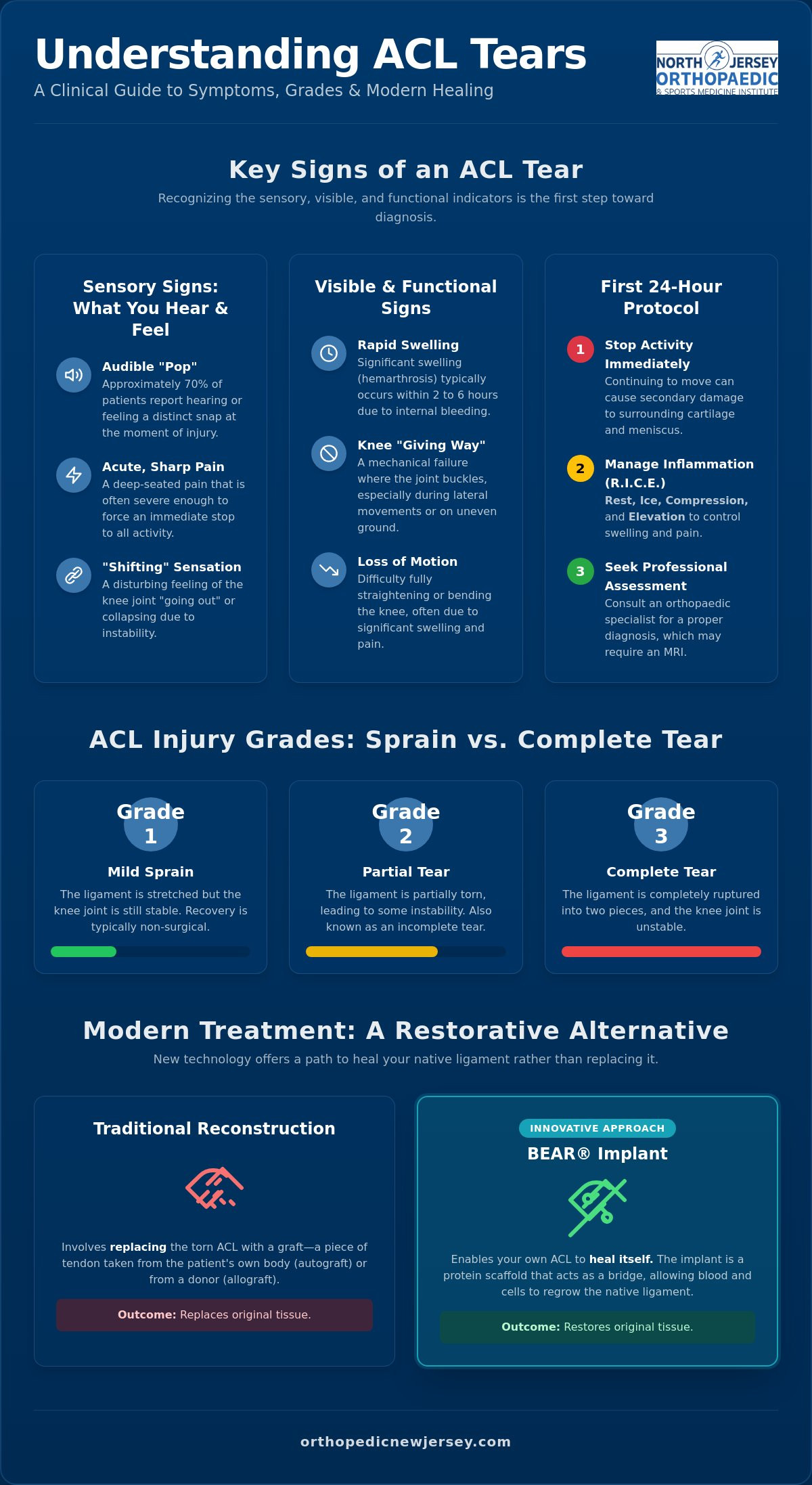
What Does an ACL Tear Feel Like? The Sensory Checklist
An ACL tear is a rupture of the anterior cruciate ligament that often occurs during non-contact pivoting. For many patients, the injury is not just a physical event but a sensory one that creates an immediate sense of alarm. Recognizing the initial signs of ACL tear involves more than just noting pain; it requires an understanding of the specific auditory and mechanical feedback your knee provides the second the injury occurs. This feedback serves as the first diagnostic indicator that the internal structures of the knee have been compromised.
Beyond the immediate discomfort, many patients describe a disturbing “shifting” sensation within the joint. This occurs when the structural integrity of the knee is lost, allowing the femur and tibia to move out of alignment momentarily. It feels as if the joint has “gone out” or collapsed under its own weight, even if you were not carrying a heavy load at the time. This mechanical instability is a hallmark of a high-grade Anterior cruciate ligament injury and often precedes the onset of significant internal bleeding.
The “Pop” Heard Round the Field
The most frequently reported sensory indicator is the “audible pop.” Clinical data suggests that approximately 70% of patients hear or feel this distinct sound at the moment of rupture. This sound is the result of the dense ligament fibers snapping under extreme tension, similar to a thick cable reaching its breaking point. It is vital to distinguish this sound from the “click” or “snap” often associated with a meniscus tear, which is typically less resonant and may be repetitive. If you hear a loud, singular pop followed by immediate instability, it is a clear signal to stop all activity. Continuing to move on the joint can lead to secondary damage to the surrounding cartilage.
Acute Pain and Activity Termination
Following the pop, most individuals experience an immediate, deep-seated sharp pain that radiates from the center of the knee. Unlike a minor sprain that an athlete might attempt to “shake off,” an ACL tear usually forces an immediate termination of play. The pain is intense and often accompanied by a sense of vulnerability in the limb. Within minutes, the body’s inflammatory response triggers “protective guarding,” where the quadriceps and hamstrings tighten instinctively to splint the joint. Athletes we treat in Nutley and Clifton often report that this sudden, incapacitating pain was the first sign that their injury required specialized medical attention. This inability to bear weight or continue activity is a critical factor in your initial self-assessment.
Visible and Functional Symptoms of an ACL Injury
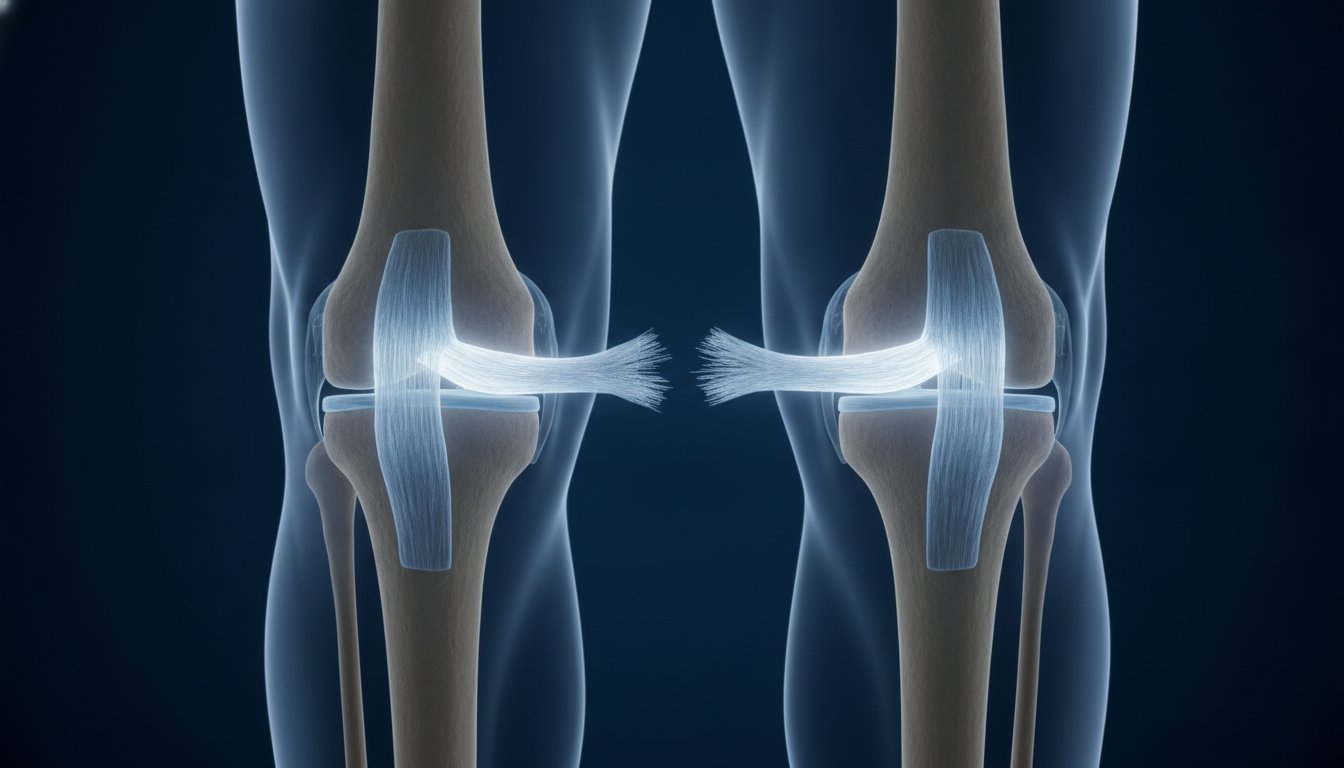
While the initial sensory feedback of an injury provides immediate clues, the visible and functional changes that manifest in the following hours offer definitive symptoms of an ACL injury. One of the most prominent clinical indicators is rapid knee swelling, a condition known as hemarthrosis. Unlike a standard strain where swelling might develop gradually over several days, an ACL rupture involves the tearing of blood vessels within the ligament itself. This internal bleeding causes the joint to balloon significantly within a narrow window of two to six hours after the incident.
This localized joint effusion creates a high-pressure environment inside the knee capsule. It’s often accompanied by significant tenderness along the joint line, making weight-bearing difficult or impossible. If you notice your knee appears significantly larger than the unaffected side shortly after a pivot or collision, these are primary signs of ACL tear that require professional evaluation. While many patients attempt to manage this with over-the-counter remedies, visible swelling of this magnitude usually indicates structural trauma rather than a simple muscle pull.
Understanding “Giving Way”
The anterior cruciate ligament serves as the primary stabilizer against the forward movement of the tibia relative to the femur. When this “seatbelt” of the knee is compromised, patients experience a classic sensation of the knee “giving way.” This isn’t just a feeling of weakness; it’s a mechanical failure where the joint buckles during simple lateral movements or when attempting to walk on uneven surfaces. This functional deficit is among the clearest signs of ACL tear, indicating that the ligament is no longer performing its stabilizing role. For many athletes in the Clifton and Nutley areas, this instability creates a profound psychological fear of the knee “stepping out” during routine activity, which is a signal to consult with a board-certified orthopaedic specialist.
Range of Motion and Swelling
The “stiff knee” effect is a direct consequence of both the physical blockage from fluid and the body’s natural response to trauma. You may find it impossible to achieve full extension, meaning you can’t straighten your leg completely. Similarly, fully bending the knee becomes a painful challenge. This loss of range of motion is often more than just a reaction to pain; it’s a physical restriction caused by the volume of blood and inflammatory fluid within the joint space. While applying ice and elevating the limb can provide temporary relief and mask some of these signs, they don’t resolve the underlying ligamentous damage. Accurate diagnosis is essential to determine if you’re a candidate for modern interventions like the BEAR® Implant, which focuses on restoration rather than traditional reconstruction.
ACL Injury Grades: Is It a Sprain or a Complete Tear?
When assessing the signs of ACL tear, clinicians categorize the severity of the damage into three distinct grades. This classification system is vital because it dictates the treatment pathway and the likelihood of needing surgical intervention. A Grade 1 injury involves microscopic tearing of the ligament fibers; while the knee remains stable, the ligament is stretched and painful. In contrast, a Grade 2 injury is a partial tear where the ligament is significantly stretched and partially detached, leading to noticeable joint laxity. A Grade 3 injury represents a complete rupture, where the ligament is torn into two pieces and provides no stability to the joint.
While a physical examination can provide a strong indication of damage, an MRI remains the definitive standard for grading the injury. The imaging allows a surgeon to see the exact state of the ligament and check for concurrent damage to the meniscus or articular cartilage. Identifying the specific grade early is essential, especially given that even complete Grade 3 ruptures may now be eligible for restorative techniques like the BEAR® Implant if treated within the appropriate window. Accurate grading ensures you don’t waste time on treatments that are insufficient for the level of trauma sustained.
Partial vs. Complete Ruptures
There is a common misconception that partial Grade 2 tears will inevitably heal on their own through rest alone. In reality, a compromised ligament is often unable to support the weight and rotational forces of daily life. Without professional bracing and a structured rehabilitation plan, a Grade 2 tear can quickly progress to a full Grade 3 rupture. Consulting a knee injury specialist NJ is the most effective way to receive an accurate diagnosis and prevent further structural decline. Early intervention can often preserve enough of the native tissue to qualify for restoration rather than a full graft-based reconstruction.
The Role of the Lachman Test
During your initial consultation, your surgeon will perform specific manual tests to evaluate the structural integrity of your knee. The Lachman test is widely considered the gold standard for diagnosing an ACL tear in a clinical setting. During this exam, the surgeon stabilizes the femur while applying a forward tug to the tibia. If the tibia moves too far forward or the “end feel” is soft, it indicates a compromised ligament. Manual tests are 85-95% accurate before imaging. These assessments help us determine the immediate level of instability and whether the signs of ACL tear you’ve observed align with a specific grade of injury.
Your 24-Hour ACL Injury Checklist: Next Steps
Once you have identified the clinical signs of ACL tear, the first 24 hours are critical for managing inflammation and protecting the joint from secondary trauma. Immediate action can prevent further damage to the meniscus or articular cartilage. Follow this structured checklist to ensure you are on the path toward an accurate diagnosis and modern recovery options.
- Step 1: Implement the R.I.C.E protocol. Rest the knee, apply ice for 20-minute intervals, use a compression wrap, and elevate the limb above heart level to control joint effusion.
- Step 2: Use crutches immediately. If weight-bearing causes a buckling sensation or sharp pain, don’t attempt to walk unaided. Protecting the joint from instability is paramount.
- Step 3: Schedule a specialist consultation. Contact a board-certified surgeon in Nutley or Bloomfield who specializes in minimally invasive sports medicine.
- Step 4: Prepare for an MRI. This imaging is essential to visualize the ligament fibers and assess for hidden meniscus damage that X-rays cannot detect.
- Step 5: Inquire about restoration. Ask your surgeon if you are a candidate for native ligament healing, especially if you are within the first few weeks of injury.
Managing Symptoms at Home
While your instinct may be to reach for over-the-counter anti-inflammatories, some specialists advise caution in the first 24 hours if you are considering restorative procedures. Certain medications can sometimes interfere with the early inflammatory markers that signal the body to begin its natural repair process. Focus instead on proper bracing. A hinged knee brace provides the lateral stability your ACL is no longer providing, which protects your meniscus from being crushed between the femur and tibia during movement. While an urgent care center can provide initial X-rays to rule out fractures, a specialist appointment is necessary to address the complex soft tissue damage associated with an ACL rupture.
The Importance of Early Diagnosis
Many patients mistakenly wait for the swelling to completely subside before seeking a surgical opinion. This delay can be costly. Modern techniques like BEAR implant ACL repair New Jersey are highly time-sensitive. This procedure, which allows your own ACL to knit back together using a bio-resorbable scaffold, typically requires intervention within a 50-day window from the date of injury. Specialized clinics near Montclair and Clifton are equipped to expedite the imaging and diagnostic process, ensuring you don’t miss the opportunity for native healing. If you have experienced the hallmark signs of ACL tear, acting quickly is the best way to preserve your long-term joint health.
If you suspect a ligament injury, contact our Nutley orthopaedic office today to schedule a diagnostic evaluation and discuss your eligibility for advanced repair options.
Modern Treatment: Why Your ACL Signs May Lead to Native Healing
The evolution of sports medicine has moved beyond simply replacing damaged tissue. For decades, the standard response to the clinical signs of ACL tear was reconstruction, a process that involves removing the torn ligament and replacing it with a graft harvested from the patient’s own body or a donor. While effective, this traditional method creates a secondary injury site and removes the native ligament, which contains vital nerve endings and blood vessels. Today, patients in North Jersey have access to a restorative alternative that focuses on healing the original tissue rather than discarding it.
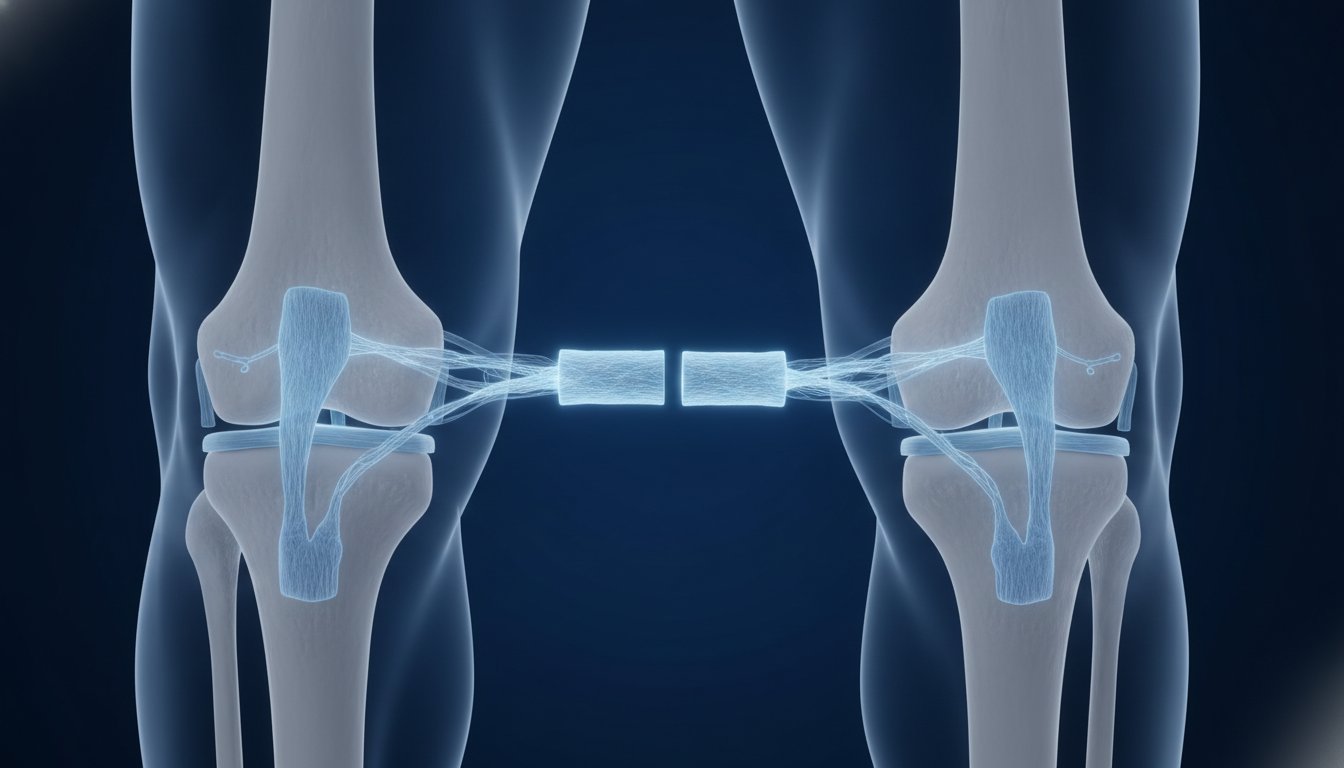
The Bridge-Enhanced ACL Repair (BEAR®) Implant represents this shift from replacement to restoration. This technology acts as a biological bridge, stabilized between the two ends of the torn ligament. By absorbing the patient’s own blood into a collagen scaffold, the implant creates the ideal environment for the ligament fibers to knit back together. This approach is particularly appealing to athletes who wish to maintain their natural anatomy and potentially avoid the long-term risk of early-onset osteoarthritis often associated with traditional reconstruction. Choosing this modern intervention in Nutley allows patients to benefit from cutting-edge science without leaving their local community.
What is BEAR® Implant Surgery?
This procedure is a form of minimally invasive orthopedic surgery NJ that prioritizes the preservation of your native joint structures. Unlike traditional methods that drill large tunnels into the bone to secure a graft, the BEAR® approach focuses on the biological reconnection of your original ACL. For a deeper understanding of the procedural steps and patient requirements, you can review our detailed resource on What is BEAR Implant Surgery?. Keeping your original ligament is often superior because it preserves the proprioception, your brain’s ability to sense the knee’s position, which is frequently diminished when a graft is used.
Recovery and Return to Sport
The recovery process for native restoration follows a methodical biological timeline. While the early stages focus on protecting the healing ligament, the long-term goal is a return to high-level activity without the donor-site morbidity associated with hamstring or patellar tendon grafts. Our clinical team coordinates closely with physical therapy specialists in Nutley and Clifton to ensure that every milestone is met with precision. For a detailed breakdown of the rehabilitation phases, refer to our BEAR Implant ACL Recovery Guide. Identifying the signs of ACL tear early allows you to explore these modern interventions before the window for native repair closes.
Move Toward a Restorative Recovery
Recognizing the sensory and visible signs of ACL tear is the first step in protecting your long-term joint health. Whether you heard a distinct pop or are experiencing the instability of a joint that “gives way,” these indicators demand a precise diagnostic approach. Moving beyond traditional reconstruction, modern orthopaedics now offers the potential to heal your native ligament, preserving the natural anatomy and biomechanics of your knee.
To determine if you are a candidate for the BEAR® Implant or other minimally invasive techniques, it’s essential to act within the initial weeks of your injury. Schedule a Consultation with our ACL Specialist in Nutley to receive an evaluation from a board-certified orthopaedic surgeon. Our facility is conveniently located for residents of Nutley, Clifton, and Bloomfield, providing expert care close to home. You don’t have to navigate this recovery alone; professional guidance is the bridge back to your active lifestyle.
Frequently Asked Questions
Can I walk with a torn ACL?
Yes, many individuals can walk on a flat surface shortly after the initial pain subsides, but the joint will lack its necessary structural stability. While you might feel capable of basic movement, the knee often feels “loose” or prone to buckling during sudden pivots or stair climbing. Walking without a diagnosis is risky because the absence of the ligament’s stabilizing function can lead to secondary injuries in the surrounding cartilage. Recognizing these functional signs of ACL tear is the first step in preventing further joint degradation.
Is a “pop” always a sign of a complete ACL tear?
An audible “pop” is a significant clinical indicator, but it doesn’t always signify a complete rupture. While approximately 70% of complete ACL tears involve this distinct sound, a similar noise can occur during a meniscus tear or a high-grade sprain of the collateral ligaments. Because the sensory experience of a “pop” is so common in serious knee trauma, it requires a professional evaluation and imaging to differentiate between a partial tear and a full ligamentous rupture.
How long do I have to see a surgeon after a knee injury?
You should ideally consult an orthopaedic specialist within 7 to 10 days of the injury to ensure all treatment pathways remain open. Early evaluation is particularly critical if you are interested in modern restorative options like the BEAR® Implant, which typically requires intervention within a 50-day window. Delaying your visit beyond this period may limit your eligibility for native ligament healing and could lead to chronic instability or additional meniscus damage.
What happens if I leave a torn ACL untreated?
Leaving a torn ACL untreated often results in chronic knee instability and recurrent “giving way” episodes during routine activity. These mechanical failures frequently cause secondary damage to the meniscus and articular cartilage as the bones of the joint shift improperly. Over time, this cumulative trauma significantly increases the risk of developing early-onset osteoarthritis. For many athletes, failing to address the signs of ACL tear early leads to a permanent reduction in their ability to participate in pivoting sports.
Does an ACL tear always require surgery?
Surgery is not mandatory for every patient, but it’s often the recommended course for those wishing to return to pivoting sports or physically demanding occupations. Sedentary individuals may choose to manage the injury through intensive physical therapy and functional bracing. However, for active residents in Nutley and Clifton, surgical restoration or repair is usually the most reliable path to regaining full joint functionality and preventing the long-term consequences of persistent instability.
How is an ACL tear diagnosed without an MRI?
A board-certified surgeon can often identify the signs of ACL tear through specialized physical maneuvers such as the Lachman test or the Pivot Shift test. These manual assessments allow the practitioner to feel for excessive forward motion of the tibia relative to the femur. While these clinical tests are remarkably accurate in experienced hands, an MRI is still considered the gold standard to confirm the specific grade of the tear and to visualize associated soft tissue damage.
What is the difference between an ACL tear and a meniscus tear?
An ACL tear primarily causes a sensation of instability and rapid, significant swelling, whereas a meniscus tear often involves “mechanical” symptoms like catching, locking, or clicking. While both injuries can occur simultaneously during a single trauma, a meniscus tear typically results in localized pain along the joint line. In contrast, an ACL rupture usually causes a deeper, more generalized pain within the center of the knee joint following a pivot or sudden stop.
Are there non-surgical options for ACL injuries in North Jersey?
Non-surgical management in North Jersey involves a structured rehabilitation program designed to strengthen the surrounding musculature, specifically the hamstrings and quadriceps. Functional bracing can also provide external support for daily activities and linear movements. While these options don’t repair the ligament itself, they can improve stability for patients who choose not to undergo minimally invasive procedures or those with lower physical activity demands. For additional resources on non-surgical treatments for joint and disc issues, you can discover Coral Way Disc Center and their specialized care models.