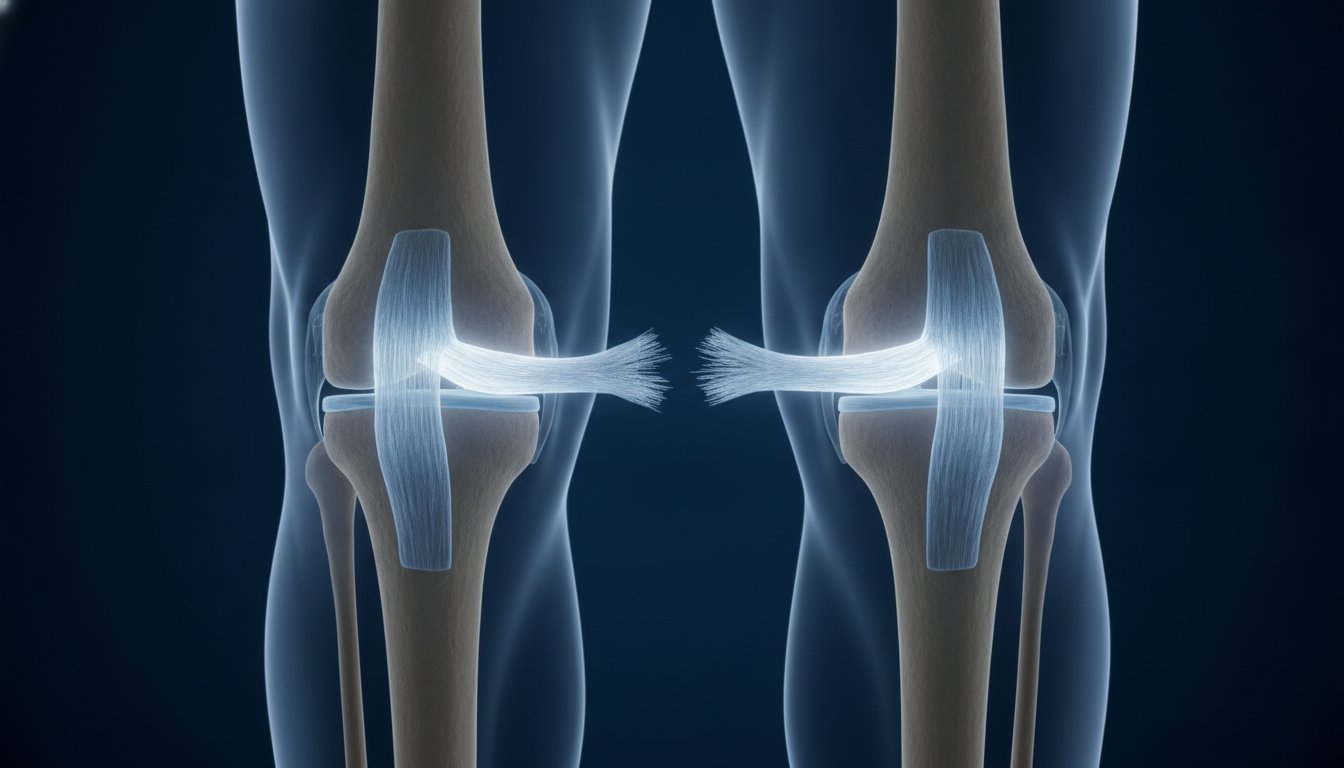
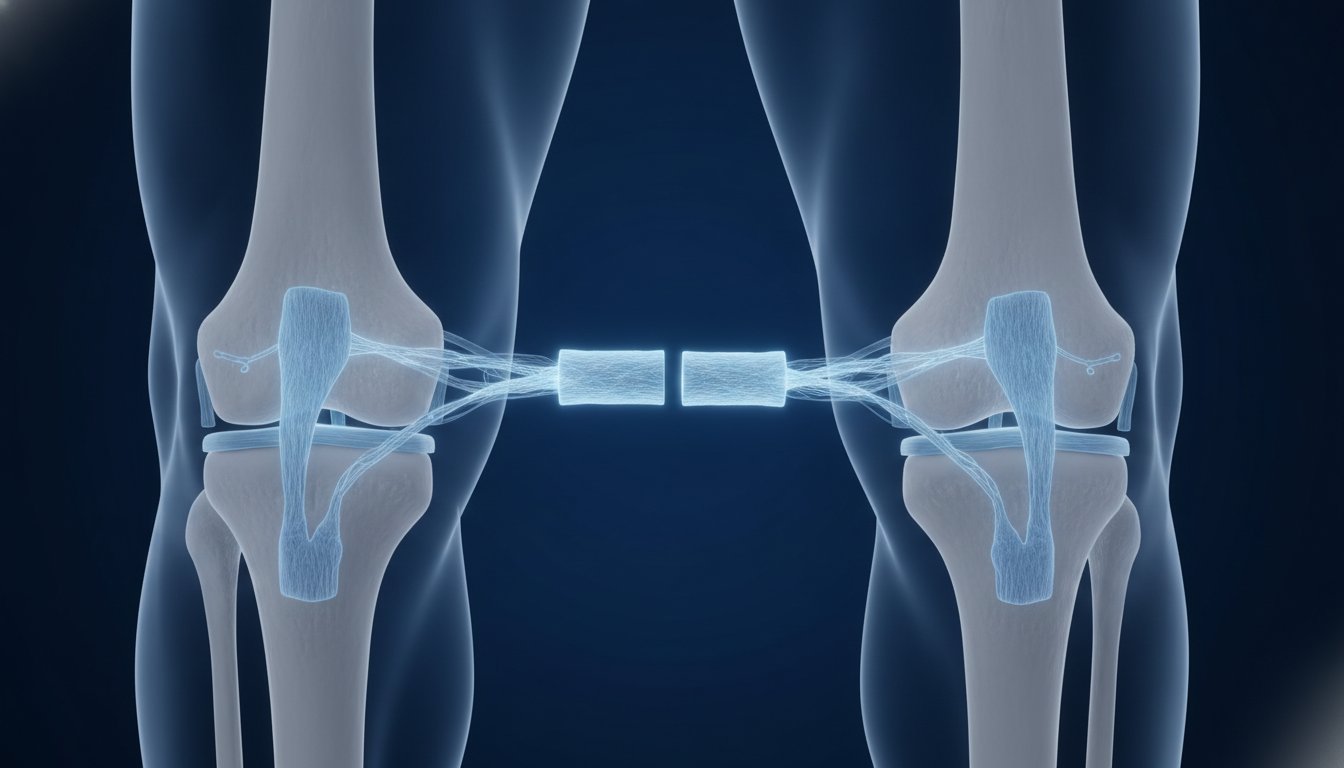
What if the traditional method of fixing a torn ligament by replacing it entirely with a graft isn’t the only path to a stable knee? For many athletes in North Jersey, the fear of a grueling twelve-month rehabilitation is often compounded by the anxiety of losing their native anatomy to a donor tendon. If you’ve been searching for minimally invasive ACL repair NJ, you’ve likely found yourself lost in a sea of technical jargon and conflicting surgical advice. You deserve a recovery plan that prioritizes the preservation of your natural knee structure while minimizing the disruption to your daily life.
We recognize that your primary goal is a predictable return to sport or work without the burden of extensive scarring or permanent loss of function. This article outlines how sophisticated arthroscopic techniques and the BEAR® Implant are transforming the clinical standard for ACL care. You’ll learn how these modern interventions facilitate natural healing, potentially offering a faster trajectory back to peak performance. We will bridge the gap between established surgical wisdom and the latest biological advancements, providing the clarity you need to navigate your journey toward recovery.
Key Takeaways
- Distinguish between traditional ACL reconstruction and modern repair techniques that focus on preserving your native ligament anatomy.
- Identify the specific eligibility criteria for the BEAR® Implant, including the critical 50-day window following a complete ACL rupture.
- Evaluate the physiological advantages of minimally invasive ACL repair NJ, which utilizes arthroscopic precision to reduce surgical trauma and post-operative stiffness.
- Master the essential phases of recovery, from immediate pain management protocols to the functional transition off crutches within six weeks.
- Connect with board-certified specialists in North Jersey who utilize advanced methodology to personalize your orthopaedic surgical plan.
Understanding Minimally Invasive ACL Repair and Reconstruction
Modern orthopaedic surgery has undergone a significant transformation, moving away from large, invasive procedures toward techniques that prioritize tissue preservation. Minimally invasive surgery (MIS) in orthopaedics is defined by the use of small incisions, often no larger than a buttonhole, and specialized fiber-optic cameras. This approach allows surgeons to visualize and treat internal joint structures with a level of precision that was previously unattainable through traditional “open” surgery. For patients seeking minimally invasive ACL repair NJ, this means a surgical experience designed to minimize trauma to the healthy muscles and ligaments surrounding the knee.
The core of this methodology is the arthroscope. This thin, flexible tube contains a high-definition camera that transmits real-time images to a monitor in the operating suite. While Anterior cruciate ligament reconstruction has long been the standard for addressing complete tears, modern advancements now allow for a critical distinction between reconstruction and repair. Reconstruction involves replacing the torn ligament with a graft, whereas repair focuses on facilitating the healing of the patient’s original tissue. Identifying which approach is clinically appropriate is the first step in a successful recovery journey. Patients who want to understand the full spectrum of options available to them can benefit from reviewing a comprehensive overview of minimally invasive orthopedic surgery NJ procedures before their consultation.
What is Arthroscopic ACL Surgery?
Arthroscopic surgery utilizes “keyhole” incisions to access the knee joint. In our Nutley practice, we utilize these small portals to insert the arthroscope and specialized surgical instruments. This technique offers several clinical advantages over older methods. Because the incisions are small, there’s a documented reduction in post-operative blood loss and a lower risk of surgical site infections. Patients often report less immediate post-operative pain, which allows for a more comfortable transition into early-stage physical therapy. The precision of the camera ensures that the surgeon can address the ACL tear while carefully protecting the meniscus and articular cartilage.
The Shift from Replacement to Restoration
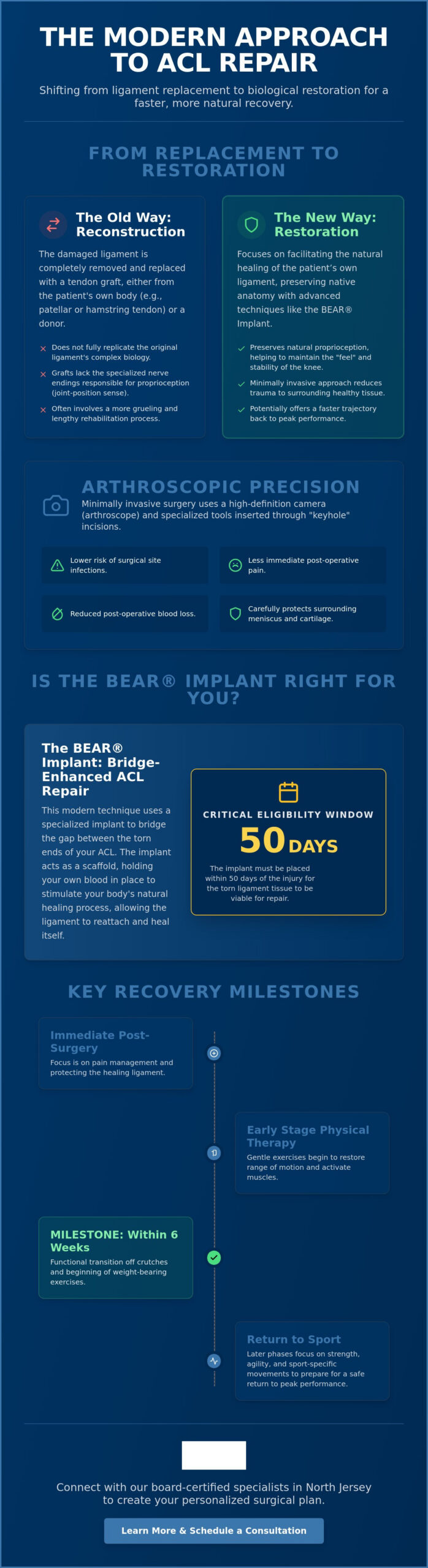
For decades, the “old way” of treating a torn ACL involved removing the damaged ligament entirely and replacing it with a tendon graft from the patient’s own body or a donor. While effective, this replacement doesn’t fully replicate the complex biology of the original ligament. The “new way” focuses on restoration. Many athletes in North Jersey now seek “graft-free” options because they prioritize the preservation of natural proprioception. Proprioception is the body’s ability to sense the position and movement of the joint. Native ligaments contain specialized nerve endings that grafts lack. By assisting the body in healing its own tissue rather than replacing it, we aim to maintain the natural “feel” and stability of the knee, which is often considered the gold standard for high-performance recovery.
ACL Reconstruction vs. BEAR® Implant: Which Is Right for You?
Selecting the most appropriate surgical path requires a clear understanding of the difference between biological restoration and structural replacement. While traditional reconstruction has long provided a stable solution for athletes, BEAR® Implant ACL Repair in New Jersey: The New Standard for many patients, represents a significant shift toward ligament preservation. The primary distinction lies in the source of the tissue. Reconstruction utilizes a graft to replace the ACL entirely, whereas the BEAR procedure facilitates the healing of your original ligament tissue.
Harvard Medical School research on bridge-enhanced ACL repair (BEAR) indicates that this technique is particularly effective for patients who prioritize maintaining their native anatomy and proprioception. Eligibility for this minimally invasive ACL repair NJ is strictly time-sensitive. Clinical data confirms that the implant must typically be placed within 50 days of the injury to be successful. This window is essential because the torn ligament tissue must remain healthy and viable to bridge the gap during the healing process. If you’ve recently suffered a tear, scheduling a clinical evaluation early is vital to keep this option available.
The BEAR® Implant: ACL Repair Without a Graft
The BEAR® Implant is a protein-based sponge designed to act as a biological scaffold. During the procedure, the sponge is saturated with your own blood and positioned precisely between the torn ends of the ACL. This creates a protected environment where your body’s natural healing cells can migrate, thrive, and eventually reconnect the ligament. As the first FDA-approved device for this purpose, it eliminates the need to harvest a graft from your patellar or hamstring tendon. Consequently, you avoid the “second surgical site” pain and potential long-term donor-site weakness that often complicates the early stages of traditional recovery.
Traditional Reconstruction: When Grafts Are Still Necessary
Traditional reconstruction remains the gold standard for chronic tears, cases where the ligament has retracted significantly, or complex injuries that fall outside the 50-day window. In these scenarios, creating a new, robust ligament using a graft is the most reliable way to restore stability. You may choose an autograft, utilizing your own tissue, or an allograft from a donor. Both options are performed with the same arthroscopic precision to ensure a minimally invasive ACL repair NJ experience. Our focus remains on selecting the graft type that best aligns with your age, activity level, and long-term athletic goals.
The Clinical Benefits of Smaller Incisions and Arthroscopic Precision
The success of a modern surgical intervention is often measured by the preservation of the internal biological environment. While traditional open procedures require significant disruption to the knee’s supporting structures, minimally invasive ACL repair NJ focuses on a targeted approach that limits the surgical footprint. By utilizing arthroscopic portals, surgeons can access the joint without detaching or significantly traumatizing the surrounding knee capsule and muscles. This reduction in tissue disruption is a primary factor in mitigating the inflammatory response that follows surgery, leading to a more controlled recovery period.
One of the most significant hurdles in post-operative rehabilitation is joint stiffness. Extensive surgical trauma often triggers the formation of excessive scar tissue, which can restrict the range of motion and prolong the time spent in physical therapy. Because arthroscopic techniques involve smaller incisions and less internal manipulation, patients typically experience less post-operative swelling. This clinical advantage allows for an earlier introduction of movement exercises. Additionally, the reduced surgical trauma correlates with a lower reliance on narcotic pain medications. Most patients in our North Jersey surgical centers find that their discomfort is manageable with non-opioid protocols, facilitating a clearer and more active start to their recovery. These procedures are typically performed on a same-day basis, allowing you to return home shortly after the intervention.
Preserving the Knee’s Natural Biomechanics
The physiological benefit of preserving your original tissue goes beyond structural stability; it involves the complex system of proprioception. Proprioception is your body’s innate ability to sense the position and movement of the joint. Native ACL tissue contains specialized mechanoreceptors that provide real-time feedback to the brain. When we perform a repair rather than a full reconstruction, these nerve endings remain intact. The clinical indications for the FDA-approved BEAR® Implant emphasize its role in facilitating a natural healing response that maintains this sensory feedback. Furthermore, by avoiding large incisions, we prevent the permanent muscle weakness in the quadriceps or hamstrings that often occurs when those tissues are harvested for grafts.
Reduced Risk of Long-Term Complications
The precision afforded by modern arthroscopy also addresses the long-term health of the joint. There is a well-documented link between initial surgical trauma and the eventual development of post-traumatic osteoarthritis. By minimizing the “insult” to the joint during surgery, we aim to protect the delicate articular cartilage. High-definition cameras allow for the exact placement of the repair scaffold, which reduces the risk of “impingement.” This occurs when a poorly positioned ligament or graft rubs against the bone, leading to premature wear or failure. This meticulous level of detail ensures that your minimally invasive ACL repair NJ provides a foundation for years of pain-free movement.
Your Recovery Timeline: From Surgery in Nutley to Returning to Sport
Recovery begins the moment you leave our Nutley facility. The first 72 hours are critical for inflammation control and pain management. We emphasize the “RICE” protocol, rest, ice, compression, and elevation, to manage the initial biological response to the procedure. Because minimally invasive ACL repair NJ involves smaller incisions and less tissue disruption, patients often report that their initial swelling is more manageable than with traditional methods. This reduced surgical footprint allows for a smoother transition to home care in a familiar North Jersey setting.
Between weeks two and six, the clinical focus shifts toward restoring early range of motion and transitioning off crutches. This period is vital for preventing joint stiffness, a common hurdle in orthopaedic recovery. Understanding how these modern techniques compare to older standards can help set realistic expectations. You can explore these differences further in our Minimally Invasive vs. Traditional Orthopedic Surgery: A Patient’s Comparison Guide. By the third month, you’ll enter the strengthening phase. MIS allows for an earlier start to progressive resistance training because the surrounding musculature remains largely intact.
Physical Therapy: The Engine of Recovery
We view the surgical procedure as 50% of the success; the remaining 50% is determined by the quality and consistency of your rehabilitation. Physical therapy is the engine that drives your return to peak performance. It’s essential to partner with sports medicine specialists near Bloomfield and Clifton who are familiar with advanced ligament preservation protocols. These experts will guide you through the neuromuscular training necessary to protect your repaired or reconstructed ligament during the most vulnerable stages of healing.
Milestones for Returning to Activity
Progress is measured by functional milestones rather than just the calendar. While every patient’s biology is unique, the following timeline is typical for those undergoing minimally invasive ACL repair NJ:
- Walking without a limp: Typically achieved between weeks 2 and 4 as swelling subsides and muscle control returns.
- Jogging and straight-line activities: Usually commences around months 3 to 4, once sufficient quadriceps strength is documented.
- Return to pivoting sports: High-demand activities like soccer or football typically require 6 to 9 months of dedicated training to ensure the joint can handle rotational forces.
If you’re ready to take the first step toward a modern recovery, schedule a consultation with our orthopaedic team today to discuss your personalized treatment plan.
Expert ACL Care at The Orthopaedic & Sports Medicine Institute
The Orthopaedic & Sports Medicine Institute serves as a specialized resource for patients seeking advanced knee care. Our board-certified surgeons are dedicated to performing minimally invasive ACL repair NJ with a focus on biological preservation and anatomical restoration. We don’t just treat an MRI image; we treat the individual athlete. This patient-centered approach ensures that your specific lifestyle and athletic goals remain the primary drivers of your surgical plan. By understanding the unique demands you place on your knees, whether on the soccer field or in a professional setting, we can tailor the intervention to your specific physiological needs.
Our commitment to the local North Jersey community, from Nutley to Kearny, is rooted in providing transparent, expert guidance. We believe that every patient deserves access to the latest surgical innovations without having to travel far from home. This local focus allows us to coordinate closely with regional physical therapy providers, ensuring that your transition from surgery to rehabilitation is seamless and medically supervised.
Why Choose a Board-Certified Specialist in Nutley?
Selecting an Orthopedic Surgeon near Bloomfield, NJ: Selecting a Specialized Expert is a decision that impacts your long-term joint health. Fellowship training in sports medicine is a critical credential. It indicates that the practitioner has undergone rigorous, specialized education beyond a general orthopaedic residency. This expertise is particularly relevant when navigating the choice between traditional grafts and newer restorative technologies. Our practice is strategically located to serve major North Jersey hubs. This proximity is essential for coordinating the early stages of recovery and ensuring that follow-up care is accessible for patients coming from Kearny and neighboring towns.
Scheduling Your ACL Consultation
Timing is a significant factor in surgical outcomes. As previously discussed, the window for the BEAR® Implant is limited to the first 50 days following a complete ACL rupture. Early diagnosis is the only way to ensure you have the full range of modern options available to you. Delaying an evaluation can sometimes mean losing the opportunity for a “graft-free” repair. We encourage residents in Belleville, Lyndhurst, and North Arlington to seek a clinical evaluation as soon as possible after a knee injury. A thorough physical examination, combined with precise MRI confirmation, allows us to determine if you are a candidate for minimally invasive ACL repair NJ. Our team provides the specialized care and technical precision necessary for a successful and stable return to your active life.
Restoring Stability Through Advanced Ligament Preservation
Modern orthopaedics has moved beyond the simple replacement of tissue to a focus on biological restoration. The availability of minimally invasive ACL repair NJ allows for a recovery process that prioritizes your native anatomy and preserves vital sensory feedback. By utilizing arthroscopic precision and the BEAR® Implant, we help your body heal itself without the need for traditional graft harvesting. This approach not only reduces surgical trauma but also sets the stage for a more natural feel in the joint once you return to full activity.
Success depends on timely diagnosis and a committed approach to rehabilitation. Our board-certified surgeons specialize in these cutting-edge techniques, providing the high-level expertise needed to return you to the sports and activities you love. We’ve dedicated our practice to serving the communities of Nutley, Bloomfield, and Clifton with specialized care that bridges the gap between surgical innovation and patient-centered recovery. Your journey back to peak performance is a collaborative effort between clinical excellence and your own dedication to the healing process.
Schedule a Consultation with our Board-Certified ACL Specialists in Nutley today to discuss your eligibility for ligament restoration. We’re here to help you regain your confidence and move forward with a stronger, healthier knee.
Frequently Asked Questions
Is minimally invasive ACL repair better than traditional reconstruction?
The superiority of one method over another depends entirely on your clinical presentation and the timing of your injury. Minimally invasive repair is often preferred for its ability to preserve your native ligament and natural proprioception. However, traditional reconstruction is still the most reliable choice for chronic tears or cases where the original tissue is no longer viable for healing.
How long does a minimally invasive ACL surgery take?
Most arthroscopic ACL procedures are completed within 60 to 90 minutes. This timeframe allows our surgeons to meticulously position the repair scaffold or graft using high-definition visualization. Since these are performed as same-day surgeries in our modern surgical centers, you’ll spend a few hours in recovery before returning home to begin your rehabilitation process.
Will I have a large scar after ACL repair in NJ?
You won’t have a large, conspicuous scar because we utilize small arthroscopic portals. These “keyhole” incisions are typically less than one centimeter in length. By performing minimally invasive ACL repair NJ, we minimize the disruption to your skin and underlying soft tissues. This approach results in significantly less visible scarring and a more aesthetic post-operative appearance compared to older, open surgical methods.
Can any orthopedic surgeon perform the BEAR® Implant procedure?
Only surgeons who have completed specialized training and certification can perform the BEAR® Implant procedure. This technique involves a unique biological scaffold that requires precise handling and placement. Our board-certified specialists in Nutley have undergone the necessary training to provide this advanced restorative option to our patients, ensuring the highest standard of technical proficiency during the procedure.
How soon can I drive after minimally invasive knee surgery?
Most patients return to driving within 2 to 6 weeks after surgery. Your specific timeline depends on which knee was operated on and your progress in physical therapy. You must be completely off all narcotic pain medications and demonstrate enough muscle control to perform an emergency brake maneuver safely. We’ll provide a specific clearance during your follow-up appointment based on your functional recovery.
Does insurance cover minimally invasive ACL repair at your Nutley office?
Insurance coverage for minimally invasive ACL repair NJ is generally standard across most major carriers, though specific device coverage can vary. While arthroscopic techniques are widely accepted, it’s essential to verify the specific benefits of your plan regarding newer technologies like the BEAR® Implant. Our office staff is available to help you navigate these details and provide the necessary clinical documentation for your provider. For a broader understanding of how coverage and authorization processes apply to minimally invasive orthopedic surgery NJ procedures, our specialized buyer’s guide offers additional context.
What happens if I don’t get my torn ACL repaired?
Choosing to leave an ACL tear untreated often leads to chronic joint instability and a high risk of secondary injuries. Without a functional ligament, the knee joint frequently shifts abnormally, which can tear the meniscus and damage the articular cartilage. Long-term data indicates that untreated tears significantly accelerate the onset of post-traumatic osteoarthritis, often limiting your mobility and physical activity levels later in life.
Are the results of ACL repair as strong as a traditional graft?
Repaired ligaments have shown the potential to be as structurally sound as traditional grafts while offering better natural joint sensation. While a graft provides immediate mechanical strength, a successful repair facilitates the growth of your own living tissue. This biological restoration aims to replicate the original strength and flexibility of your native ACL, providing a stable foundation for both daily activities and high-impact sports.